Containers

Integrate Amazon API Gateway with Amazon EKS
Since 2015, customers have been using Amazon API Gateway to provide scalable and secure entry points for their API services. As customers adopt Amazon Elastic Kubernetes Service (Amazon EKS) to orchestrate their services, they have asked us how they can use API Gateway to expose their microservices running in Kubernetes. This post shows you how […]

Traffic Encryption in AWS App Mesh across accounts using certificates from AWS Certificate Manager Private CA and AWS Resource Manager
NOTICE: October 04, 2024 – This post no longer reflects the best guidance for configuring a service mesh with Amazon ECS and Amazon EKS, and its examples no longer work as shown. For workloads running on Amazon ECS, please refer to newer content on Amazon ECS Service Connect, and for workloads running on Amazon EKS, […]

Running Airflow Workflow Jobs on Amazon EKS with EC2 Spot Instances
Apache Airflow is an open-source distributed workflow management platform for authoring, scheduling, and monitoring multi-stage workflows. It is designed to be extensible, and it’s compatible with several services like Amazon Elastic Kubernetes Service (Amazon EKS), Amazon Elastic Container Service (Amazon ECS), and Amazon EC2. Many AWS customers choose to run Airflow on containerized environments with […]

Automated software delivery using Docker Compose and Amazon ECS
Note: Docker Compose’s integration with Amazon ECS has been deprecated and is retiring in November 2023 In November 2020, Docker Compose for Amazon ECS became generally available. It is now even easier for a developer to take a containerized microservices-based application from their workstation and deploy it straight to the AWS Cloud. Developers can now run […]

Using Dex & dex-k8s-authenticator to authenticate to Amazon EKS
This post was contributed by Márk Sági-Kazár, Jeremy Cowan, and Jimmy Ray. Introduction In an earlier post, Paavan Mistry introduced us to the OIDC identity provider (IdP) authentication for Amazon Elastic Kubernetes Service (Amazon EKS), a feature that allows you to use an OIDC identity provider with new or existing clusters. Before launching this feature, […]
Building container images on Amazon ECS on AWS Fargate
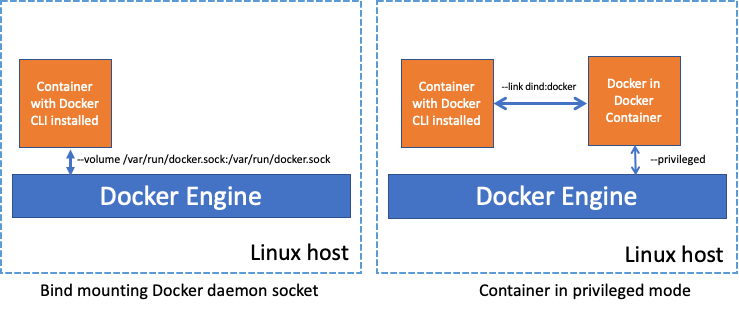
Note: The Kaniko project has been archived and is not actively maintained. Building container images is the process of packaging an application’s code, libraries, and dependencies into reusable file systems. Developers create a Dockerfile alongside their code that contains all the commands to assemble a container image. This Dockerfile is then used to produce a […]
Managing compute for Amazon ECS clusters with capacity providers.
Customers running containers are often challenged with having to manage and understand how to run and scale the compute for their clusters. For customers taking advantage of Amazon Elastic Container Service (Amazon ECS) on AWS Fargate, the burden is lifted as the underlying compute layer is fully managed by AWS, enabling the customer to focus […]

Policy-based countermeasures for Kubernetes – Part 2
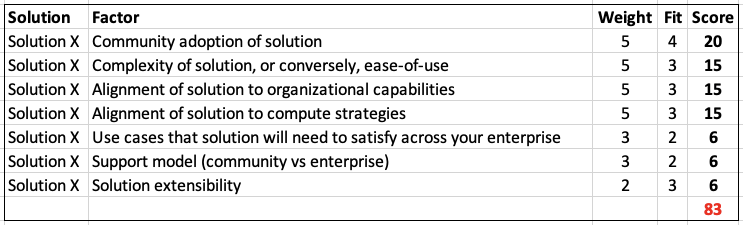
Choosing the Right Policy-As-Code Solution In Part 1 of this series, we introduced the concept of policy-as-code (PaC), and discussed the following solutions: OPA, OPA/Gatekeeper and MagTape. In this post (Part 2) we will review the Kyverno and k-rail PaC solutions. For Kubernetes, there are several PaC solutions available in the open-source software (OSS) community. […]
Policy-based countermeasures for Kubernetes – Part 1
Choosing the right policy-as-code solution This is Part 1 in a two part series where we discuss policy-as-code solutions. As more organizations adopt containerization as a delivery strategy, the need for automated security, compliance, and privacy controls that detect, prevent, reduce, and counteract known and unknown threats, has increased. Out of this increased need for […]

Preparing for Kubernetes API deprecations when going from 1.15 to 1.16
Note: The contents of this blog are no longer up to date as the referenced Amazon EKS Kubernetes version is no longer supported. Refer to the Amazon EKS Kubernetes versions AWS documentation for up to date information on supported Amazon EKS Kubernetes versions. The way that Kubernetes evolves and introduces new features is via […]