AWS Database Blog

Integrating Teradata with Amazon Redshift Using the AWS Schema Conversion Tool
David Gardner is a solutions architect and Pratim Das is a specialist solutions architect for Analytics at Amazon Web Services. Teradata provides long-standing data warehouse solutions, with many customers and applications running on its platforms. As companies migrate to the cloud, they are using Amazon Redshift as part of their cloud adoption. Recently AWS announced […]
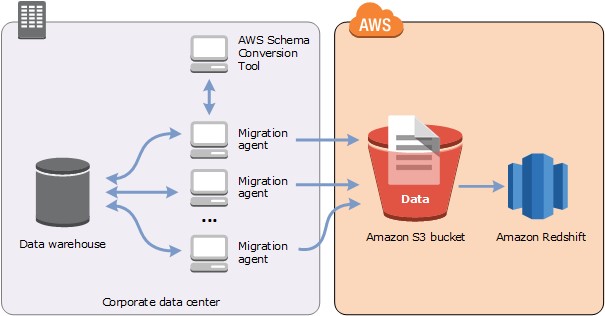
How to Use SSL with the AWS Schema Conversion Tool Data Extractors
In another blog post, we described how to use the AWS Schema Conversion Tool data extractors (AWS SCT data extractors) to migrate your legacy data warehouse to Amazon Redshift. Amazon Redshift is a fast, fully managed, petabyte-scale data warehouse service that makes it simple and cost-effective to analyze all your data using your existing business […]

Database Migration Gaining Momentum
Ilia Gilderman is a senior software development manager at Amazon Web Services. Only five months have passed since our most recent post, in March 2017, about the momentum of AWS Database Migration Service (AWS DMS). So far, we’ve watched our customers migrating over 35,000 unique databases to AWS using AWS DMS. Here is a quick […]
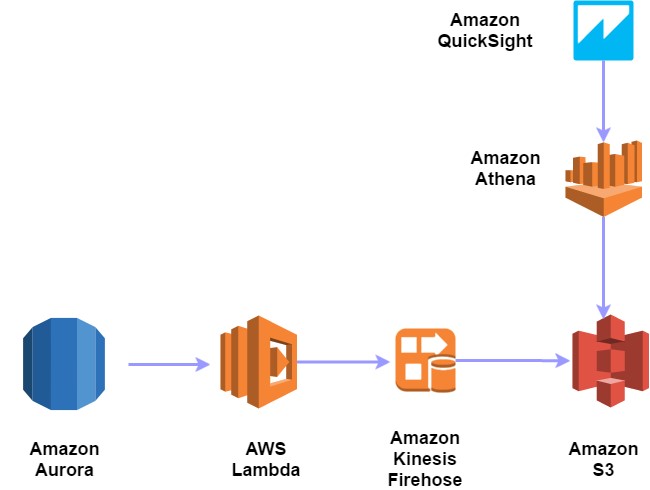
Capturing Data Changes in Amazon Aurora Using AWS Lambda
February 9, 2024: Amazon Kinesis Data Firehose has been renamed to Amazon Data Firehose. Read the AWS What’s New post to learn more. Re Alvarez-Parmar is a solutions architect at Amazon Web Services. He helps enterprises achieve success through technical guidance and thought leadership. In his spare time, he enjoys spending time with his two […]

Picking Your First Database to Migrate to Amazon RDS or Amazon Aurora with PostgreSQL-compatibility
David Rader is the vice president of engineering at OpenSCG. OpenSCG is an AWS Consulting Partner and a leading expert in PostgreSQL, helping customers migrate to, operate, and optimize PostgreSQL and other data platforms on-premises and in the cloud. In a previous post, we covered the overall approach you can take to migrate your current […]
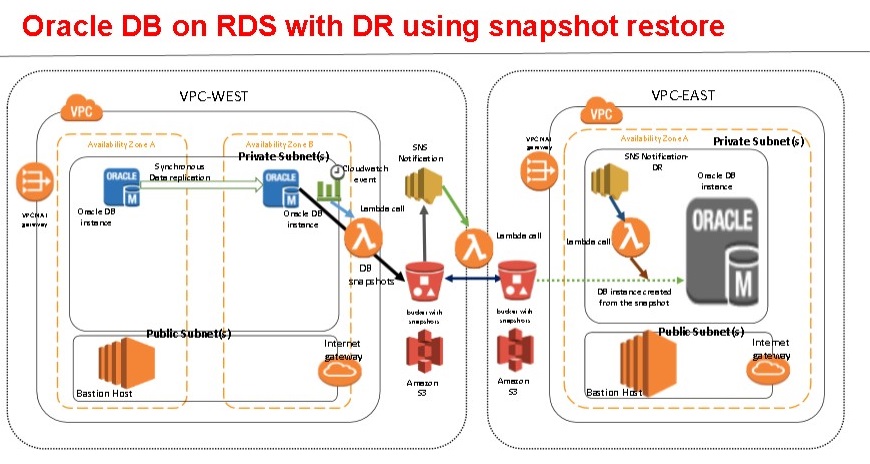
Cross-Region Automatic Disaster Recovery on Amazon RDS for Oracle Database Using DB Snapshots and AWS Lambda
Sameer Malik is a specialist solutions architect and Christian Williams is an enterprise solutions architect at Amazon Web Services. Many AWS users are taking advantage of the managed service offerings that are available in the AWS portfolio to remove much of the undifferentiated heavy lifting from their day-to-day activities. Amazon Relational Database Service (Amazon RDS) […]

Reading Amazon S3 Data from Oracle on Amazon EC2
When you’re working with AWS services, Amazon S3 is the first choice to store text data files. In the past, to access S3 data, first you’d download the files and then perform extract, transform, and load (ETL) to load the data into Oracle. This approach has two drawbacks. It takes time to download and perform […]
Amazon Aurora Under the Hood: Quorum Membership
Anurag Gupta runs a number of AWS database services, including Amazon Aurora, which he helped design. In this under the hood series, Anurag discusses the design considerations and technology underpinning Aurora. This post is the last in a four-part series discussing how Amazon Aurora uses quorums. In the first post, I described the benefits of […]
Amazon Aurora Under the Hood: Reducing Costs Using Quorum Sets
Anurag Gupta runs a number of AWS database services, including Amazon Aurora, which he helped design. In this under the hood series, Anurag discusses the design considerations and technology underpinning Aurora. This post is the third in a four-part series discussing how Amazon Aurora uses quorums. I hope the discussion is useful to you as […]

How to Migrate Your Data Warehouse to Amazon Redshift Using the AWS Schema Conversion Tool Data Extractors
This blog post gives you a quick overview of how you can use the AWS Schema Conversion Tool (AWS SCT) data extractors to migrate your existing data warehouse to Amazon Redshift. Amazon Redshift is a fast, fully managed, petabyte-scale data warehouse service that makes it simple and cost-effective to analyze all your data using your existing business intelligence […]