AWS for Industries
Breaking the custody chain: How AI is preventing surgical specimen mishandling
Have you ever wondered when a nurse draws blood from you or you deposit a urine sample, how the sample is handled from there? Typically, laboratory samples change hands multiple times before the actual testing occurs. Research also indicates that mislabeling, mishandling, and loss of specimens during surgical procedures occur frequently and over 73% of those events can be avoided.
These incidents can lead to diagnostic delays, the need for surgery revisions, prolonged length of stay and significant financial risks (including additional procedural costs). Such errors and delays are recognized as a major source of risk in healthcare, making it a primary concern for laboratory leaders and staff to implement effective mitigation strategies.
In the high-stakes environment of surgical care, precision and accountability are paramount—especially when it comes to specimen management. Atlantic Health recognized a critical opportunity to modernize its operating room (OR) workflows by replacing a paper-based specimen tracking process with a robust digital solution. The result: a transformative initiative that enhances patient safety, reduces operational risk, and sets a new standard for healthcare efficiency.
The challenge: Manual tracking in a digital world
Surgical pathology specimen management is a complex, multidisciplinary process. From the moment a specimen is collected in the OR, it must be accurately identified, labeled, preserved, transported, and documented. Historically, Atlantic Health relied on handwritten logs and manual handoffs to track this journey—a method susceptible to inefficiencies and limited traceability.
This paper-based system presented several challenges:
- Lack of real-time visibility regarding specimen location
- No automated alerts for delays or missing specimens
- Limited reporting capabilities
- High labor intensity and risk of human error
The solution: A digitally driven chain of custody
To address these challenges, Atlantic Health launched the Electronic Specimen Tracking project. The centerpiece of this initiative is a mobile app designed to digitize and streamline the entire specimen journey. Built for mobile devices, the app integrates seamlessly with Epic, an electronic health record system. The app leverages AI and computer vision to reduce manual input.
Key features include:
- Location scanning: QR codes identify handoff points instantly.
- Label recognition: Optical character recognition (OCR) technology reads specimen labels with precision, tagging it for training AI models to improve accuracy and performance.
- Timeline tracking: Each handoff is logged with date, time, and location.
- Automated alerts: If a specimen isn’t tracked within three hours, stakeholders receive email notifications.
- Reporting dashboard: Real-time insights into specimens in transit, delivered, or overdue.
This digital solution facilitates full traceability, accountability, and rapid response to potential issues, replacing guesswork with data-driven clarity.
The electronic specimen tracking app
The development team of Atlantic Health built the app entirely on Amazon Web Services (AWS) using services such as:
- AWS WAF
- Amazon CloudFront
- Amazon Textract
- Amazon Simple Storage Service (Amazon S3)
- Amazon Elastic Container Service (Amazon ECS)
- Amazon Aurora (for PostgreSQL)
- Application Load Balancer
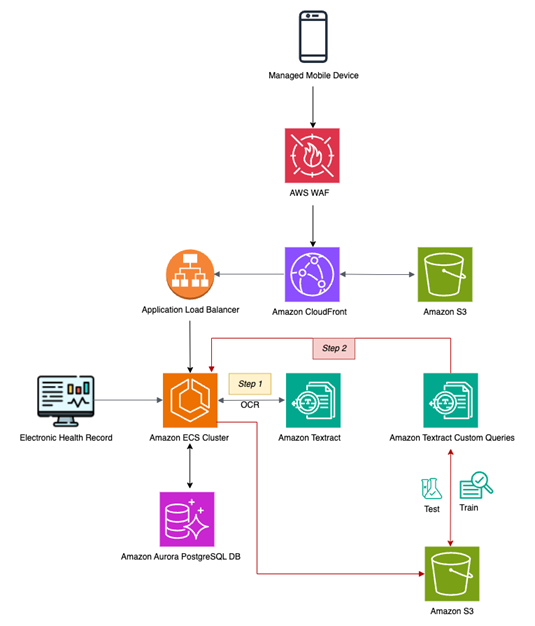
Figure 1 – Architecture diagram of the app
The app’s development was done in a two-step process. Initially when patient data, along with specimen data, is collected a QR code is created and all the information is uploaded to Amazon S3. The application runs on Amazon ECS Clusters, which call the Amazon Textract API to extract relevant information from the order document, lab specimen and patient data. This information is verified by a human-in-the-loop initially and feedback is provided on the accuracy of the data extracted. This is also matched with the data stored in an Amazon Aurora PostgreSQL database.
Once it is verified and cleared, all the collected data is fed into another S3 bucket. This cycle is repeated for several patients, to gather more data. Once Atlantic Health had a large amount of sanitized data in the new S3 bucket, they created an adapter in Amazon Textract for custom queries. It ingested all the data from the second S3 bucket to do finetune training of itself. Once the adapter was properly trained and tested, it was ready for Step 2 of the process.
The specimen tracking application tracks the location of the specimen, its handler, the patient to whom the specimen belongs, order details, and time—confirming the accuracy or sending an alert. In Step 2, when a nurse or caregiver scans the specimen label with a mobile device it gathers all relevant details that are available.
In the future, the caregiver will be able to verify the validity by asking questions in natural language and receive required details. That way the caregiver can confirm the patient’s medical record number (MRN), order ID and other details for accuracy.
Overcoming integration challenges
One of the biggest hurdles was integrating the new system into existing workflows across multiple departments. Surgical teams, pathology staff, and IT personnel all had unique processes and priorities.
To facilitate adoption Atlantic Health implemented a comprehensive change management strategy:
- Stakeholders received hands-on training and ongoing support.
- Feedback loops allowed for iterative improvements.
- The app was designed with user experience at its core, minimizing disruption.
This collaborative approach confirmed the system was embraced across the organization, driving consistent usage and maximizing impact.
Innovation at work
What sets this project apart is its innovative use of existing technologies in a healthcare context. Rather than investing in costly radio frequency identification (RFID) infrastructure or retooling lab instrumentation, Atlantic Health opted for a more agile, cost-effective solution.
Innovations include:
- Real-time visibility: Staff can track specimens instantly, reducing delays.
- Automated escalation: Proactive alerts prevent errors before they occur.
- Comprehensive data capture: Every interaction is logged, creating a defensible audit trail.
These capabilities not only solve the immediate business problem but also lay the groundwork for future enhancements in surgical workflow optimization.
Measurable impact
Between January and September of 2025 over 13,000 specimens were successfully tracked using the new system. The results speak for themselves:
- Error reduction: Digitization eliminated manual bottlenecks and improved accuracy.
- Operational efficiency: The staff spent less time on tracking and more time on patient care.
- Cost savings: The Amazon Textract based solution was less than 80% less in cost compared to RFID based tracking.
- Regulatory compliance: The system helps with an auditable chain of custody, thereby supporting regulatory compliance and risk management.
Conclusion
The Electronic Specimen Tracking project, built on AWS, exemplifies how targeted digital transformation can yield outsized benefits in healthcare. By solving a critical operational challenge with a scalable, user-friendly solution, Atlantic Health enhanced patient safety, improved diagnostic accuracy, and demonstrated leadership in clinical innovation. Atlantic Health delivered a smart, lean approach—one that’s already making a measurable difference and is poised for broader adoption.
Contact an AWS Representative to find out how we can help accelerate your business.