AWS for Industries
Deploying industrial AI on AWS: Building the autonomous factory
Manufacturers have been using AI and robotics in their operations for years. The question is no longer how these technologies improve operations, it’s how to deploy industrial AI autonomously at production scale without replacing existing infrastructure, locking into a single vendor, or spending years in pilot mode.
AWS provides the digital thread foundation, edge-to-cloud infrastructure, and AI capabilities that make autonomous factories possible today. To prove it, AWS in collaboration with SoftServe built the AI-Powered Product Journey, a fully operational autonomous production line showcased at Hannover Messe 2026. Attendees designed a custom metal drink coaster, then watched AMRs, cobots, and a humanoid robot manufacture, inspect, and deliver it autonomously powered by physical AI.
The demo follows a product from concept to delivery and proves that autonomous manufacturing is production-ready when you build it on the right foundation. Here’s what each step looks like when you build it on AWS, and what it unlocks for teams ready to move from pilot to production.
Video 1: AI-Powered Product Journey demo overview
What’s holding manufacturers back
Physical AI and agentic AI have reached commercial viability, yet most organizations still struggle to deploy them at scale. Three barriers persist:
- The simulation-to-real gap: AI systems that perform well in controlled environments often fail on a live factory floor, where robots must perceive, reason, and act reliably without human intervention.
- Integration complexity: Siloed Product Lifecycle Management (PLM), Enterprise Resource Planning (ERP), Manufacturing Execution System (MES), and Supply Chain Management (SCM) systems prevent the unified data foundation that autonomous systems require. Legacy approaches lock manufacturers into proprietary ecosystems.
- ROI justification: Technologies need operations-grade proof before manufacturers can commit at scale.
AWS addresses these barriers with software-defined AI solutions that work across any vendor’s equipment. The AI-Powered Product Journey demonstrates each solution end to end: a digital thread closes the integration gap, simulation-first training bridges the sim-to-real divide, and production-grade results validate ROI before fleet-wide commitment. Here’s how each stage works.
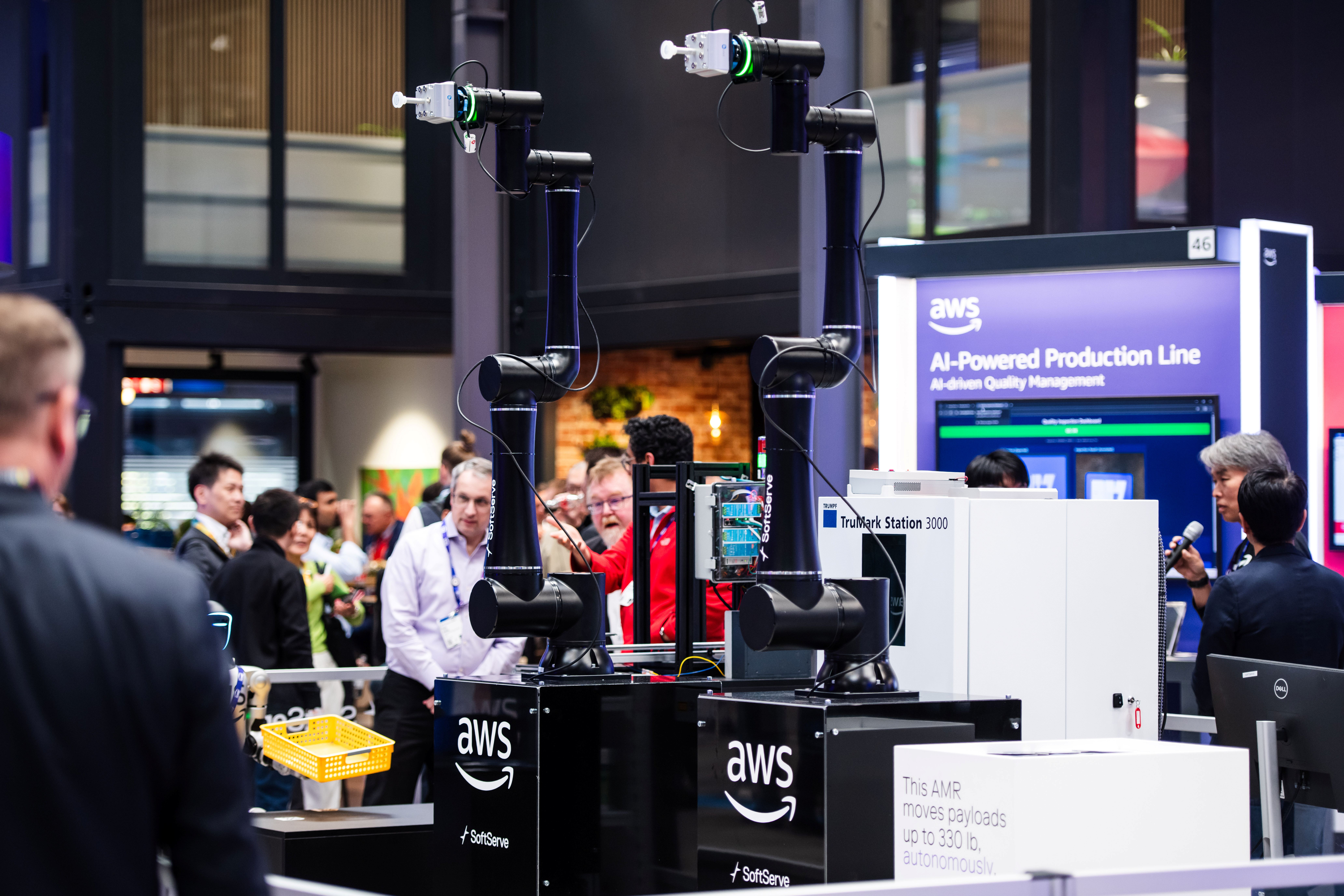
Figure 1: AI-powered Product Journey demo at Hannover Messe 2026
Engineering and development
Before a coaster reaches the production floor, it must be designed, tracked, and validated. The Engineering and Development tunnel walks attendees through how AWS connects every stage, from concept to finished product through a unified digital thread.
Product design
The first step of the demo is creating the personalized drink coaster design. AI agents guide attendees through a series of design choices, such as custom text and font style, and generates four custom designs the attendee can choose from in real time. Amazon Bedrock Guardrails validates content safety and Amazon Nova Canvas produces the custom gen AI image that is sent via MQTT to the production line.
This compresses a design cycle that typically takes weeks of iteration and manual prototyping into seconds.
AI-powered engineering workflows
Generative design is only the starting point. Amazon Bedrock AgentCore integrates with PTC Creo and PTC WindChill to bring AI directly into CAD and PLM workflows. Engineers use natural language to modify designs instantly, eliminating repetitive tasks. The AI analyzes PLM data to suggest optimal materials based on design intent and manufacturing requirements, automatically updating CAD drawings.
These integrations help engineers reduce design iteration cycles from weeks to hours, cut prototype costs, and accelerate time-to-market, keeping engineers focused on innovation rather than manual CAD operations.
Building a digital thread
A product design is only as useful as the systems that carry it forward. Most manufacturers struggle with disparate data silos, PLM, ERP, MES, and SCM systems that don’t communicate, leading to inconsistent data, slow decision-making, and delays in industrialization.
Using Amazon Bedrock, you can build a manufacturing digital thread: a unified data foundation that connects every stage of the product lifecycle from design specifications to manufacturing records to quality outcomes. Developing a digital thread reduces information retrieval time and provides complete context for decision-making on production insights, traceability, quality, and customer data, all automatically connected through graph-based relationships.
In the demo, a conversational digital thread assistant answers questions on production insights, traceability, quality trends, and customer data through a single interface, querying PLM, ERP, MES, and SCM systems simultaneously. Context-aware intelligent assistants access secure enterprise data through specialized agents using advanced semantic search powered by Retrieval-Augemented Generation (RAG) and knowledge graphs, transforming rigid data structures into searchable, semantic layers.
The digital thread gives AI systems the context to make intelligent decisions rather than following pre-programmed instructions. Without it, robots are just automation. With it, they become autonomous.
AI-powered training and simulation
Before a robot touches the factory floor, it needs to learn how to operate there. Traditional robotics development is slow, expensive, and requires massive amounts of real-world data. Physical prototyping risks damaging costly equipment, and traditional simulation requires expensive on-premises RTX workstations that take weeks to set up.
Physical AI enables robots to perceive their environment, reason through decisions, and adapt to variability, but training these capabilities requires a complete edge-to-cloud infrastructure. AWS and NVIDIA provide it:
Synthetic data generation: NVIDIA Cosmos World Foundation Models on Amazon EKS transform hours of human demonstrations into thousands of diverse training scenarios, eliminating the data bottleneck.
Distributed training: AWS Batch orchestrates training across NVIDIA H100-powered instances, reducing training time from weeks to hours. Reinforcement learning (NVIDIA Isaac Lab) develops adaptive behaviors; imitation learning (NVIDIA GR00T N1.5) enables precise manipulation tasks.
Physics-accurate simulation: NVIDIA Isaac Sim on Amazon EC2 provides on-demand photorealistic environments to test thousands of scenarios in parallel, safely validating robot behaviors before real-world deployment, with no upfront hardware investment.
Sim-to-real deployment: Trained models deploy to NVIDIA Jetson Thor edge devices through AWS IoT Greengrass, with bidirectional telemetry for monitoring and continuous improvement.
The demo also featured Neural Concept, a physics-based AI platform running natively on AWS that reduces Computational Fluid Dynamics (CFD) simulation time from 4 days to 6 seconds, enabling unlimited design iterations within existing timelines.
This approach lets teams train sophisticated robot behaviors in days instead of months, test safely before deploying, and scale from one robot to fleet-wide automation, bridging the simulation-to-real gap that stalls most AI robotics pilots.
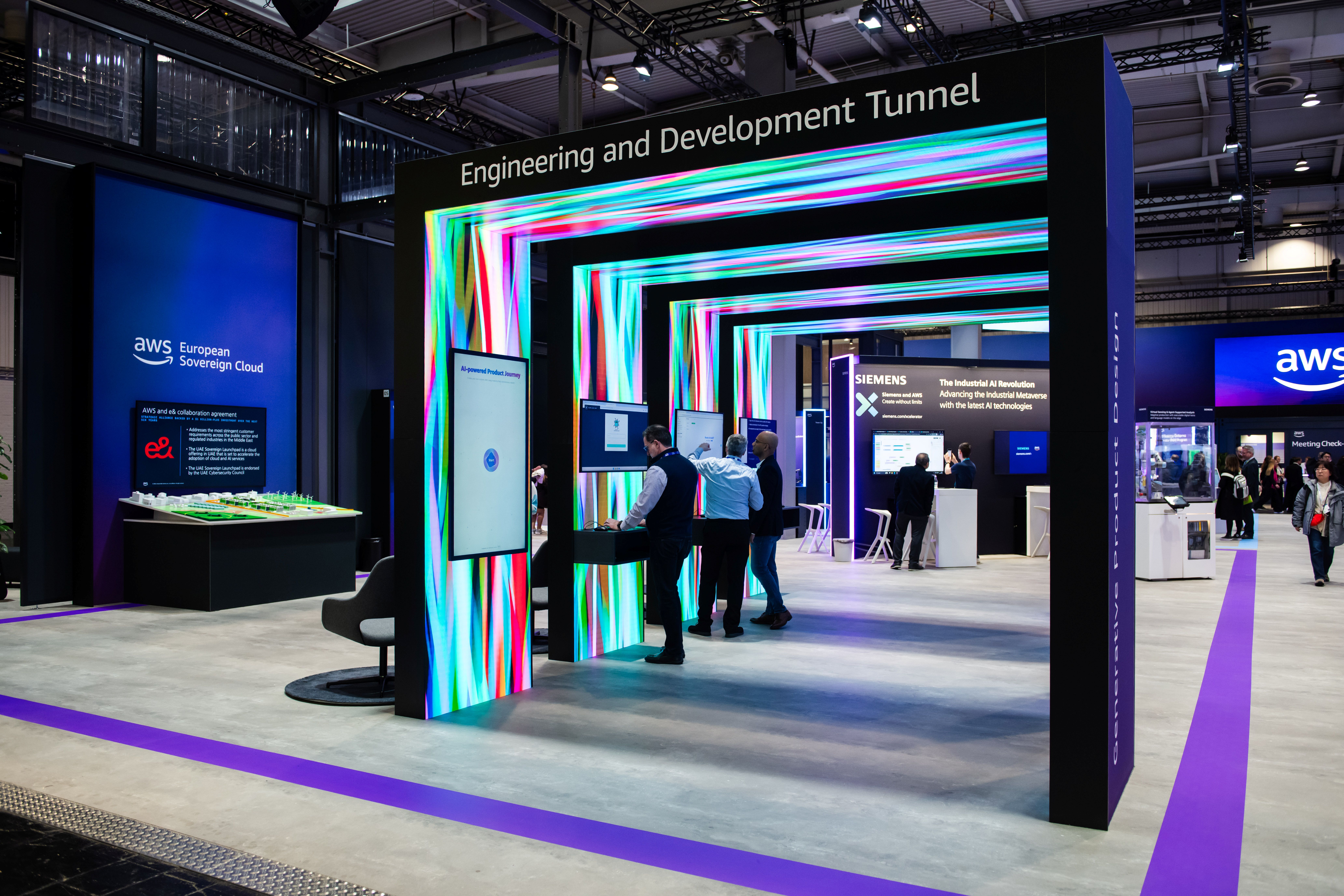
Figure 2: Engineering and development tunnel at Hannover Messe 2026
Smart manufacturing
With the digital thread in place, the demo moves to the production floor. Here, robots don’t execute pre-programmed tasks. They perceive their environment, reason through decisions, and act without human intervention.
Three capabilities make this possible: AI-powered automation, agentic orchestration, and automated quality inspection, each running across multi-vendor equipment.
Autonomous production and multi-fleet orchestration
With robot policies trained in simulation, the line runs itself. SoftServe and AWS integrated robotic arms, an autonomous mobile robot (AMR), a humanoid robot, a quality vision system, and a laser engraver into one unified ROS2-based environment, demonstrating multi-fleet orchestration across vendors.
The production flow:
- A Rockwell Automation OTTO100 AMR detects low stock and autonomously navigated from inventory to the workstation, avoiding obstacles and optimizing its route in real time.
- A StandardBots cobot uses chaos picking, powered by advanced computer vision with Meta SAM3 and depth cameras, to identify, grasp, and manipulate coaster blanks in unpredictable orientations, without pre-programmed movements.
- The cobot loads each blank into a Trumpf laser engraver, where custom designs are queued and produced, enabling mass customization of personalized units at scale.
- Agentic AI via Amazon Bedrock AgentCore coordinates the entire workflow, decomposing goals into executable steps, routing orders to the right station, and adapting when conditions changed. Predictive maintenance agents monitor real-time telemetry from IoT sensors on the engravers, automatically generating maintenance procedures and scheduling technicians when patterns indicated a need.
This approach lets teams deploy the best robot for each task regardless of vendor, orchestrate them as a unified system under a single control layer, and maintain flexibility to swap or add equipment as needs evolve, without re-architecting.
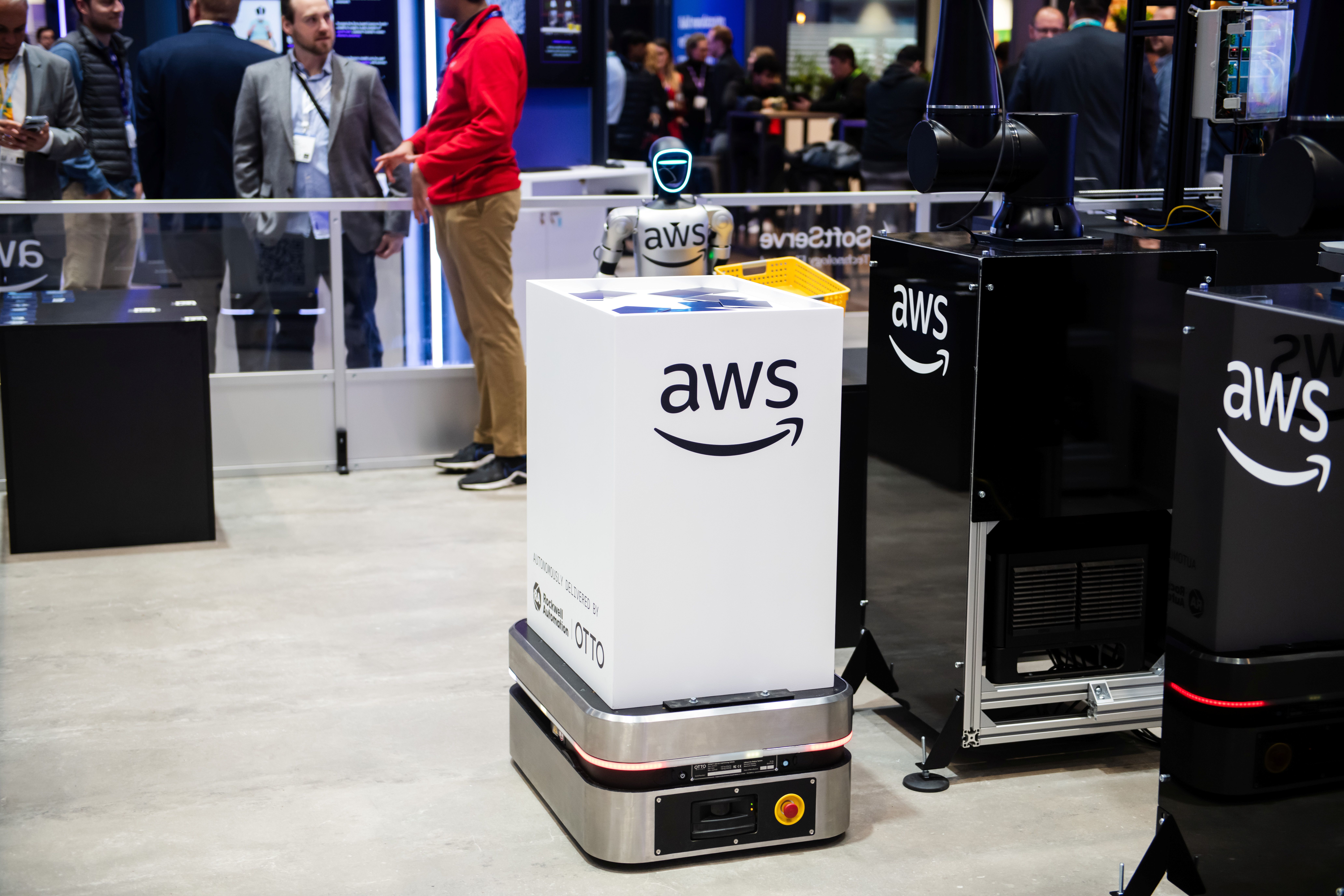
Figure 3: Rockwell Automation OTTO100 AMR moving raw material around production line
AI-powered quality inspection
After engraving, a robotic arm places each coaster in a quality inspection station. Amazon Nova Pro analyzes the captured image using the original design as reference, comparing dimensional accuracy, surface quality, and structural defects with a pass/fail determination in under 5 seconds.
Two features made this especially powerful:
- Zero training data required. Amazon Nova Pro eliminates the time, cost, and data science expertise traditionally needed to build, train, and maintain vision-based defect detection models. Quality criteria are updated through simple prompt changes.
- Autonomous root cause analysis. When a defect is detected, an AI agent built on Amazon Bedrock AgentCore traces the issue to its source, correlating IoT data, production records, and inspection results, identifying root causes in minutes rather than hours and reducing defect propagation across the line.
This helps improve product quality rates, reduce inspection setup time for new products, and close the loop between defect detection and resolution automatically.
Fulfillment and delivery
Once a coaster passes quality inspection, the robotic arm places it in a basket held by a Unitree humanoid robot. The humanoid carries the finished product to the delivery table, where attendees collect their custom-designed coaster.
Humanoid robots navigate unstructured environments, handle varied objects, and interact with people, capabilities that open up fulfillment, logistics, and last-mile tasks that were previously impossible to automate. Powered by NVIDIA Jetson Thor for edge inference and AWS IoT Greengrass for fleet management, humanoid automation is ready for environments where cobots and AMRs can’t reach.
Teams can extend autonomous operations beyond the production line into packaging, fulfillment, and customer handoff, reducing manual labor in the last steps where it traditionally persists.
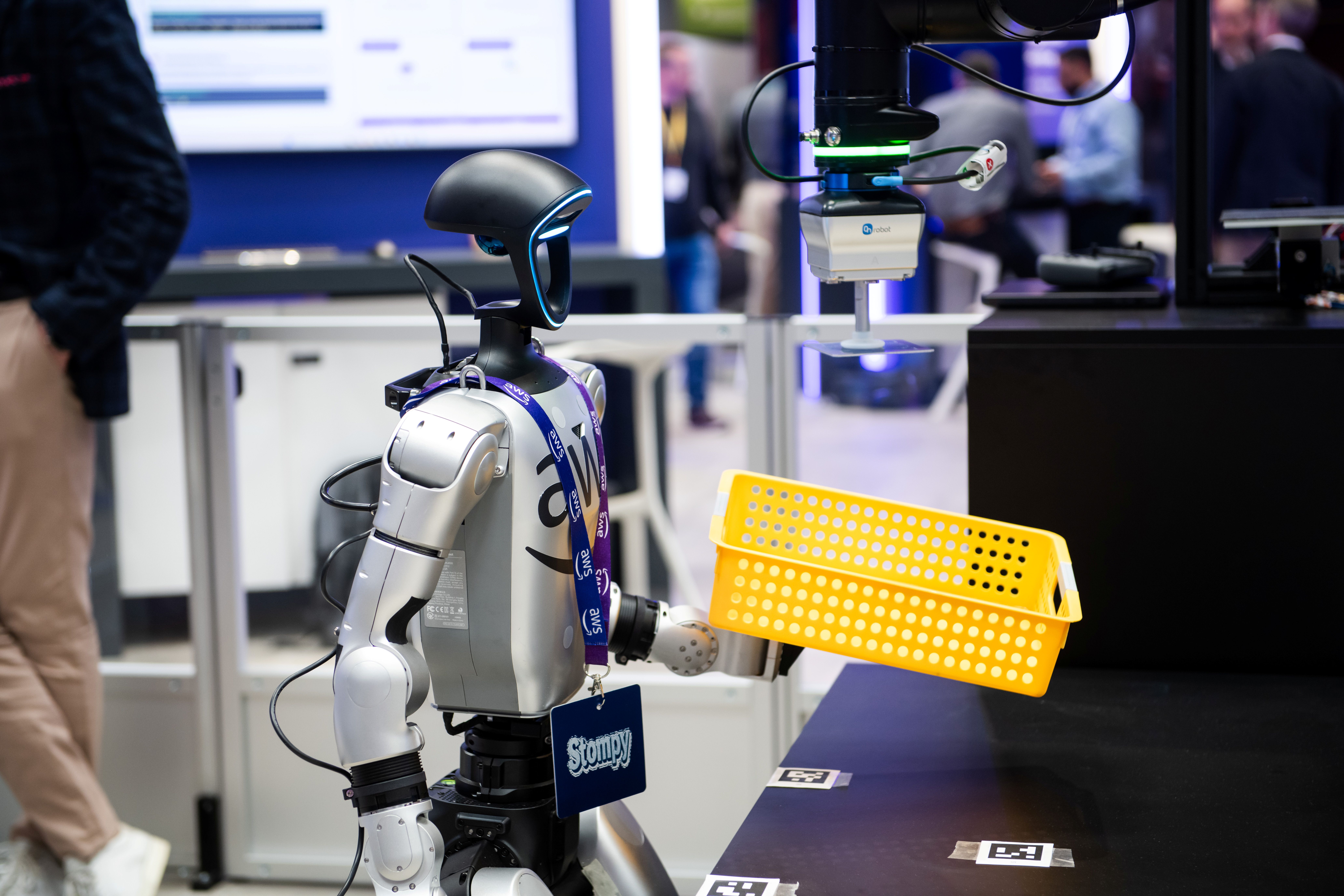
Figure 4: Humanoid robot waiting to receive coaster to deliver to the fulfillment area
How SoftServe and AWS brought the concept to life
SoftServe and AWS delivered the manufacturing cell using a simulation-first methodology that any manufacturer can replicate.
The SoftServe team built a digital twin in NVIDIA Isaac Sim before physical hardware arrived. They validated robot behaviors, optimized motion paths, and identified integration issues in simulation. When hardware shipped, the transition from digital twin to physical deployment took days, not months.
ROS2 (Robot Operating System 2) provided the middleware layer that enables coordination across all hardware regardless of vendor, proving that multi-fleet systems can be built on open standards rather than proprietary integrations.
An AI-driven workflow replaced rigid automation scripts with adaptive orchestration. The AI agent managed decisions across all stations—from order intake to engraver control to delivery—and adapted when conditions changed on the line. This included custom integrations for robotic loading sequences and cloud communication with the AI orchestrator, proving that intelligent systems can work with existing manufacturing equipment.
The result: a production cell that ran continuously for five days at Hannover Messe 2026, manufacturing custom coasters from order to delivery. For teams evaluating similar deployments, this approach provides a replicable model: build the digital twin first, validate in simulation, then deploy to physical hardware with confidence.
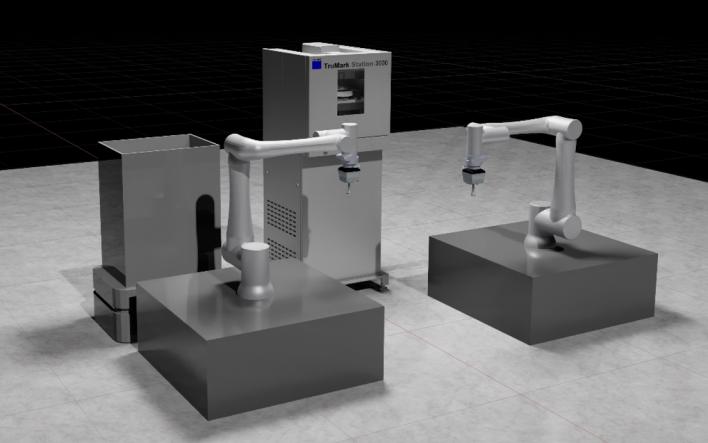
Figure 5: Digital twin of demo in NVIDIA Isaac Sim
Move from pilot to production
In this post, we walked through the AI-Powered Product Journey, a fully operational autonomous production line that manufactured custom coasters from design to delivery at Hannover Messe 2026. We showed how a digital thread foundation, simulation-first training, and agentic orchestration work together to close the three gaps that stall most autonomous manufacturing deployments: the sim-to-real gap, integration complexity, and ROI justification.
The services behind this demo — Amazon Bedrock AgentCore, NVIDIA Isaac Sim on Amazon EC2, AWS IoT Greengrass, and Amazon Nova Pro — are available today. SoftServe’s simulation-first methodology provides a replicable model for teams ready to move beyond pilots.
Start with the digital thread. Train in simulation. Deploy to hardware with confidence.
Get started
To learn how AWS can help you deploy autonomous manufacturing at scale, visit AWS for Manufacturing. If you’re evaluating a similar deployment, we’d love to hear about your use case, tell us in the comments.