Networking & Content Delivery
Category: Learning Levels

Integrating sub-1 Gbps hosted connections with AWS Transit Gateway
Update August 8,2022: AWS Direct Connect now supports connections to AWS Transit Gateway at speeds of 500 megabits per second (Mbps) and lower. The architecture described in this post is no longer needed. AWS Transit Gateway provides you with the ability to connect multiple VPCs, VPNs and scale up to 5,000 attachments. It simplifies management […]

Accelerating WordPress with CloudFront using the AWS for WordPress Plugin
AWS for WordPress WordPress is a technological marvel in the number of internet sites it powers and the momentum with which developers actively contribute to the community. Recent estimates put WordPress at powering more than 34% of internet sites, and more than 50,000 plugins are available through WordPress.org covering everything from security enhancements to SEO […]
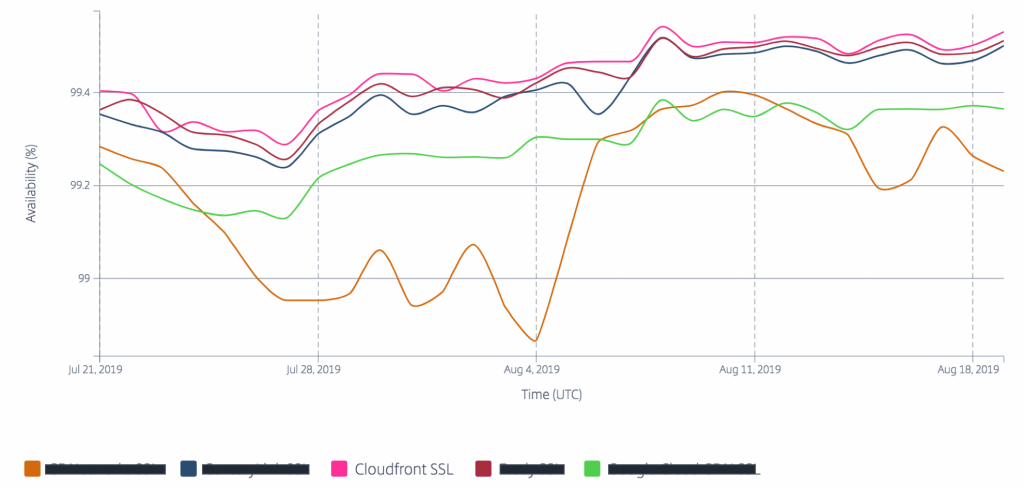
Using multiple content delivery networks for video streaming – part 1
Introduction Today, viewing video content is a prevalent form of online activity whether in entertainment, education, marketing, or information. For example, as a Solutions Architect at AWS, I tend to watch hours of video a week to learn about technologies, and I also leverage video content to convey ideas and best practices in a scalable […]

Analyzing and visualizing AWS Global Accelerator flow logs using Amazon Athena and Amazon QuickSight
AWS Global Accelerator simplifies multi-region cloud deployments while leveraging the AWS vast, highly available, and congestion-free global network. Global Accelerator uses a pair of static anycast IP addresses to direct you to the application that is geographically closest and has healthy endpoints, using routing policies that you configure. This feature makes sure that you have […]

Authorization@Edge using cookies: Protect your Amazon CloudFront content from being downloaded by unauthenticated users
Enterprise customers who host private web apps on Amazon CloudFront may struggle with a challenge: how to prevent unauthenticated users from downloading the web app’s source code (for example, React, Angular, or Vue). In a separate blog post, you can learn one way to provide that security using Amazon Lambda@Edge and Amazon Cognito, with an example […]
Integrating AWS Transit Gateway with AWS PrivateLink and Amazon Route 53 Resolver
An update was made on October 6, 2025: With the availability of Amazon Route 53 Profiles, the below design approach can be greatly simplified and is no longer recommended. Instead we recommend to use of this new capability, as outlined in the blog post “Streamlining multi-VPC DNS management with Amazon Route 53 Profiles and interface […]

Migrate from Transit VPC to AWS Transit Gateway
Amazon Virtual Private Cloud (Amazon VPC) provides you with the ability to create as many virtual networks as you need. It also provides different options for connecting these networks to each other and to non-AWS infrastructure, such as on-premises data centers, remote headquarters, or other offices. Most of you start this journey with a few […]

Continually Enhancing Domain Security on Amazon CloudFront
Last year, a colleague of mine wrote a blog post about new security measures that Amazon CloudFront was implementing to enhance the security of how domains are used on CloudFront distributions. This included mitigations to prevent the abusive use of domain fronting practices by not allowing SSL handshake requests and subsequent requests over the secured […]