AWS Public Sector Blog
How agentic AI can accelerate the federal rulemaking lifecycle
Each year, federal agencies issue thousands of final rules through the Federal Register, which recently reached a record number of pages in a single year. Behind each rule is one of the most document-intensive processes in government—a journey through eight phases spanning research, drafting, clearance, public comment, analysis, revision, approval, and publication. Complex rules can take years from proposal to implementation, limiting every agency’s ability to respond to emerging safety, environmental, financial, and labor challenges.
Three bottlenecks consume most of that time: Notice of Proposed Rulemaking (NPRM) development and internal clearance, public comment analysis, and final rule clearance. Of these, comment analysis is the most severe bottleneck—agencies can receive hundreds of thousands of submissions, some containing thousands of pages of detailed analysis, and this single phase can stretch well over a year. Many agencies have invested in tools to manage comment volume, particularly for identifying duplicates using keyword matching or basic natural language processing (NLP). But these tools detect textual similarity only—they miss comments that make the same substantive argument in entirely different language or organized campaigns that vary wording to evade matching.
Agentic AI offers a fundamentally different approach. Agentic AI deploys multiple specialized agents that collaborate across the full rulemaking lifecycle—each with a focused role, access to authoritative sources, and the ability to hand off to the next. Critically, these agents can also understand intent and context, not merely match text. For comment analysis, this means agents can review entire sets of submissions to understand the substantive arguments being made, identify true duplicates regardless of how they’re worded, and surface the unique comments that require a response.
Amazon Web Services (AWS) is working with federal agencies to explore how this approach can meaningfully compress rulemaking timelines while maintaining regulatory quality and public participation requirements.
Where agentic AI fits across the lifecycle
The eight phases of rulemaking group naturally into four capability clusters where agentic AI can deliver the greatest impact. Within each cluster, specialized agents replicate the division of labor that already exists in practice—researchers, drafters, and reviewers are different people with different expertise—while operating at machine speed. The four capability clusters are:
- Pre-rulemaking and research synthesis – Agents can continuously monitor safety databases, inspector general reports, legislation, court decisions, and stakeholder petitions, flagging issues that warrant regulatory attention. Agentic systems can independently formulate research strategies, query multiple information sources, synthesize findings across disparate datasets, identify gaps in available information, and compile baseline data for regulatory impact analysis. This autonomous navigation of information landscapes can dramatically accelerate the preliminary research phase.
- NPRM development – Agents can generate initial regulatory text from policy outlines, produce preamble language citing statutory authority, create technical specifications based on engineering standards, cross-reference existing regulations for consistency, and format documents to Federal Register style. A separate compliance agent can review drafts against the Administrative Procedure Act (APA), applicable executive orders governing regulatory review, and agency-specific requirements, verifying that all required analyses are complete, citations are correct, and potential legal vulnerabilities are flagged before the draft moves to clearance.
- Public comment analysis – Agentic AI can move agencies beyond existing tools in ways that benefit both the agency and the public. Agents can identify comments that make the same substantive argument regardless of phrasing, catch coordinated campaigns that vary wording to evade matching, and distinguish between genuinely unique comments and paraphrased duplicates. Rather than waiting until the comment period closes, agents can monitor incoming submissions in real time—clustering by theme, flagging emerging campaigns, and giving agencies a head start on what is typically the longest phase. On the public side, an AI assistant could help citizens structure their feedback more effectively, identifying whether a similar comment already exists, suggesting how to frame novel arguments, and ensuring submissions address the specific questions posed in the NPRM.
- Final rule, clearance, and publication – Agents can revise regulatory text to incorporate comment-driven changes, generate comprehensive responses to comments, coordinate parallel reviews across divisions, and track the clearance workflow through departmental and Office of Information and Regulatory Affairs (OIRA) review. Version control across multiple review iterations—a persistent pain point in complex rulemakings—becomes an automated capability. Finally, agents can ensure the finished rule meets Federal Register publication formatting and compliance standards before submission.
The following graphic illustrates these capability clusters, with agentic AI capabilities mapped to each. Specialized agents serve focused roles across the full lifecycle.
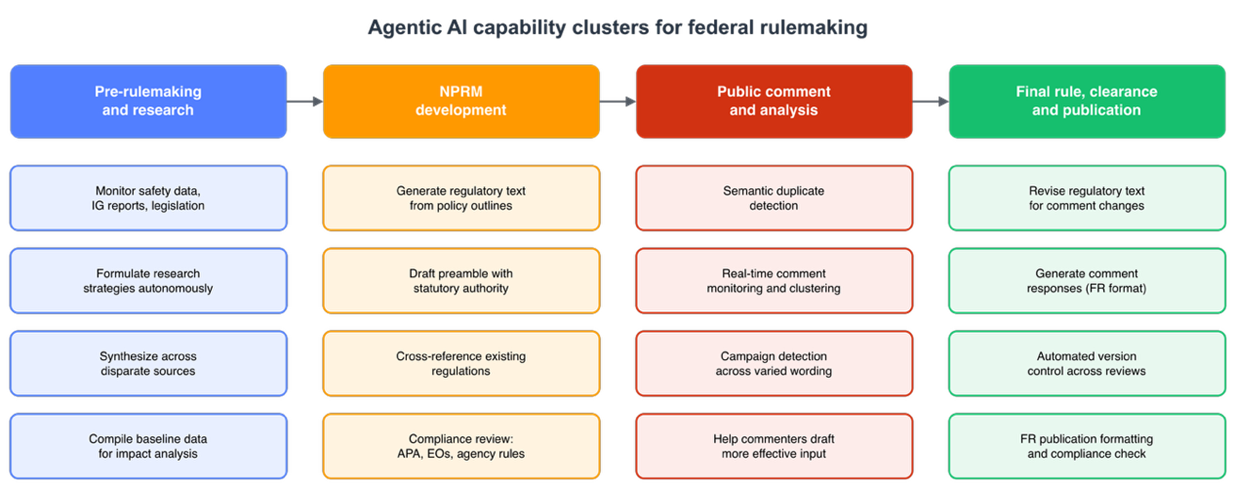
Figure 1: The eight phases of federal rulemaking grouped into four capability clusters
Orchestrating the workflow itself
Another advantage with agentic AI is its ability to manage the operational complexity of rulemaking itself. Traditional robotic process automation follows rigid preset rules and breaks when processes change. Agentic AI uses contextual reasoning to understand situations, make judgment calls within defined parameters, and adapt in real time.
For federal rulemaking, this means an agentic system can autonomously manage the sequential dependencies and parallel workflows that characterize the regulatory process:
- Phase transitions – Monitor the status of each rulemaking phase, identify when prerequisites for the next phase are complete, and initiate handoffs automatically.
- Intelligent document routing – Route documents to appropriate reviewers based on content analysis and subject matter expertise rather than relying on manual assignment or fixed distribution lists.
- Interagency coordination – Coordinate parallel activities such as simultaneous interagency consultations, schedule and manage review meetings, consolidate feedback from multiple reviewers, and identify conflicting recommendations requiring resolution.
- Stakeholder management – Track which stakeholders have submitted comments, identify additional stakeholders who should be consulted based on the regulatory topic, send automated status updates, maintain communication logs for transparency and accountability, and flag concerns requiring senior leadership attention.
- Exception handling – Intelligently recover from unexpected conditions—missing information, conflicting feedback, deadline changes, personnel transitions—finding alternative paths rather than failing.
Crucially, these agents maintain comprehensive audit trails of all actions taken, providing the traceability that regulated environments demand.
In the following graphic, an agentic orchestrator on Amazon Bedrock coordinates specialized agents, manages workflow capabilities, draws from authoritative knowledge bases, and escalates to human oversight for substantive policy decisions.
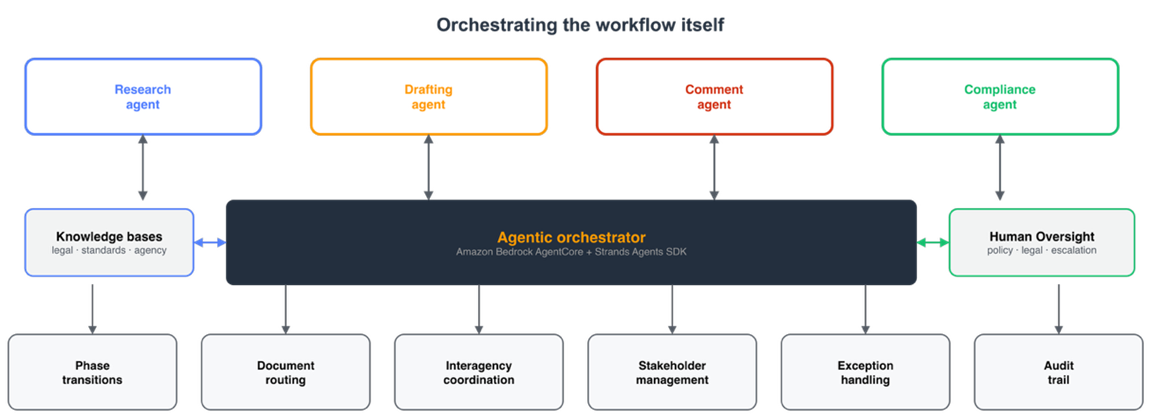
Figure 2: The autonomous orchestration layer
Grounding agents in Amazon Bedrock Knowledge Bases makes AI-generated content traceable to authoritative sources rather than relying on model training data alone. Amazon Bedrock provides flexible deployment options for agentic workloads, from open frameworks like the Strands Agents SDK running on Amazon Bedrock AgentCore to fully managed deployments through Amazon Bedrock Managed Agents. Either way, agents provide natural checkpoints between phases so you can rerun research without regenerating the draft or revise compliance checks without repeating upstream work.
Governance and human oversight
Deploying AI in rulemaking demands a governance framework that is as deliberate as the regulatory process itself. Under current Office of Management and Budget (OMB) guidance, agencies must implement minimum risk management practices for high-impact AI, including pre-deployment testing, impact assessments, ongoing monitoring, and human oversight mechanisms.
The key principle is that agentic AI can autonomously manage workflow routing, document tracking, stakeholder coordination, and content generation, but human experts must retain decision-making authority for substantive policy questions, regulatory interpretations, and responses to significant public comments. This boundary is not a limitation of the technology. It reflects the reality that rulemaking involves judgment calls that carry legal weight, and the public has a right to know that those judgments are made by accountable human decision-makers.
Agencies should establish clear use policies specifying which tasks are appropriate for AI assistance, create quality assurance processes to detect and correct AI errors, ensure transparency about AI use in the rulemaking process, and train staff on effective AI oversight. The goal is augmentation, not replacement, which frees experts from mechanical processing so they can focus on the policy judgments that require human insight.
A phased approach for agency leaders
Implementing agentic AI for rulemaking doesn’t require an all-or-nothing commitment. Agencies can build capability in stages:
- Augment existing tools – Enhance comment deduplication with semantic understanding, add real-time monitoring during open comment periods, and deploy AI for document formatting and Federal Register compliance. These are high-volume, lower-risk applications that deliver immediate value while building organizational confidence.
- Agentic drafting and analysis – Introduce specialized agents for NPRM development—research agents grounded in authoritative knowledge bases, drafting agents for regulatory text and preambles, and compliance agents for legal review. Expand comment analysis to include substantive summarization, preliminary response drafting, and commenter-facing AI assistance.
- Full lifecycle orchestration – Deploy the complete multi-agent pipeline from pre-rulemaking research through final clearance, with an orchestrator coordinating phase transitions, managing parallel reviews, handling exceptions, coordinating stakeholder communications, and maintaining an auditable record of every decision point.
Getting started
Federal rulemaking is structured, document-intensive, and high-impact—a natural fit for agentic AI. The technology is mature enough for deployment in lower-risk applications today, with more sophisticated capabilities following as agencies gain experience. To explore how these workflows can transform your agency’s regulatory operations, visit Amazon Bedrock or contact your AWS account team.