AWS Public Sector Blog
How government agencies can transform cybersecurity operations with Amazon Bedrock AgentCore
Government agencies are facing a cybersecurity challenge. Traditional security information and event management (SIEM) systems generate thousands of alerts on a daily basis, overwhelming security operations center (SOC) analysts who spend countless hours manually investigating incidents. Studies show that 70% of alerts turn out to be false positives. This reactive approach creates critical vulnerabilities: alert fatigue, skill shortages, delayed response times, and inconsistent analysis quality.
Agentic AI systems can transform security monitoring from reactive to proactive operations. Unlike traditional rule-based systems, agentic AI can reason through complex threat patterns, plan multistep investigation strategies, act autonomously to run security workflows, learn continuously from new threat intelligence, and collaborate through coordinated AI agents for thorough analysis. For government agencies facing sophisticated nation-state actors and complex regulatory requirements, this shift from manual processes to intelligent automation can deliver measurable improvements in threat detection, response times, and compliance documentation.
This post explores how government agencies can implement agentic AI for security monitoring on Amazon Web Services (AWS) using Amazon Bedrock AgentCore, a solution for deploying and operating AI agents more securely at scale. We created an Agent Graph architecture pattern that delivers intelligent, automated threat detection and response capabilities while maintaining the compliance, auditability, and structured workflows government operations demand.
Using agents for government security
Agentic AI systems are increasingly being built using a multi-agent architecture, meaning multiple agents collaborate on complex goals. There are four primary coordination patterns used in this architecture: Agents as Tools, Swarms Agents, Agent Graphs, and Agent Workflows. For a detailed understanding of these different patterns, you can refer to Multi-Agent collaboration patterns with Strands Agents and Amazon Nova.
For government security operations, the Agent Graph pattern provides critical advantages that align with public sector requirements. It provides predictable escalation paths: Each security incident follows documented procedures, creating the consistency regulatory audits require. With this pattern, government agencies can demonstrate compliance with established security protocols.
The pattern provides clear chains of custody, maintaining evidence integrity throughout the investigation and response process and preserving the forensic documentation necessary for potential legal proceedings or oversight inquiries. It also features deterministic decision-making, providing the repeatability and transparency of frameworks such as those demanded by the National Institute of Standards and Technology (NIST), the Federal Risk and Authorization Management Program (FedRAMP), and the Federal Information Security Modernization Act (FISMA). Similar threats receive consistent treatment while maintaining audit trails for regulatory compliance and accountability. The following figure illustrates an Agent Graph architecture pattern specifically designed for government security operations:
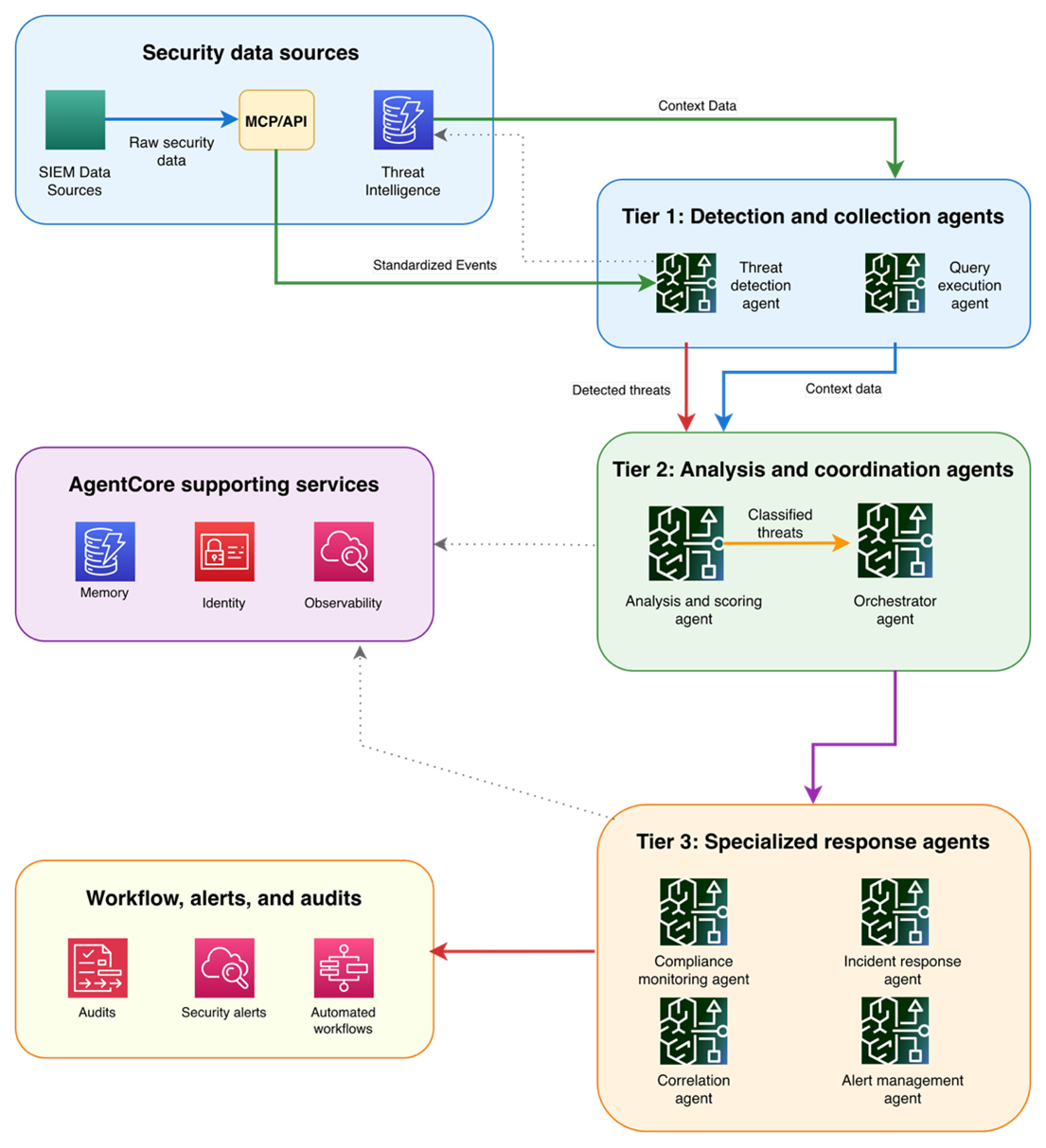
Figure 1: Architecture pattern for government security operations with agents
The architecture works in three distinct agent tiers that mirror government organizational structures and security clearance requirements.
Tier 1: Automated threat detection and data collection
There are two types of agents that serve as the primary sensor layer for security operations:
- Threat detection agent – Continuously monitors SIEM data streams through the Model Context Protocol (MCP), an open source standard that provides a universal interface AI agents can use to connect with external data sources and tools. If the offering doesn’t provide an MCP server, the appropriate API can be used. The agent analyzes security events in real time, identifying potential threats and anomalies that require investigation. It also stores these threats in threat intelligence databases for historical purposes.
- Query execution agent – Runs coordinated queries against the threat intelligence database to gather context when the threat detection agent identifies suspicious patterns.
Tier 2: Intelligent analysis and coordination
There are two types of agents that run the structured decision-making government operations require:
- Analysis and scoring agent – Applies AI-powered classification to assess threat severity and potential impact. The agent evaluates multiple factors including attack vectors, targeted assets, potential blast radius, and alignment with known threat actor techniques to generate standardized threat scores.
- Orchestrator agent – Serves as the central coordination hub, routing classified threats through appropriate response pathways based on threat type, severity, and organizational policies. Each security incident follows established procedures while adapting to specific threat characteristics.
Tier 3: Specialized response capabilities
There are four types of specialized agents that run coordinated responses within their defined roles. These agents interact with other AWS services to run multistep response procedures with appropriate checkpoints for human approval:
- Correlation agent – Performs cross-environment event correlation, identifying potential relationships between seemingly unrelated security events across different SIEM systems, time periods, or agencies. It helps detect sophisticated multistage attacks traditional systems might miss.
- Incident response agent – Automates procedural aspects of incident response, running established containment and remediation procedures while maintaining approval workflows and documentation requirements. Critical decisions still require human authorization, providing appropriate oversight.
- Compliance monitoring agent – Operates continuously across security activities, confirming each action meets regulatory requirements. It generates detailed audit documentation and maintains real-time compliance posture. This agent alerts administrators to potential violations.
- Alert management agent – Manages complex notification and escalation requirements. This agent is in charge of informing the right officials through appropriate channels based on threat severity and organizational hierarchy.
Implementing the architecture with Amazon Bedrock AgentCore
Amazon Bedrock AgentCore provides the essential capabilities needed to address the challenges that can be associated with the implementation of agents. The service includes AgentCore Runtime, which provides a serverless purpose-built hosting environment for deploying and running AI agents at scale. It facilitates a highly secure, isolated execution environment with rigorous data protection for each agent session, making it suitable for the strict compliance needs of government organizations. AgentCore Memory provides persistent context, which means agents can learn from past incidents while maintaining data sovereignty and security controls. Agents can reference historical threat patterns, previous investigations, and organizational response precedents to improve decision-making over time.
Government organizations need robust identity management solutions that can handle the unique challenges associated with non-human identities, such as agents. AgentCore Identity addresses these challenges, supporting the complex authentication requirements of government environments while facilitating more secure access to AWS services and third-party applications. AgentCore Observability provides the sophisticated monitoring and audit capabilities government agencies need for oversight and compliance through Amazon CloudWatch. With OpenTelemetry-compatible telemetry and detailed visualizations of agent activities, government leaders can demonstrate accountability and maintain the transparency required for public sector operations.
Measurable benefits for government agencies
This architecture pattern based in agentic AI can deliver measurable benefits for government agencies, including a reduction in security incident investigation time through structured agent coordination, audit compliance maintained through built-in workflow documentation, improvement in threat detection accuracy through consistent analysis procedures, and a reduction in false positive alerts through structured scoring and correlation.
The Agent Graph pattern can transform government cybersecurity operations from reactive, resource-intensive processes into proactive, AI-driven capabilities that enhance security effectiveness while providing the compliance, accountability, and transparency public sector operations demand.
Conclusion
Agentic AI presents a transformational opportunity for government agencies to modernize their cybersecurity operations. By implementing appropriate architecture patterns with Amazon Bedrock AgentCore and MCP integration on AWS, agencies can achieve significant operational improvements while providing traceability for their security decisions, facilitating regulatory compliance and oversight.
Government leaders who are ready to transform their cybersecurity posture can begin by assessing their current SIEM infrastructure, identifying MCP integration opportunities, and developing a phased implementation plan that uses existing technology investments while building toward a future based in intelligent, automated security.
Additional resources
- AWS Security Blog
- Amazon Bedrock AgentCore documentation
- Amazon Bedrock AgentCore example repository
This post demonstrates an architecture pattern of agentic AI for security monitoring on AWS. For questions about implementing this pattern at your agency, contact your AWS Support team.