AWS Public Sector Blog
Orygen delivers virtual therapy anywhere with Amazon GameLift Streams
For many young people experiencing mental health challenges, entering a clinical setting can feel overwhelming. Anxiety, trauma, or social withdrawal can make traditional therapy environments difficult to access, even when support is urgently needed. With up to 75 percent of mental health conditions emerging before the age of 25, early engagement and accessible pathways to care are critical to long-term outcomes.
Orygen, a globally recognized youth mental health research organization based in Melbourne, Australia, is exploring a different model. The organization is creating new ways for young people to engage with therapy from whatever device they have, wherever they are by combining immersive virtual environments with clinical practice and streaming them through Amazon Web Services (AWS).
When technology designed to help becomes a barrier
The Orygen Digital extended reality (XR) Innovation Lab’s vision is to deliver virtual reality (VR)-enhanced therapy as an effective, globally scalable intervention for young people experiencing mental health challenges. One of their projects is Orygen Virtual Worlds (OVW).
Young people who struggle to leave their homes can access group sessions through OVW remotely on their computer and move through activities designed to encourage discussion and emotional engagement. In OVW, participants choose and customize a virtual avatar before joining group therapy sessions:
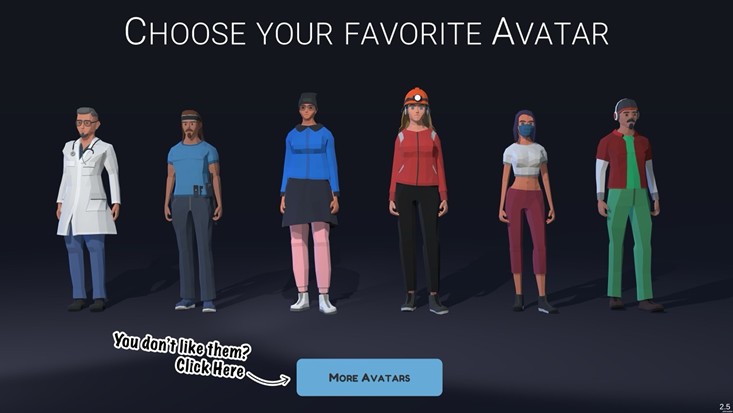
Figure 1: Avatar selection screen in Orygen Virtual Worlds
They then travel to an island where, alongside group therapy, participants can engage in activities such as hide and seek, spin the wheel, and breathing exercises.
One of the most powerful settings is a virtual campfire where participants sit together and speak with one another using online voice chat while a trained moderator guides the conversation. The team uses a technique to direct conversation by holding a virtual basketball and passing it to the next person they want to hear from.
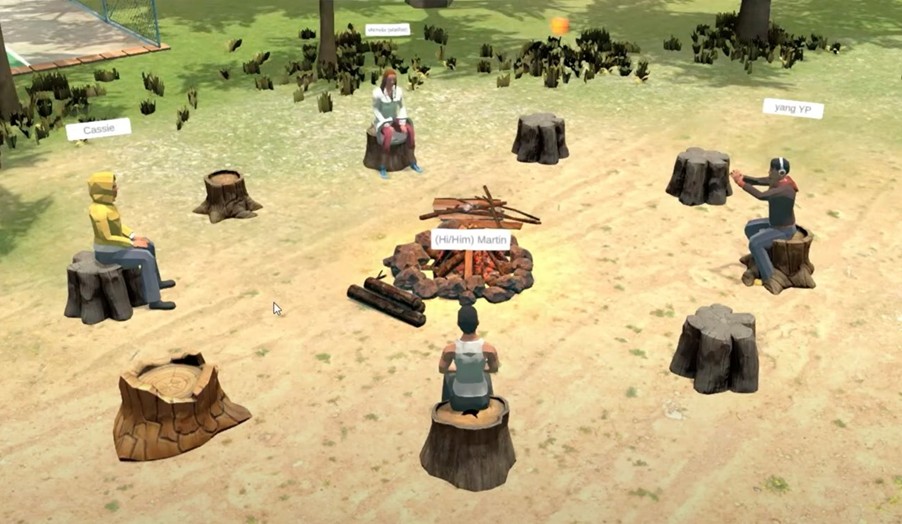
Figure 2: Virtual campfire group therapy setting
The format resembles a familiar multiplayer game, but the objective is therapeutic, with built-in activities co-designed with group therapy clinicians to make them fun while being purposeful. The environment creates a sense of presence and connection without the pressure of a face-to-face setting. For a young person who hasn’t left their home in weeks, joining a session from their bedroom is a significantly more manageable first step than attending a clinic in person.
Early sessions demonstrated the approach’s potential, but the team quickly encountered a major technical barrier. The application required direct installation on a participant’s device and demanded high hardware specifications, particularly dedicated graphics processing unit (GPU) processing power, to render virtual environments in real time. Many of the young people participating didn’t have access to suitable devices. Some were using school-issued Chromebooks while others had tablets, and many had older laptops without advanced graphics cards.
Even when compatible hardware was available, software downloads, configuration steps, and operating system compatibility issues made onboarding difficult for both participants and clinicians.
Streaming immersive therapy from the cloud
The breakthrough came when, supported by the AWS team, the Orygen Digital XR Lab explored running the application in the cloud rather than on local devices. Using Amazon GameLift Streams, a fully managed service that streams interactive applications from the cloud to any device through a web browser, GPU-enabled AWS infrastructure now hosts the Unity application. Instead of rendering graphics locally, the virtual environment runs on powerful cloud instances and streams to the participant’s device in real time through a standard web browser.
This shift fundamentally changes the solution’s accessibility. The graphical workload runs on cloud GPUs designed for high-performance rendering, while the participant’s device receives a video stream and sends back inputs such as keyboard, mouse, or controller actions. As long as a participant has a stable internet connection and a browser, the experience runs smoothly whether it’s on a Chromebook, tablet, phone, or older laptop. If a participant can stream video, they can join therapy. This architecture illustrates how the Orygen Unity application runs on cloud GPUs and streams to participants’ devices through Amazon GameLift Streams:
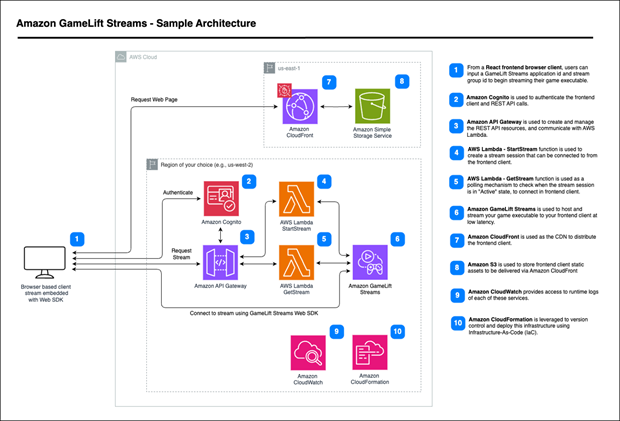
Figure 3: Amazon GameLift Streams example reference architecture
The conversations around the virtual campfire rely on real-time voice chat, and the sense of shared presence depends on immediate feedback between participants. Using high-performance networking infrastructure, the Orygen Digital XR Lab team minimizes latency to deliver a responsive experience that feels natural.
Most importantly from a clinical perspective, onboarding friction has been eliminated. Instead of requiring participants to download software or own high-specification hardware, clinicians now send a link that launches the experience in a browser. The virtual environment loads from the cloud and streams to the participant’s screen. Once they’re inside, participants can explore a shared world where group therapy blends with interactive activities.
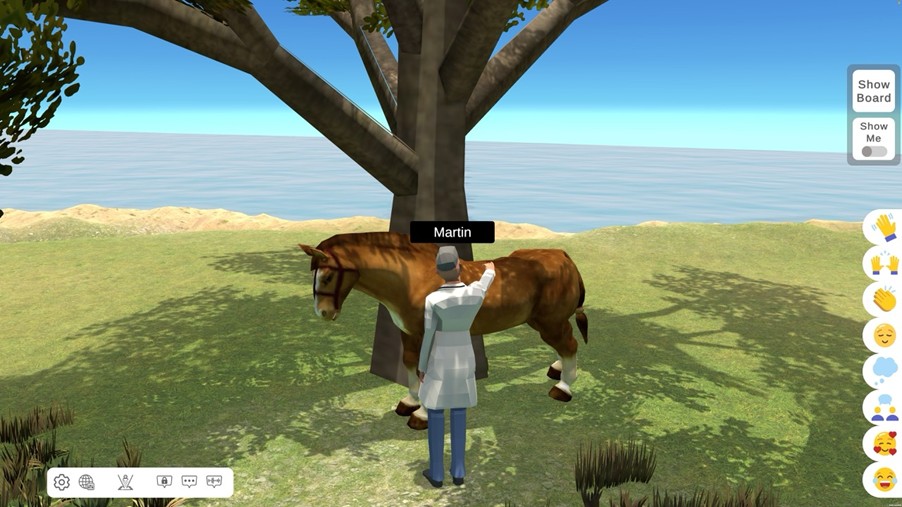
Figure 4: Exploring and interacting in Orygen Virtual Worlds
Measurable impact on reach
OVW has already demonstrated powerful clinical results. Across four groups, 90 percent of participants could attend in-person therapy for the first time after taking part in virtual world sessions. A study entitled Feasibility and acceptability of Orygen Virtual Worlds: a virtual world platform for delivering youth mental health treatment confirmed that virtual world-based interventions are a safe and engaging way to deliver mental health support to young people.
Previously, this success was only accessible to participants with high-performance, GPU-enabled laptops. This barrier is lifted by moving to Amazon GameLift Streams. The same clinically effective experience is now available to anyone with a browser and an internet connection. This seamless process is critical when working with a population who might disengage at the first sign of technical difficulty.
What’s next
The work is still evolving and building on the success of early trials, but the direction is clear. When immersive therapeutic environments combine with scalable, cost-effective cloud infrastructure, it becomes possible to deliver new forms of care that meet young people on their own terms. For some participants, joining a moderated conversation around a virtual campfire might be the first step toward reconnecting with others and beginning the process of recovery.
In collaboration with AWS, the Orygen Digital XR Lab can now take that step from anywhere.
To learn how cloud streaming can expand access to care in your organization, explore Amazon GameLift Streams or visit AWS for Healthcare & Life Sciences.
About Orygen
Orygen is a not-for-profit organization based in Melbourne, Australia, focusing on improving outcomes for young people aged 12–25 through research, policy development, clinical services, training, and education. Its work spans early intervention, digital mental health, and the development of new models of care designed specifically for young people experiencing emerging mental health conditions. As youth mental health becomes one of the most pressing health and economic challenges of our time, Orygen global leadership in the field has been recognized through its designation as the World Health Organization (WHO) Collaborating Centre for Young People’s Mental Health.
The Orygen Digital XR Innovation Lab is a world-leading interdisciplinary group of clinical academics, clinicians, experts by experience, and researchers working alongside VR developers. The XR Lab is led by Professor Lucia Valmaggia. Dr. Martin Reinoso is the senior XR engineer of the XR Lab.