AWS Security Blog
Introducing AWS WAF simplified pricing
Starting today, AWS WAF pricing is easier to predict. Your bill is now based on three dimensions: the resources you protect, the traffic AWS WAF inspects, and the level of protection you apply to that traffic.
Existing AWS WAF customers move to the new pricing on February 1, 2027. Until then, you keep your current pricing, and you don’t need to do anything at launch. This post explains what’s changing, how to estimate your costs under the new model, and where to find full pricing details and examples on the AWS WAF pricing page.
For new or smaller workloads, the Free plan of CloudFront flat-rate pricing plans is another way to start. If your application serves fewer than 1 million requests per month, the Free plan costs $0 per month for each CloudFront distribution. It includes AWS WAF protection against common web threats, DDoS protection, and the CloudFront CDN, with no overage charges.
Why the pricing is changing
Under the previous model, adding a protection often meant adding a charge, so every security decision was also a billing decision. The new pricing separates those two questions and makes the trade off between cost and security posture easy to see. Turning on a rule, the Bot Control common protection, or the Anti-DDoS rule group doesn’t add a subscription or a separate per-request charge. Those requests bill at the base request rate.
Capacity also stops affecting your rate. Each protection pack (web ACL) now includes up to 2,500 web ACL capacity units (WCUs), up from 1,500, and going past your included capacity no longer raises what you pay per request. The premium request fee applies only to the traffic you choose to send through advanced protections.
You can estimate costs before writing a single rule, and those estimates hold even as your rules change. Security rules change often. A new CVE or a shift in bot behavior can require a configuration update the same day. Adding, reordering, or removing rules doesn’t change your rate.
What this means for existing customers
If you already use AWS WAF, your account stays on current pricing until February 1, 2027. If you hold an AWS WAF private pricing agreement, it stays in force until it expires.
You don’t have to work out the math yourself. The AWS WAF pricing page includes worked examples that show how the three fees add up for common workloads. If you have questions about how the new pricing applies to your account, contact your AWS account team or open a Support case.
For AWS Shield Advanced subscribers, nothing changes. Your Shield Advanced subscription, its price, and your included AWS WAF entitlement stay the same. AWS WAF remains included up to 1,500 WCU per protection pack (web ACL), the resources Shield Advanced protects stay unmetered, and AWS WAF base requests remain free up to 50 billion per calendar month.
Customers on a CloudFront flat-rate pricing plan also see no change. AWS WAF stays included in your plan, and your plan’s included requests stay the same.
How the new pricing works
AWS WAF bills three fees. The resource fee is an hourly charge for each resource associated with a protection pack (web ACL). It covers resources that AWS WAF can protect, such as Amazon CloudFront distributions, Application Load Balancers, and Amazon API Gateway APIs. The base request fee applies to each request AWS WAF inspects. The premium request fee applies on top of the base request fee, to the requests that advanced protections evaluate, such as Bot Control targeted protections, Fraud Control, API Security, and AI Security. AWS WAF also launches two new managed rule groups today, API Security and AI Security. Both use the same premium request fee, with no separate subscription or rate. For the current list of advanced protections, see the AWS WAF Developer Guide.
| Fee | What it’s charged for | Rate |
| Resource fee | Each resource associated with a protection pack (web ACL), prorated hourly | $0.01 per hour (about $7.30 per month) |
| Base request fee | Each request that AWS WAF inspects | $0.60 per million requests |
| Premium request fee | Requests evaluated by advanced protections, in addition to the base request fee | $5.00 per million requests |
Requests evaluated by one or more advanced protections are billed $5.60 per million: the $0.60 base request fee plus the $5.00 premium request fee. AWS WAF charges the premium request fee once per request, however many advanced protections evaluate it. A request that Bot Control targeted protections, API Security, and AI Security evaluate is still billed $5.60 per million. A request that an earlier rule blocks before it reaches an advanced protection pays only the base request fee. For instance, a request blocked by a custom rule before it reaches Bot Control pays $0.60 per million, not $5.60.
Figure 1 shows where each previous charge lands under the new pricing model. AWS WAF also inspects request bodies up to the maximum size that each associated resource type supports, at no extra charge. For the current limits by resource type, see Considerations for managing body inspection in AWS WAF.
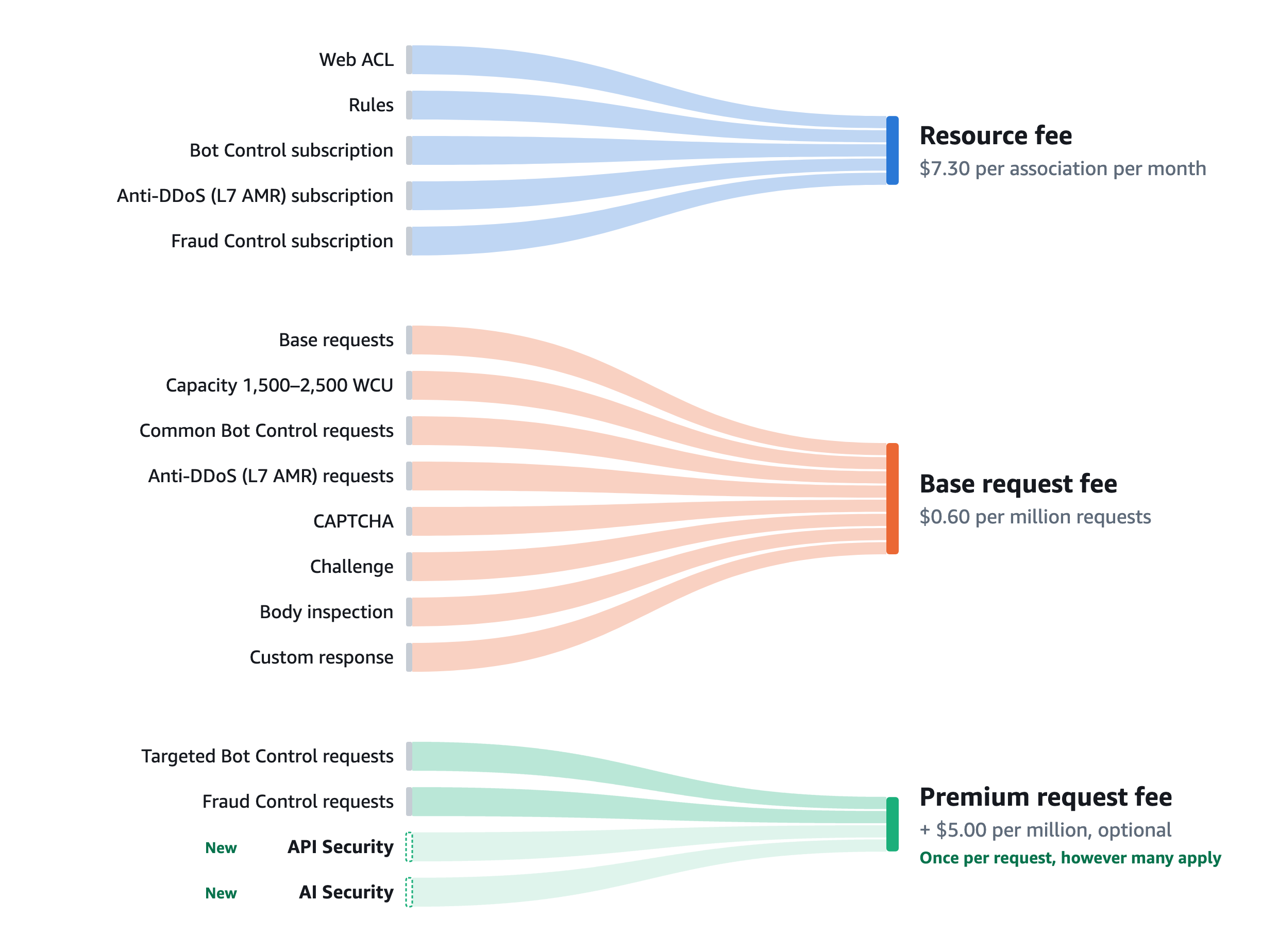
Figure 1: Mapping of previous AWS WAF pricing components to the new three-dimension model
See your traffic with the Security analytics dashboard
The new pricing also includes the Security analytics dashboard. The dashboard shows full traffic metrics for your protected applications over a rolling 21 day window. You can use it to see the requests your protection packs (web ACLs) inspect and how your rules act on them, which helps you tune the protections and understand what drives your request fees. The dashboard is included at no additional cost.
Estimating your bill
Figure 2 shows how the three dimensions add up for three example workloads.
Example 1: One protected resource. One Application Load Balancer serving 20 million requests per month.
- Resource fee: 1 resource × $0.01 per hour × 730 hours = $7.30
- Base request fee: 20 million × $0.60 per million = $12.00
- Total: $19.30 per month
Example 2: A larger footprint. 40 resources serving 150 million requests per month.
- Resource fee: 40 × $7.30 = $292.00
- Base request fee: 150 million × $0.60 per million = $90.00
- Total: $382.00 per month. At this size, the resource fee is the larger share.
Example 3: Advanced protections. 5 resources, 300 million requests, 30 million of them evaluated by advanced protections.
- Resource fee: 5 × $7.30 = $36.50
- Base request fee: 300 million × $0.60 per million = $180.00
- Premium request fee: 30 million × $5.00 per million = $150.00
- Total: $366.50 per month
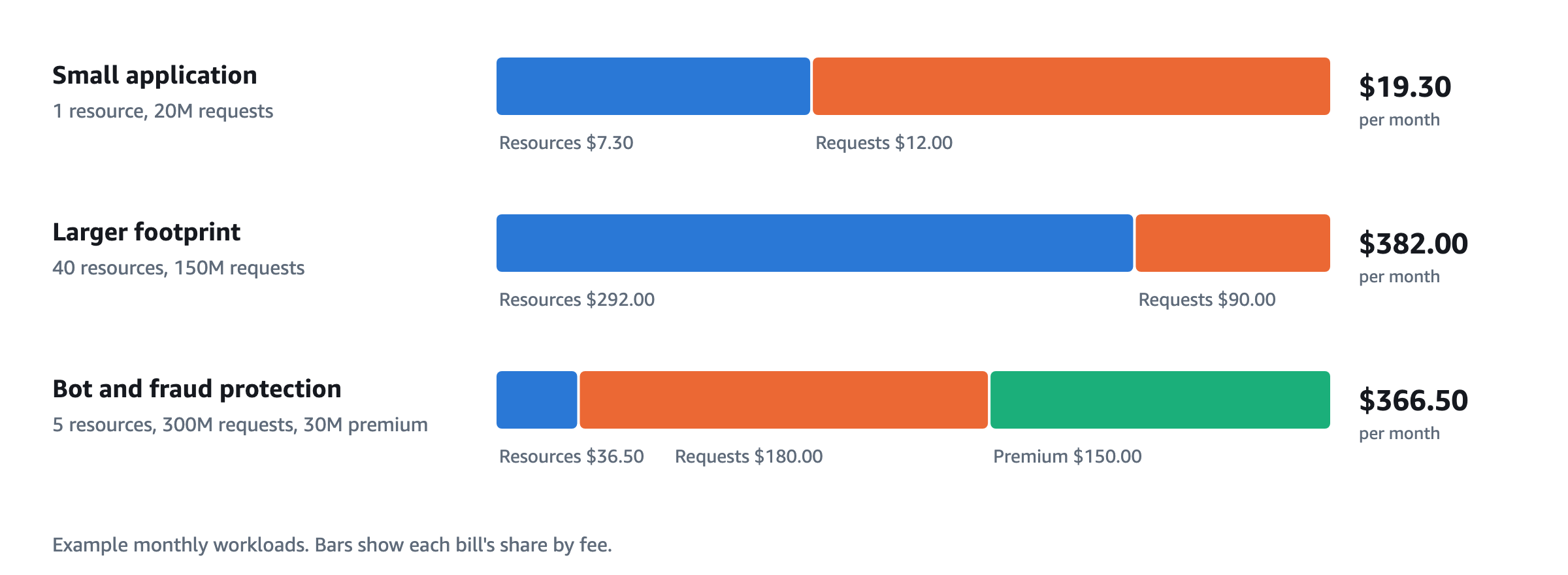
Figure 2: How the three dimensions add up for three example workloads
To estimate your own bill, start with how many resources each protection pack (web ACL) is associated with, since that drives the resource fee. For request volumes, AWS WAF publishes Amazon CloudWatch metrics for each protection pack (web ACL) and each protected resource, including the requests your advanced protections evaluate. The Security analytics dashboard gives you the same traffic view without building your own reports.
A few architectural choices can also help. Where it fits your architecture, protecting traffic at Amazon CloudFront can cost less than protecting many downstream resources one by one. If you serve many customer domains, Amazon CloudFront SaaS Manager lets you manage them as tenants of one multi-tenant distribution, so you can apply one protection pack across them. Scope-down statements send advanced protections only the traffic that warrants them, such as login or checkout paths.
Availability and getting started
The new AWS WAF pricing is available starting today. To get started, open the AWS WAF console, review your protection packs (web ACLs) and their resource associations, and review the examples on the AWS WAF pricing page.
Frequently asked questions
Does AWS WAF charge for requests it blocks? Yes. AWS WAF bills each request it inspects, including the requests it blocks. The protected resource bills those requests as usual, except Amazon CloudFront, which doesn’t charge for requests that AWS WAF blocks (learn more).
If a request passes through two protection packs (web ACLs), is it billed twice? Yes. For example, if a request passes a protection pack (web ACL) on a CloudFront distribution and another on the Application Load Balancer behind it, each protection pack (web ACL) bills it.
Does the Security analytics dashboard cost extra? No. The dashboard is included with AWS WAF at no additional cost.
Does pricing change for AWS Marketplace managed rule groups or AWS Shield Advanced? No. Pricing for AWS Marketplace managed rule groups and AWS Shield Advanced stays the same, and resources protected by Shield Advanced stay on their current pricing.
Is there a free tier? AWS WAF does not have a standalone free tier. If you serve your application through CloudFront and it handles fewer than 1 million requests per month, the CloudFront flat-rate Free plan includes AWS WAF at $0 per month. For plan details, see CloudFront flat-rate pricing plans.
What if my application needs more than 2,500 WCU? Open an AWS Support case to request a capacity increase.
Conclusion
The new AWS WAF pricing makes cost easier to plan around, so it does not become a blocker to security best practices. Your bill follows three things you can measure: the resources you protect, the requests AWS WAF inspects, and the requests that advanced protections evaluate. Adding, changing, or reordering rules doesn’t change your rate, and turning on Bot Control common protections or the Anti-DDoS rule group doesn’t add a subscription. The Security analytics dashboard gives you 21 days of traffic visibility at no additional cost.
To see what the change means for you, review the examples on the AWS WAF pricing page, or model a new workload in the AWS Pricing Calculator.
If you have questions about this post, contact AWS Support or start a new thread on AWS re:Post.