AWS Security Blog

How to Remove Single Points of Failure by Using a High-Availability Partition Group in Your AWS CloudHSM Environment
A hardware security module (HSM) is a hardware device designed with the security of your data and cryptographic key material in mind. It is tamper-resistant hardware that prevents unauthorized users from attempting to pry open the device, plug any extra devices in to access data or keys such as subtokens, or damage the outside housing. […]

Enable Your Federated Users to Work in the AWS Management Console for up to 12 Hours
AWS Identity and Access Management (IAM) supports identity federation, which enables external identities, such as users in your corporate directory, to sign in to the AWS Management Console via single sign-on (SSO). Now with a small configuration change, your AWS administrators can allow your federated users to work in the AWS Management Console for up […]

How to Audit Cross-Account Roles Using AWS CloudTrail and Amazon CloudWatch Events
You can use AWS Identity and Access Management (IAM) roles to grant access to resources in your AWS account, another AWS account you own, or a third-party account. For example, you may have an AWS account used for production resources and a separate AWS account for development resources. Throughout this post, I will refer to […]

New Whitepaper Now Available: The Security Perspective of the AWS Cloud Adoption Framework
February 23, 2023: We updated the link to the whitepaper in the first paragraph. Today, AWS released the Security Perspective of the AWS Cloud Adoption Framework (AWS CAF). The AWS CAF provides a framework to help you structure and plan your cloud adoption journey, and build a comprehensive approach to cloud computing throughout the IT […]

How to Use AWS CloudFormation to Automate Your AWS WAF Configuration with Example Rules and Match Conditions
Note from July 4, 2017: The solution in this post has been integrated into AWS WAF Security Automations, and AWS maintains up-to-date solution code in the companion GitHub repository. AWS WAF is a web application firewall that integrates closely with Amazon CloudFront (AWS’s content delivery network [CDN]). AWS WAF gives you control to allow or block […]

How to Use SAML to Automatically Direct Federated Users to a Specific AWS Management Console Page
Identity federation enables your enterprise users (such as Active Directory users) to access the AWS Management Console via single sign-on (SSO) by using their existing credentials. In Security Assertion Markup Language (SAML) 2.0, RelayState is an optional parameter that identifies a specified destination URL your users will access after signing in with SSO. When using […]

How to Prevent Uploads of Unencrypted Objects to Amazon S3
There are many use cases to prevent uploads of unencrypted objects to an Amazon S3 bucket, but the underlying objective is to protect the confidentiality and integrity of the objects stored in that bucket. AWS provides several services that help make this process easier, such as AWS Identity and Access Management (IAM) and AWS Key […]
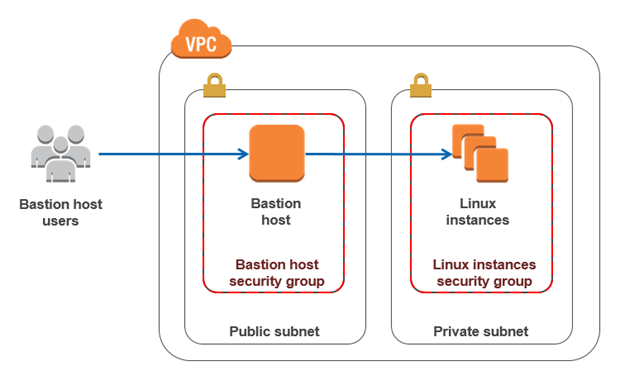
How to Record SSH Sessions Established Through a Bastion Host
A bastion host is a server whose purpose is to provide access to a private network from an external network, such as the Internet. Because of its exposure to potential attack, a bastion host must minimize the chances of penetration. For example, you can use a bastion host to mitigate the risk of allowing SSH […]

How to Set Up DNS Resolution Between On-Premises Networks and AWS by Using Unbound
In previous AWS Security Blog posts, Drew Dennis covered two options for establishing DNS connectivity between your on-premises networks and your Amazon Virtual Private Cloud (Amazon VPC) environments. His first post explained how to use Simple AD to forward DNS requests originating from on-premises networks to an Amazon Route 53 private hosted zone. His second […]

How to Manage Secrets for Amazon EC2 Container Service–Based Applications by Using Amazon S3 and Docker
Docker enables you to package, ship, and run applications as containers. This approach provides a comprehensive abstraction layer that allows developers to “containerize” or “package” any application and have it run on any infrastructure. Docker containers are analogous to shipping containers in that they provide a standard and consistent way of shipping almost anything. One […]