Networking & Content Delivery
Category: Amazon CloudFront
Amazon CloudFront Premium flat-rate pricing plan now supports higher, configurable usage allowances
Running an internet-facing application means estimating and managing costs across many services and features: content delivery, web application firewall (WAF), DNS, logging, and DDoS protection. Each has its own pricing model, its own metering, its own line item on the bill. Traffic from successful launches, organic growth, and AI bots can spike without warning, increasing […]

Tag-based invalidation in Amazon CloudFront
Update (May 2026): Amazon CloudFront now natively supports tag-based cache invalidation — no additional infrastructure required. You can tag cached objects via origin response headers or S3 metadata and invalidate them by tag directly through the CloudFront API. For details, see the CloudFront Developer Guide and the launch blog post. If you are starting fresh, […]
Manage caches with precision using Amazon CloudFront Invalidation by Cache Tag
Today, Amazon CloudFront is launching Invalidation by Cache Tag, a new capability that transforms how developers manage cached content. With this feature, you can invalidate groups of related cached objects using a single invalidation request, regardless of URL structure—making cache management more precise, efficient, and developer-friendly. In this post, we discuss the benefits of this […]
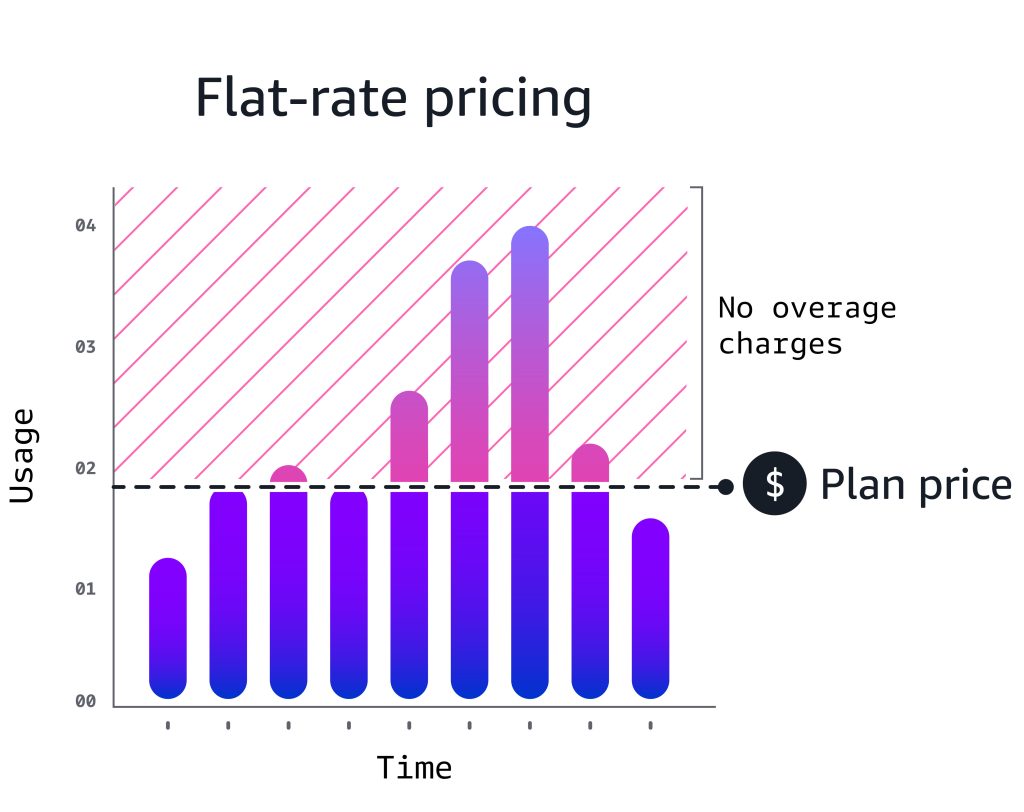
Amazon CloudFront flat-rate pricing plans: new features and expanded capabilities
In November 2025, we launched flat-rate pricing plans for Amazon CloudFront. Since launch, customers have shared feedback and we’ve been adding new capabilities. This post covers what’s new: support for Lambda@Edge, CAPTCHA, mutual TLS (mTLS), and an AI activity dashboard for visibility into AI bot and agent traffic. We’ve also clarified how plans handle traffic […]
Migrate Amazon CloudFront public origins to private VPC origins
Introduction This post demonstrates how to migrate your Amazon CloudFront public origins to Amazon Virtual Private Cloud (Amazon VPC) origins using different strategies. You can also use VPC origins with cross-accounts to support security-first architectures. When designing network architecture for CloudFront workloads, organizations must choose between centralized or distributed models. In a centralized architecture, a […]
Using cross-account CloudFront VPC origins for multi-account private API Gateway architecture
In November 2025, Amazon CloudFront introduced cross-account support for Virtual Private Cloud (VPC) origins, which allows you to keep Amazon VPC origins and CloudFront distributions in separate Amazon Web Services (AWS) accounts. In turn, organizations with multi-account strategies can use VPC origins while maintaining their desired account structure. This enables a new architectural pattern for […]
Using AWS Edge to optimize object uploads to Amazon S3
Amazon S3 is a highly scalable, secure, and durable object storage service that offers industry-leading performance and availability. It’s widely used to store a variety of unstructured data such as images, videos, backups, and logs. However, when uploading data to Amazon S3, especially large files or data accessed from different Amazon Web Services (AWS) Regions, […]
Implementing secure file uploads to Amazon S3 at the edge: Choosing the right pattern
Uploading files to Amazon Simple Storage Service (Amazon S3) is a common requirement for modern applications. Although the concept is clear, there are several ways to implement S3 uploads, each with distinct trade-offs in security, user experience, and scalability. Understanding these patterns and their best-fit scenarios is essential for making informed architectural decisions that align […]
Optimizing application performance: The strategic benefits of combining Amazon CloudFront with Application Load Balancers
As organizations scale globally, balancing user experience with operational costs becomes increasingly complex. Integrating Amazon CloudFront with Application Load Balancer (ALB) addresses this challenge by reducing latency by serving content from over 750 edge locations worldwide and maintaining persistent TCP connections between CloudFront and ALB origins while reducing Data Transfer Out (DTO) expenses through the […]
Amazon CloudFront now supports mTLS authentication to origins
Starting today, Amazon CloudFront extends its mutual TLS (mTLS) capabilities to customer origins, which enables true end-to-end authentication throughout the entire connection path—from the viewers to the customer origins. CloudFront has supported viewer mTLS between viewers and CloudFront, so that customers can strongly authenticate clients before traffic ever enters their perimeter. With this launch, that […]