AWS News Blog
20 years in the AWS Cloud – how time flies!
Celebrating twenty years of innovation in ML and AI technology at AWS. Countless developers, myself included, have embraced cloud computing and actively used its capabilities to accomplish what was previously impossible.

Introducing Amazon ECS Gateway: A fully-managed ingress solution for ECS services
Try Amazon ECS Gateway, a new account-level resource that simplifies ingress networking for containerized workloads by dynamically provisioning and managing the necessary infrastructure on your behalf, with all resources created directly in your account.
AWS Weekly Roundup: AWS Lambda Web Functions, Amazon S3 on the Vercel Marketplace, and more (October 19, 2026)
Nothing last week added a new kind of compute. What it did instead was shorten the distance between the code you already have and that code being live. AWS Lambda learned to run a plain HTTP server with no adapter in front of it, and Amazon S3 became something you can provision from inside the […]
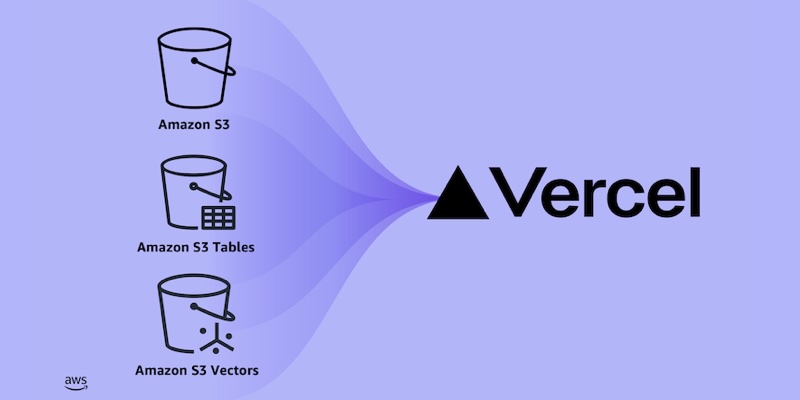
Amazon S3 is now available on the Vercel Marketplace and v0 by Vercel
Amazon Simple Storage Service (Amazon S3), including Amazon S3 Tables and Amazon S3 Vectors, is natively available on the Vercel Marketplace and v0 by Vercel.
AWS Weekly Roundup: Prime Day 2026 by the numbers, Claude Haiku 5.5, Amazon Nova 2.5 Sonic, and more (October 13, 2026)
Some numbers are hard to picture until you sit with them for a moment. Last week we published the Prime Day 2026 metrics, and the one that stuck with me is 2.3 quadrillion: the daily requests Amazon ElastiCache peaked at during the event. Prime Day ran back in June, so this post always lands as […]
Announcing AWS Lambda Web Functions
AWS Lambda Web Functions is a serverless compute primitive that runs your HTTP framework natively, delivering fast, consistent responses through multi-concurrent execution and automated global distribution.

All the numbers: Amazon Prime Day 2026 powered by AWS
Amazon Prime Day 2026 was exclusively for Prime members and ran June 23–26, 2026 with millions of deals across more than 35 categories. As part of our annual tradition of sharing how AWS powered Prime Day (2016, 2017, 2019, 2020, 2021, 2022, 2023, 2024, and 2025), I want to share the services and chart-topping metrics […]
AWS Weekly Roundup: Amazon Bedrock Managed Agents powered by OpenAI, Q3 service availability updates, Kiro workflows, and more (October 5, 2026)
Last week, we announced a public preview of Amazon Bedrock Managed Agents powered by OpenAI, built on a customized version of OpenAI’s Agents API engineered to be AWS-native and integrated with AWS resources. You can now build agents optimized for OpenAI models that run entirely inside AWS with the identities, permissions, and governance controls you […]

Announcing AWS Well-Architected Agent, an AI-powered intelligence to optimize your cloud environment (preview)
Introducing the public preview of AWS Well-Architected Agent, an AI-powered service that analyzes your AWS environment to deliver targeted, contextual recommendations for improving your applications’ cost, security, performance, and resilience—with ready-to-implement fixes aligned to your business goals.