- Solutions›
- One Amazon Lane›
- Prime Air delivery via drone
Prime Air Drone Delivery
Amazon’s technology forward delivery service that brings customers their orders ultra-fast
Drone delivery innovation
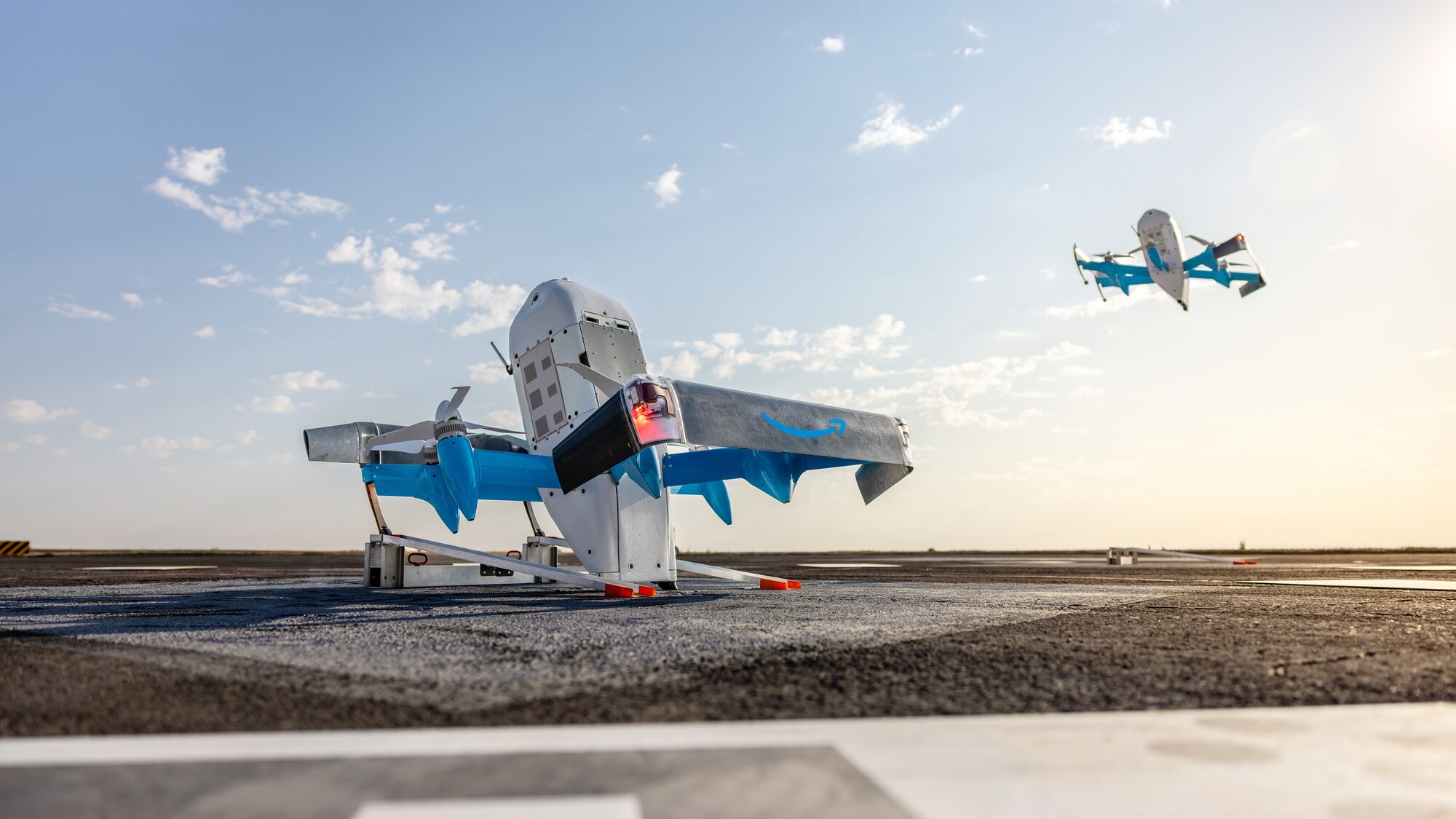
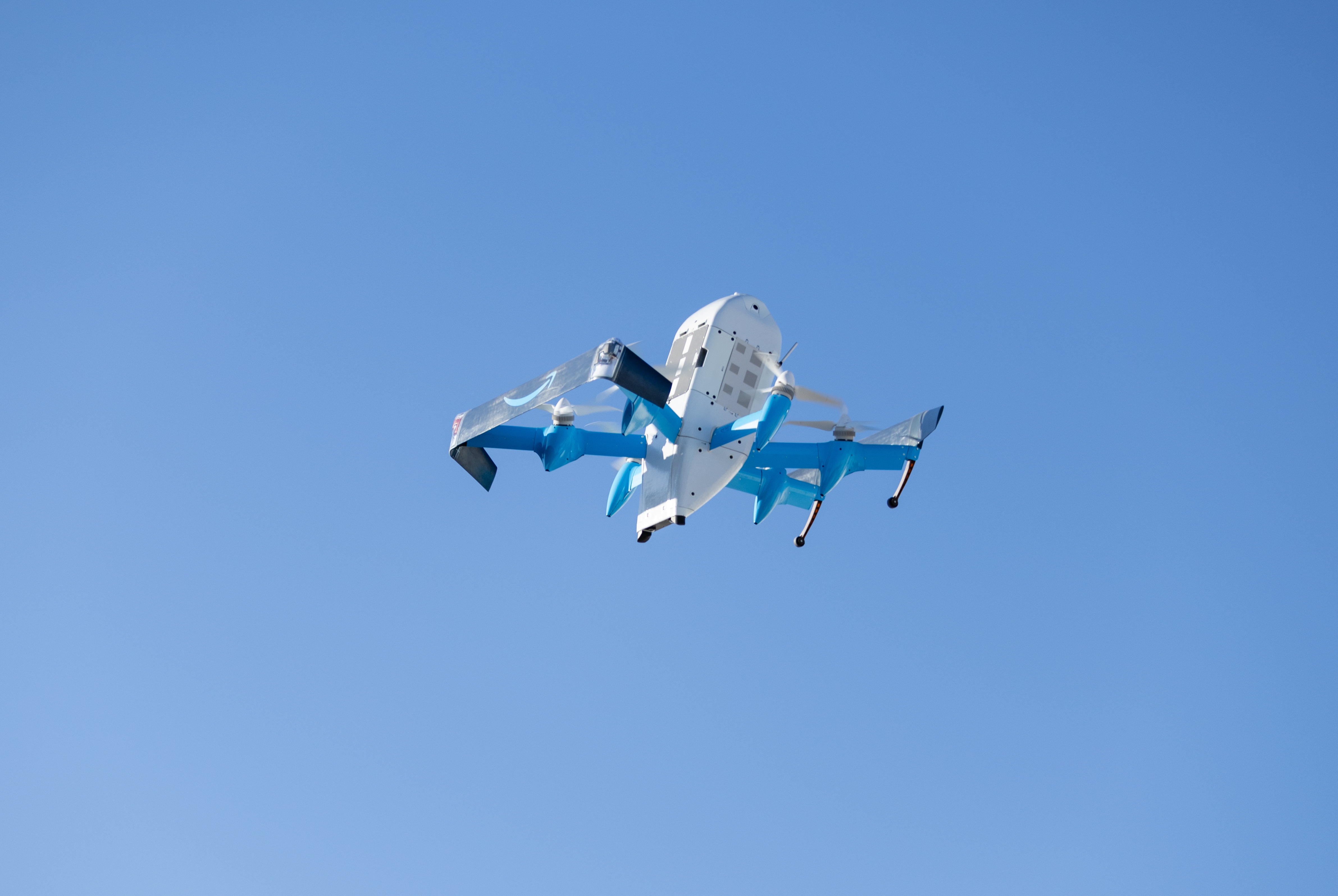
Prime Air’s newest drone, the MK30, is fully electric and capable of delivering to customers up to 7.5 miles from an Amazon facility within 60 minutes.
Perception and navigation technology
The MK30 drone uses onboard technology to navigate environments, sense-and-avoid obstacles, and deliver packages. The drone operates with Beyond Visual Line of Sight capabilities to reach more customers faster than ever before.

Built to Scale
The drone leverages multiple safety systems to safely operate and can trigger a return-to-station action when needed. Prime Air’s delivery service is authorized by the Federal Aviation Authority (FAA)
Continuous development
Prime Air consistently innovates and improves the MK30. These investments led to a 40% reduction in the MK30’s perceived sound compared to previous generations and a drone capable servicing millions of customers around the world.
Built with AWS
Powering autonomous drone delivery through AWS cloud services and real-time data processing
End-to-end AWS Integration
Prime Air uses AWS Step Functions and AWS Batch to orchestrate data processing workflows that use terabytes of raw data including LiDAR point clouds, aerial imagery, and geospatial vector inputs to identify and score safe drone delivery points. This data is stored in an Amazon Aurora cluster running Postgres with PostGIS extensions to enable high performance geospatial query operations. This enables eligible customers to select and modify their drone delivery point in their address book or while in checkout on Amazon.com. The data artifacts produced by these workflows enable Prime Air to deliver successfully using a combination of GPS and vision-based navigation.
Real-time weather and airspace updates
Prime Air also uses AWS Step Functions and various Amazon ECS and AWS Fargate compute nodes to preplan nominal and contingency mission trajectories, deconflict them, and manage pre-flight flows. This system relies extensively on Amazon DynamoDB, Amazon S3, Amazon SQS, and Amazon API Gateway for distributed workloads, artifact storage, and scalability. Edge devices such as field weather stations and traffic receivers for ADS-B (beacons mounted on aircraft) use AWS IoT Greengrass to publish data to the AWS Cloud. This enables Prime Air to ensure flights are planned and executed with up-to-the-minute weather and avoid airspace conflicts.
Prime Air MK30
Did you find what you were looking for today?
Let us know so we can improve the quality of the content on our pages