AWS Architecture Blog
Category: Amazon SageMaker AI
Unlock efficient model deployment: Simplified Inference Operator setup on Amazon SageMaker HyperPod
In this post, we walk through the new installation experience, demonstrate three deployment methods (console, CLI, and Terraform), and show how features like multi-instance-type deployment and native node affinity give you fine-grained control over inference scheduling
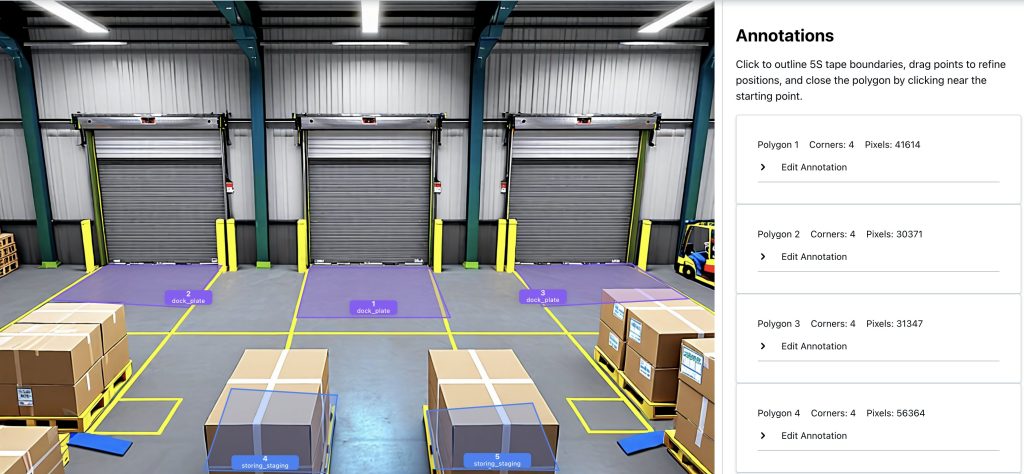
Automate safety monitoring with computer vision and generative AI
This post describes a solution that uses fixed camera networks to monitor operational environments in near real-time, detecting potential safety hazards while capturing object floor projections and their relationships to floor markings. While we illustrate the approach through distribution center deployment examples, the underlying architecture applies broadly across industries. We explore the architectural decisions, strategies for scaling to hundreds of sites, reducing site onboarding time, synthetic data generation using generative AI tools like GLIGEN, and other critical technical hurdles we overcame.
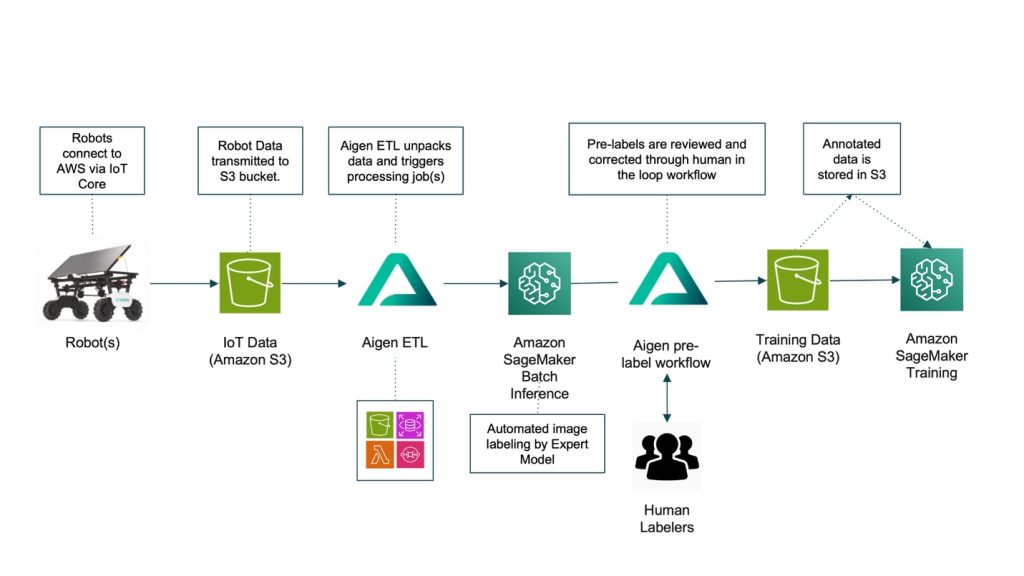
How Aigen transformed agricultural robotics for sustainable farming with Amazon SageMaker AI
In this post, you will learn how Aigen modernized its machine learning (ML) pipeline with Amazon SageMaker AI to overcome industry-wide agricultural robotics challenges and scale sustainable farming. This post focuses on the strategies and architecture patterns that enabled Aigen to modernize its pipeline across hundreds of distributed edge solar robots and showcase the significant business outcomes unlocked through this transformation. By adopting automated data labeling and human-in-the-loop validation, Aigen increased image labeling throughput by 20x while reducing image labeling costs by 22.5x.

Optimizing fleet operations using Amazon SageMaker AI and Amazon Bedrock
In this post, we’ll explore how to maximize the value of dashcam footage through best practices for implementing and managing Computer Vision systems in commercial fleet operations. We’ll demonstrate how to build and deploy edge-based machine learning models that provide real-time alerts for distracted driving behaviors, while effectively collecting, processing, and analyzing footage to train these AI models.