AWS Architecture Blog
Category: Foundational (100)
How to run a DR readiness engagement
This final post turns the DR framework into a repeatable engagement: a five-step sequence from kickoff and gap assessment through progressive validation to an updated recovery commitment, with a real before-and-after example and ways to compress the timeline from months to weeks. Part 3 of a three-part series.
Validating your DR commitment: From controlled test to real-world readiness
After you define your DR targets, testing tells you whether they hold. This post walks through a four-level progressive validation model (tabletop, planned failover, surprise drill, and game day) and shows how each level surfaces a different class of recovery gap that feeds back into your commitment. Part 2 of a three-part series.
Three business decisions that define your DR success
A disaster recovery strategy is only as strong as the business decisions behind it. Before you choose an architecture pattern, three decisions shape whether recovery succeeds: what you’re actually recovering, what the business needs from that recovery, and what your dependencies allow you to commit to. Part 1 of a three-part series.
Vessel-specific voyage optimization with machine learning: Manta on AWS
Manta Marine Technologies closes the gap between seemingly identical ships by training machine learning models on each vessel’s own operational history. Learn how Manta delivers vessel-specific voyage optimization on AWS to help shipowners reduce fuel consumption and improve voyage efficiency.
Introducing the Snowflake and AWS Custom Lens for the AWS Well-Architected Framework
The Snowflake and AWS Custom Well-Architected Framework Lens brings together AWS Well-Architected best practices and Snowflake guidance into a single review experience, with integrated recommendations that reflect how the two services compose in production. In this post, we walk through each pillar, the three access points (AWS Management Console, Kiro, and Snowflake Cortex Code), and how to run your first review.
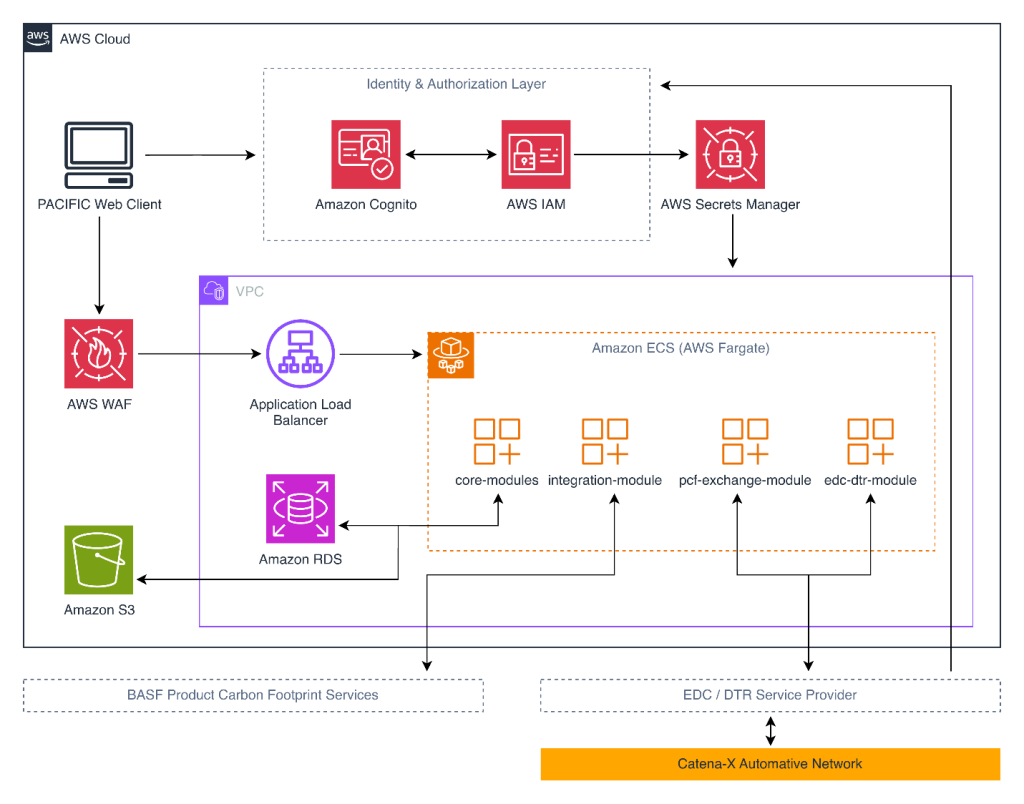
PACIFIC enables multi-tenant, sovereign product carbon footprint exchange on the Catena-X data space using AWS
This post explores how PACIFIC enables multi-tenant, sovereign PCF exchange on the Catena-X data space using Amazon Elastic Container Service (Amazon ECS) on AWS Fargate, Amazon Cognito, and AWS Identity and Access Management (IAM) to deliver measurable environmental impact and competitive advantage in a carbon-conscious marketplace.
Unlock efficient model deployment: Simplified Inference Operator setup on Amazon SageMaker HyperPod
In this post, we walk through the new installation experience, demonstrate three deployment methods (console, CLI, and Terraform), and show how features like multi-instance-type deployment and native node affinity give you fine-grained control over inference scheduling

Create a serverless custom retry mechanism for stateless queue consumers
In this post, we propose a solution that handles serverless retries when the workflow’s state isn’t managed by an additional service.

Using AWS Serverless to Power Event Management Applications
Most large events have common activities such as event registration, check-in upon arrival, and requesting of amenities. When designing applications, factors such as high availability, low latency, reliability, and security must be considered. In this blog post, we’d like to show how Amazon Web Services (AWS) can assist you in event planning activities. We’ll share […]

IT Resilience Within AWS Cloud, Part II: Architecture and Patterns
In Part I of this two-part blog, we outlined best practices to consider when building resilient applications in hybrid on-premises/cloud environments. We also showed you how to adapt mindsets and organizational culture. In Part II, we’ll provide technical considerations related to architecture and patterns for resilience in AWS Cloud. Considerations on architecture and patterns The […]