AWS Architecture Blog
Category: Amazon EC2
Scale distributed AI workloads with Ray and Anyscale on Amazon EC2
Building multimodal AI/ML pipelines on Amazon EC2 means scaling distributed compute, controlling costs across stages, and keeping up with new models and hardware. This post shows how the Ray-powered Anyscale application on AWS helps you deploy Ray across three compute options and scale from prototype to production without code changes.
How BMW Group accelerated connected vehicle workloads on AWS Graviton
Learn how BMW Group migrated its connected vehicle platform from x86 to AWS Graviton. Using Karpenter, multi-architecture container builds, and Graviton-based CI/CD runners, the team moved workloads without disruption, cutting NGINX ingress CPU by about 57 percent and delivering about 40 percent better price-performance.
Vessel-specific voyage optimization with machine learning: Manta on AWS
Manta Marine Technologies closes the gap between seemingly identical ships by training machine learning models on each vessel’s own operational history. Learn how Manta delivers vessel-specific voyage optimization on AWS to help shipowners reduce fuel consumption and improve voyage efficiency.
How Anchorage Digital and Turnkey verify code with AWS Nitro Enclaves
Anchorage Digital and Turnkey built verifiable infrastructure on AWS Nitro Enclaves so crypto wallets can cryptographically verify which code parsed a transaction. This post covers the architecture, the attestation-gated access pattern, and how it extends to any high-trust workflow beyond blockchain.
Scaling patterns for self-organizing multi-agent clusters with Kiro
Learn how to coordinate AI agents through shared state in Amazon S3 instead of a central orchestrator. Deploy and observe self-organizing agent clusters on Amazon EC2 with the open-source kiro-flock reference implementation.
Building highly available Oracle databases with Amazon FSx for NetApp ONTAP
This post shows how to build a highly available Oracle database architecture using FSxN shared storage, Auto Scaling groups with dynamic AMI updates, and serverless orchestration to help reduce recovery times with current configurations.
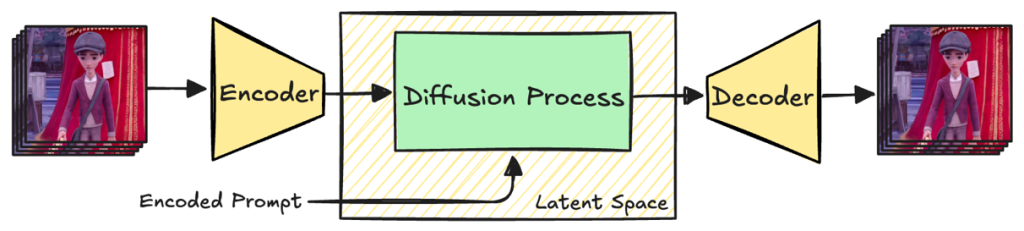
How Synthesia optimizes generative AI video inference on Amazon EC2 G7e instances
This post introduces a video decoding optimization technique that we have ideated in collaboration with Synthesia Research Engineering team, which we call Asynchronous Frame Generation Pipeline. Adopting this technique allows you to overlap GPU compute, device-to-host (D2H) data transfer, and host-side post-processing. In this post, we apply this technique to the VAE decoder of a Wan video generation model as an example, where our benchmarks on G7e show increased GPU kernel utilization from 82% to 99.9%, in turn leading to an 8.2% decrease in latency (and increase in throughput) for video decoding. We expect this technique to benefit any customer with a chunked video generation pipeline that transfers frames to host memory.

Enhance the resilience of critical workloads by architecting with multiple AWS Regions
In this post, we will share how you can use multi-Region as an architectural approach to achieve higher resilience on Amazon Web Services (AWS). This approach relies on first operating a workload across multiple Availability Zones within an AWS Region, before expanding to achieve even higher resilience by using multiple Regions.

Automating multi-AZ high availability for WebLogic administration server with DNS: Part 2
In Part 1 of this series, we used a floating virtual IP (VIP) to achieve hands-off high availability (HA) of WebLogic Admin Server. In Part 2, we’ll achieve an arguably superior solution using Domain Name System (DNS) resolution. Using a DNS to resolve the address for WebLogic admin server Let’s look at the reference WebLogic […]
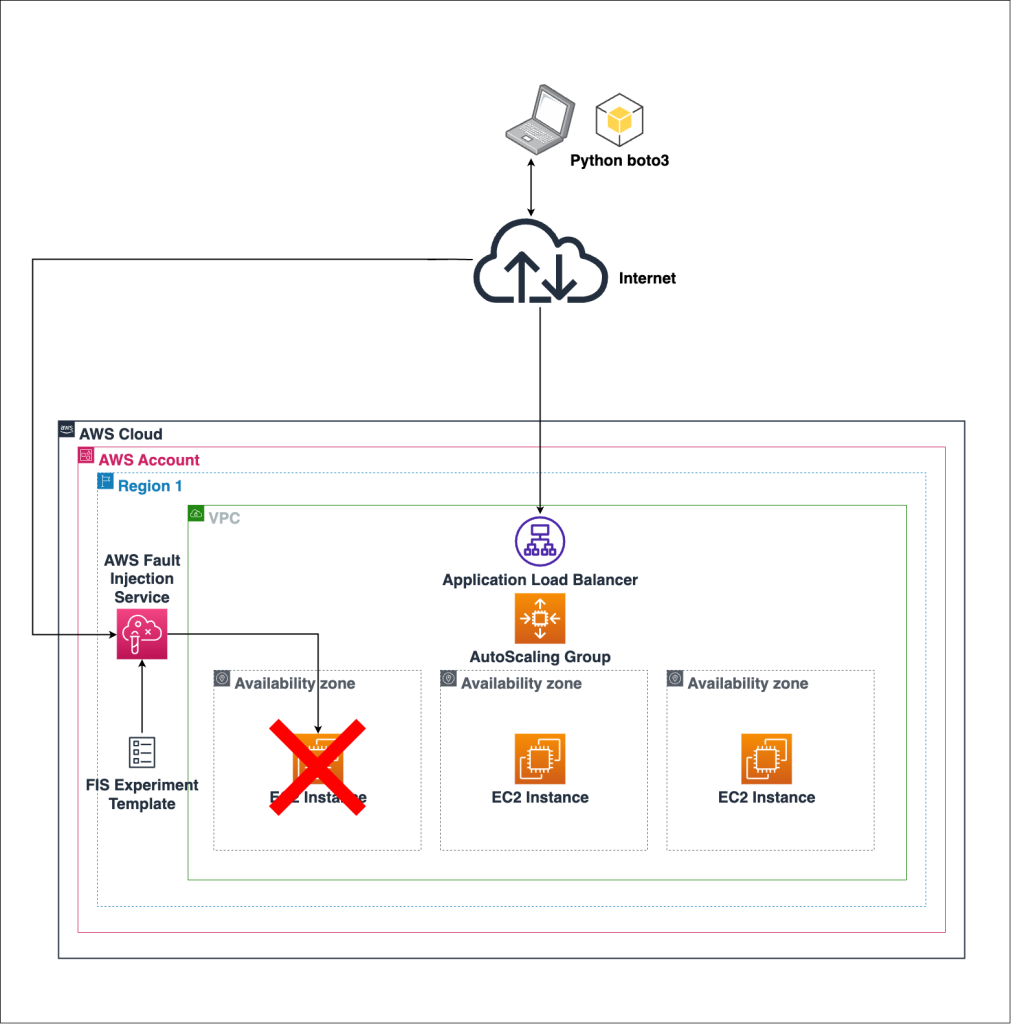
Behavior Driven Chaos with AWS Fault Injection Simulator
A common challenge organizations face is how to gain confidence in and provide evidence for the continuous resilience of their workloads. Using modern chaos engineering principles can help in meeting this challenge, but the practice of chaos engineering can become complex. As a result, both the definition of the inputs and comprehension of the outputs […]