AWS Architecture Blog
Category: Generative AI
How Synthesia optimizes generative AI video inference on Amazon EC2 G7e instances
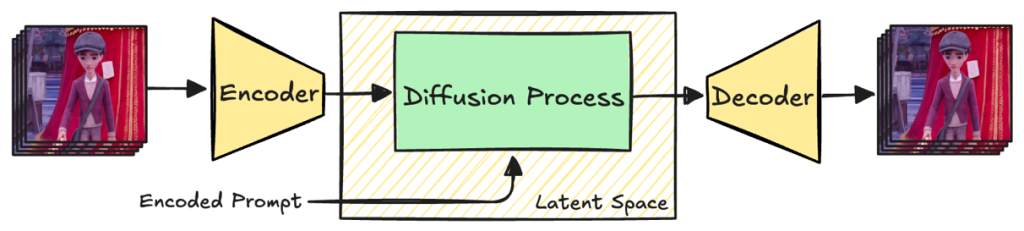
This post introduces a video decoding optimization technique that we have ideated in collaboration with Synthesia Research Engineering team, which we call Asynchronous Frame Generation Pipeline. Adopting this technique allows you to overlap GPU compute, device-to-host (D2H) data transfer, and host-side post-processing. In this post, we apply this technique to the VAE decoder of a Wan video generation model as an example, where our benchmarks on G7e show increased GPU kernel utilization from 82% to 99.9%, in turn leading to an 8.2% decrease in latency (and increase in throughput) for video decoding. We expect this technique to benefit any customer with a chunked video generation pipeline that transfers frames to host memory.
Digital Transformation at Santander: How Platform Engineering is Revolutionizing Cloud Infrastructure
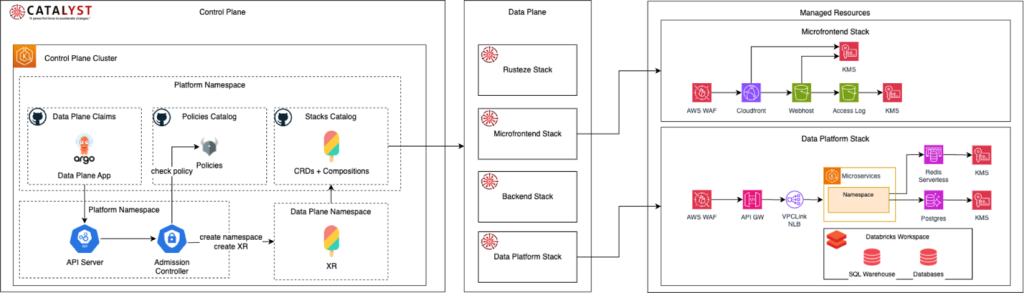
Santander faced a significant technical challenge in managing an infrastructure that processes billions of daily transactions across more than 200 critical systems. The solution emerged through an innovative platform engineering initiative called Catalyst, which transformed the bank’s cloud infrastructure and development management. This post analyzes the main cases, benefits, and results obtained with this initiative.
Architecting for AI excellence: AWS launches three Well-Architected Lenses at re:Invent 2025
At re:Invent 2025, we introduce one new lens and two significant updates to the AWS Well-Architected Lenses specifically focused on AI workloads: the Responsible AI Lens, the Machine Learning (ML) Lens, and the Generative AI Lens. Together, these lenses provide comprehensive guidance for organizations at different stages of their AI journey, whether you’re just starting to experiment with machine learning or already deploying complex AI applications at scale.
Announcing the updated AWS Well-Architected Generative AI Lens
We are delighted to announce an update to the AWS Well-Architected Generative AI Lens. This update features several new sections of the Well-Architected Generative AI Lens, including new best practices, advanced scenario guidance, and improved preambles on responsible AI, data architecture, and agentic workflows.
Deploy LLMs on Amazon EKS using vLLM Deep Learning Containers
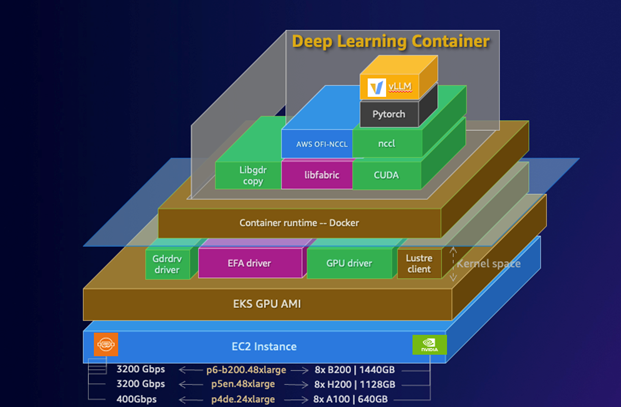
In this post, we demonstrate how to deploy the DeepSeek-R1-Distill-Qwen-32B model using AWS DLCs for vLLMs on Amazon EKS, showcasing how these purpose-built containers simplify deployment of this powerful open source inference engine. This solution can help you solve the complex infrastructure challenges of deploying LLMs while maintaining performance and cost-efficiency.

Migrate and modernize VMware workloads with AWS Transform for VMware
AWS Transform for VMware is a service that tackles cloud migration challenges by significantly reducing manual effort and accelerating the migration of critical VMware workloads to AWS Cloud. In this post, we highlight its comprehensive capabilities, including streamlined discovery and assessment, intelligent network conversion, enhanced security and compliance, and orchestrated migration execution.

Simplifying sustainability reporting using AWS and generative AI in banking
In this post, you learn how you can use generative AI services on Amazon Web Services (AWS) to automate your sustainability reporting requirements, reduce manual effort, and improve accuracy. You do this by implementing an automated solution for extracting, processing, and validating data from corporate reports.

Amazon Bedrock baseline architecture in an AWS landing zone
In this post, we explore the Amazon Bedrock baseline architecture and how you can secure and control network access to your various Amazon Bedrock capabilities within AWS network services and tools. We discuss key design considerations, such as using Amazon VPC Lattice auth policies, Amazon Virtual Private Cloud (Amazon VPC) endpoints, and AWS Identity and Access Management (IAM) to restrict and monitor access to your Amazon Bedrock capabilities.

Analyze media content using AWS AI services
Organizations managing large audio and video archives face significant challenges in extracting value from their media content. Consider a radio network with thousands of broadcast hours across multiple stations and the challenges they face to efficiently verify ad placements, identify interview segments, and analyze programming patterns. In this post, we demonstrate how you can automatically transform unstructured media files into searchable, analyzable content.

Optimizing fleet operations using Amazon SageMaker AI and Amazon Bedrock
In this post, we’ll explore how to maximize the value of dashcam footage through best practices for implementing and managing Computer Vision systems in commercial fleet operations. We’ll demonstrate how to build and deploy edge-based machine learning models that provide real-time alerts for distracted driving behaviors, while effectively collecting, processing, and analyzing footage to train these AI models.