AWS Compute Blog
Serverless ICYMI Q1 2026
Stay current with the latest serverless innovations that can improve your applications. In this 32nd quarterly recap, discover the most impactful AWS serverless launches, features, and resources from Q1 2026 that you might have missed.
In case you missed our last ICYMI, check out what happened in Q4 2025.
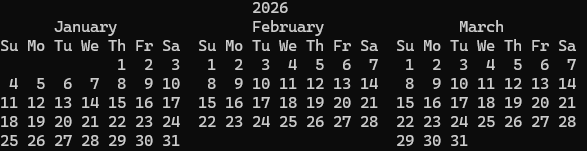
2026 Q1 calendar
Serverless with Mama J
Serverless with Mama J
If you really want to know whether you understand something, try explaining it to your mom!
That’s exactly what Eric Johnson did. His mom, everyone calls her Mama J, wanted to know what serverless actually means and why it matters. So he walked her through it: what servers do, why they’re a headache to manage, and how AWS Lambda lets you skip all that by running code only when it’s needed, scaling automatically, and charging you nothing when nobody’s using it.
Watch the video on the AWS Developers YouTube channel.
Build serverless apps faster with AI
AWS is providing a growing set of AI-powered tools to bring serverless expertise directly into your coding assistants. From Model Context Protocol (MCP) servers and Anthropic Claude plugins to Kiro Powers. These tools provide contextual guidance for architecture decisions, implementation patterns, and deployment automation across the full serverless development lifecycle.
For more information on the tools available, see the resources page.
Serverless Patterns Collection
The open source Serverless Patterns Collection on Serverless Land now provides a direct link to download pattern .zip files. You can also clone the whole repo and explore more patterns.
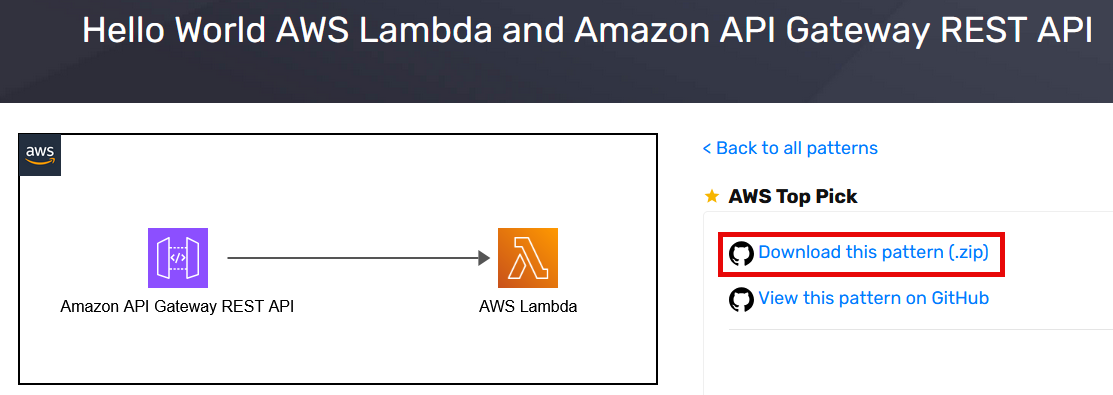
Serverless Patterns .zip download
AWS Lambda
Build fault-tolerant, long-running applications using familiar programming patterns using AWS Lambda durable functions. You can use Lambda durable functions to write multi-step workflows in your preferred programming language, using built-in methods that automatically handle progress checkpointing and error recovery. This can improve your architecture so that you can focus on your business logic and optimize costs by charging only for active compute time.
You can build durable functions in Python and TypeScript and there is a durable execution SDK for Java in preview with the code available on GitHub.
Eric Johnson has a new video deep dive showing how to upload videos and scan them with AI. Learn how to coordinate multiple AWS services like Amazon Rekognition and Amazon Transcribe, implement human-in-the-loop approval workflows, and crate a live dashboard for real-time updates.
To find out how durable functions work, see the blog post which also provides testing and best practices guidance. You can also watch the re:Invent Breakout Session video: Deep Dive on AWS Lambda durable functions (CNS380)
Lambda now supports the .NET 10 runtime, including support for file-based apps. Developers can take advantage of the latest .NET 10 performance improvements, new language features, and improved startup times for Lambda functions.
You can now see Availability Zone (AZ) metadata in function execution environments. This allows you to determine the AZ ID (e.g., use1-az1) of the AZ your function is running in. This helps build functions that can make AZ-aware routing decisions, such as preferring same-AZ endpoints for downstream services to reduce cross-AZ latency. Operators can also implement AZ-aware resilience patterns like AZ-specific fault injection testing.
Payload size increase
AWS has increased the maximum payload size from 256 KB to 1 MB for a number of services such as asynchronous Lambda invocations, Amazon SQS, and Amazon EventBridge. This gives you more room to build and maintain context-rich event-driven systems and reduce the need for complex workarounds such as data chunking or external large object storage.
This blog post explores a real-world example using rich event context in agentic event-driven architectures
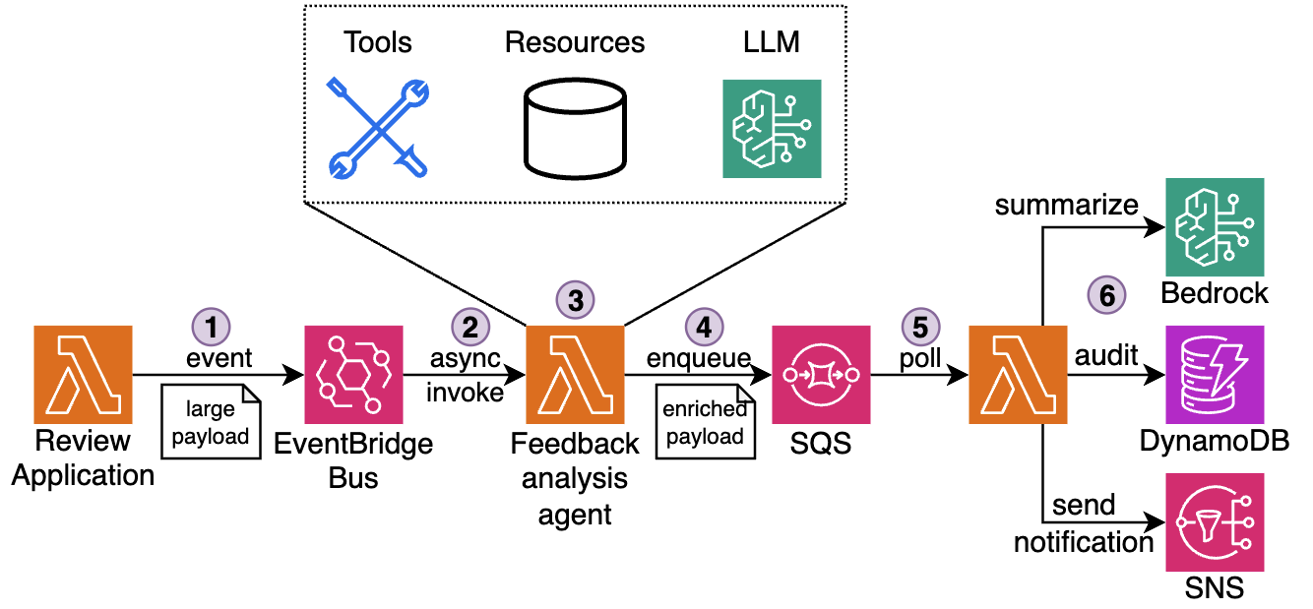
Payload size increase workflow
Amazon Bedrock
Amazon Bedrock expanded its model availability with a new set of fully managed open-weight models spanning frontier reasoning and agentic coding. Other model releases include Anthropic Claude Opus 4.6 and Claude Sonnet 4.6, and NVIDIA Nemotron 3 Super. You can invoke them through the unified Amazon Bedrock API without managing any underlying infrastructure, making it straightforward to experiment and swap models as your workload evolves.
Amazon Bedrock AgentCore is the infrastructure layer for securely deploying and operating AI agents. It works with popular open source frameworks, including Strands Agents, LangGraph and CrewAI, giving you the flexibility to build with your preferred tools without vendor lock-in.
AgentCore Gateway now includes semantic tool search, so you can discover the right tool for a task using natural language queries instead of manually browsing a catalogue. It also adds custom KMS encryption, debugging messages, and resource tagging to give you stronger governance over tool integrations.
Policy in Bedrock AgentCore allows you to define precise boundaries on agent actions and run continuous quality monitoring. This helps you maintain predictable, auditable agent behavior in production without embedding guardrail logic inside each individual agent.
AgentCore Runtime now supports stateful MCP server features, allowing agents to maintain session context across tool calls for richer, more coherent multi-step interactions.
Strands Agents
Strands Agents SDK
Strands Agents is an open source SDK for building and running AI agents in just a few lines of code, working with models available in Amazon Bedrock. Strands Labs is a new dedicated GitHub organization for experimental agent projects, including robotics and code agents. This gives you early access to cutting-edge agentic techniques before they reach production frameworks. See the introduction blog post for more information.
AWS Step Functions
AWS Step Functions introduces an enhanced TestState API that enables API-based testing for validating workflows before deployment. The new API supports testing individual states in isolation or complete workflows end-to-end, making it easier to verify state machine logic without incurring runtime costs.
By integrating TestState API testing into CI/CD pipelines, you can validate workflow logic before deployment, reducing the risk of production issues. Find complete code examples and testing framework in the GitHub repository.
Amazon EventBridge
Amazon EventBridge Scheduler now provides resource count metrics to help you monitor quota usage. These new metrics make it easier to track the number of schedules and schedule groups in your account and proactively manage service quotas.
Amazon DynamoDB
You can replicate Amazon DynamoDB table data across multiple AWS accounts and Regions. This enhances resiliency through account-level isolation, supports tailored security and data-perimeter controls. You can align workloads by business unit or environment and simplify governance requirements.
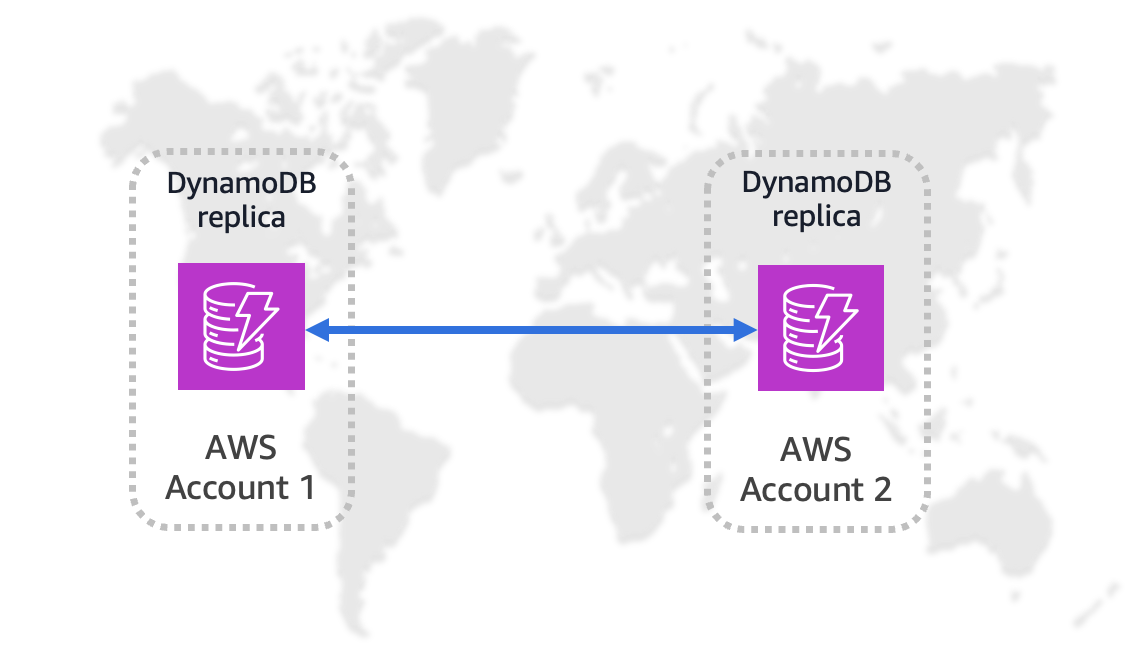
Amazon DynamoDB global replication
Amazon ECS
Amazon ECS Managed Instances can now integrate with Amazon EC2 Capacity Reservations. This allows you to make sure there is capacity availability for your container workloads while benefiting from the management automation of ECS Managed Instances.
ECS also now supports Network Load Balancer (NLB) for linear and canary deployment strategies. This helps you perform gradual traffic shifting using NLBs, providing more flexibility in deployment pipelines for latency-sensitive applications.
Serverless blog posts
January
- .NET 10 runtime now available in AWS Lambda
- Serverless ICYMI Q4 2025
- More room to build: serverless services now support payloads up to 1 MB
February
- Building fault-tolerant applications with AWS Lambda durable functions
- Optimizing Compute-Intensive Serverless Workloads with Multi-threaded Rust on AWS Lambda
March
- Enabling high availability of Amazon EC2 instances on AWS Outposts servers (Part 3)
- Testing Step Functions workflows: a guide to the enhanced TestState API
Serverless Office Hours
Join our livestream every Tuesday at 11 AM PT for live discussions, Q&A sessions, and deep dives into serverless technologies. Watch episodes on-demand at serverlessland.com/office-hours.
January
- Jan 7 – New: Amazon API Gateway response streaming
- Jan 14 – What’s New: AWS Lambda event source mappings
- Jan 21 – New: AWS Lambda tenant isolation
- Jan 28 – AWS Step Functions Local Testing
February
- Feb 4 – App Modernization with CDK Blueprints
- Feb 11 – Observability for Distributed Systems
- Feb 18 – AI & Java
- Feb 25 – AI for content creators
March
- Mar 11 – Serverless resilience: A practitioner’s guide
- Mar 18 – Analytics for Modern Data Lakes & AI
- Mar 24 – AWS MCP server
Still looking for more?
The Serverless landing page has overall information about building serverless applications. The Lambda resources page contains case studies, webinars, whitepapers, customer stories, reference architectures, and even more Getting Started tutorials.
You can also follow the Developer Advocacy team to see the latest news, follow conversations, and interact with the team.
- Julian Wood: @julian_wood, https://www.linkedin.com/in/julianrwood/
- Eric Johnson: @edjgeek, https://www.linkedin.com/in/singledigit/
- Erik Hanchet: @ErikCH, https://www.linkedin.com/in/erikhanchett/
- Salih Gueler: @salihgueler, https://www.linkedin.com/in/salihgueler/
- Marcia Villalba: @mavi888uy, https://www.linkedin.com/in/marciavillalba
And finally, visit Serverless Land for your serverless needs.