AWS for Industries
GreenBridge.AI redefines renewable energy operations with agentic AI on AWS
Renewable energy operators face a growing challenge: Managing increasingly large, complex, high-value portfolios across solar, wind, and battery energy storage system (BESS) while meeting tighter compliance, grid, and market demands. Many operational workflows remain reactive, manual, and fragmented—limiting both performance and scalability. However, GreenBridge.AI is innovating renewable energy operations through AI agents for greater automated efficiency and scalability.
At the time of writing, three challenges converge to make operations more difficult:
- Data overload – Operators must act on information from supervisory control and data acquisition (SCADA) systems, sensors, weather feeds, and enterprise resource planning (ERP) platforms. However, critical knowledge remains siloed, hard to access, and difficult to operationalize.
- Manual burden – Operations and management (O&M) teams face alert fatigue and slow, reactive decision-making, as fragmented tools force them to hunt for insights and prioritize tasks manually.
- Grid and market pressure – Participation now demands foresight and rapid coordination. Delays or missteps in scheduling, fault response, or compliance can impact reliability, revenue, and safety.
Legacy dashboards and predictive maintenance tools can no longer keep up. Predictive maintenance today is not only about identifying potential failures—it’s about managing the full asset lifecycle proactively and autonomously.
Purpose-built agentic AI
The GreenBridge.AI platform models tasks in energy operations as a node in a directed acyclic graph (DAG). Each node represents a specialized AI agent, or model, responsible for a step in the workflow—from anomaly detection to work order approval. These agents can run sequentially or in parallel, with their outputs feeding the next stage of decision-making. The following figure illustrates the optimization workflow.
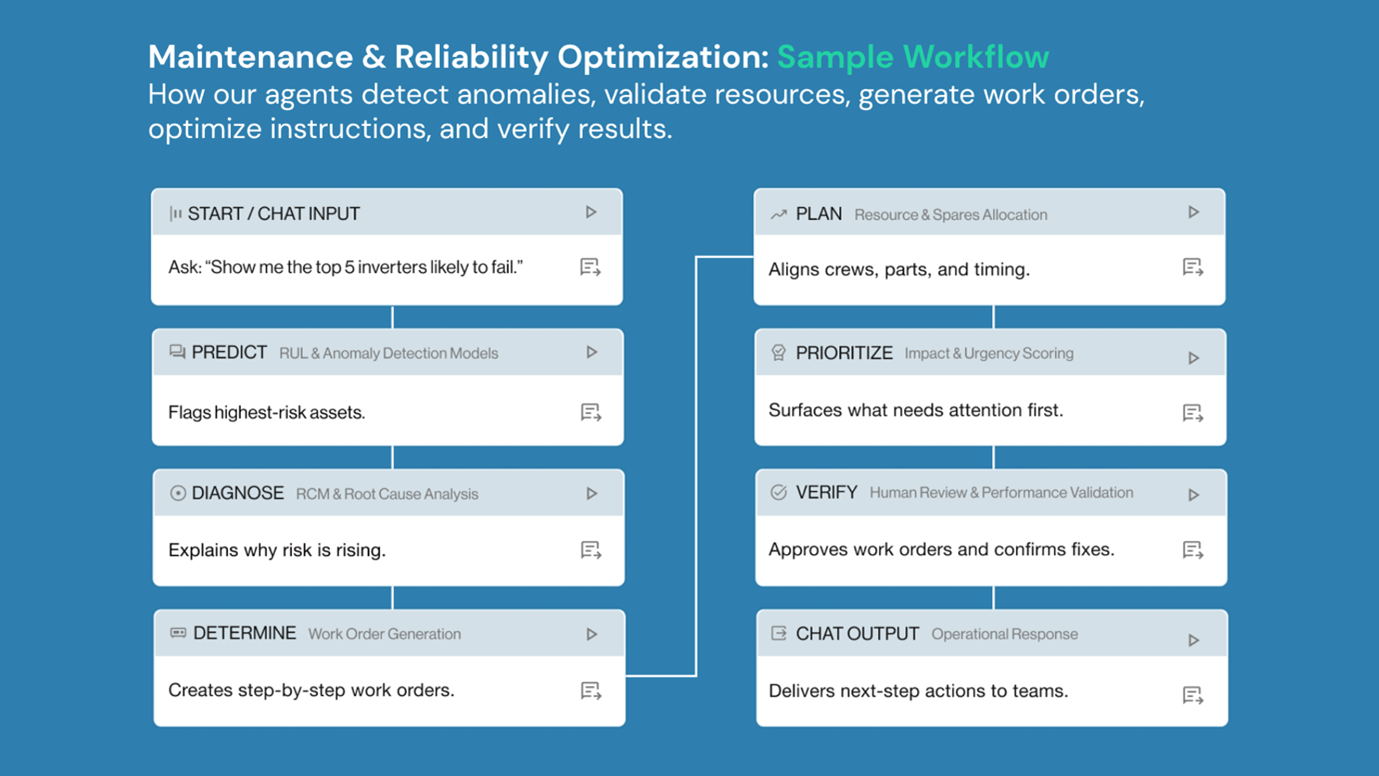
Figure 1: GreenBridge.AI optimization workflow
The workflow begins with a user submitting a request through a chat interface, for example to identify assets with elevated risk. The process then moves through a series of analytical stages. Predictive models evaluate remaining useful life and anomaly signals to surface assets that require attention. Diagnostic steps apply reliability-centered maintenance and root cause analysis to provide context for the identified risk.
Based on these results, structured work orders are generated with defined maintenance steps. The workflow continues into planning, where workforce availability, spare parts, and timing are aligned. Tasks are then ranked using impact and urgency criteria. Before execution, a human review step validates the recommended actions and confirms expected performance outcomes. The workflow concludes by returning the validated next steps to operations teams through a chat-based response.
GreenBridge.AI deploys multiple types of AI agents to cover the full spectrum of renewable energy operations:
- Asset management AI agents – Monitor, benchmark, and enhance asset health and performance across solar, wind, and BESS portfolios. They help operators prioritize interventions and track overall portfolio efficiency.
- Operational and maintenance AI agents – Optimize daily O&M workflows by detecting anomalies, classifying faults, scheduling and logging maintenance, and streamlining reporting. These agents reduce the manual burden and speed up fault response.
- Performance engineering AI agents – Analyze yield, loss factors, and performance curves to deliver actionable recommendations for maximizing output and efficiency. They translate complex operational data into precise steps that boost productivity.
- Document intelligence agents – Digest manuals, fault code libraries, contracts, and SOPs to surface critical knowledge instantly. By making structured and unstructured content accessible, they make sure agents have the context needed for accurate decision-making and execution.
Customer outcomes speak for themselves:
- Up to 18% less unplanned downtime for inverters and transformers
- 12–20% lower maintenance costs through AI-guided interventions
- Up to 24% faster repairs, with the right parts and procedures ready
- Stronger reporting and compliance through AI-driven insights and documentation mapping
These results are realized at scale, across fleets, AWS Regions, and energy types, without adding operational complexity.
Building the digital foundation
Powering this agentic layer is a strong digital foundation:
- Integrated data fabric – High-frequency streams from SCADA, sensors, weather, and ERP systems converge into a unified layer that contextualizes agent decisions. The architecture enables insights that are hard to replicate manually, giving operators timely context across portfolios.
- Document intelligence at scale – OEM manuals, fault code libraries, SOPs, and contracts are ingested into a vector-based semantic search system, enabling rapid retrieval. New documents are automatically indexed, and outdated content is aged out, making sure agents can access current and relevant information.
- Built for interoperability – GreenBridge.AI integrates seamlessly with Computerized Maintenance Management System (CMMS), ERP platforms, grid forecasting tools, and other operational systems. It uses industry-standard formats and APIs, preserving existing workflows while adding intelligence.
Together, these capabilities create a foundation that powers agent learning, accelerates it with operational data, and enables GreenBridge.AI to scale seamlessly across regions without adding complexity.
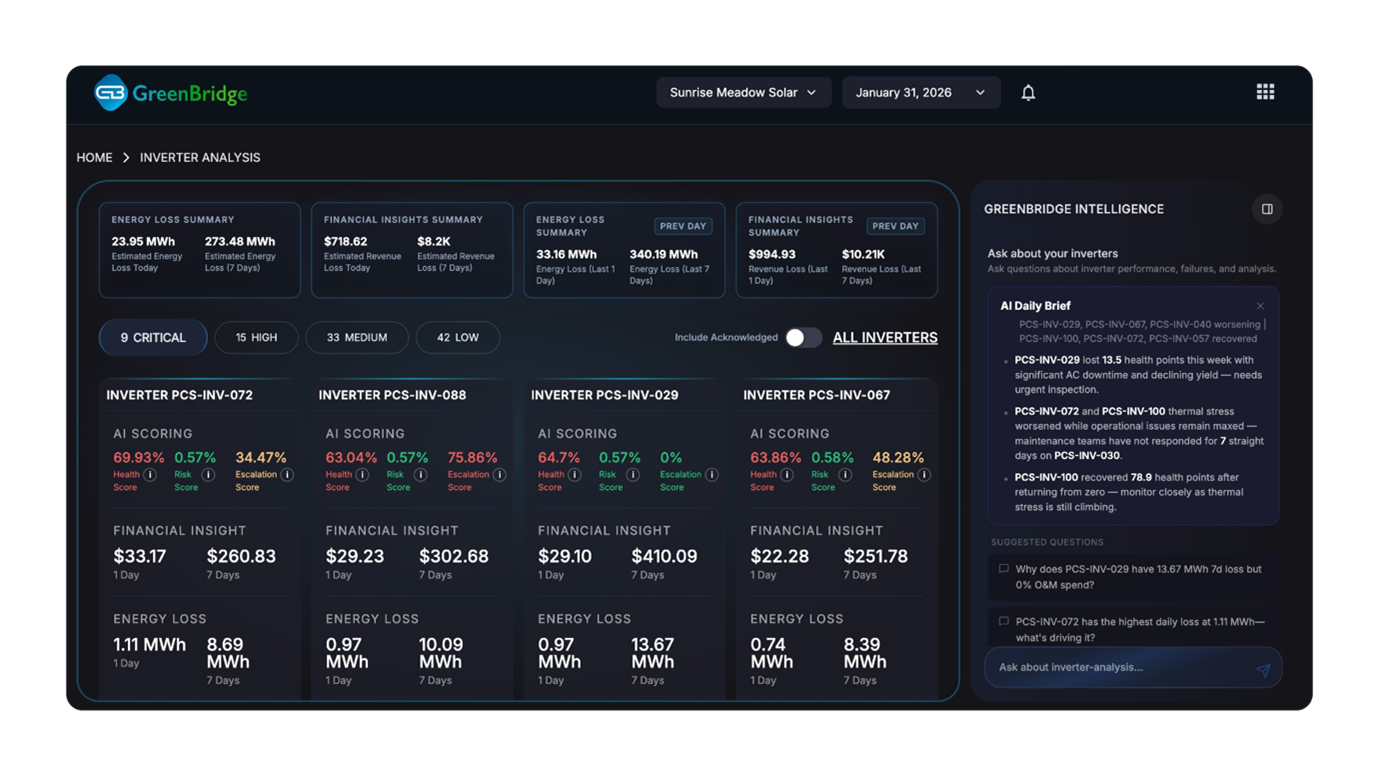 Figure 2.1: Screenshot of the GreenBridge.AI Inverter Analysis Agent showing a fleet-wide inverter operations view with AI-generated health, risk, and escalation scores, estimated energy and revenue loss summaries, inverter prioritization by criticality, and a conversational intelligence panel surfacing operational insights and maintenance recommendations.
The Inverter Analysis agent provides a portfolio-wide operational view across inverter fleets. The system continuously evaluates asset health, operational risk, escalation priority, estimated energy loss, and financial impact, while surfacing the highest-priority assets requiring attention. A conversational intelligence interface enables operators to investigate failures, understand operational degradation trends, and retrieve AI-generated maintenance insights through natural language interactions.
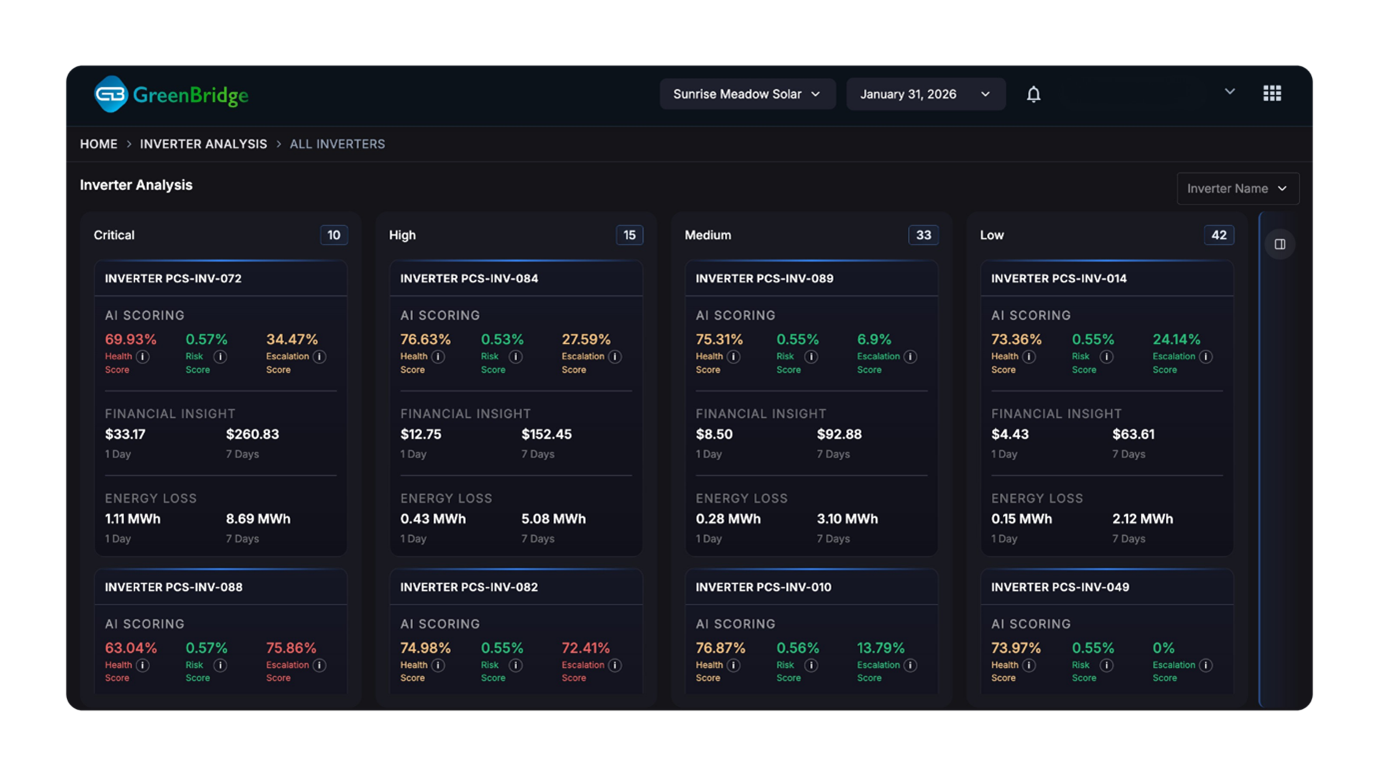 Figure 2.2: Screenshot of the GreenBridge.AI Inverter Analysis Agent showing inverters grouped into Critical, High, Medium, and Low priority categories based on AI-generated health, risk, and escalation scoring, alongside estimated revenue loss and energy loss metrics for each inverter.
The Inverter Analysis agent continuously scores and ranks inverters using operational severity, degradation patterns, and business impact signals. Assets are grouped into Critical, High, Medium, and Low priority tiers, enabling operations teams to focus maintenance efforts on the most impactful issues first. Each inverter analysis includes projected revenue impact, estimated energy loss, and escalation indicators that help accelerate operational decision-making across the portfolio.
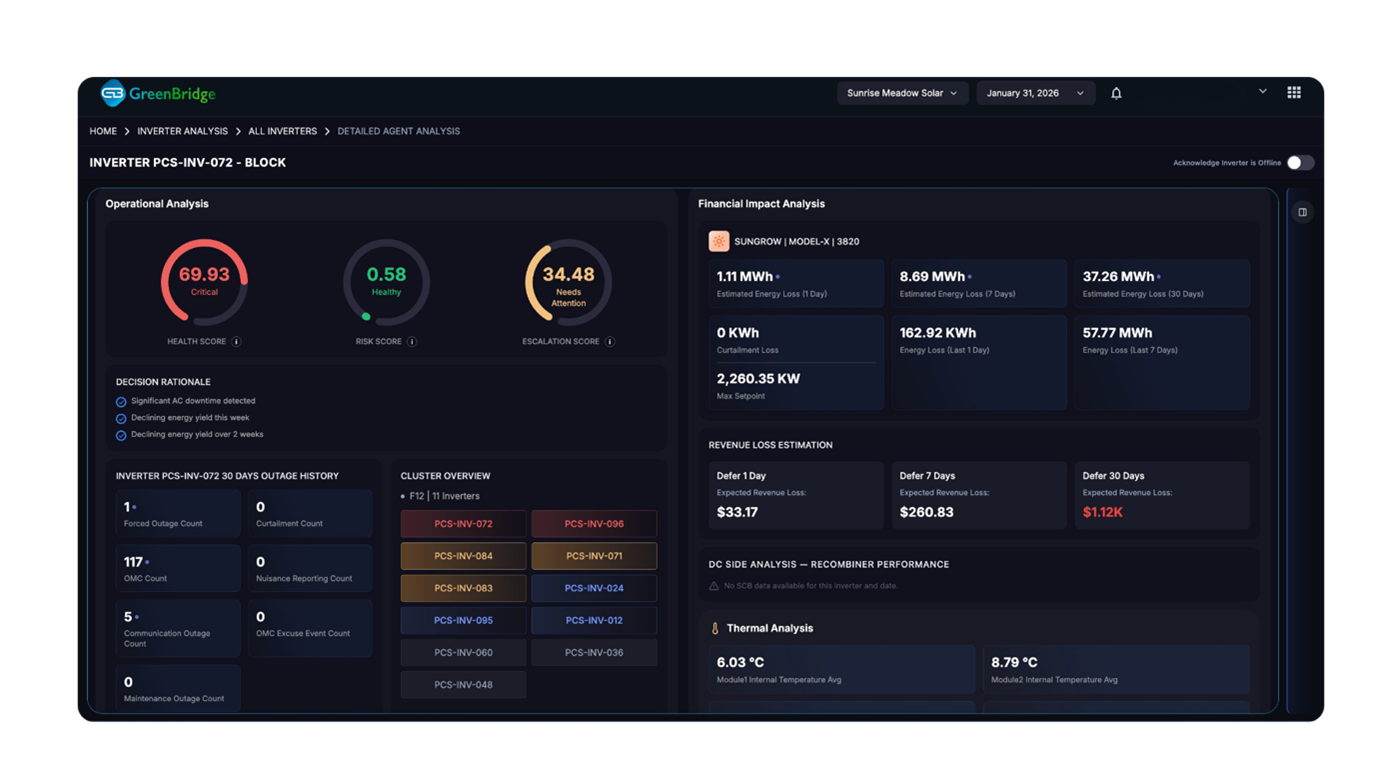
Figure 2.3: Screenshot of the GreenBridge.AI Detailed Inverter Analysis interface showing operational health scoring, escalation analysis, outage history, cluster-level inverter comparison, financial impact analysis, revenue loss estimation, thermal analysis, and AI-generated operational rationale for an individual inverter asset.
Drilling into an individual inverter surfaces a detailed operational and financial analysis generated by the AI agent. The system explains why the asset has been flagged, highlights outage and communication event history, compares inverter behavior against peer assets within the same cluster, and quantifies projected business impact through estimated energy and revenue loss calculations. Supporting thermal analysis and operational diagnostics help maintenance teams accelerate root-cause investigation and corrective action planning.
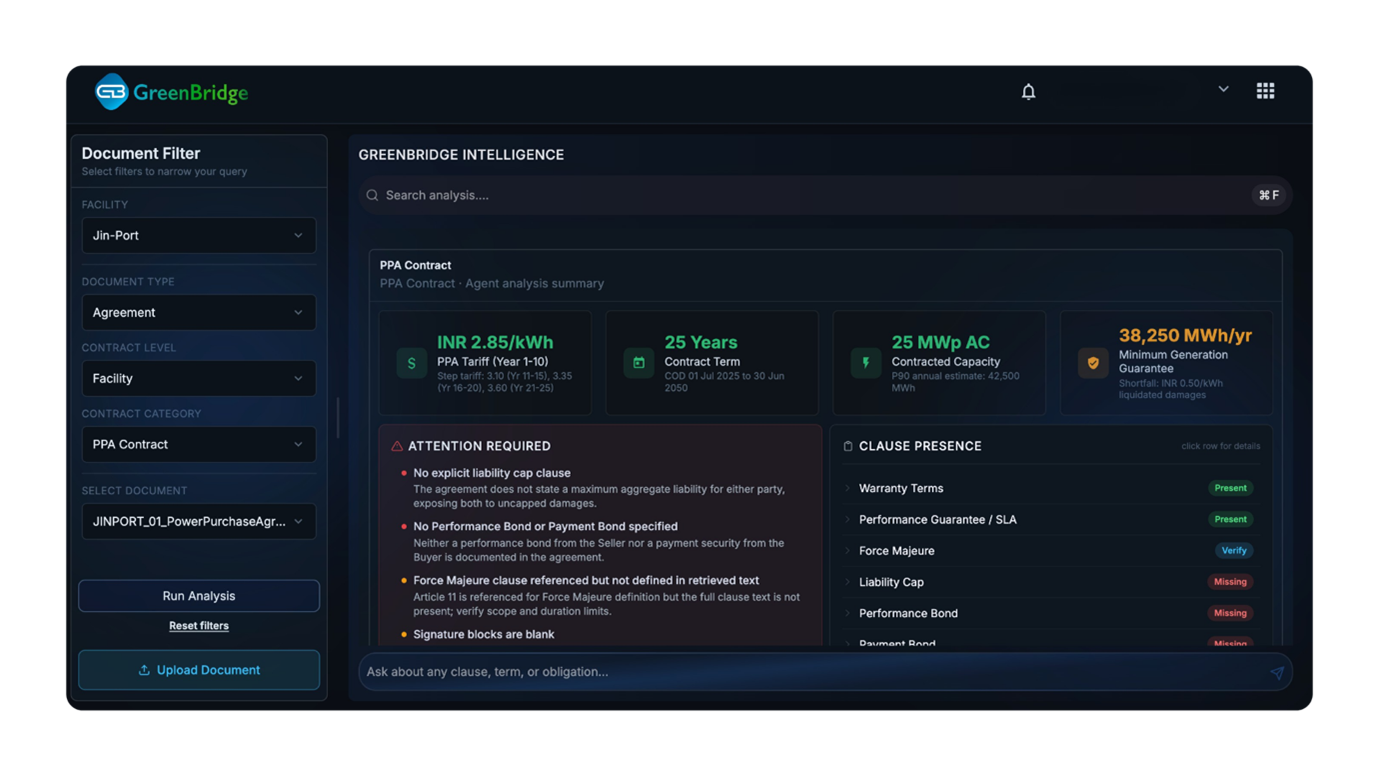
Figure 3.1: Screenshot of the GreenBridge.AI Document Intelligence Agent showing AI analysis of a power purchase agreement (PPA), including extracted commercial terms, contract duration, generation guarantees, operational risk flags, and clause validation analysis for key contractual protections.
The Document Intelligence agent, powered by Amazon Bedrock Knowledge Bases, ingests PPA and O&M agreements and returns structured operational analysis immediately. Key contract terms are extracted into structured KPI summaries, while an Attention Required panel flags material risks such as missing liability caps, incomplete insurance details, and undefined contractual protections. A Clause Presence analysis verifies which standard contractual safeguards are present, missing, or require review. Operators can also query clauses, obligations, and contractual conditions using natural language interactions.
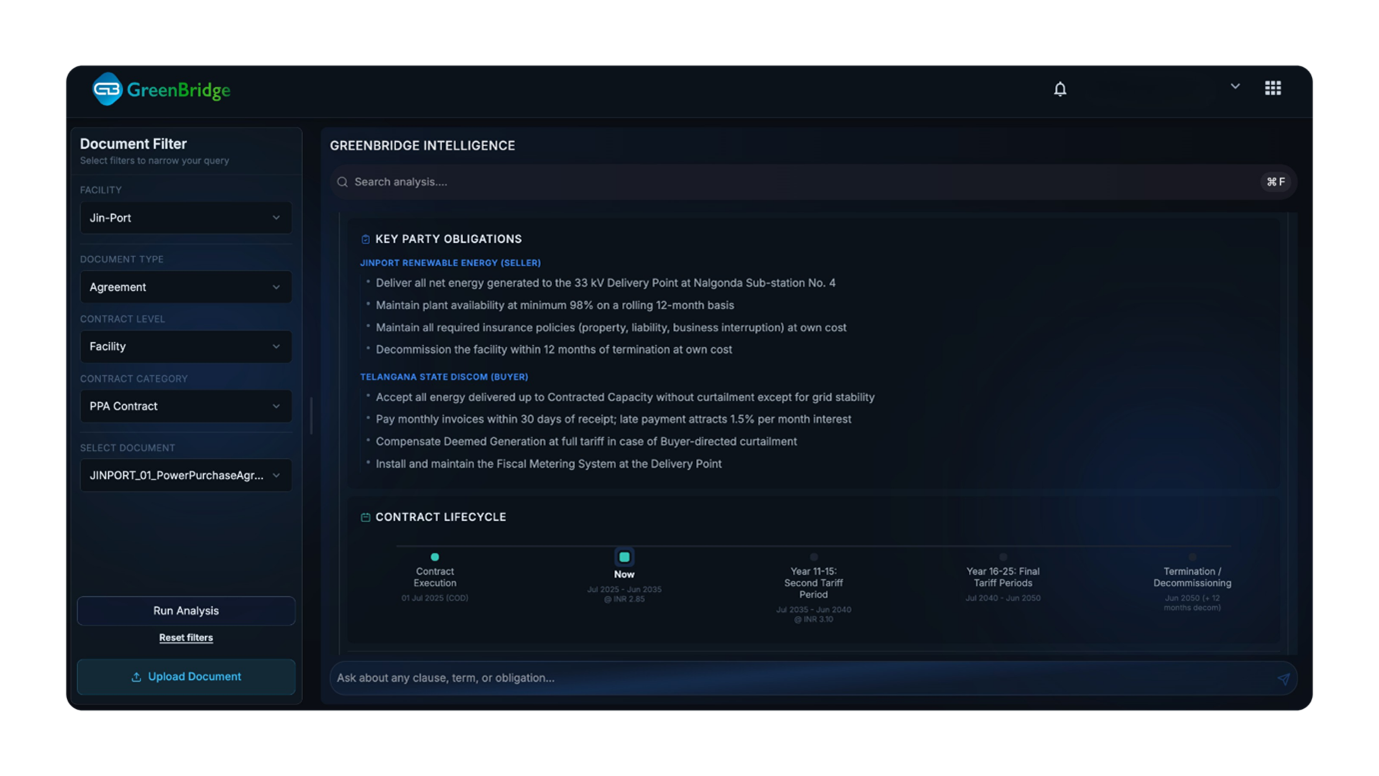 Figure 3.2: Screenshot of the GreenBridge.AI Document Intelligence Agent showing extracted contractual obligations, operational responsibilities, tariff lifecycle milestones, and agreement timelines from a power purchase agreement using AI-driven document analysis.
The Document Intelligence agent transforms complex contractual language into structured operational intelligence. The system extracts key party obligations, maintenance responsibilities, payment terms, curtailment conditions, and lifecycle milestones from large agreements, enabling operators and commercial teams to quickly understand long-term contractual commitments. Timeline visualization and AI-assisted obligation analysis help reduce manual document review effort while improving operational visibility and compliance readiness.
Security, compliance, and responsible AI
GreenBridge.AI is designed with security and compliance as foundational principles, embedding governance, access control, and auditability into every deployment.
To support responsible AI operations, GreenBridge.AI uses the following AWS services and platform capabilities:
- Role-based access control and audit logging, using AWS Identity and Access Management (IAM), and AWS CloudTrail, to enforce least-privilege permissions and record user and agent activity
- Human oversight mechanisms for critical or high-impact decisions, enabling review and validation before execution
- Explainable agent actions supported by decision logs, providing transparency into recommendations and actions
The GreenBridge.AI security and compliance cycle, as illustrated in the following diagram, combines access control, activity logging, and human review to support governed and auditable AI-driven operations across energy workflows.
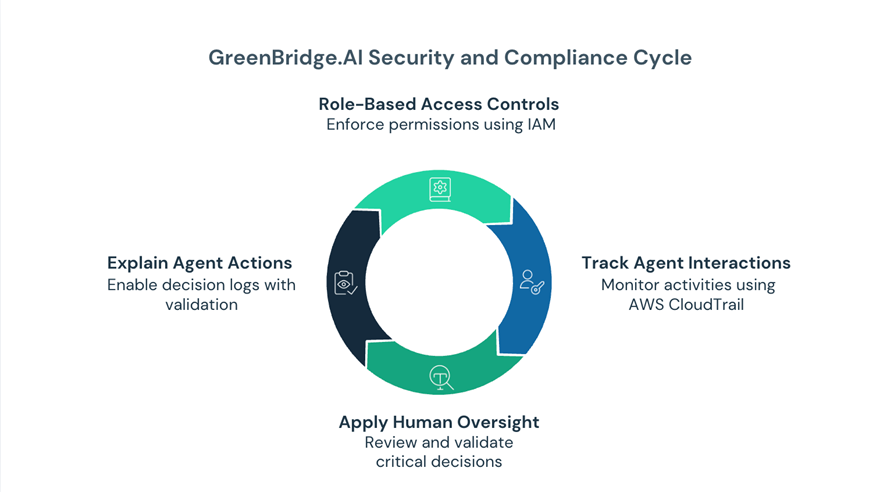
Figure 4: Diagram of the GreenBridge.AI Security and Compliance Cycle
The GreenBridge.AI and AWS advantage
The GreenBridge.AI platform is deeply integrated with AWS, as illustrated in the following diagram:
- Amazon OpenSearch Service and Amazon Simple Storage Service (Amazon S3) store and index structured and unstructured operational documents, including manuals, fault libraries, and procedures, which agents reference during analysis and execution
- IAM enforces role-based access control across users, services, and agents
- CloudTrail records API activity and agent interactions to support auditing and operational traceability
GreenBridge.AI continues to evolve its agentic AI framework, including ongoing evaluation of additional observability, control, and monitoring capabilities, as customer and operational requirements develop.
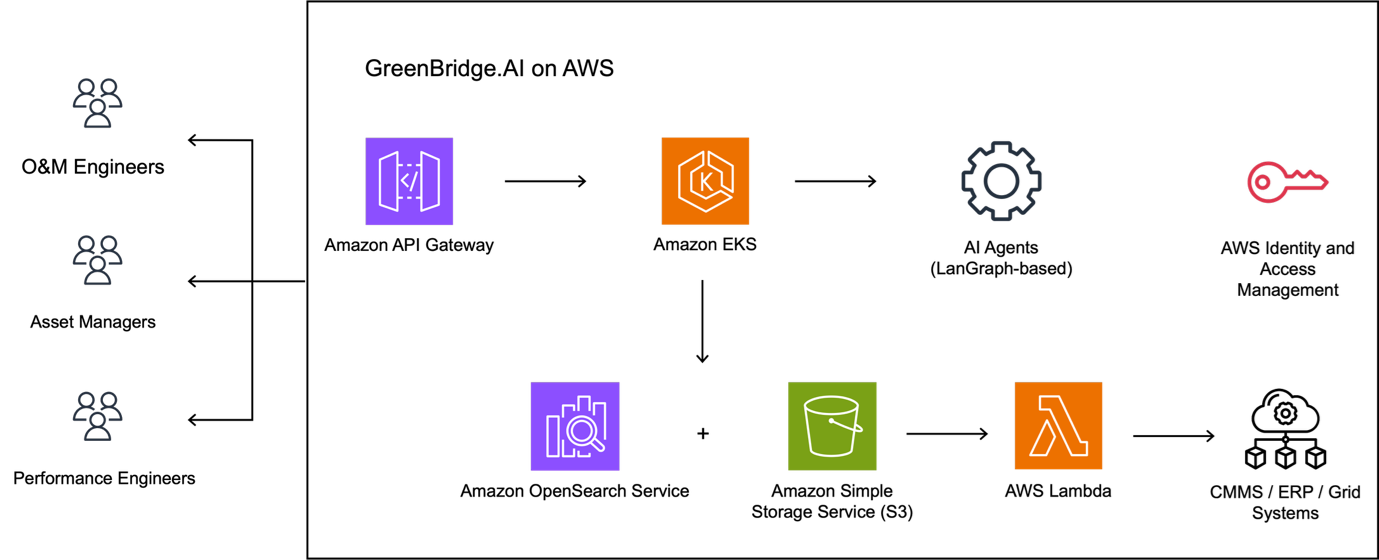
Figure 5: GreenBridge.AI architecture overview
The GreenBridge.AI platform is available on AWS Marketplace and is designed for fast onboarding with long-term extensibility. GreenBridge.AI is delivered as a software as a service (SaaS) application hosted on AWS. Customers access the platform through secure, credentialed links provisioned by the GreenBridge.AI team. This provides controlled onboarding and role-based permissions aligned with their operational needs.
Conclusion
The era of passive analytics is over in a market where every megawatt matters. Renewable operators need AI that doesn’t only advise, but acts.
The GreenBridge.AI platform, built on AWS infrastructure, delivers an agentic AI solution that transforms complex data into intelligent action, and fragmented workflows into seamless execution. It also innovates reactive troubleshooting into autonomous performance optimization.
As the industry evolves, the next frontier lies in scaling these capabilities across fleets, Regions, and energy types. Operators need to be able to move from insight to autonomous decision-making—changing siloed data into collaborative coordinated, portfolio-wide performance gains.
To see how the agentic AI solution from GreenBridge.AI can transform your solar, wind, or BESS operations, request a tailored executive briefing. Or contact an AWS representative for more information about how we can help accelerate your business.
Further reading
- AWS Lambda Developer Guide – Learn how AWS Lambda supports event-driven architectures and integrates with downstream systems
- Security best practices in IAM – Review guidance for enforcing least-privilege access and governing enterprise workloads
- Amazon OpenSearch Service Developer Guide – An overview of how OpenSearch Service enables search and analytics for structured and unstructured data