AWS for Industries
Modernize Siemens Teamcenter Infrastructure with Certified Amazon RDS
In the modern manufacturing environment, Product Lifecycle Management (PLM) systems have become essential for competitive advantage. By establishing a single source of truth for product data from initial design through manufacturing, service, and end-of-life, PLM enables manufacturers to make faster decisions, reduce errors, and bring products to market more quickly. For manufacturers using Siemens Teamcenter as their PLM system, the underlying database infrastructure plays an important role in determining business agility and system performance.
With Amazon Relational Database Service for Oracle and Amazon Relational Database Service for SQL Server now certified for Teamcenter, we explore in this post how these fully managed database services deliver high availability, reduced operational overhead, and enterprise-grade security for PLM deployments.
As engineering and manufacturing process complexity grows, the on-premises database infrastructure supporting Teamcenter becomes increasingly challenging to manage at scale. This certification enables customers to migrate to Amazon Web Services (AWS) and adopt fully managed database services to de-risk operations, optimize Total Cost of Ownership (TCO), and accelerate product innovation.
Siemens Teamcenter with Amazon RDS
Siemens Teamcenter is a comprehensive Product Lifecycle Management (PLM) solution that manages data throughout the entire product lifecycle, from initial concept through design, manufacturing, service, and end of life. By establishing a single source of truth, Teamcenter connects mechanical, electrical, and software components of a product, accelerating development cycles, minimizing errors, and ensuring compliance while driving sustainable product innovation.
Given this comprehensive scope of managing complex bill of materials (BOM), documentation, and product data across engineering disciplines spanning the entire product lifecycle, Teamcenter is a data-intensive application where database performance at scale directly impacts user experience and engineering throughput. For example, the PLM system’s ability to serve as a single source of truth depends on rapid data retrieval and processing, making database operational excellence critical to achieving the accelerated development cycles, error reduction, and productivity improvements.
Amazon Relational Database Service (Amazon RDS) is a fully managed database service that reduces the operational complexity of on-premises enterprise databases. For organizations modernizing their infrastructure, Amazon RDS delivers automated provisioning, patching, backup, and recovery across multiple database engines, enabling your teams to focus on innovation rather than database administration. With built-in high availability through Multi-AZ (Availability Zone) deployments, and integration with AWS security and monitoring services, Amazon RDS provides the performance, reliability, and compliance controls that organizations demand.
Migrating Teamcenter to AWS enables technology leaders to transition from capital-intensive infrastructure investments to a predictable, optimized operating expense model while redirecting focus from infrastructure administration to engineering value creation. The architecture diagram below depicts how Teamcenter can be deployed on AWS cloud infrastructure, with Amazon RDS functioning as the centralized managed database layer supporting both Oracle and Microsoft SQL Server database engines compatible with Teamcenter. This architecture illustrates the Teamcenter servers and Amazon RDS database instances deployed within a protected Amazon Virtual Private Cloud (VPC), emphasizing the Multi-AZ deployment strategy that delivers continuous availability through automated failover mechanisms.
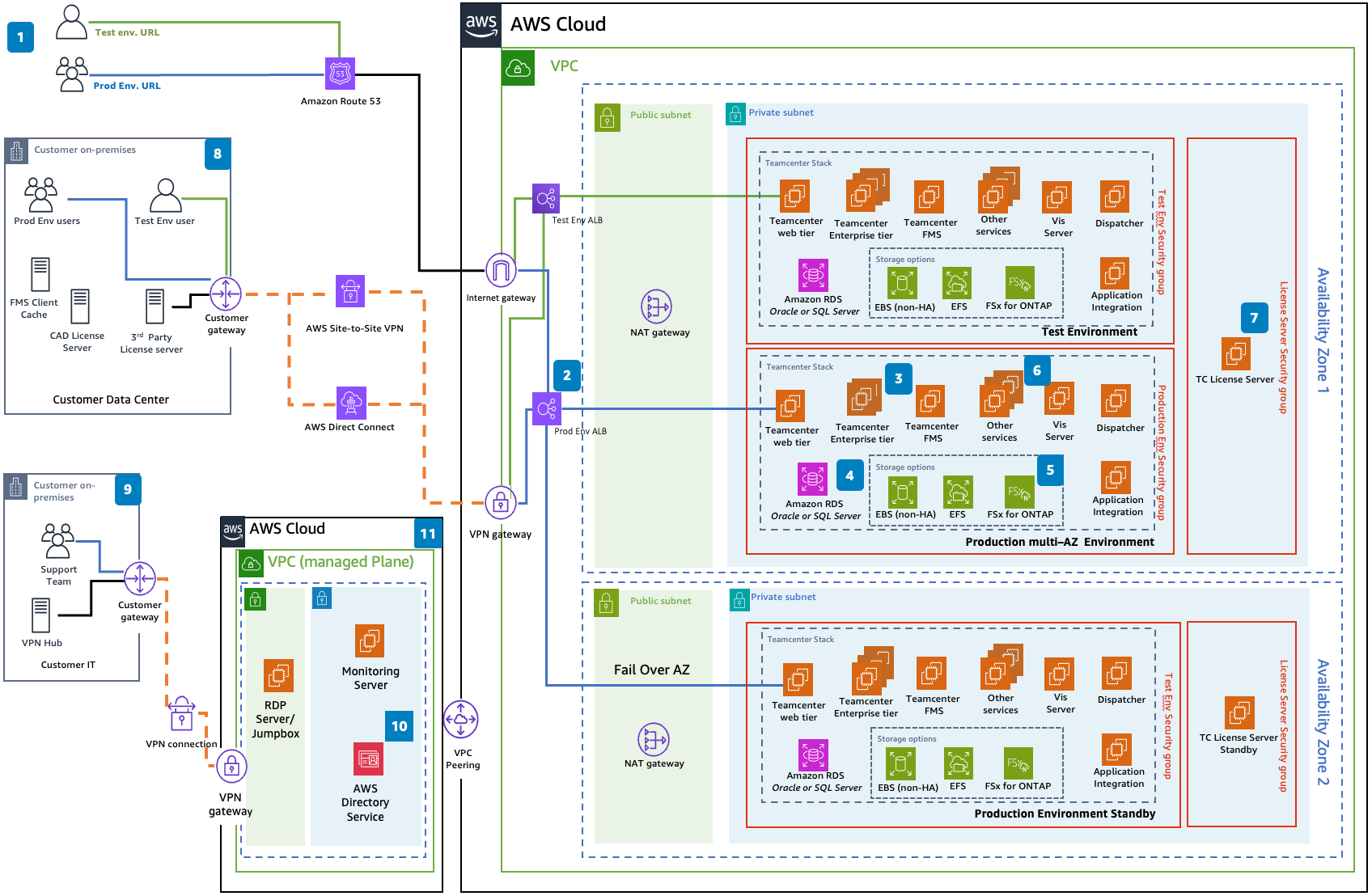
Figure 1: Siemens Teamcenter Architecture on AWS
Refer to the official Teamcenter on AWS architecture jointly published by Siemens and AWS to learn more about AWS services you can use for deploying Teamcenter in your AWS account.
Database and Licensing Options
AWS provides flexible licensing options for Amazon RDS for Oracle and Amazon RDS for SQL Server to support Siemens Teamcenter deployments. For Oracle, customers can choose License Included (LI) for Standard Edition 2 (SE2), where AWS manages the Oracle Database license and compliance, or Bring Your Own License (BYOL) for both SE2 and Enterprise Edition, which allows organizations to leverage existing Oracle investments with appropriate Software Update License and Support.
For SQL Server, Amazon RDS offers a License Included model covering software, infrastructure, and management across multiple editions, as well as Bring Your Own Media (BYOM), which allows customers who migrate from on-premises environments to adopt a managed database service on AWS and reuse their existing Microsoft SQL Server licenses, including Software Assurance, through Microsoft’s License Mobility program. Through flexible pricing models like On-Demand Instances, Reserved Instances, and Database Savings Plans, customers can optimize their infrastructure costs to align with specific business requirements.
Enterprise Resilience and Business Continuity
For global manufacturers, the availability of the PLM system is paramount. Downtime in Teamcenter can halt engineering work across multiple time zones. Achieving high availability (HA) for on-premises databases often involves complex configurations that are difficult to implement and sustain. Amazon RDS addresses this requirement through Multi-AZ deployments. In the architecture above, Amazon RDS maintains a synchronous standby instance in a physically separate Availability Zone, which provides the following benefits:
- Automated Failover: If an infrastructure failure occurs, Amazon RDS initiates an automatic failover to the standby instance with minimal downtime.
- Minimized Risk: This redundant architecture keeps the PLM environment highly available, reducing the risk of unplanned downtime.
- Data Integrity: Synchronous replication helps ensure data remains consistent and protected against localized disruptions.
Operational Excellence and Elastic Scalability through Managed Services
Amazon RDS streamlines database management by automating time-consuming routine administrative tasks. Where traditional database systems demand substantial effort for infrastructure setup, OS updates, and software patching, Amazon RDS handles these tasks automatically through scheduled maintenance windows. This managed service approach frees technical teams to focus on strategic initiatives and digital transformation projects instead of routine upkeep.
As PLM implementations grow and more engineering teams come onboard, database workloads increase correspondingly. With traditional on-premises hardware, customers overprovision infrastructure for peak capacity from day one. Both Amazon RDS for Oracle and Amazon RDS for SQL Server provide an elastic, fully managed solution where you can scale compute and memory resources to meet changing demands, while storage can automatically scale up when enabled to accommodate growing data volumes. Furthermore, for intensive engineering cycles, Amazon RDS offers Provisioned IOPS that provides consistent IOPS and throughput, preventing database bottlenecks during heavy simultaneous read/write operations. Together, these managed capabilities help ensure your PLM infrastructure adapts to engineering demands efficiently, maximizing performance while optimizing resource utilization and removing overprovisioning costs.
Intellectual Property Security
Intellectual property represents a manufacturer’s most critical asset, necessitating a security framework for product data management that is both comprehensive and aligned with international compliance standards.
Deploying Teamcenter with Amazon RDS provides a hardened foundation for IP protection. Amazon RDS encrypts data at rest using hardware-accelerated EBS encryption, with encryption keys managed by AWS Key Management Service (AWS KMS) and data in transit is encrypted using secure communication protocols. Amazon Virtual Private Cloud (VPC) isolates resources from the public internet with granular access controls. Comprehensive compliance certifications, including SOC and ISO standards, along with infrastructure designed to support ITAR compliance requirements, streamline auditing processes for highly regulated sectors. This integrated security architecture allows organizations in regulated industries to protect their critical product data while meeting stringent regulatory requirements and maintaining operational flexibility.
Conclusion: A Foundation for Digital Transformation
The goal of any PLM implementation is to help manufacturers design better products and get them to market faster. By offloading the complexities of database management to Amazon RDS, organizations gain the stability, scalability, and security required to maintain a competitive edge.
As manufacturers continue to build more integrated and data-intensive PLM capabilities, the database infrastructure becomes increasingly critical. Leveraging Amazon RDS for the core Teamcenter database helps ensure the technical foundation is robust enough to support seamless collaboration, real-time data access, and the next generation of product innovation.
AWS Marketplace offers a comprehensive range of Siemens Digital Industries Software solutions. Explore the full list of Siemens products available on AWS Marketplace and visit the official partnership website to learn more about the collaboration between AWS and Siemens. For a better understanding of the benefits of purchasing Siemens software on AWS Marketplace, refer to the Siemens blog, How AWS Marketplace transforms the buying experience on the cloud.
Special thanks to additional contributors to this blog including:
- Anantha Darbha (Product Manager Teamcenter Cloud, Siemens)
- Dimitrios Dovas (Head of Cloud Product Management, Siemens)
- Donna Yasay (AWS Senior Leader, Solutions Architect – Automotive and Manufacturing)
- Jerome Darko (WW Database Migration SSA, AWS)
- Thomas Jones (Sr. Manager, WW Tech Partners, AWS)