Artificial Intelligence
Category: Amazon SageMaker

Using genetic algorithms on AWS for optimization problems
Machine learning (ML)-based solutions are capable of solving complex problems, from voice recognition to finding and identifying faces in video clips or photographs. Usually, these solutions use large amounts of training data, which results in a model that processes input data and produces numeric output that can be interpreted as a word, face, or classification […]
Automating complex deep learning model training using Amazon SageMaker Debugger and AWS Step Functions
Amazon SageMaker Debugger can monitor ML model parameters, metrics, and computation resources as the model optimization is in progress. You can use it to identify issues during training, gain insights, and take actions like stopping the training or sending notifications through built-in or custom actions. Debugger is particularly useful in training challenging deep learning model […]

This month in AWS Machine Learning: January edition
Hello and welcome to our first “This month in AWS Machine Learning” of 2021! Every day there is something new going on in the world of AWS Machine Learning—from launches to new to use cases to interactive trainings. We’re packaging some of the not-to-miss information from the ML Blog and beyond for easy perusing each […]
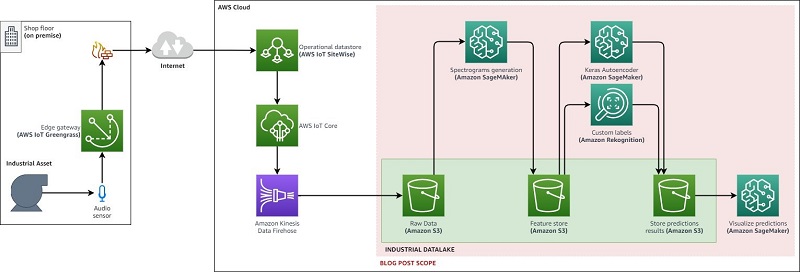
Performing anomaly detection on industrial equipment using audio signals
Industrial companies have been collecting a massive amount of time-series data about operating processes, manufacturing production lines, and industrial equipment. You might store years of data in historian systems or in your factory information system at large. Whether you’re looking to prevent equipment breakdown that would stop a production line, avoid catastrophic failures in a […]

Managing your machine learning lifecycle with MLflow and Amazon SageMaker
June 2024: The contents of this post are out of date. We recommend you refer to Announcing the general availability of fully managed MLflow on Amazon SageMaker for the latest. With the rapid adoption of machine learning (ML) and MLOps, enterprises want to increase the velocity of ML projects from experimentation to production. During the […]
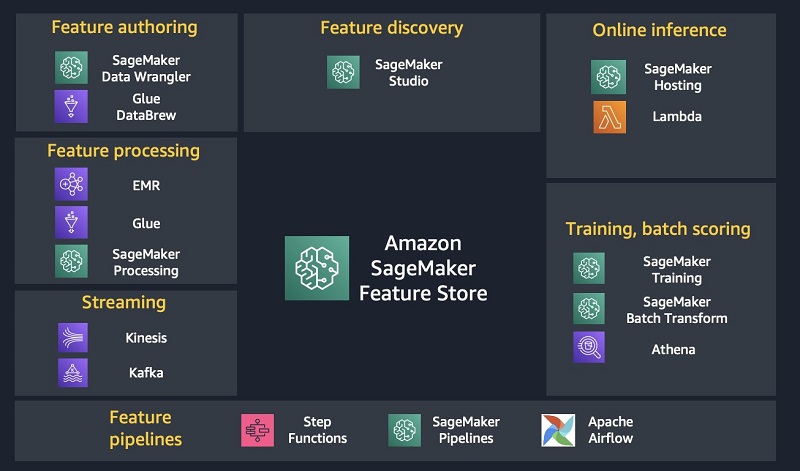
Understanding the key capabilities of Amazon SageMaker Feature Store
October 2022: This post was reviewed and updated for accuracy. One of the challenging parts of machine learning (ML) is feature engineering, the process of transforming data to create features for ML. Features are processed data signals used for training ML models and for deployed models to make accurate predictions. Data scientists and ML engineers […]

Saving time with personalized videos using AWS machine learning
CLIPr aspires to help save 1 billion hours of people’s time. We organize video into a first-class, searchable data source that unlocks the content most relevant to your interests using AWS machine learning (ML) services. CLIPr simplifies the extraction of information in videos, saving you hours by eliminating the need to skim through them manually […]
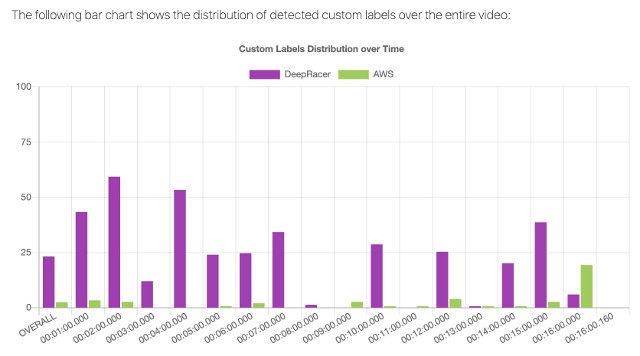
Building your own brand detection and visibility using Amazon SageMaker Ground Truth and Amazon Rekognition Custom Labels – Part 1: End-to-end solution
According to Gartner, 58% of marketing leaders believe brand is a critical driver of buyer behavior for prospects, and 65% believe it’s a critical driver of buyer behavior for existing customers. Companies spend huge amounts of money on advertisement to raise brand visibility and awareness. In fact, as per Gartner, CMO spends over 21% of […]

Multi-account model deployment with Amazon SageMaker Pipelines
Amazon SageMaker Pipelines is the first purpose-built CI/CD service for machine learning (ML). It helps you build, automate, manage, and scale end-to-end ML workflows and apply DevOps best practices of CI/CD to ML (also known as MLOps). Creating multiple accounts to organize all the resources of your organization is a good DevOps practice. A multi-account […]
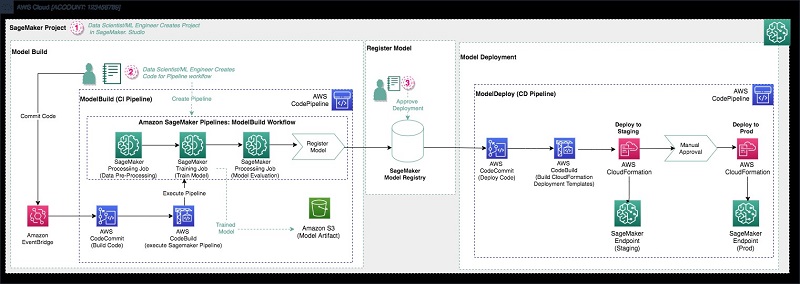
Building, automating, managing, and scaling ML workflows using Amazon SageMaker Pipelines
March 2025: This post was reviewed and updated for accuracy. We have Amazon SageMaker Pipelines, the first purpose-built, easy-to-use continuous integration and continuous delivery (CI/CD) service for machine learning (ML). SageMaker Pipelines is a native workflow orchestration tool for building ML pipelines that take advantage of direct Amazon SageMaker integration. Three components improve the operational resilience and reproducibility of your […]