AWS Public Sector Blog
A Decade of Innovation: Celebrating 10 Years of Impact at AWS Imagine for Nonprofits
How the nonprofit sector is leading the way on responsible AI, data equity, and mission-driven technology — and what’s next.
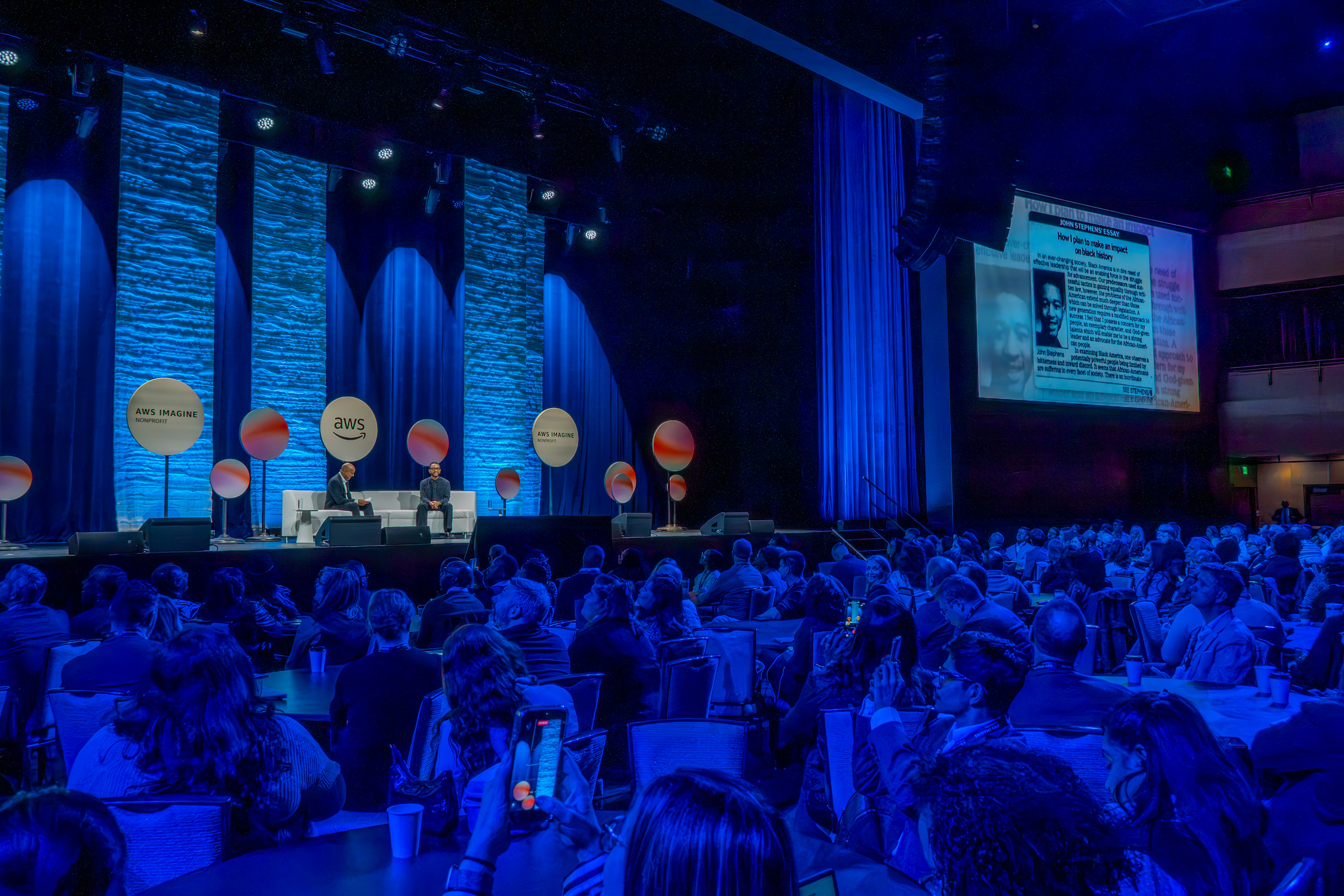
This year’s AWS Imagine for Nonprofits conference marked a milestone: 10 years of bringing together nonprofit leaders, technologists, and mission-driven innovators to explore how technology can accelerate social and environmental impact.
Held at MGM National Harbor in Oxon Hill, Maryland, the event was equal parts anniversary celebration of all nonprofits have achieved in the last decade and forward-looking summit on the opportunity ahead.
As Rick Buettner, Managing Director of Global Nonprofits at AWS, reminded the packed room, “At Amazon, it’s always day one. What that means is that we’re just getting started.”
This year also coincides with the 20th anniversary of Amazon Web Services (AWS), adding extra weight to the reflection on how far cloud and AI technology have advanced with the sector. Over the course of the day, attendees heard from nonprofit leaders, AWS executives, and a Grammy and Oscar-winning artist and philanthropist about the power of data, responsible AI, and cross-sector collaboration. Here are the key highlights and announcements from this year’s conference.
10 Years of nonprofit innovation
Lauren Stovall, Global Head of Nonprofit Programs at AWS and the creator of the Imagine Nonprofit Conference, opened her keynote remarks by capturing the spirit that has defined the event since its founding: “This event has always been designed with the acknowledgement that you all are innovators — because you have to be. When society falls short, you all are the ones that provide hope. When people are in need, you’re the ones that rush in to help. And when traditional systems fail, you build new ones.”
Looking back at a decade of sustained partnership, Stovall highlighted how nonprofit technology has evolved from early cloud experiments to sophisticated, AI-powered solutions that are transforming billions of lives. “The purposeful application of technology has transformed billions of lives and created pathways to serve billions more,” she said. “I think we can all agree: time well spent.”
Three organizations exemplify what a decade of innovation looks like in practice:
- THORN’s Safer platform has helped detect more than 12 million suspected child sexual abuse material (CSAM) files and content on online platforms — an enterprise-grade tool protecting children in the digital age at scale.
- Global Citizen’s AWS-powered app has activated 43 million actions, unlocked $49 billion in funding, and positively impacted 1.3 billion people — roughly one in six people on the planet.
- The Allen Institute has mapped the complete adult mouse brain, simulating 10 million neurons and 26 billion synapses, paving the way for the first map of the human brain and enabling AI-powered inferences about diseases like Alzheimer’s and Parkinson’s.
“That refusal to accept the status quo, paired with innovative thinking, is what makes nonprofits so special.”
— Lauren Stovall, Global Head of Nonprofit Programs, AWS
Amplifying voices with AI: Fair Trade USA
Felipe Arango, CEO of Fair Trade USA, delivered one of the keynote’s most compelling addresses — a challenge to technologists and nonprofits alike to ensure that the AI benefits the people who need it most.
“AI can predict what you’ll buy before you even know you want it,” Arango told the audience. “But the person that grew that product still doesn’t have access to clean water or to health and educational opportunities for their kids. Consumers don’t choose what they don’t see. And today, too many people at the beginning of our supply chains are still invisible. That’s not a technology gap. That is a design gap.”
The numbers underscore the urgency: 75% of the world’s poor still live in rural areas; by 2050, half of the suitable land for growing coffee could disappear in some regions while 125 million people depend on that crop worldwide.
Over nearly three decades, Fair Trade USA has built a model grounded in one belief: “The people closest to the problems are also the closest ones to the solution.” The results are tangible: $1.3 billion mobilized supporting over 1.6 million farmers, fishers, and workers across operations spanning 50+ countries, with more than 1,500 brands participating in the fair trade movement and 30+ years of producer community data now being unlocked with AI.
“Data is becoming the new land, and power is shifting with it. Who owns it, who understands it, and who benefits from it — if producers don’t own their data, they will be ridden out of the future.”
— Felipe Arango, CEO, Fair Trade USA
To address this, Fair Trade USA is leveraging Amazon Bedrock to amplify producer voices at scale. Their vision is to move “from labels to lived outcomes, from claims to evidence” — building a system where every product carries a living story owned and told by producers, visible at the moment of discovery, at the moment of purchase, and long after.
“Imagine buying coffee and instantly seeing the people and the solutions that your purchase supported — not as marketing, but as truth,” Arango said. “We have the tools. We have the moment. The question is what we choose to build, and for whom.”
Arango framed the AWS partnership as critical infrastructure for this vision: “You are building infrastructure that can help shape how people make informed decisions. We are building systems to ensure those decisions include everyone. Together we can make fairness the default — not a filter, not a feature, the foundation of trade.”
Protecting the natural world: Jane Goodall Institute
Dr. Lilian Pintea, Vice President of Conservation Science at the Jane Goodall Institute, took the audience back 25 years to a candlelit table at Jane’s house in Gombe National Park — the moment he and Dr. Goodall first reviewed satellite imagery showing all the trees of Gombe from space.
“Jane looked at me and said, ‘This is magic,'” Pintea recalled. “And I felt that we were at the beginning of a special journey.”
That journey has led to one of the most ambitious digital preservation efforts in science. JGI’s Gombe Stream Research Center holds the world’s longest ongoing study of chimpanzees — 66 years of continuous observation. The scale of the archive is extraordinary: 500,000+ pages of handwritten research notes in local Kiswahili and Kiga languages with unique JGI notation, decades of video and audio recordings including soundscapes from Gombe, and the only location in the world tracking five generations of chimpanzees and their individual life histories.
The challenge: digitizing even the last third of the chimpanzee archive at the current manual pace would take 13 years. The AWS Generative AI Innovation Center visited Gombe last August to understand data workflow gaps — and the collaboration that followed has been transformative.
“With AWS, we’re making sure the next generation of researchers and conservationists doesn’t just inherit that knowledge — they build on it.”
— Dr. Lilian Pintea, VP of Conservation Science, Jane Goodall Institute
In one of her last videos, Dr. Jane Goodall herself articulated the vision: “AI technologies should be considered as tools used to address the needs of local communities and support them in the stewardship of the land so that it will improve the lives of people, animals, and the environment. All of which is interconnected.”
Responsible AI: AWS’s framework for the nonprofit sector
A key theme throughout the day was a focus on building a strong data strategy. Without a data foundation, AI has the potential to become ineffective and inaccurate. AWS is helping nonprofits build the data foundation first, then layer responsible AI on top. The approach includes:
- Automatically identifying sensitive data and securing it
- Centralizing data across siloed systems and governing it responsibly
- Automatically evaluating foundational models against organizational AI policies
- Keeping the human in the loop — “AI is serving us. We are not serving AI. We always have to remember that.”
FINCA International’s Aura platform offers a compelling proof point. Previously siloed across multiple poverty alleviation systems, FINCA centralized its data and then built Aura using Amazon Bedrock and Anthropic’s Claude. The result: researchers can now quickly identify which interventions work best for which communities, map new solutions, and give feedback to ensure the AI stays aligned with organizational goals.
National Geographic Society and AWS
Dave Levy, Vice President of Worldwide Public Sector at AWS, took the stage to bridge two themes that ran throughout the day: the power of legacy data and the transformative potential of AI-driven storytelling.
“One of the most powerful things technology can do is help us preserve information and learn from the past while we build for the future,” Levy said.
With that, he announced a landmark new partnership between the National Geographic Society and AWS. The National Geographic Society has spent 138 years documenting the world — ocean floors, ancient civilizations, vanishing ecosystems — amassing billions of assets. The partnership will digitize billions of assets from the National Geographic archive, use AI to make the archive searchable and accessible in entirely new ways, and increase the speed and scale of the Society’s storytelling for researchers, educators, and explorers worldwide.
Levy also reflected on his conversation with Dr. Goodall at last year’s Imagine conference: “That conversation has stayed with me nearly every day and it will always stay with me. I share her belief that we all have the power to make a difference every single day.”
A conversation with John Legend
In a fireside chat, Dave Levy sat down with Grammy and Oscar-winning artist, producer, and philanthropist, John Legend for a wide-ranging conversation about technology, storytelling, and systemic social change.
Their discussion explored Legend’s work in criminal justice reform, racial equity, and education — and how sustained cross-sector partnerships and committed advocacy can drive change at the systems level. Legend shared his perspective on the unique role nonprofits and technology play in building communities where dignity, safety, and opportunity are accessible to all.
AWS Imagine Grant: 2026–2027 cycle now open
AWS announced that the 2026–2027 funding cycle for the AWS Imagine Grant is now open. Since the program launched in 2018, AWS has awarded more than $21 million in unrestricted grants to more than 180 nonprofit organizations worldwide. The program is operational for eligible nonprofits based in five countries across the globe – the United States, Canada, United Kingdom, Australia, and New Zealand.
Stovall emphasized that the grant is designed to do more than fund technology projects — it’s meant to spark strategic thinking: “We really truly hope that the application process itself helps codify thinking, bring together stakeholders, and really start looking at how data, advanced cloud capabilities, and AI can be brought into your organizational strategy to amplify your work while also supercharging impact reporting and storytelling.”
Organizations interested in applying are encouraged to visit the AWS Imagine Grant website to learn more about eligibility and the application process. The deadline for the 2026-2027 grant cycle is June 5, 2026.
Building connections that drive impact
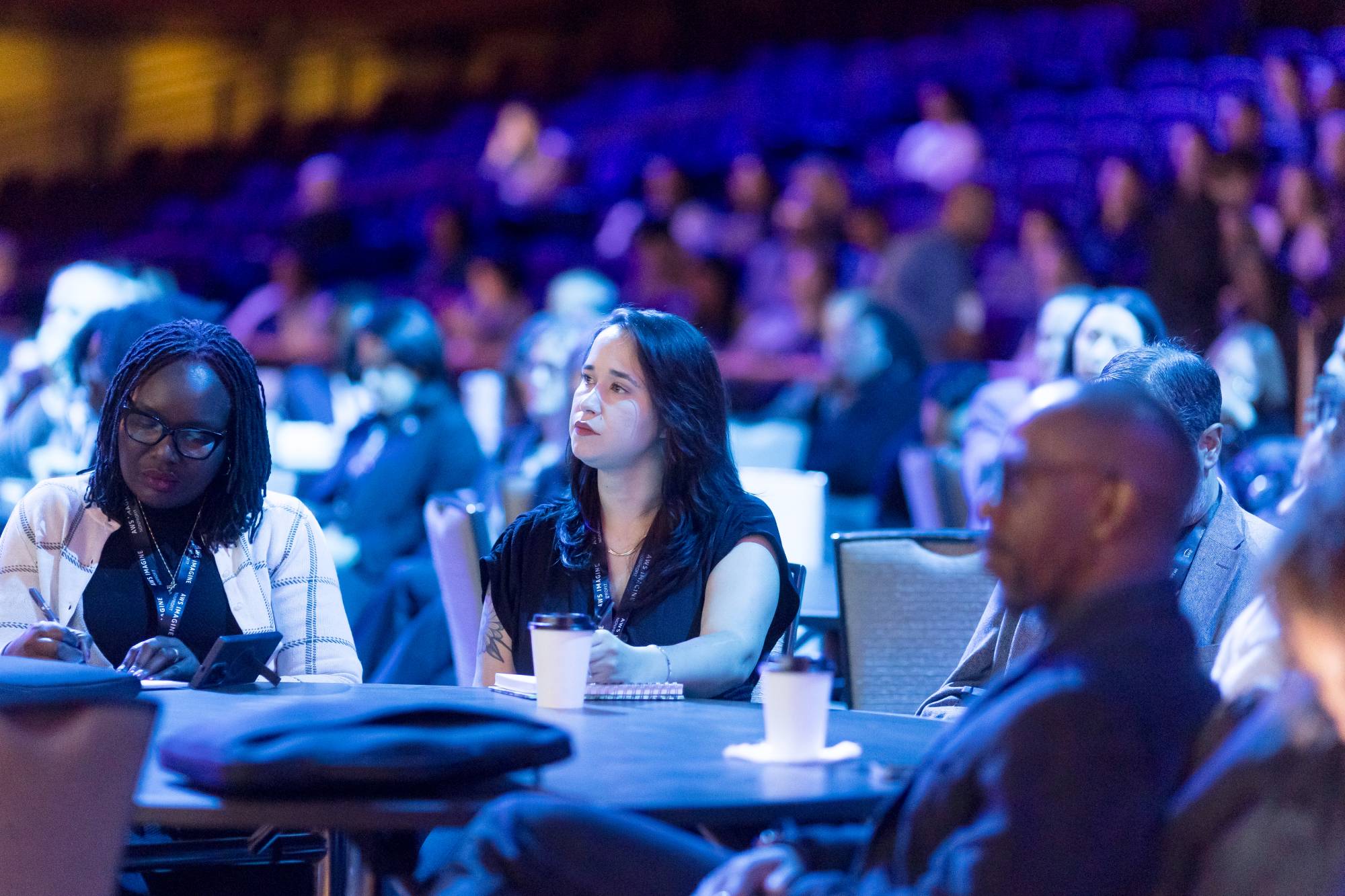
Beyond the keynote stage, AWS Imagine for Nonprofits 2026 offered attendees immersive opportunities to explore technology solutions, connect with experts, and experience the power of AWS tools firsthand.
At the AWS Builder’s Lounge, nonprofit technologists and mission leaders could engage directly with AWS solutions through hands-on workshops and 1:1 Solutions Architect consultations. Attendees explored practical implementations of cloud infrastructure, data analytics, and AI-powered tools designed specifically for nonprofit use cases. A diverse community of AWS partners were there, offering specialized expertise in areas ranging from data migration and security to custom application development and AI implementation. And, in the Impact Lounge, attendees had the opportunity to talk with the AWS for Nonprofits team, as well as discover resources and programs to help them accomplish their goals. Here, nonprofit leaders shared their journeys – the challenges they faced, the solutions they built, and the communities they serve.
Looking ahead: Day one for the next decade
The 2026 AWS Imagine for Nonprofits conference made one thing clear: the nonprofit sector is not just adopting AI — it is helping define what responsible, mission-driven AI looks like. From amplifying the voices of farmers and workers across the global supply chain to preserving 66 years of primate research before it is lost forever, nonprofits are proving that technology is most powerful when it is in service of something larger than efficiency.
If you couldn’t attend this year’s conference or would like to revisit your favorite sessions, check out the on-demand session library.
To learn more about how AWS supports nonprofits, visit the AWS for Nonprofits homepage. And if your organization is ready to accelerate its technology strategy, start a conversation with our team today.