AWS Security Blog
Category: Foundational (100)

AWS achieves HDS certification in two additional Regions
We’re excited to announce that two additional AWS Regions—Asia Pacific (Jakarta) and Europe (Milan)—have been granted the Health Data Hosting (Hébergeur de Données de Santé, HDS) certification. This alignment with HDS requirements demonstrates our continued commitment to adhere to the heightened expectations for cloud service providers. AWS customers who handle personal health data can use […]

Introducing the Security Design of the AWS Nitro System whitepaper
AWS recently released a whitepaper on the Security Design of the AWS Nitro System. The Nitro System is a combination of purpose-built server designs, data processors, system management components, and specialized firmware that serves as the underlying virtualization technology that powers all Amazon Elastic Compute Cloud (Amazon EC2) instances launched since early 2018. With the […]

Authority to operate (ATO) on AWS Program now available for customers in Spain
Meeting stringent security and compliance requirements in regulated or public sector environments can be challenging and time consuming, even for organizations with strong technical competencies. To help customers navigate the different requirements and processes, we launched the ATO on AWS Program in June 2019 for US customers. The program involves a community of expert AWS […]

How to use Amazon Verified Permissions for authorization
Applications with multiple users and shared data require permissions management. The permissions describe what each user of an application is permitted to do. Permissions are defined as allow or deny decisions for resources in the application. To manage permissions, developers often combine attribute-based access control (ABAC) and role-based access control (RBAC) models with custom code […]
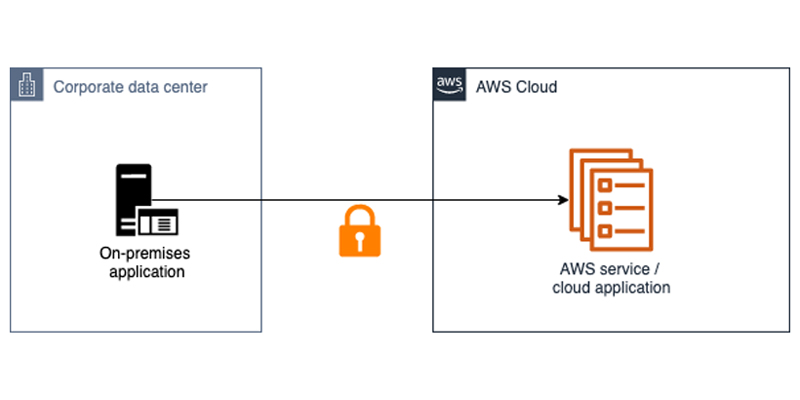
Approaches for authenticating external applications in a machine-to-machine scenario
December 8, 2022: This post has been updated to reflect changes for M2M options with the new service of IAMRA. This blog post was first published November 19, 2013. August 10, 2022: This blog post has been updated to reflect the new name of AWS Single Sign-On (SSO) – AWS IAM Identity Center. Read more […]
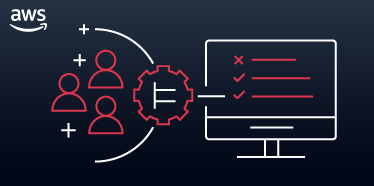
Get the best out of Amazon Verified Permissions by using fine-grained authorization methods
With the release of Amazon Verified Permissions, developers of custom applications can implement access control logic based on caller and resource information; group membership, hierarchy, and relationship; and session context, such as device posture, location, time, or method of authentication. With Amazon Verified Permissions, you can focus on building simple authorization policies and your applications—instead […]

AWS Digital Sovereignty Pledge: Control without compromise
French | German | Indonesian | Italian | Japanese | Korean | Portuguese | Spanish | Arabic We’ve always believed that for the cloud to realize its full potential it would be essential that customers have control over their data. Giving customers this sovereignty has been a priority for AWS since the very beginning when […]

AWS Security Profile: Sarah Currey, Delivery Practice Manager
In the weeks leading up to AWS re:invent 2022, I’ll share conversations I’ve had with some of the humans who work in AWS Security who will be presenting at the conference, and get a sneak peek at their work and sessions. In this profile, I interviewed Sarah Currey, Delivery Practice Manager in World Wide Professional […]
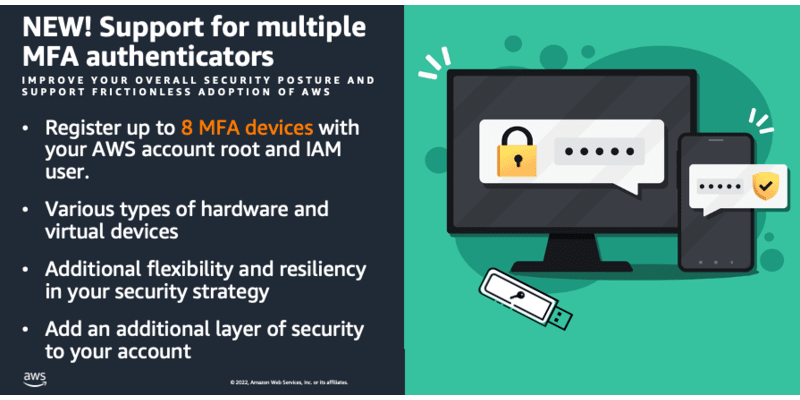
You can now assign multiple MFA devices in IAM
November 17, 2025: The MFA Security Key program, which provided eligible customers with free MFA devices, has been discontinued effective November 6th, 2025. While existing devices will continue to function normally, no new orders for MFA security keys will be accepted after the program closure date. At Amazon Web Services (AWS), security is our top […]

Detect and block advanced bot traffic
Automated scripts, known as bots, can generate significant volumes of traffic to your mobile applications, websites, and APIs. Targeted bots take this a step further by targeting website content, such as product availability or pricing. Traffic from targeted bots can result in a poor user experience by competing against legitimate user traffic for website access […]