AWS Security Blog
GuardDuty Extended Threat Detection has added five new indicators to surface attack sequences
Amazon GuardDuty Extended Threat Detection correlates weak GuardDuty signals into a single, critical-severity attack sequence finding when their composition crosses a threshold of credibility. On May 20, 2026, the service started attaching five new indicator types to those sequences: MALICIOUS_PACKAGE, MISCONFIGURATION, REACHABILITY, SENSITIVE_DATA, and VULNERABILITY. For more information, see Document history for Amazon GuardDuty and Attack sequence finding details.
These indicators come from Amazon Inspector, Amazon Virtual Private Cloud (Amazon VPC) Reachability Analyzer, Amazon Macie, and posture data surfaced through AWS Security Hub. You might already run these services for other reasons, and now Extended Threat Detection folds their signals into attack sequence findings. This post is an operational guide for teams already running the prerequisite services and discusses what the new indicators look like in a finding, what the post-launch data shows, and how to fold them into your incident-response workflow. These indicators help Extended Threat Detection prioritize the highest-priority signals in your account, which provides higher confidence findings on the workload surfaces as part of an active defense strategy monitoring runtime activity on Amazon Elastic Compute Cloud (Amazon EC2), Amazon Elastic Container Service (Amazon ECS), and Amazon Elastic Kubernetes Service (Amazon EKS).
New indicators overview
In GuardDuty, a signal is any event it evaluates when looking for suspicious activity. A weak signal is one that, on its own, doesn’t clearly point to a threat which the five new indicators fall into. A single Common Vulnerabilities and Exposures (CVE) finding on a host, for instance, tells you a vulnerability exists not that an attacker is exploiting it. These findings earn their value when GuardDuty correlates them with the suspicious-activity signals it already tracks, as shown in the following table:
| Indicator | Source | What it tells you |
| VULNERABILITY | Amazon Inspector | CVE list with Common Vulnerability Scoring System (CVSS) severity and Exploit Prediction Scoring System (EPSS) exploit-likelihood scores. |
| MALICIOUS_PACKAGE | Amazon Inspector | Amazon Inspector MAL-* package indicators. For more on how Amazon Inspector scores vulnerabilities, see Amazon Inspector Security Research. |
| REACHABILITY | Amazon VPC Reachability Analyzer | Whether the host or cluster is reachable from the internet |
| MISCONFIGURATION | AWS Security Hub controls (posture management) | The resource has configuration that doesn’t align with AWS or industry best practices. For example, IMDSv1 still enabled, overly permissive admin policies, or publicly accessible Amazon Simple Storage Service (Amazon S3) buckets. |
| SENSITIVE_DATA | Amazon Macie | Potential sensitive data has been discovered in the resource. |
The five values appear on the Indicators tab of the attack-sequence finding in the AWS Management Console for GuardDuty and in the GetFindings JSON file.
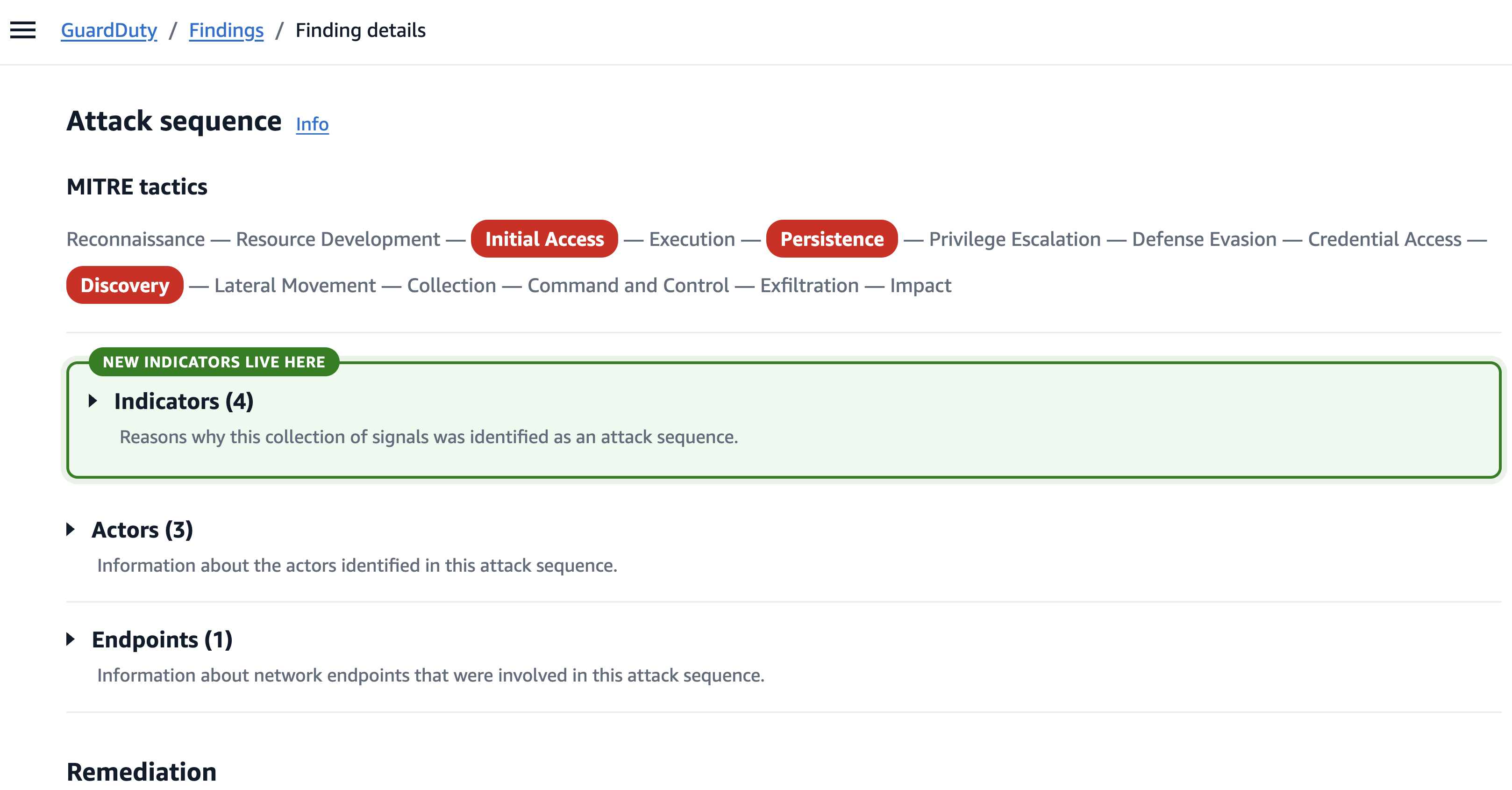
Figure 1: Indicators section of an attack sequence finding
A note on EPSS, because the VULNERABILITY indicator carries it. According to the FIRST EPSS overview, the score is the probability that a published CVE will be exploited in the wild in the next 30 days ranging from 0 to 1. EPSS doesn’t replace CVSS, which describes the inherent severity of a vulnerability, whereas EPSS describes how likely it is to be exploited soon making it the more useful number for incident response.
Prerequisites
To populate the indicators, you need to have the following AWS services enabled:
- Amazon Inspector on Amazon EC2 and Amazon EKS to support
VULNERABILITYandMALICIOUS_PACKAGE. - AWS Security Hub powers
MISCONFIGURATIONbased on AWS Foundational Security Best Practices. - Amazon VPC Reachability Analyzer on production VPCs to support
REACHABILITY. - GuardDuty Runtime Monitoring on Amazon EC2, Amazon ECS, and Amazon EKS. Every signal it produces is a potential anchor.
- Amazon Macie powers
SENSITIVE_DATA.
Strengthening weak runtime signals
Runtime signals such as a process invocation, a pod exec, or a syscall pattern can be noisy sometimes. A single runtime signal that doesn’t match a known offensive-tool path isn’t significant on its own, and without resource-state context it typically stays below the threshold for a Critical attack sequence.
The new indicators supply that missing context. When Extended Threat Detection sees a weak runtime signal on a host that also carries a combination of high-priority unpatched CVEs, a known malicious package, an IMDS misconfiguration, and internet reachability, it promotes the collection to a single CRITICAL attack sequence with high confidence. Customer feedback on individual GuardDuty runtime findings has consistently identified noise as a major pain point and adding this resource-state context is what turns those weak signals into actionable alerts.
In practice, this surfaces as a substantial increase in net-new attack-sequence findings on the runtime-process surface to roughly one in four prioritized runtime-process attack sequences, with little change on the network-indicator of compromise (IOC) surface. Within the first week of launch, this pattern showed up across many customer accounts where attack sequences that would previously have surfaced as a collection of weaker, unconnected findings now surface as a single CRITICAL finding.
Example: A net-new attack sequence on Amazon EKS
Now that you understand how Extended Threat Detection has improved through additional indicators, let’s walk through an example of how these indicators add value. In this example we analyze an actual scenario that was observed on an Amazon EKS cluster. The observed activity occurred over an 8-day period with eleven different GuardDuty findings.
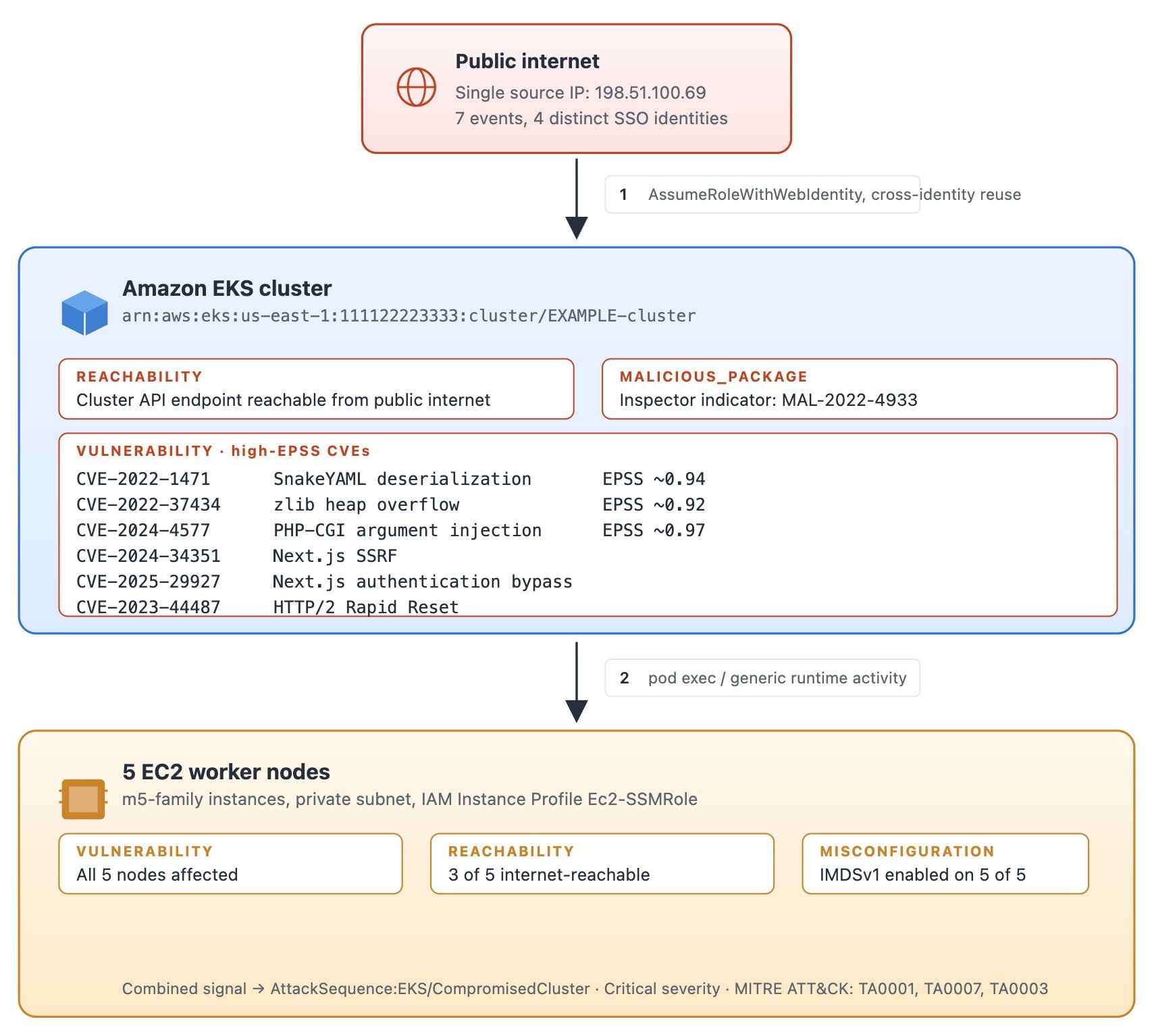
Figure 2: Activity summary for the EKS cluster before Extended Threat Detection correlated the signals
What GuardDuty saw on the activity surface over 8 days as shown in Figure 2 was 55 EKS_AUDIT_LOGS signals across pod execs, role assumptions, and AssumeRoleWithWebIdentity calls and 18 finding-level signals all originating from one external IP address of 198.51.100.69. This IP address authenticated as four distinct AWS Identity and Access Management (IAM) identities to the same EKS cluster. Runtime activity on the worker nodes was generic because there was no process that matched a known offensive-tool path and no execution-profile flag was fired. Under the pre-launch correlation, this sequence would have needed the EKS_MALICIOUS_PROCESS rule to fire, which requires either a malicious exec path or an unusual-suspicious-tool profile. Neither was present in this activity, so no correlated attack-sequence finding was raised.
What the new GuardDuty Extended Threat Detection indicators added to the EKS example:
MALICIOUS_PACKAGEon the cluster: Amazon Inspector identifierMAL-2022-4933.VULNERABILITY(full Amazon Inspector output) on the cluster: 42 CVEs total, 33 ratedCRITICALby CVSS.- On the cluster: 12 CVEs including CVE-2022-1471 (SnakeYAML deserialization, EPSS 0.94), CVE-2024-4577 (PHP-CGI argument injection, EPSS 0.97), CVE-2024-34351 (Next.js SSRF), CVE-2025-29927 (Next.js authentication bypass), CVE-2023-44487 (HTTP/2 Rapid Reset), and CVE-2022-37434 (zlib heap overflow, EPSS 0.92).
- Across the five worker nodes: 379 CVEs total, with 68 of them marked
CRITICALby Amazon Inspector.
REACHABILITY: Cluster API endpoint internet-reachable and three of five worker nodes also internet-reachable.MISCONFIGURATION(EC2 IMDS): All five worker nodes still expose IMDSv1.
When these additional indicators are taken into consideration, this surfaces as a single AttackSequence:EKS/CompromisedCluster with a CRITICAL severity, with all four populated indicators on the Indicators tab and a MITRE ATT&CK® mapping to Initial Access (External Remote Services), Discovery, and Persistence.
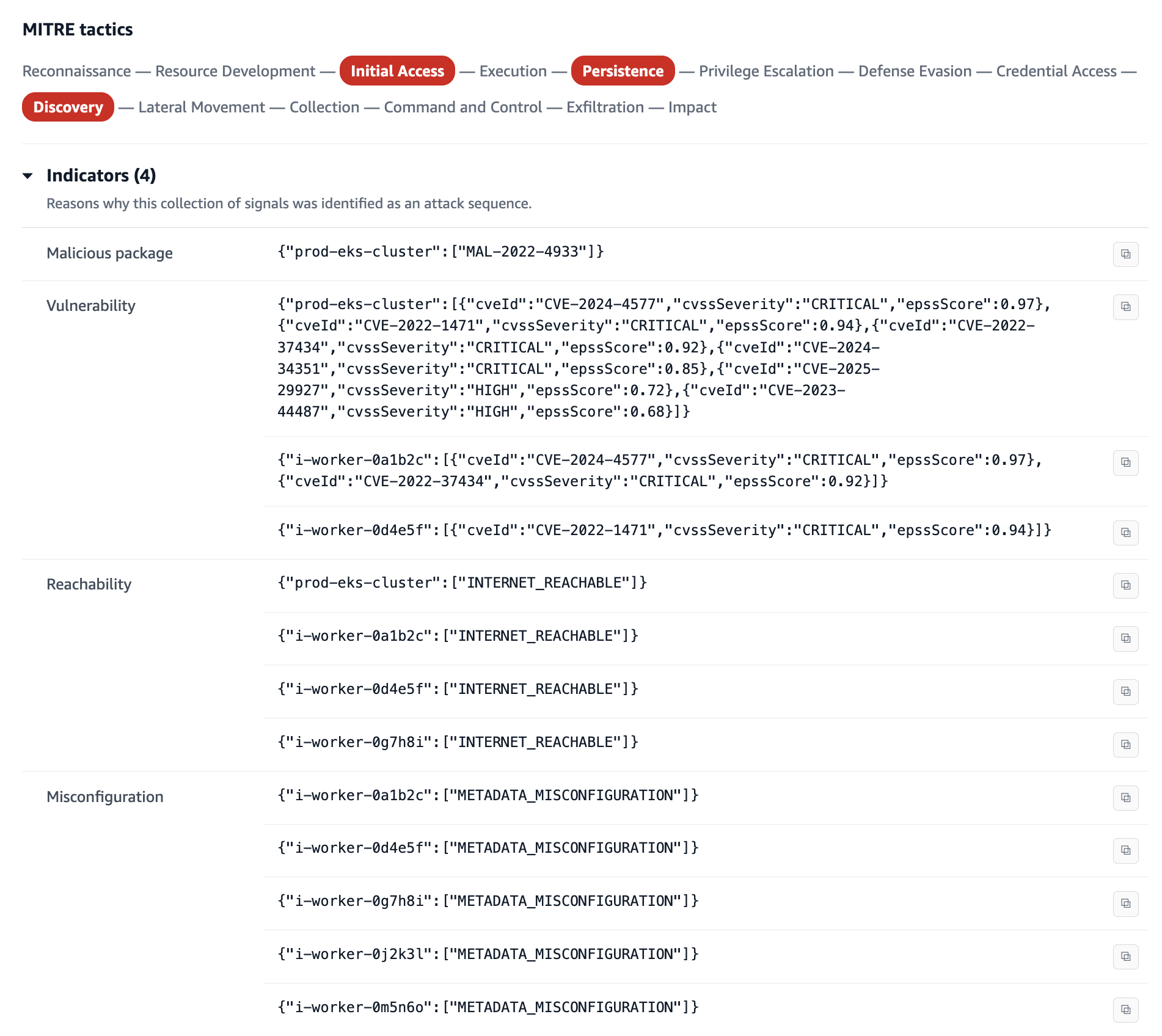
Figure 3: New vulnerability indicators within an attack sequence
The finding lists more than 100 Amazon EC2 CVEs at the worker-node level, one CRITICAL CVSS, plus a long HIGH tail, but most are LOW vulnerability priority because their EPSS scores are low. Rather than sifting through more than 100 findings to decide which to address first, GuardDuty highlights the high-priority ones so you can focus your response efforts where they have the most impact.
Example: Cryptomining and a vulnerable host
In this second example we walk through an EC2 instance group where GuardDuty already had a strong network-based finding for cryptomining and the new indicators provided additional remediation context that made incident response faster.
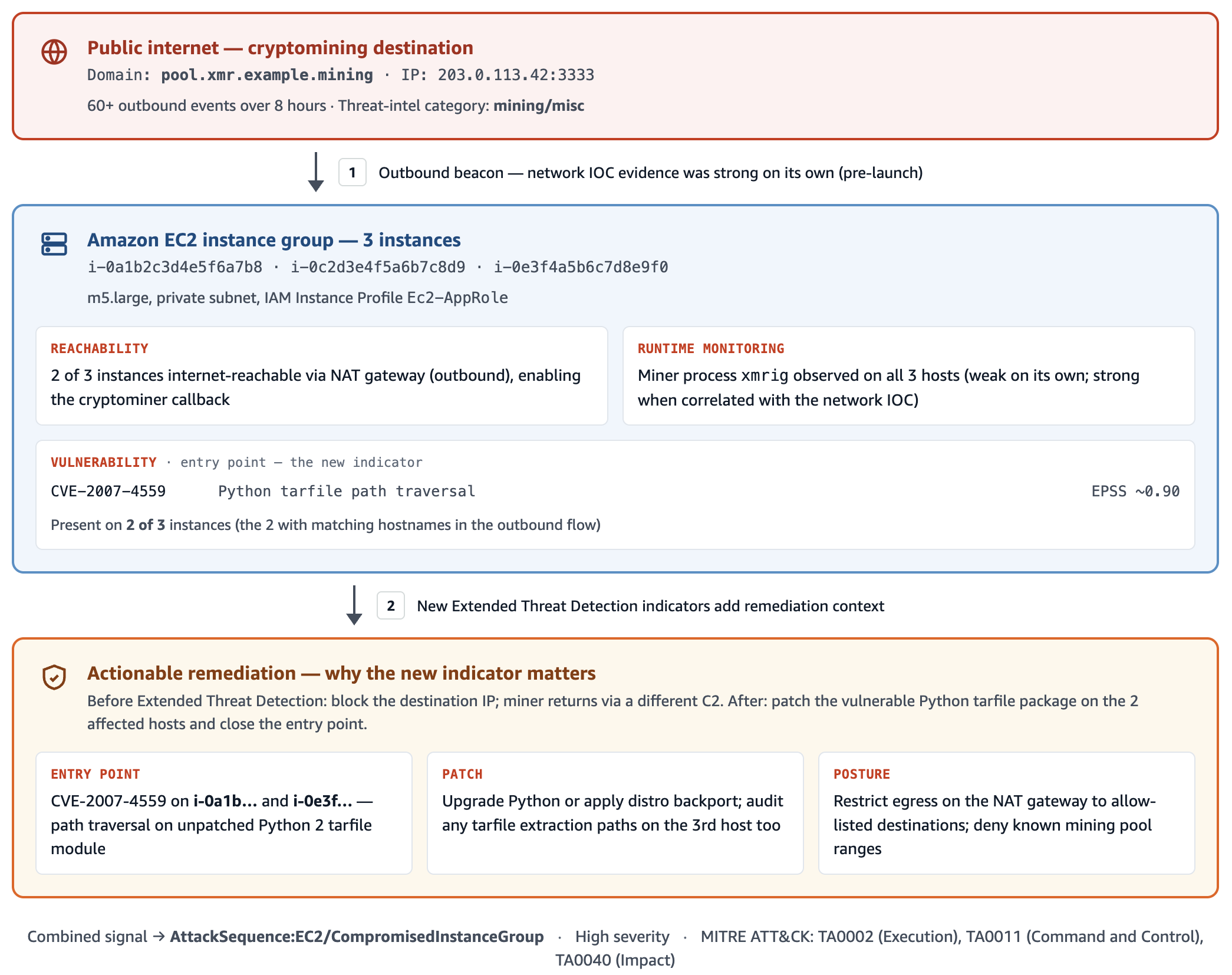
Figure 4: Cryptomining attack on EC2 instances
A set of EC2 instances was communicating with a known cryptomining destination, which was flagged by threat intelligence as mining/misc. The network IOC evidence was strong on its own.
- Observations added by the new indicators:
VULNERABILITYlisted CVE-2007-4559 Python tarfile with EPSS around 0.9 on two of the three involved instances. - Result: The AttackSequence:EC2/CompromisedInstanceGroup finding is now actionable beyond block the destination IP; it tells you which patch will remediate the vulnerability the cryptominer likely came in through so you can address the underlying entry point rather than only removing the outbound connection.
This attack sequence would have been generated without the vulnerability context because GuardDuty had strong evidence of cryptomining of the EC2 instance group, however, triaging is faster with more context.
Indicators of compromise observed across the first-week launch sample
The following CVEs listed, along with their EPSS scores at the time, were observed on hosts across the customer accounts that received the new Extended Threat Detection indicators during the first week after launch at the moment each indicator finding was generated. EPSS scores are point-in-time, so a CVE’s listed priority on any future finding will reflect the current EPSS rather than the values shown here.
- CVE-2024-4577 – PHP-CGI argument injection on Windows. EPSS 0.97+.
- CVE-2022-1471 – SnakeYAML deserialization. EPSS 0.94. Critical CVSS.
- CVE-2022-37434 – zlib heap buffer overflow. EPSS 0.92.
- CVE-2007-4559 – Python tarfile path-traversal. EPSS still 0.9+ in 2026.
- CVE-2025-29927 – Next.js authentication bypass. Frequent on Node web tiers.
- CVE-2024-34351 – Next.js SSRF.
- CVE-2023-44487 – HTTP/2 Rapid Reset.
Runtime monitoring surfaced weak signals tied to malware and tooling artifacts recovered from the compromised hosts:
- HackTool family Linux/frp (Fast Reverse Proxy variants were used as command-and-control tunnels), often disguised as
kuboard-agentandkuboard-agent-serverbinaries on Amazon EKS worker nodes. Container-snapshot path matches were also observed under/var/lib/containerd/io.containerd.snapshotter.v1.overlayfs/snapshots/.../usr/bin/. The frp binaries are present inside the container image and on the node, which means rebuilding the node from an unpatched AMI won’t be sufficient remediation. - Burp Collaborator out-of-band callback hostnames were found under
*[.]oastify[.]com, matching pattern<35-char base32>[.]oastify[.]com. These co-occurred with frp on the same EKS sequence, probably a second tool or actor on shared infrastructure. - The Amazon Inspector malicious-package indicator
MAL-2022-4933was found in both Amazon EC2 and Amazon EKS contexts.
Identity and access patterns correlated with the tooling signals above:
- A single external source IP authenticated as multiple distinct human IAM identities across separate Amazon EKS, Amazon ECS, and Amazon EC2 surfaces over a short window. This was the most common identity signature on the new Amazon EKS-process net-new class.
Responding to attack sequences with these indicators
The new indicators don’t change incident-response runbooks for attack sequences that have already occurred. They matter for new findings, which are concentrated on enhancing signals related to runtime monitoring. For those:
- Treat the sequence with urgency.
MALICIOUS_PACKAGEand a high-priorityVULNERABILITYmean the host was, and still is, at risk of being compromised. Contain the exposures and remediate the vulnerabilities. Rotate every IAM credential, instance profile, or IAM Roles for Service Accounts (IRSA)-bound role that could have been exposed. - Patch on EPSS-weighted priority, not alone on raw CVSS. The finding’s high-priority
VULNERABILITYlist is already filtered to high-EPSS CVEs. - Isolate public resources indicated by
REACHABILITYindicators. An internet-reachable host with exploitable vulnerabilities should be isolated for remediation.
For more support, see the remediation steps in Remediating detected GuardDuty security findings and GuardDuty Investigation, an AI-powered security analysis of your GuardDuty findings and accounts.
Conclusion
GuardDuty Extended Threat Detection can deliver more high-confidence attack sequence findings on the runtime workload surfaces where your security teams often need help most: Amazon EC2, Amazon ECS, and Amazon EKS. It does this by combining GuardDuty activity signals with resource-state context from other AWS services. Customer feedback on individual GuardDuty runtime findings has consistently identified noise as a major pain point, and correlating those weak signals with vulnerability, package-risk, reachability, misconfiguration, and sensitive-data indicators is how Extended Threat Detection turns the noise into actionable CRITICAL findings. If you’ve already enabled AWS Security Hub, Amazon Inspector, Amazon VPC Reachability Analyzer, Macie, and GuardDuty Runtime Monitoring, the new indicators automatically start showing up on your attack-sequence findings. If you aren’t using these services, we encourage you to explore enabling them to access the new GuardDuty Extended Threat Detection indicators and the value that these individual services deliver.
If you have feedback about this post, submit comments in the Comments section below. If you have questions about this post, start a new thread on AWS re:Post or contact AWS Support.