AWS Compute Blog
Category: AWS Lambda

Operating Lambda: Debugging configurations – Part 2
This is the second post in a series on debugging Lambda-based applications. This post shows how to identify and resolve memory and CPU-bound functions, and how to understand and use timeouts effectively in production applications.

Building single binary file extensions for AWS Lambda with .NET
This post shows how to create, build, and package a C# Lambda extension as a single binary file. Explore the example code and other Lambda extensions examples in the GitHub repository.

Operating Lambda: Debugging code – Part 1
Debugging serverless applications is different to debugging single-server or monolithic applications. You must consider debugging across multiple invocations and services, and understanding the state of a distributed workload.

Using AWS X-Ray tracing with Amazon EventBridge
X-Ray is a powerful tool for providing observability in serverless applications. With the launch of X-Ray passive tracing in EventBridge, this allows you to trace requests across distributed applications more easily.

Caching data and configuration settings with AWS Lambda extensions
This post is written by Hari Ohm Prasath Rajagopal, Senior Modernization Architect and Vamsi Vikash Ankam, Technical Account Manager In this post, I show how to build a flexible in-memory AWS Lambda caching layer using Lambda extensions. Lambda functions use REST API calls to access the data and configuration from the cache. This can reduce […]
Operating Lambda: Building a solid security foundation – Part 2
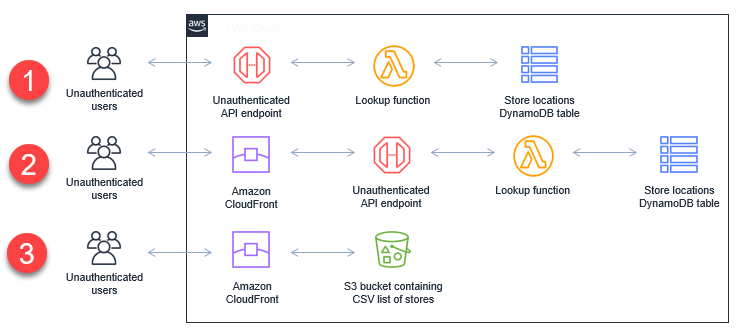
In this blog post, I explain how to secure workloads with public endpoints and the different authentication and authorization options available. I also show different approaches to exposing APIs publicly.
Building a serverless multi-player game that scales
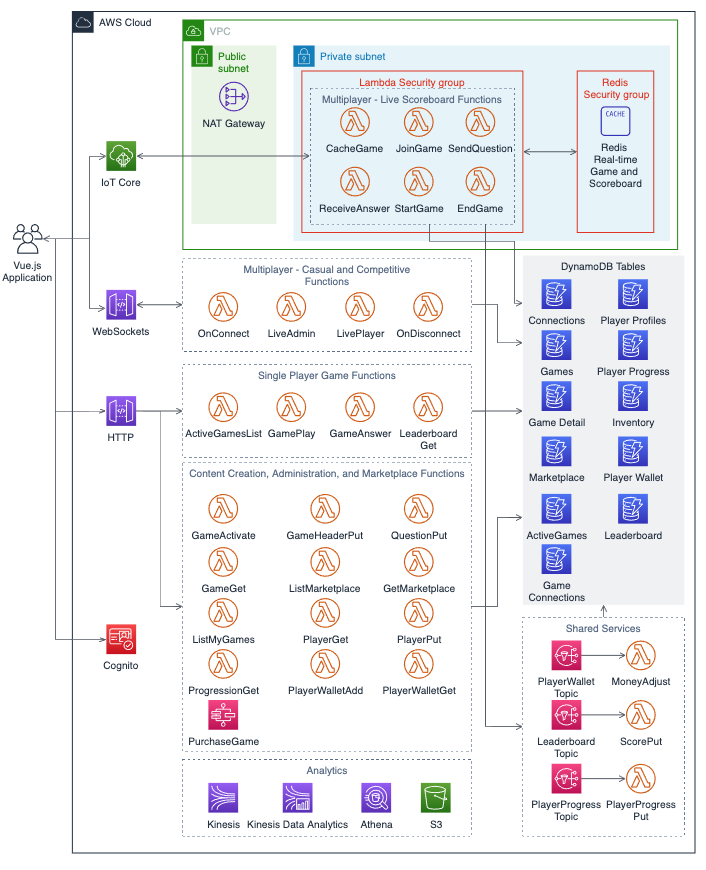
This post introduces the Simple Trivia Service, a single- and multi-player game built using a serverless-first architecture on AWS. I cover different solutions that you can use to enable connectivity from your game client to a serverless-first backend for both single- and multi-player games.

Operating Lambda: Building a solid security foundation – Part 1
This post explains the Lambda execution environment and how the service protects customer data. It covers important steps you should take to prevent data leakage between invocations and provides additional security resources to review.

Operating Lambda: Application design – Part 3
This post discusses choosing and managing runtimes, the effect on performance, and how you can use multiple runtimes within a single serverless application. It explains the networking model and whether a Lambda function must have access to a customer VPC or can run with the default VPC configuration. It also compares the different invocation modes for Lambda functions.

Extending SaaS products with serverless functions
As customers increasingly use SaaS solutions in their businesses, they want the same customization and extensibility available in on-premises solutions. SaaS partners have developed APIs and integration hooks to help address this need. For more sophisticated customization, products enable custom code to run within their SaaS workflows.