
We needed elastic cloud computing, but we didn’t have cloud infrastructure experts. AWS was the right offering in terms of technical aspects and ease of use.
Kirsten Heiss
Managing Director, OpenCampusOverview
Collaborating with a community of over 100 partner institutions, OpenCampus provides an open source, low-code application platform to help universities design their campus management systems. To deliver a scalable solution that’s compliant with the General Data Protection Regulation, OpenCampus needed a cloud solution provider that offers both state-of-the-art scalability and major foundation models (FMs). So, the company used Amazon Web Services (AWS) and adopted Amazon Bedrock—a comprehensive, secure, and flexible service for building generative AI applications and agents. OpenCampus can now set up a software demonstration in 5–10 minutes and achieve virtually 100 percent uptime - even with tens of thousands of users being online at each university.
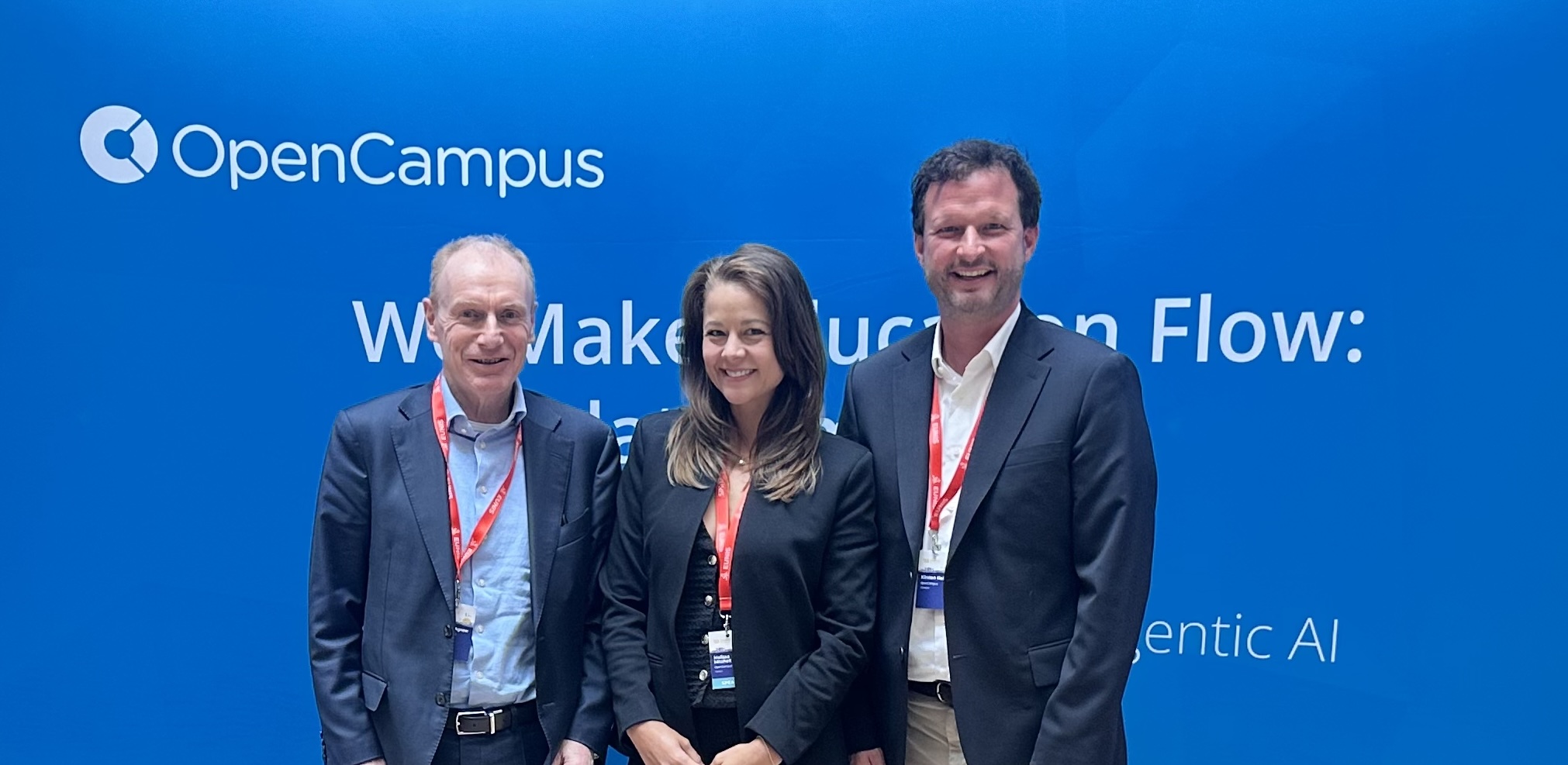
About OpenCampus
Founded in 2013, OpenCampus offers an open source, no-code, and AI-native software-as-a-service solution for educational institutions across Europe. The company plans to expand its offering into the United States and Asia.
Opportunity | Using AWS to build a no-code solution for OpenCampus
OpenCampus is helping educational institutions take control of their technology by designing, managing, and automating every digital workflow across campus in a single no-code system. The company’s platform is built on Drupal and equipped with a drag-and-drop workflow modeler that integrates FMs directly into processes. “It’s a massive effort for universities to tailor technology to their specific needs,” says Kirsten Heiss, managing director of OpenCampus. “We wanted to provide them with the tools to build the solution that they needed at an acceptable cost.”
But when OpenCampus started delivering its mission-critical functionality, the underlying cloud infrastructure wasn’t where the team wanted it to be. The team was looking for a scalable solution that it can use to handle dynamic spikes and long-term growth, adopt AI services, stay compliant, and keep innovating. The solution also needed to be more manageable so that the OpenCampus team could spend more time building value, not managing operations. “We wanted to create a more powerful solution to address the institutions’ needs,” says Heiss.
At the time, the company was using a mix of on-premises infrastructure and a nonelastic cloud provider. The system experienced highly variable demand—spiking dramatically on the first and last days of the semester when students booked classes and checked grades. So, OpenCampus wanted to effectively support these peaks and avoid overprovisioning during times of lower demand. “We needed elastic cloud computing, but we didn’t have cloud infrastructure experts,” says Heiss. “AWS was the right offering in terms of technical aspects and ease of use.”
Solution | Implementing AI securely by using Amazon Bedrock
The company engaged AWS Professional Services to supplement its team with specialized skills and experience. Working alongside the AWS team during the migration, the OpenCampus team created a system that automated infrastructure setup for new customers. The AWS infrastructure worked seamlessly with OpenCampus’s software-as-a-service (SaaS) offering. This way, the company could greatly simplify onboarding and help customers select and configure additional AWS services directly from their OpenCampus dashboard.
OpenCampus built its solution on Amazon Elastic Container Service (Amazon ECS), a fully managed container orchestration service, and Amazon Aurora, which provides high performance and availability. To manage this infrastructure, the company implemented AWS Lambda so that users can run code without thinking about servers or clusters. “Our tech people really appreciated what these services could do and the ease of implementing them,” says Heiss.
When the time came to incorporate AI into its software, OpenCampus again collaborated with the AWS Professional Services team and Ankercloud, an AWS Partner. “We wanted to offer openness, flexibility, and ease of incorporation for our clients when it came to using AI,” says Heiss. OpenCampus achieved this by implementing Amazon Bedrock, and Ankercloud parameterized the AI calls to help OpenCampus’s customers choose the FMs that fulfill their needs. “Amazon Bedrock offers hundreds of FMs from leading AI companies, which is excellent, because universities can use the models that match their needs while staying compliant,” says Heiss.
Following the AWS Shared Responsibility Model, the company benefited from the advanced security features of the AWS infrastructure. “We can add a security layer and support the universities in operating their systems in a safer way than they could in their on-premises data centers,” says Heiss.
Outcome | Improving performance while reducing costs by 46 percent
OpenCampus has solved its scalability and stability issues. “Using AWS, we hardly encounter high latency or inaccessible sites,” says Heiss. The company has experienced virtually 100 percent uptime—something it didn’t have on its previous infrastructure. And through OpenCampus’s SaaS offering, customers save costs because they don’t need to provision or manage infrastructure. For example, one Austrian university cut its infrastructure costs by up to 46 percent.
In addition, OpenCampus reduced the time to set up a software demonstration from 2–3 hours to 5–10 minutes, saving time for its internal team. The company has 152 campuses online and plans to expand its offering into new regions beyond Europe, including the United States and Asia. It’s also eager to see how customers’ use of the product evolves over time.
“We’ve seen our clients come up with many innovative solutions, not only saving time but also improving learners’ outcomes,” says Melissa Mitchell, head of innovation and business development at OpenCampus. “It will be interesting to watch and learn from what our clients do with the tools that we provide, and to see how, together, we can make education easier and more accessible.”
To learn more, visit aws.amazon.com/bedrock.