Delivering interactive offline remote learning using AWS with Yiya
Education nonprofit Yiya Solutions is expanding access to remote learning with an offline solution on AWS.
Benefits
- active learners
- 40,000+
- of learners completing coursework
- 70%
- of learners recommending AirLearning
- 99%
- reach increase for first content partner
- 48%
Overview
About three-quarters of Uganda’s residents are 30 years old or younger. And over 70 percent of youth in rural Uganda don’t enter secondary school because of barriers such as poverty, infrastructure limitations, or lack of internet access.
To address this challenge, Yiya Solutions (Yiya) built its telecom-based offline remote-learning solution AirLearning on Amazon Web Services (AWS). The solution delivers interactive 12-week courses that help youth develop practical skills—strengthening their economic mobility, confidence, and leadership—through radio and mobile phones without requiring internet access, smartphones, or uninterrupted electricity. Now, 70 percent of users complete their coursework, and 99 percent would recommend AirLearning to others.
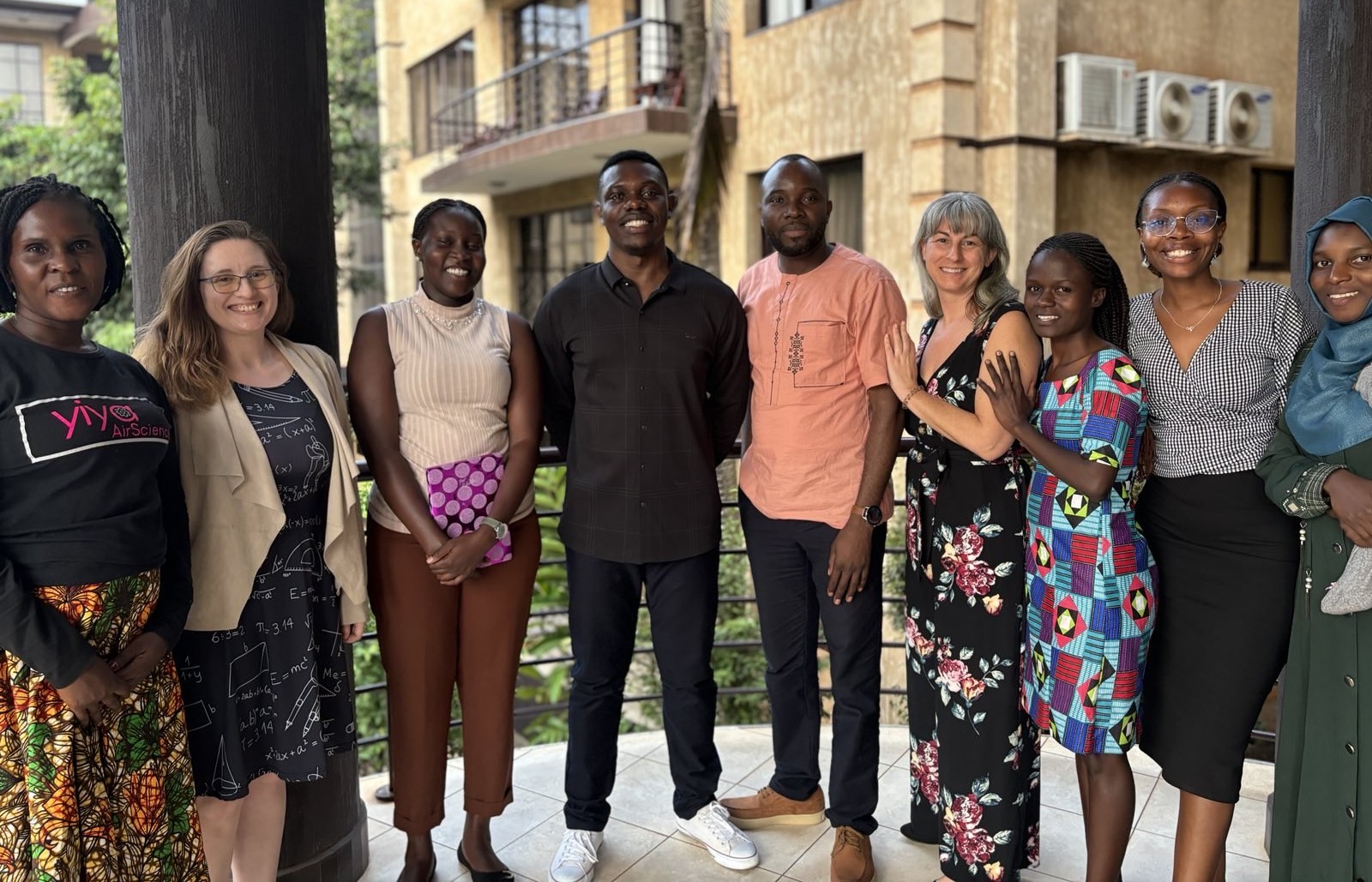
About Yiya Solutions
Founded in 2016, nonprofit Yiya Solutions is an educational-technology provider in Uganda. Its telecom-native platform AirLearning serves rural and underserved regions, delivering remote learning to youth who don’t have internet or smartphones.
Opportunity | Using AWS to support offline education
Yiya was cofounded by Samson Wambuzi, a Uganda-raised teacher, and Erin Fitzgerald, an engineer and former educator who studied at the Massachusetts Institute of Technology (MIT). The two met while designing a curriculum for a nonprofit and shared a belief that education could be more practical and accessible.
They started an in-person after-school program that provided experiential education in Uganda, teaching people how to use inexpensive, local materials to build practical solutions, such as solar food dryers and water filters. “We fell in love with the problem, not the solution,” says Fitzgerald. “Constraint is what forces you to innovate. When you start with what people already have around them, you get solutions that work in their lives.”
Learners in Uganda lost access to the program during the COVID-19 pandemic school closures. So the cofounders built a minimum viable product to deliver an interactive, offline learning solution through radio and keypad phones. The offline nature of this solution was vital because only 4 percent of Ugandans in rural areas have internet access. Initially aimed at serving 400 students, the pilot attracted about 20,000 learners in its first month.
That response surfaced two challenges inherent in delivering education by radio and basic phone at scale. First, radio is a one-way medium. Because Yiya had no way to know who was listening, it couldn’t reach learners who were falling behind before they left the program. Second, infrastructure that had been built for hundreds of learners needed to serve tens of thousands, and traffic spikes during live lessons could slow the platform.
To continue delivering content offline while providing individualized support for learners and tracking their progress, Yiya decided to use AWS. “We chose AWS for availability at scale and for the ability to separate workloads,” says Fitzgerald. “It also provides the capacity to grow as enrollment increases.”
Solution | Redefining accessible learning for low-resource learners
Yiya’s cofounders connected with the AWS team through MIT Solve, a social-impact initiative that helps new businesses access resources to address global challenges. Soon after, AWS representatives introduced Yiya to the AWS Education Equity Initiative, which empowers organizations to create digital learning solutions for underserved learners globally. After conducting a product review, the nonprofit migrated its infrastructure and analytics workloads to AWS to improve reliability, scalability, and near real-time (NRT) learner engagement.
Yiya now hosts its content library and learner data for its core learning solution, AirLearning, on Amazon Lightsail, an easy-to-use virtual private server. The server stores an interoperability layer that bridges device connectivity, learner profiles, and AirVoice, Yiya’s AI voice tutor. Tailoring its answers to the way that Ugandan learners speak, AirVoice responds in a familiar East African accent. Learners interact with lessons in NRT, receive SMS reminders, complete weekly assessments, and dial in to listen to recorded lesson summaries. Through AirVoice, which draws on each learner’s profile and course history, students can ask questions to revisit concepts that they haven’t understood in class.
To support the teacher’s dashboard, live responses, and after-lesson analytics, the nonprofit relies on the AI-powered business intelligence capabilities of Amazon Quick Sight. During radio broadcasts, teachers can engage with learners to correct misunderstandings and adjust instruction. After lessons, Yiya uses analytics to segment learners by risk level, sending live calls to high-risk learners and SMS nudges to others. This helps teachers shift from delivering one-way instruction to identifying learners’ needs and adjusting follow-up support accordingly.
“Using AWS, we built a robust technology foundation that scales as more learners join,” says Michael Arikosi, product specialist at Yiya. “Our team can identify students who have difficulty so that we can reach out to them before they drop out. That kind of info was invisible to us.”
Yiya’s approach to measuring engagement in offline environments, which includes a validated method for tracking radio listenership in NRT, was published in peer-reviewed research at the ACM Conference on Learning @ Scale (2025). In a single course, learners exchanged more than 900,000 text messages with the platform.
Using AWS, Yiya has provided consistent performance during traffic spikes and maintained service availability even during countrywide internet shutdowns in Uganda. The nonprofit has also strengthened its credibility with funders and government stakeholders—for example, when discussing an opportunity to expand to West Africa.
Outcome | Delivering credentials and creating real-life impact
AirLearning is also becoming a delivery platform for other education organizations: Its first paying content partner delivered a financial literacy course to 2,022 learners. This expanded the partner’s annual reach by 48 percent in a single 3-month course. By the end of the course, 84 percent of learners who had been saving informally moved to a bank, mobile money service, or savings group. Because the same AWS infrastructure hosts every partner’s content and learner data, Yiya can onboard a new organization and adapt its content without building new systems.
The nonprofit’s solution has engaged more than 40,000 Ugandan learners. Overall, 70 percent of learners who sign up for AirLearning complete all coursework, exceeding online-learning benchmarks, and 64 percent demonstrate content mastery on the final assessment. Those who score 75 percent or higher on the final assessment earn a certificate from Yiya (which is licensed as a remote vocational training provider by the Directorate of Industrial Training [now called UVTAB] within Uganda’s Ministry of Education and Sports). Learners describe this credential as opening doors to work opportunities. Overall, 99 percent of students would recommend AirLearning.
Peer-reviewed research that was done by Carnegie Mellon University’s Human-Computer Interaction Institute found that the course was most successful for learners who typically had the fewest educational opportunities. Women, village residents, and learners without internet access completed the course at higher rates than men, urban counterparts, and those with internet access, respectively—all with equal performance on the final exam. In the same peer-reviewed research by Carnegie Mellon University, learners’ stated likelihood of pursuing further education rose from 48–61 percent over the course, with significant gains in engineering mindset and community problem-solving.
Looking ahead, Yiya is expanding to a new region of Uganda, onboarding two new content partners, and scaling AirVoice to 10,000 concurrent users. The nonprofit is working toward a future where almost any education organization can reach last-mile learners through infrastructure that already exists.
“My grandmother said to me, ‘When you complete school, you can change the life of our family and our community,’” says Wambuzi. “That message is shaping what we’re doing right now.”
Learner experience with AirLearning

Using AWS, we built a robust technology foundation that scales as more learners join. Our team can identify students who have difficulty so that we can reach out to them before they drop out.
Michael Arikosi
Product Specialist, Yiya SolutionsAWS Services Used
More Customer Stories


Did you find what you were looking for today?
Let us know so we can improve the quality of the content on our pages