AWS Compute Blog

Author: Julian Wood
Julian Wood is a Senior Developer Advocate for the AWS Serverless team. He loves helping developers and builders learn about, and love, how serverless technologies can transform the way they build and run applications at any scale. Julian was an infrastructure architect and manager in global enterprises and start-ups for more than 25 years before going all-in on serverless at AWS.
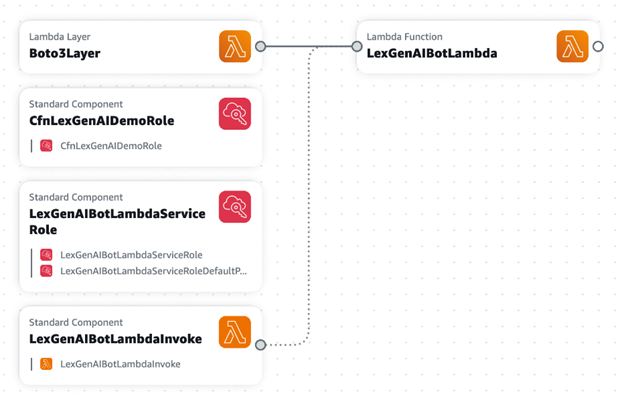
Using generative infrastructure as code with Application Composer
This post is written by Anna Spysz, Frontend Engineer, AWS Application Composer AWS Application Composer launched in the AWS Management Console one year ago, and has now expanded to the VS Code IDE as part of the AWS Toolkit. This includes access to a generative AI partner that helps you write infrastructure as code (IaC) […]

Managing AWS Lambda runtime upgrades
This post is written by Julian Wood, Principal Developer Advocate, and Dan Fox, Principal Specialist Serverless Solutions Architect. AWS Lambda supports multiple programming languages through the use of runtimes. A Lambda runtime provides a language-specific execution environment, which provides the OS, language support, and additional settings, such as environment variables and certificates that you can access from […]

Scaling improvements when processing Apache Kafka with AWS Lambda
AWS Lambda is improving the automatic scaling behavior when processing data from Apache Kafka event-sources. Lambda is increasing the default number of initial consumers, improving how quickly consumers scale up, and helping to ensure that consumers don’t scale down too quickly. There is no additional action that you must take, and there is no additional […]

Enhancing runtime security and governance with the AWS Lambda Runtime API proxy extension
This post is written by Anton Aleksandrov, Principal Serverless Solutions Architect, and Shridhar Pandey, Senior AWS Lambda Product Manager. AWS Lambda runtimes use the Lambda Runtime API to communicate with the Lambda service. Runtimes use it to retrieve inbound events to be processed by the function handler, return successful handler responses to the Lambda service, and […]

Detecting and stopping recursive loops in AWS Lambda functions
This post is written by Pawan Puthran, Principal Serverless Specialist TAM, Aneel Murari, Senior Serverless Specialist Solution Architect, and Shree Shrikhande, Senior AWS Lambda Product Manager. AWS Lambda is announcing a recursion control to detect and stop Lambda functions running in a recursive or infinite loop. At launch, this feature is available for Lambda integrations […]

Implementing AWS Lambda error handling patterns
This post is written by Jeff Chen, Principal Cloud Application Architect, and Jeff Li, Senior Cloud Application Architect Event-driven architectures are an architecture style that can help you boost agility and build reliable, scalable applications. Splitting an application into loosely coupled services can help each service scale independently. A distributed, loosely coupled application depends on […]
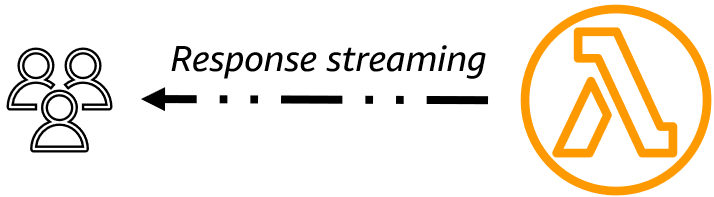
Introducing AWS Lambda response streaming
Today, AWS Lambda is announcing support for response payload streaming. Response streaming is a new invocation pattern that lets functions progressively stream response payloads back to clients. You can use Lambda response payload streaming to send response data to callers as it becomes available. This can improve performance for web and mobile applications. Response streaming […]
Serverless ICYMI Q1 2023
February 12, 2024: Amazon Kinesis Data Firehose has been renamed to Amazon Data Firehose. Read the AWS What’s New post to learn more. Welcome to the 21st edition of the AWS Serverless ICYMI (in case you missed it) quarterly recap. Every quarter, we share all the most recent product launches, feature enhancements, blog posts, webinars, […]

Introducing AWS Lambda Powertools for .NET
CloudWatch and AWS X-Ray offer functionality that provides comprehensive observability for your applications. Lambda Powertools .NET is now generally available. The library helps implement observability when running Lambda functions based on .NET 6 while reducing the amount of custom code.
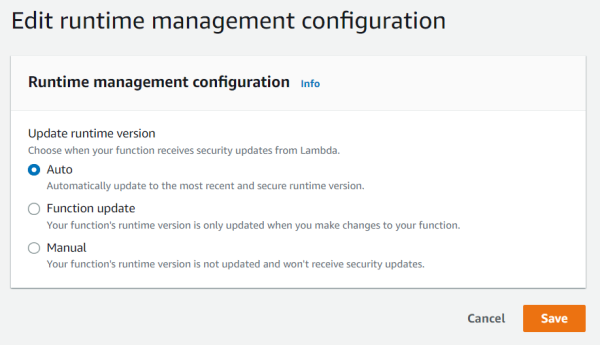
Introducing AWS Lambda runtime management controls
This blog post is written by Jonathan Tuliani, Principal Product Manager. Today, AWS Lambda is announcing runtime management controls which provide more visibility and control over when Lambda applies runtime updates to your functions. Lambda is also changing how it rolls out automatic runtime updates to your functions. Together, these changes provide more flexibility in […]