AWS Compute Blog
Category: Uncategorized
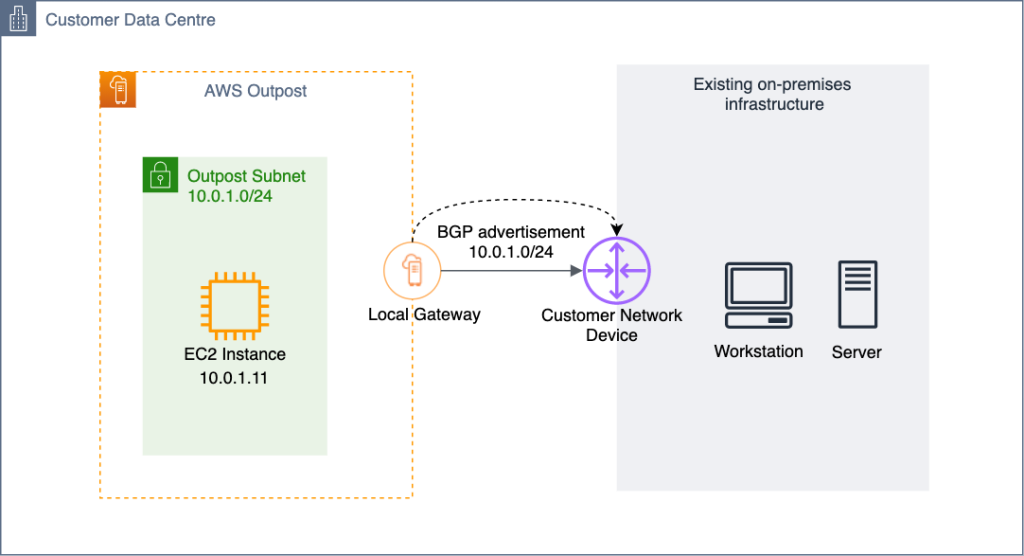
How to choose between CoIP and Direct VPC routing modes on AWS Outposts rack
This blog post is written by Sumit Menaria, Senior Hybrid Solutions Architect AWS WWSO Core Services. AWS Outposts Rack is a fully-managed service that extends AWS infrastructure, services, APIs, and tools to customer premises. By providing local access to AWS managed infrastructure and services, Outposts rack enables customers to build and run applications on premises […]

Implementing architectural patterns with Amazon EventBridge Pipes
This post is written by Dominik Richter (Solutions Architect) Architectural patterns help you solve recurring challenges in software design. They are blueprints that have been used and tested many times. When you design distributed applications, enterprise integration patterns (EIP) help you integrate distributed components. For example, they describe how to integrate third-party services into your […]

Automating your workload deployments in AWS Local Zones
This blog post is written by Enrico Liguori, SA – Solutions Builder , WWPS Solution Architecture. AWS Local Zones are a type of infrastructure deployment that places compute, storage,and other select AWS services close to large population and industry centers. We now have a total of 32 Local Zones; 15 outside of the US (Bangkok, […]
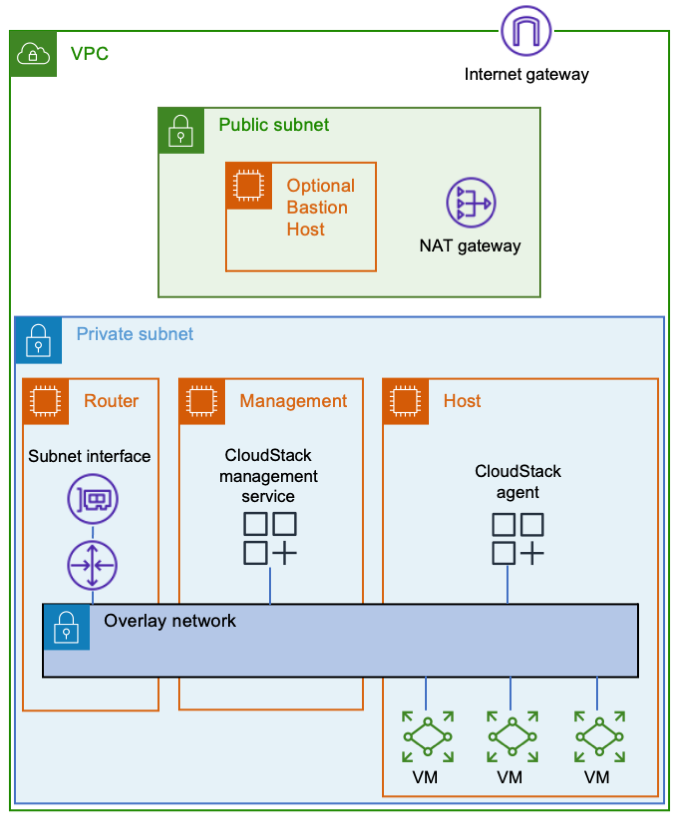
Building a Cloud in the Cloud: Running Apache CloudStack on Amazon EC2, Part 2
This blog is written by Mark Rogers, SDE II – Customer Engineering AWS. In part 1, I showed you how to run Apache CloudStack with KVM on a single Amazon Elastic Compute Cloud (Amazon EC2) instance. That simple setup is great for experimentation and light workloads. In this post, things will get a lot more […]

Building a Cloud in the Cloud: Running Apache CloudStack on Amazon EC2, Part 1
This blog is written by Mark Rogers, SDE II – Customer Engineering AWS. How do you put a cloud inside another cloud? Some features that make Amazon Elastic Compute Cloud (Amazon EC2) secure and wonderful also make running CloudStack difficult. The biggest obstacle is that AWS and CloudStack both want to manage network resources. Therefore, we must […]

Enabling load-balancing of non-HTTP(s) traffic on AWS Wavelength
This blog post is written by Jack Chen, Telco Solutions Architect, and Robert Belson, Developer Advocate. AWS Wavelength embeds AWS compute and storage services within 5G networks, providing mobile edge computing infrastructure for developing, deploying, and scaling ultra-low-latency applications. AWS recently introduced support for Application Load Balancer (ALB) in AWS Wavelength zones. Although ALB addresses […]
Scaling AWS Outposts rack deployments with ACE racks
This blog post is written by Eric Vasquez, Specialist Hybrid Edge Solutions Architect, and Paul Scherer, Senior Network Service Tech. Overview AWS Outposts brings managed, monitored AWS infrastructure, compute, and storage to your on-premises environment. It provides the same AWS APIs, and console experience you would get within the AWS Region to which the Outpost […]
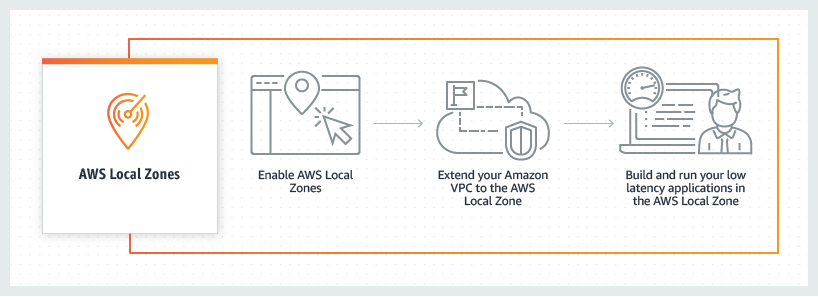
AWS Local Zones and AWS Outposts, choosing the right technology for your edge workload
This blog post is written by Joe Sacco, Senior Technical Account Manager. The AWS Global Cloud Infrastructure includes 30 Launched Regions, 96 Availability Zones (AZs), 410+ Points of Presence with 400+ Edge Locations, and 13 Regional Edge Caches. With over 200 AWS services, most customer workloads can run in the AWS Regions. However, for some […]

Reducing Java cold starts on AWS Lambda functions with SnapStart
At AWS re:Invent 2022, AWS announced SnapStart for AWS Lambda functions running on Java Corretto 11. This feature enables customers to achieve up to 10x faster function startup performance for Java functions, at no additional cost, and typically with minimal or no code changes.

Starting up faster with AWS Lambda SnapStart
This blog written by Tarun Rai Madan, Sr. Product Manager, AWS Lambda, Mike Danilov, Sr. Principal Engineer, AWS Lambda, and Colm MacCárthaigh, VP/Distinguished Engineer, EC2. AWS Lambda SnapStart is a new performance optimization developed by AWS that can significantly improve the startup time for applications. Announced at AWS re:Invent 2022, the first capability to feature […]