AWS Compute Blog
Tag: AWS Lambda

Invoking AWS Lambda from Amazon MQ
This post courtesy of Josh Kahn, AWS Solutions Architect Message brokers can be used to solve a number of needs in enterprise architectures, including managing workload queues and broadcasting messages to a number of subscribers. Amazon MQ is a managed message broker service for Apache ActiveMQ that makes it easy to set up and operate […]

Announcing Go Support for AWS Lambda
This post courtesy of Paul Maddox, Specialist Solutions Architect (Developer Technologies). Today, we’re excited to announce Go as a supported language for AWS Lambda. As someone who’s done their fair share of Go development (recent projects include AWS SAM Local and GoFormation), this is a release I’ve been looking forward to for a while. I’m […]

Serverless @ re:Invent 2017
At re:Invent 2014, we announced AWS Lambda, what is now the center of the serverless platform at AWS, and helped ignite the trend of companies building serverless applications. This year, at re:Invent 2017, the topic of serverless was everywhere. We were incredibly excited to see the energy from everyone attending 7 workshops, 15 chalk talks, 20 […]
Managing AWS Lambda Function Concurrency
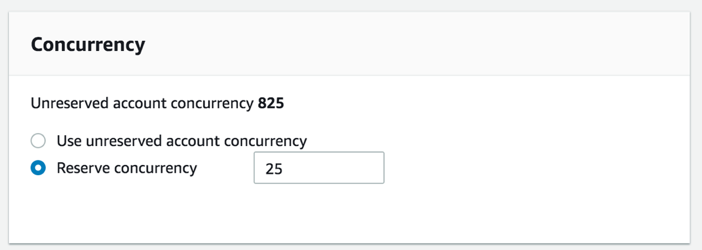
One of the key benefits of serverless applications is the ease in which they can scale to meet traffic demands or requests, with little to no need for capacity planning. In AWS Lambda, which is the core of the serverless platform at AWS, the unit of scale is a concurrent execution. This refers to the […]

Implementing Dynamic ETL Pipelines Using AWS Step Functions
This post contributed by: Wangechi Dole, AWS Solutions Architect Milan Krasnansky, ING, Digital Solutions Developer, SGK Rian Mookencherry, Director – Product Innovation, SGK Data processing and transformation is a common use case you see in our customer case studies and success stories. Often, customers deal with complex data from a variety of sources that needs […]

Implementing Canary Deployments of AWS Lambda Functions with Alias Traffic Shifting
This post courtesy of Ryan Green, Software Development Engineer, AWS Serverless The concepts of blue/green and canary deployments have been around for a while now and have been well-established as best-practices for reducing the risk of software deployments. In a traditional, horizontally scaled application, copies of the application code are deployed to multiple nodes (instances, […]

Serverless Automated Cost Controls, Part1
This post courtesy of Shankar Ramachandran, Pubali Sen, and George Mao In line with AWS’s continual efforts to reduce costs for customers, this series focuses on how customers can build serverless automated cost controls. This post provides an architecture blueprint and a sample implementation to prevent budget overruns. This solution uses the following AWS products: […]
Building a Multi-region Serverless Application with Amazon API Gateway and AWS Lambda
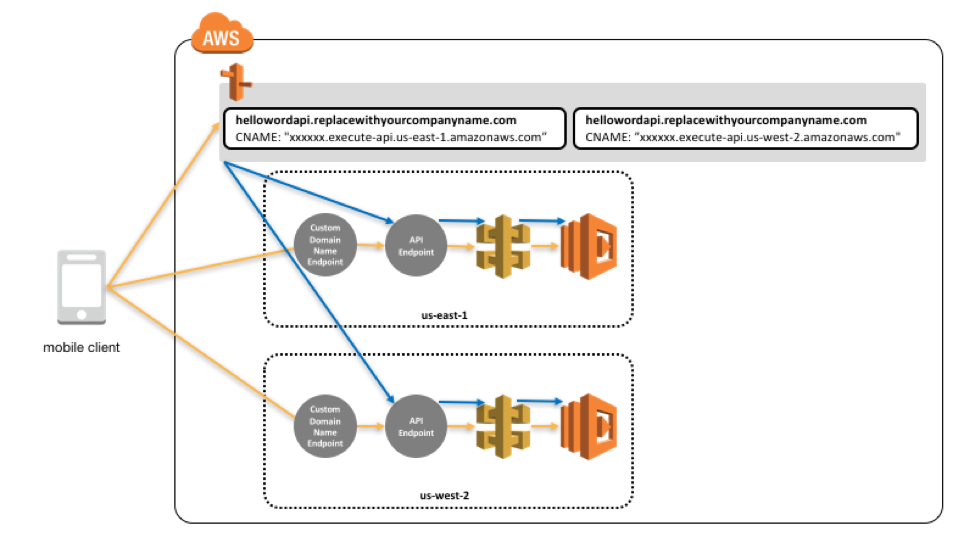
This post written by: Magnus Bjorkman – Solutions Architect Many customers are looking to run their services at global scale, deploying their backend to multiple regions. In this post, we describe how to deploy a Serverless API into multiple regions and how to leverage Amazon Route 53 to route the traffic between regions. We use latency-based […]
Automating Security Group Updates with AWS Lambda
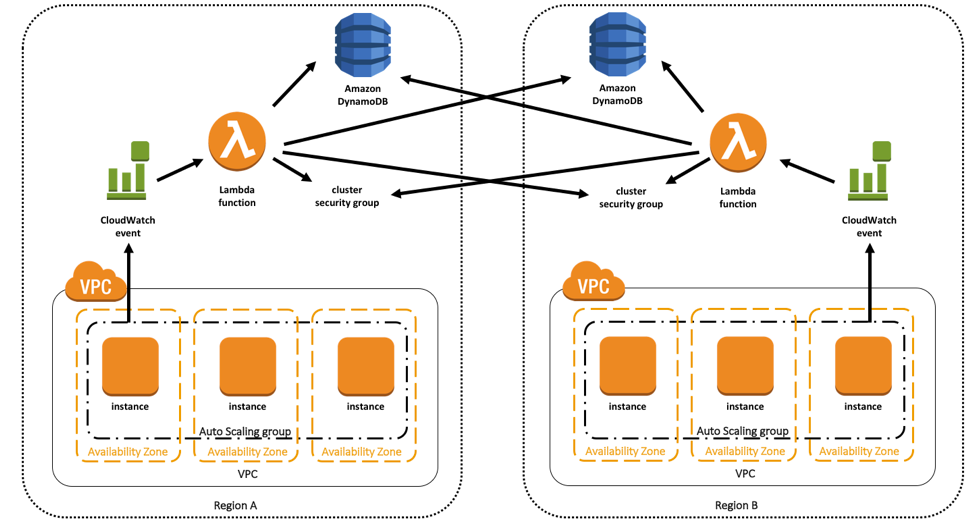
Customers often use public endpoints to perform cross-region replication or other application layer communication to remote regions. But a common problem is how do you protect these endpoints? It can be tempting to open up the security groups to the world due to the complexity of keeping security groups in sync across regions with a […]
Implementing Default Directory Indexes in Amazon S3-backed Amazon CloudFront Origins Using Lambda@Edge
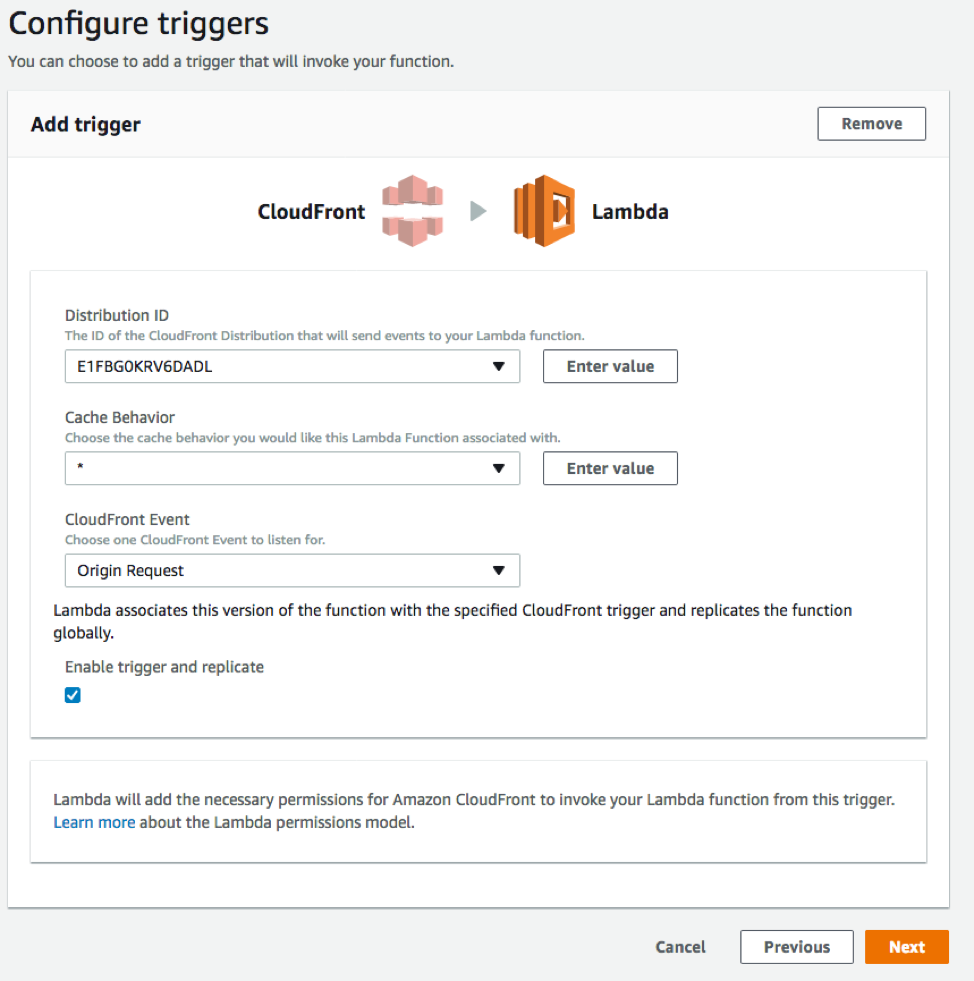
With the recent launch of Lambda@Edge, it’s now possible for you to provide even more robust functionality to your static websites. Amazon CloudFront is a content distribution network service. In this post, I show how you can use Lambda@Edge along with the CloudFront origin access identity (OAI) for Amazon S3 and still provide simple URLs […]