AWS for Industries
Category: Power & Utilities

powercloud Helps Utilities Innovate through Digital Transformation on AWS
The global energy and utilities industry is often viewed as a monolithic system, but it is very important to understand that the systems in each region, nation, and state have their own underlying characteristics. Around the world, there are 57 overseas territories and dependencies and 193 nation-states. Between each of these are numerous electric systems […]

AWS Marketplace—Launching Solutions for Power and Utilities Customers
The AWS for Power & Utilities team, alongside the AWS Marketplace team, has launched a collated set of AWS P&U Partner offerings that address the needs of global electric, water, and gas utilities to rapidly deploy solutions in their AWS environments or as software as a service. What is AWS Marketplace? AWS Marketplace is a […]

Automating Wind Farm Maintenance Using Drones and AI
Introduction Turbine maintenance is an expensive, high-risk task. According to a recent analysis from the news website, wind farm owners are expected to spend more than $40 billion on operations and maintenance over a decade. Another recent study finds by using drone-based inspection instead of traditional rope-based inspection, you can reduce the operational costs by 70% […]

AI-Driven Visual Inspection of Wind Turbines Based on Drone Imaging
Introduction Keeping wind turbines operational also means keeping them well maintained. One of the steps in maintenance is regular visual inspection. Wind farm operation and maintenance companies started to utilize drones with attached cameras to perform visual inspections. According to a recent study, drone-based inspection reduces costs by up to 70% and decreases revenue lost […]

AWS is How: GE Renewable Energy Increases Wind Energy Production
Historians have traced our practice of using the wind to power machines all the way back to first-century Alexandria. Since then, windmills have been helping people all over the world to get work done—from grinding corn and flour to pumping water. And we’ve been using wind turbines for generating electricity for over 130 years. Just […]

Centralized IT/OT Data Management using Element Unify and AWS Industrial Machine Connectivity
To remain competitive, industrial customers need to digitally transform to maximize productivity and asset availability, and to lower costs. To do this, these companies aim to liberate data from legacy operational technology (OT) systems and leverage new tools in the cloud—like machine learning (ML) and artificial intelligence (AI)—to glean new insights from their data. With […]

E.ON Enhances Customer Engagement Through Energy Disaggregation with NET2GRID
This blog was contributed by AWS partner Net2Grid CEO Bert Lutje Berenbroek In 2017, when the German market was still waiting for smart meters to be installed, E.ON wanted to be the first to offer its customers value-added services including real-time energy consumption disaggregation based on digital meters. NET2GRID won E.ON’s tender by meeting German […]

How Advizzo Empowers Utility Consumer Savings on AWS
This blog post is authored by AWS partner Advizzo. Since 2015, Advizzo’s behavioral science software and solutions have been empowering electricity, gas, and water customers around the globe to reduce their water and energy consumption and contribute to preserving the world’s natural resources. Today, over 1 million households use Advizzo’s solutions, powered by Amazon Web […]
How Artificial Intelligence Forecasting Can Help Utility Regulators Weather the COVID-19 Storm
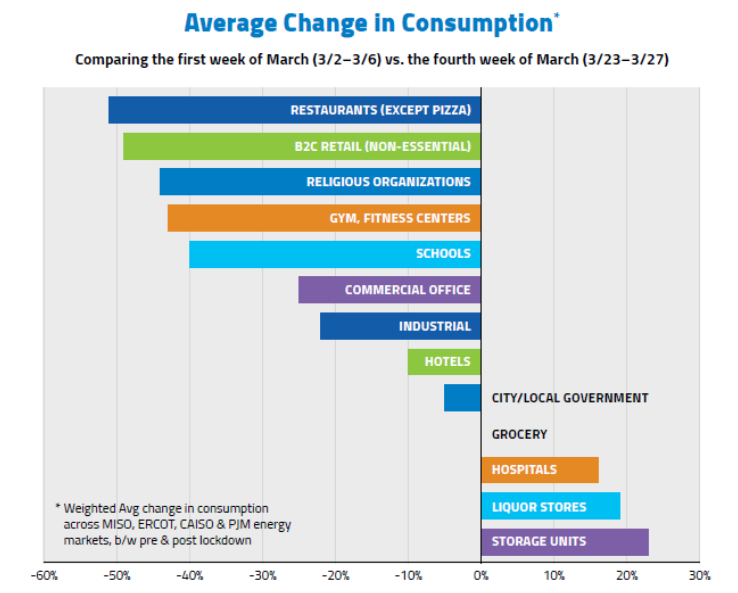
This is a contributed blog post from Siddahartha Sachdeva, CEO of AWS partner Innowatts. The COVID-19 pandemic is transforming energy consumption and usage patterns. During the pandemic, commercial energy usage slumped 30%, whereas residential demand saw significant increase. These changes surface and illuminate challenges to utilities and regulators. As utilities manage the changing energy landscape, […]

Short-term Electric Load Forecasting with Amazon Forecast
Today, the majority of electric residential, commercial, and industrial (RCI) customers receive their electricity over electric distribution circuits called “feeders.” Electric distribution feeders originate at circuit breakers within a distribution substation, and serve many customers, as shown in the following graphic. To increase grid reliability, feeders are often configured to receive electricity from multiple substations, […]