Artificial Intelligence
Category: *Post Types
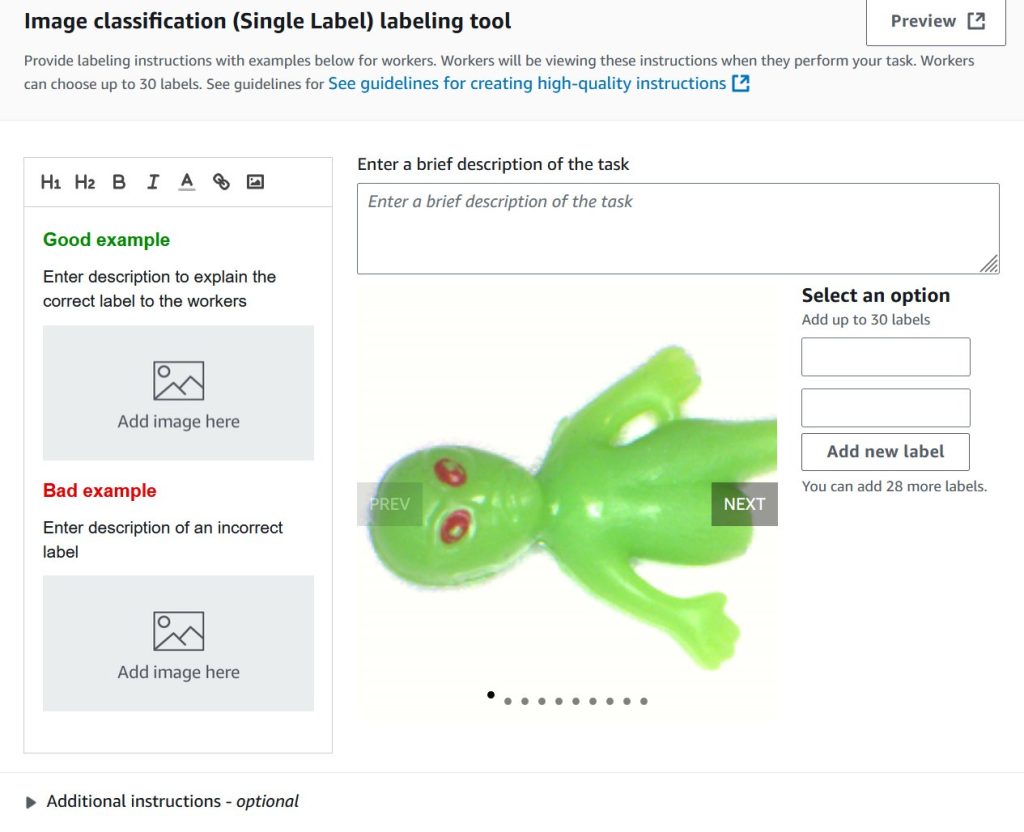
Train custom computer vision defect detection model using Amazon SageMaker
In this post, we demonstrate how to migrate computer vision workloads from Amazon Lookout for Vision to Amazon SageMaker AI by training custom defect detection models using pre-trained models available on AWS Marketplace. We provide step-by-step guidance on labeling datasets with SageMaker Ground Truth, training models with flexible hyperparameter configurations, and deploying them for real-time or batch inference—giving you greater control and flexibility for automated quality inspection use cases.
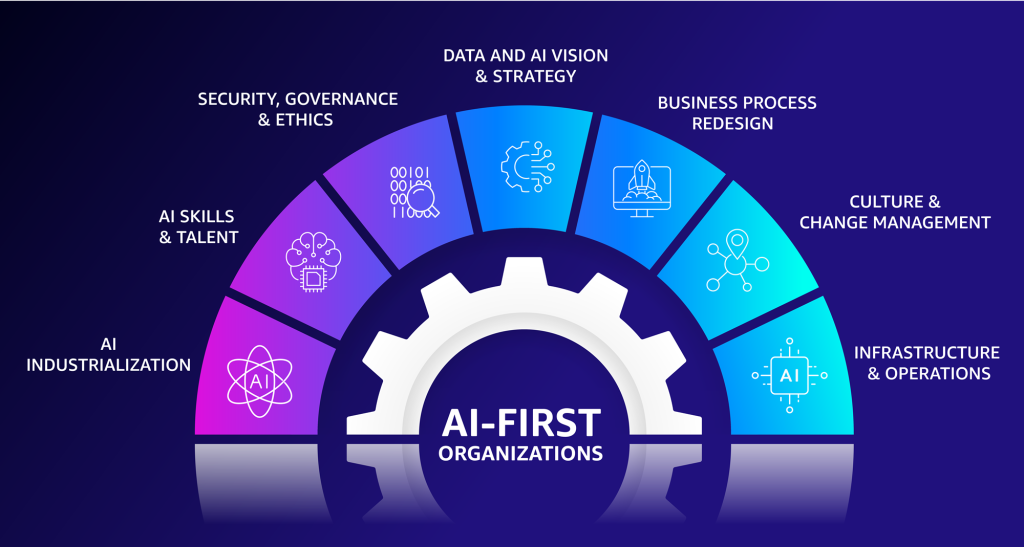
Practical implementation considerations to close the AI value gap
The AWS Customer Success Center of Excellence (CS COE) helps customers get tangible value from their AWS investments. We’ve seen a pattern: customers who build AI strategies that address people, process, and technology together succeed more often. In this post, we share practical considerations that can help close the AI value gap.
Introducing bidirectional streaming for real-time inference on Amazon SageMaker AI
We’re introducing bidirectional streaming for Amazon SageMaker AI Inference, which transforms inference from a transactional exchange into a continuous conversation. This post shows you how to build and deploy a container with bidirectional streaming capability to a SageMaker AI endpoint. We also demonstrate how you can bring your own container or use our partner Deepgram’s pre-built models and containers on SageMaker AI to enable bi-directional streaming feature for real-time inference.
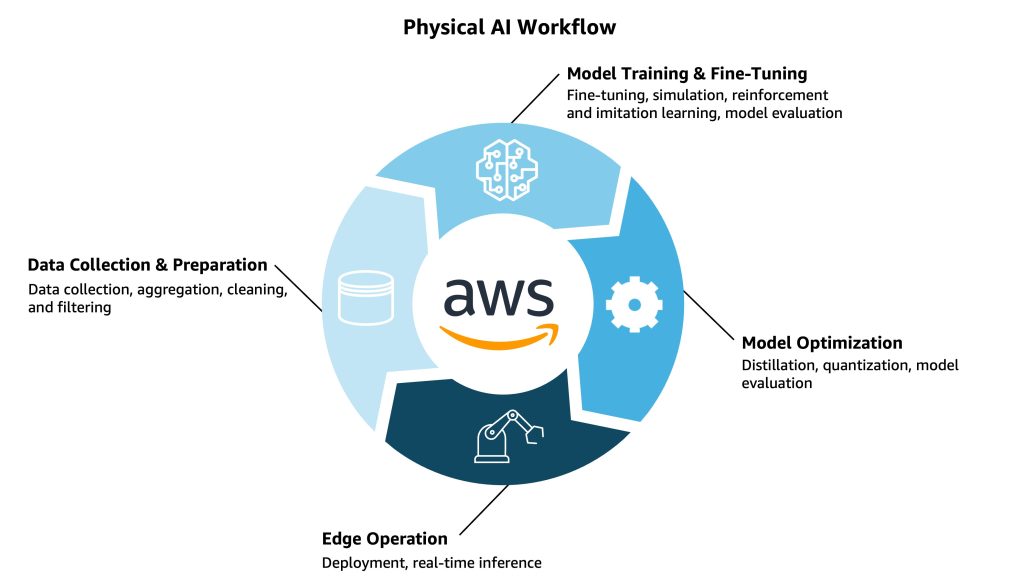
Physical AI in practice: Technical foundations that fuel human-machine interactions
In this post, we explore the complete development lifecycle of physical AI—from data collection and model training to edge deployment—and examine how these intelligent systems learn to understand, reason, and interact with the physical world through continuous feedback loops. We illustrate this workflow through Diligent Robotics’ Moxi, a mobile manipulation robot that has completed over 1.2 million deliveries in hospitals, saving nearly 600,000 hours for clinical staff while transforming healthcare logistics and returning valuable time to patient care.
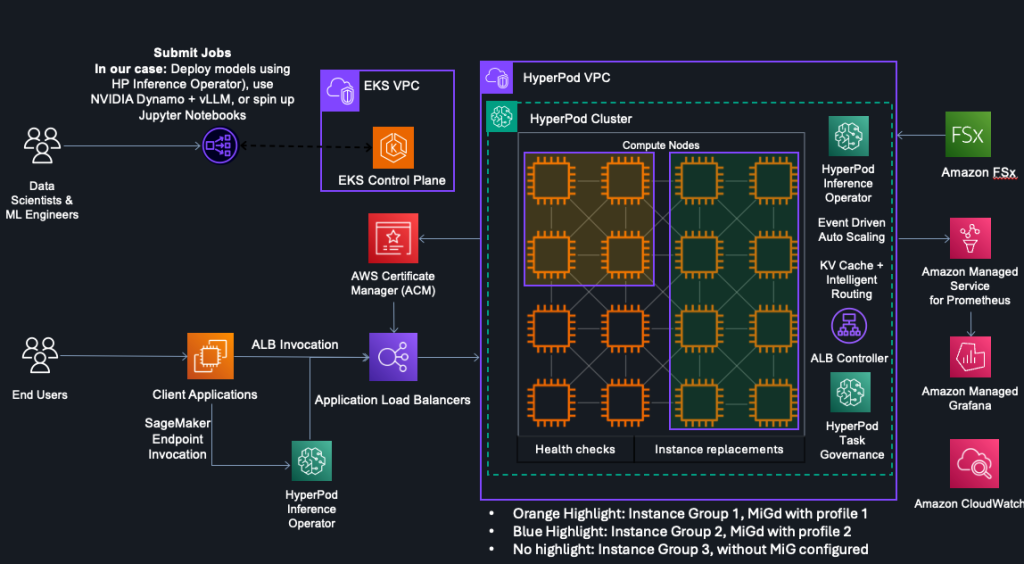
HyperPod now supports Multi-Instance GPU to maximize GPU utilization for generative AI tasks
In this post, we explore how Amazon SageMaker HyperPod now supports NVIDIA Multi-Instance GPU (MIG) technology, enabling you to partition powerful GPUs into multiple isolated instances for running concurrent workloads like inference, research, and interactive development. By maximizing GPU utilization and reducing wasted resources, MIG helps organizations optimize costs while maintaining performance isolation and predictable quality of service across diverse machine learning tasks.

Power up your ML workflows with interactive IDEs on SageMaker HyperPod
Amazon SageMaker HyperPod clusters with Amazon Elastic Kubernetes Service (EKS) orchestration now support creating and managing interactive development environments such as JupyterLab and open source Visual Studio Code, streamlining the ML development lifecycle by providing managed environments for familiar tools to data scientists. This post shows how HyperPod administrators can configure Spaces for their clusters, and how data scientists can create and connect to these Spaces.

Claude Opus 4.5 now in Amazon Bedrock
Anthropic’s newest foundation model, Claude Opus 4.5, is now available in Amazon Bedrock, a fully managed service that offers a choice of high-performing foundation models from leading AI companies. In this post, I’ll show you what makes this model different, walk through key business applications, and demonstrate how to use Opus 4.5’s new tool use capabilities on Amazon Bedrock.
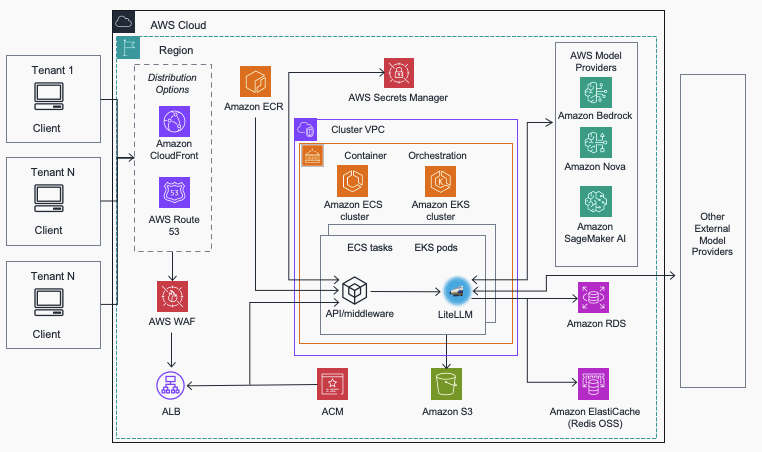
Streamline AI operations with the Multi-Provider Generative AI Gateway reference architecture
In this post, we introduce the Multi-Provider Generative AI Gateway reference architecture, which provides guidance for deploying LiteLLM into an AWS environment to streamline the management and governance of production generative AI workloads across multiple model providers. This centralized gateway solution addresses common enterprise challenges including provider fragmentation, decentralized governance, operational complexity, and cost management by offering a unified interface that supports Amazon Bedrock, Amazon SageMaker AI, and external providers while maintaining comprehensive security, monitoring, and control capabilities.
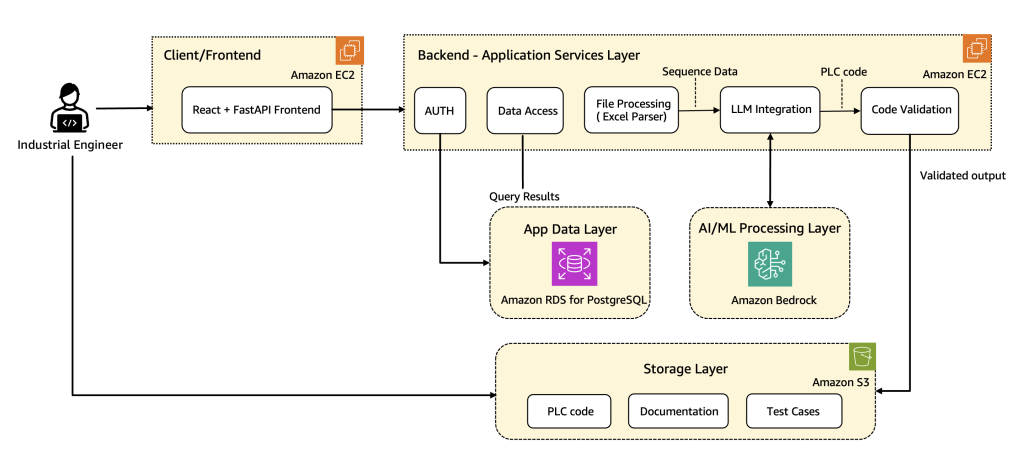
How Wipro PARI accelerates PLC code generation using Amazon Bedrock
In this post, we share how Wipro implemented advanced prompt engineering techniques, custom validation logic, and automated code rectification to streamline the development of industrial automation code at scale using Amazon Bedrock. We walk through the architecture along with the key use cases, explain core components and workflows, and share real-world results that show the transformative impact on manufacturing operations.
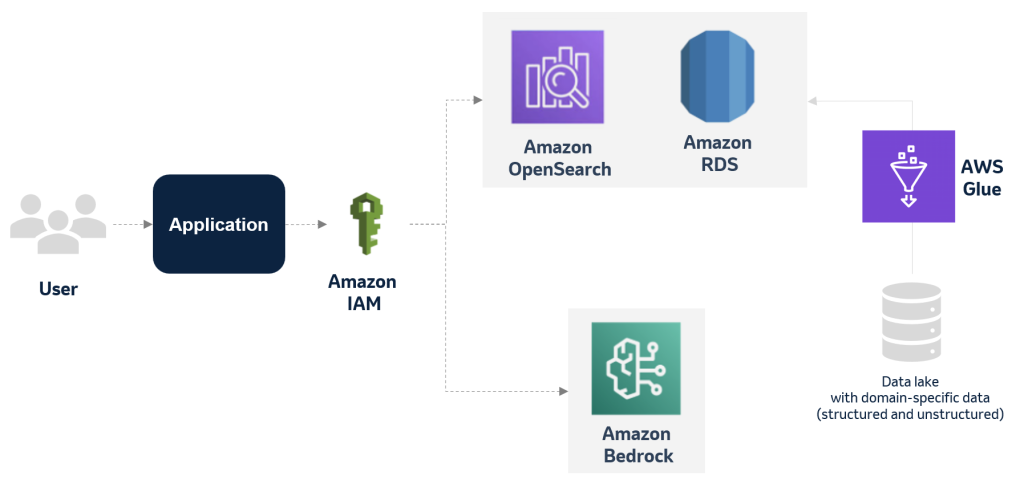
MSD explores applying generative Al to improve the deviation management process using AWS services
This blog post has explores how MSD is harnessing the power of generative AI and databases to optimize and transform its manufacturing deviation management process. By creating an accurate and multifaceted knowledge base of past events, deviations, and findings, the company aims to significantly reduce the time and effort required for each new case while maintaining the highest standards of quality and compliance.