Bagaimana konten ini?
- Pelajari
- BDH Pathway: Pendekatan Pasca-Transformator Baru untuk AI Korporasi, di AWS
BDH Pathway: Pendekatan Pasca-Transformator Baru untuk AI Korporasi, di AWS

Model transformator, arsitektur yang mendasari LLM modern, telah merevolusi cara kami hidup, bekerja, menciptakan, dan bersaing. Model ini telah memungkinkan startups untuk bereksperimen dan meluncurkan ide dengan tim yang efisien, serta menjadi perubahan besar dalam vertikal B2B seperti pengodean, analisis, dan pembuatan konten. Bagi para pendiri dan korporasi, model ini telah membuka keuntungan produktivitas yang tidak terbayangkan beberapa tahun yang lalu.
AI berbasis transformator telah berevolusi dengan penskalaan paksa, yang berarti bahwa model yang lebih besar, lebih banyak data, dan lebih banyak komputasi telah meningkatkan LLM. Jika ini masalahnya, lalu mengapa ada tingkat kegagalan 95 persen untuk proyek AI korporasi, menurut sebuah studi MIT? Jawabannya terletak pada arsitektur model transformator. Mereka memulai setiap tugas dalam keadaan yang sama setiap saat, dan tanpa memori, mereka terjebak dalam putaran Groundhog Day, tidak dapat belajar dari masa lalu. Keterbatasan teknis ini berdampak nyata pada bisnis, yang berarti infrastruktur yang memungkinkan pertumbuhan serta memberdayakan organisasi kini menjadi penghalang bagi kemajuan lebih lanjut.
Pendekatan yang sangat berbeda untuk model
Seiring perkembangan AI, taruhannya pun meningkat. Korporasi kini berupaya menerapkan AI ke kasus penggunaan dan alur kerja internal kepemilikan, yang membutuhkan model yang dapat mempelajari dan menyesuaikan perilaku dari waktu ke waktu, mendukung penalaran horizon panjang, serta menghasilkan inferensi yang dapat diamati dan dapat diaudit. Model transformator dulunya berarti transformasi bisnis, tetapi sekarang, dibutuhkan pendekatan yang sangat berbeda.
Pathway, partner model terdepan AWS, memelopori AI generasi berikutnya dengan Dragon Hatchling (BDH). Dikembangkan di Amazon SageMaker dan dioptimalkan untuk infrastruktur AWS, BDH adalah model terdepan pasca-transformator yang mendukung pembelajaran berkelanjutan, konteks tidak terbatas, dan adaptasi secara waktu nyata. BDH memecahkan tantangan inti untuk adopsi AI korporasi, memori, serta pembelajaran spontan, memungkinkan organisasi untuk membuka fungsionalitas baru yang penting dan memanfaatkan kecerdasan korporasi yang dipersonalisasi.
Keterbatasan transformator di korporasi
Model transformator tetap menjadi pilihan default untuk banyak tugas dan telah mengubah operasi bisnis secara mendasar. Namun, setelah hampir satu dekade keberadaannya, transformator mulai mencapai batas praktis dan matematis dalam korporasi.
- Transformator tidak dirancang untuk mencapai pembelajaran berkelanjutan. Mereka dilatih sekali, mereka tidak dapat mempelajari keterampilan baru dari waktu ke waktu, dan mereka tidak dapat menjadi lebih pintar dari waktu ke waktu karena mereka hanya dapat mengumpulkan teks dalam basis data eksternal.
- Transformator sangat intensif sumber daya. Mereka menggunakan sejumlah besar daya komputasi karena mereka memproses informasi dengan cara yang tumbuh sangat cepat seiring bertambahnya data, membutuhkan memori yang sangat cepat untuk dijalankan, dan terus-menerus menyesuaikan dan memperhitungkan parameter model.
- Transformator menghadapi kendala arsitektural dalam memberikan apa yang diperlukan untuk AI korporasi native. Korporasi memiliki pengetahuan dan proses khusus yang perlu diinternalisasi dan dipelajari. Mereka juga membutuhkan tata kelola serta observabilitas. Model berbasis transformator saat ini bertindak sebagai kotak hitam dengan penalaran yang buram, bergantung pada bobot yang telah dilatih sebelumnya dan tidak memiliki mekanisme untuk memodelkan 'apa yang terjadi selanjutnya.’
Pada kenyataannya, ini bermuara pada keterbatasan.
Keterbatasan teknologi pada transformator berdampak langsung pada bisnis nyata, menciptakan biaya tambahan dan kompleksitas bagi korporasi dan startups. Alih-alih berfungsi sebagai alat untuk pemberdayaan, transformator telah menjadi sumber hambatan, memaksa tim untuk menghabiskan lebih banyak waktu mengelola solusi alih-alih mendorong nilai.
- Pekerjaan ekstra diperlukan untuk menyesuaikan model dengan cara kerja bisnis yang sebenarnya. Menyelaraskan model siap pakai dengan cara organisasi beroperasi sering kali melibatkan pengelolaan beban kerja atau perbaikan tambahan, seperti membangun LLM kustom, mengubah ukuran model, dan menggunakan alur kerja agentik untuk membangun proses.
- Mengadaptasi atau melakukan kontekstualisasi pengetahuan khusus membutuhkan tim untuk mengelola penyempurnaan ekstensif dan/atau deployment alur kerja agentik yang kompleks.
- Diferensiasi menjadi tantangan. Mendapatkan output unik berarti tim harus menyesuaikan model sendiri, mengetahui bahwa mereka dapat kehilangan relevansi dan akurasi dari waktu ke waktu, atau menggunakan model siap pakai yang sama dengan pesaing mereka.
- Biaya memaksa pertukaran yang rumit. Pelatihan dan inferensi yang mahal memaksa tim untuk mengambil dan memilih lokasi AI di-deploy, sehingga kehilangan peluang potensial.
BDH: menciptakan paradigma baru kecerdasan korporasi
Kami telah melihat evolusi model transformator, tetapi bagi korporasi yang ingin membedakan penawaran mereka dan menambah nilai, model ini tidak lagi cukup. Alih-alih memberikan peningkatan tambahan pada tumpukan transformator, BDH menandai pergeseran paradigma, mengantarkan gelombang baru AI korporasi.
Tidak seperti model berbasis transformator yang menggunakan bobot tetap, arsitektur BDH lebih terstruktur seperti jaringan neuron dan sinapsis. Koneksi terus diperbarui saat informasi baru tiba, memungkinkan model untuk mempertahankan dan menyempurnakan pengetahuan dari waktu ke waktu alih-alih mereset untuk setiap tugas. Hasilnya adalah pandangan tentang kecerdasan korporasi sebagai sesuatu yang berbasis memori, otonom, serta dapat diamati. Hal ini membuka kemampuan baru bagi korporasi, termasuk:
1. Pembelajaran berkelanjutan: BDH belajar dari setiap interaksi dan menghayati pembelajaran itu dari waktu ke waktu untuk penalaran, keahlian yang persisten, dan pemecahan masalah yang makin otonom.
Mengapa hal ini penting
- BDH tidak hanya menyerap dan memuntahkan informasi lainnya. Mereka mengembangkan kecerdasan dan penilaian dari waktu ke waktu.
- Keahlian domain terakumulasi, menciptakan keuntungan yang berlipat ganda melalui personalisasi.
- Menetapkan kelekatan korporasi yang tidak dapat direplikasi melalui data atau pelatihan. AI menjadi tidak tergantikan karena mempelajari bisnis Anda.
- Alasan di seluruh horizon waktu panjang.
- Belajar dari data khusus yang langka (vs. kelaparan data transformator).
2. Efisiensi: BDH bekerja seperti otak pada GPU dengan efisiensi bawaan, baik model dalam pelatihan maupun dalam mode inferensi. Kecerdasan dimulai dari interaksi lokal yang menguat atau melemah dari waktu ke waktu dan terlibat ketika dibutuhkan, tidak sekaligus. Hanya 5 persen neuron yang aktif per token versus transformator yang mengaktifkan seluruh model sekaligus.
Selanjutnya, BDHadalah model penalaran yang sepenuhnya native. Dengan menciptakan ruang penalaran internal yang lebih besar yang disebut ruang penalaran laten, BDH memiliki mekanisme memori intrinsik yang mendukung pembelajaran dan adaptasi selama penggunaan. BDH mempertahankan keunggulan transformator, khususnya pemahaman dan pembuatan bahasa, sambil menambahkan kemampuan untuk memecahkan masalah nonbahasa yang menghambat LLM standar. Misalnya, BDH mencapai akurasi 97,4 persen pada tolok ukur Extreme Sudoku, kumpulan sekitar 250.000 teka-teki Sudoku tersulit yang tersedia, sementara LLM terkemuka kesulitan untuk beperforma sama sekali.
Mengapa hal ini penting?
- Peningkatan efisiensi 10x, di seluruh upaya pelatihan dan token inferensi.
- Mengurangi penggunaan energi dan daya.
- Waktu masuk pasar lebih cepat, tanpa pelatihan di muka secara masif (set data tipis, pembelajaran dari waktu ke waktu).
- 1 arsitektur tunggal yang unggul dalam tugas bahasa dan nonbahasa (misalnya, permainan) - menunjukkan potensi pengambilan keputusan yang kuat.
3. Kelas korporasi: Dengan BDH, korporasi dapat menjalankan AI yang memahami bisnis mereka, terus beradaptasi, dan mudah dipantau dan dijelaskan. Semua tanpa solusi atau perbaikan tambahan.
Mengapa hal ini penting
- Ini adalah AI yang disematkan dengan konteks pengalaman organisasi.
- Ada keyakinan dalam melakukan deployment sistem yang terus belajar dalam produksi dengan auditabilitas.
- AI memperhitungkan waktu dan karenanya dapat menangani kesadaran proses, kembaran digital, dan tindakan terbaik berikutnya.
- Tata kelola tentang bagaimana dan mengapa model berubah dari waktu ke waktu.
- Mekanisme yang tersedia dan jelas untuk melakukan jeda, mengisolasi, atau mengembalikan pembelajaran jika diperlukan.
'Inferensi lekat' membuka fungsionalitas AI yang penting
Apa keunggulan kompetitif Anda? Ketika melakukan deployment AI siap pakai dan pelatihan satu kali tidak lagi memberikan keunggulan kompetitif, pendekatan yang berbeda diperlukan. BDH dirancang untuk kasus penggunaan 'inferensi lekat' yang menciptakan keunggulan kompetitif korporasi yang utama. BDH terus belajar dari data kepemilikan, membangun keahlian domain dari waktu ke waktu dan menciptakan keunggulan kompetitif yang nyata.
Kasus penggunaan inferensi lekat sangat terkait dengan aset korporasi yang paling berharga: data kepemilikannya. Mereka menuntut akses konstan ke informasi paling segar dan paling langsung agar tetap akurat dan berharga, serta mereka bergantung pada kemampuan untuk bernalar secara observasional dalam durasi dan waktu yang lama.
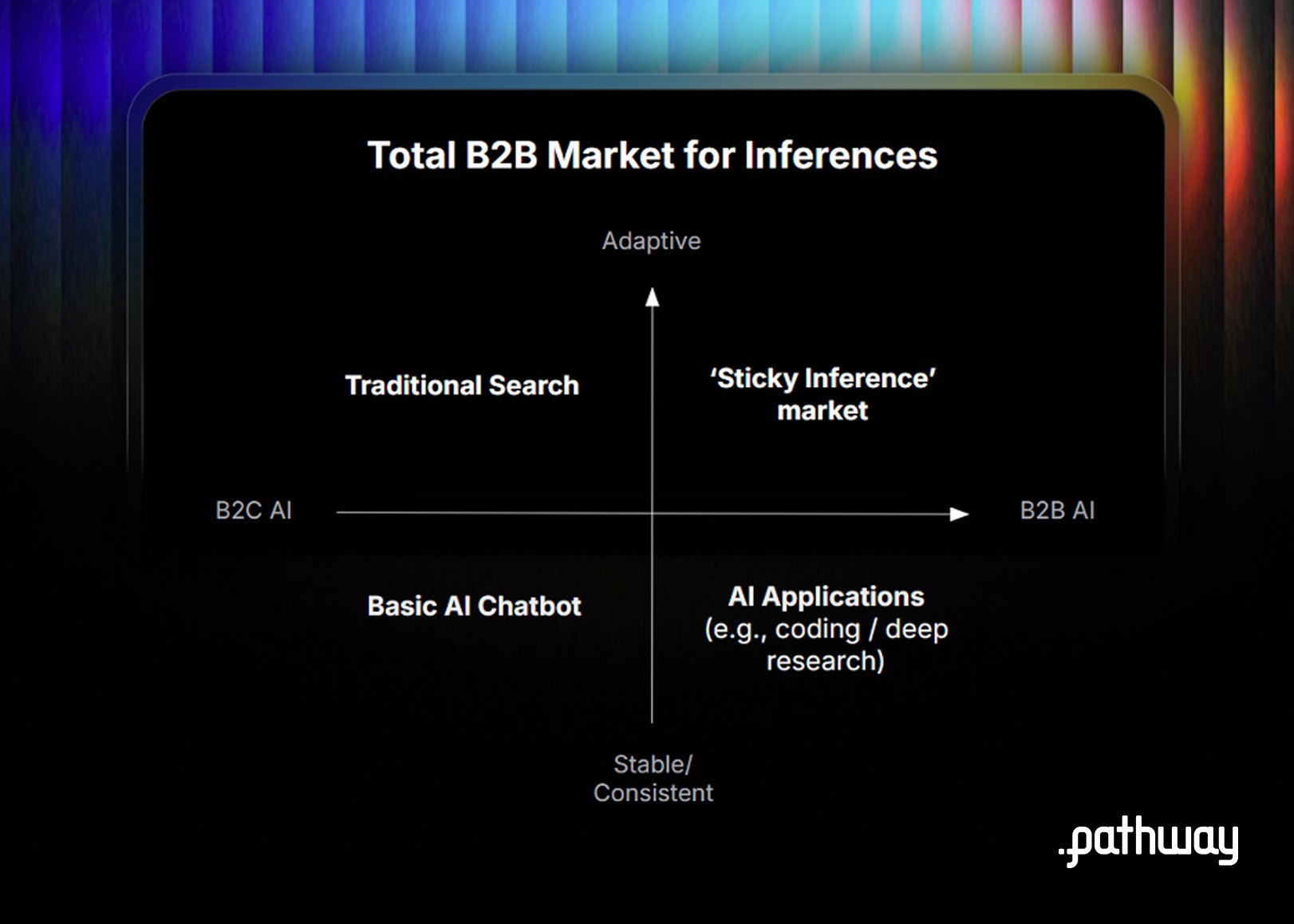
Jadi, di mana kasus penggunaan 'lekat' ini muncul? BDH melayani kasus penggunaan inferensi lekat di horizontal dan vertikal. Secara horizontal, kami melihat ini muncul di area yang fungsionalitas barunya sangat penting. Secara vertikal, kami melihat ini di retail, asuransi, teknologi, layanan keuangan, dan layanan kesehatan yang data serta konteksnya benar-benar mendorong bisnis.
Horizontal:
BDH mengotomatiskan proses akuntansi akhir kuartal yang panjang untuk perusahaan global multidisiplin dengan penalaran lintas wilayah dan departemen bisnis selama beberapa bulan. Alih-alih memperlakukan penutupan keuangan sebagai peristiwa yang terisolasi, BDH mencakup kuartal penuh, melakukan prakiraan awal, menilai varians siklus-menengah, menganalisis eksposur untuk memandu lindung nilai, mengoordinasikan rekonsiliasi, dan diakhiri dengan penutupan uji coba yang bersih serta dapat diaudit. Kecerdasan horizon-panjang ini meningkatkan akurasi dan pandangan ke depan dari waktu ke waktu.
Vertikal: Agnostik
Horizontal: Manajemen
Pembeda utama: Penalaran horizon panjang
Retail:
BDH memastikan perusahaan retail menjaga penjualan sesuai target berdasarkan kondisi dinamis. Dengan mempertimbangkan perubahan data internal dan eksternal, BDH menyarankan tindakan terbaik berikutnya seperti ke mana harus fokus dalam alur kerja personalisasi produk, peluang untuk harga dinamis atau area promosi yang disesuaikan secara wajar.
Vertikal: Retail
Horizontal: Penjualan
Pembeda utama: Tindakan terbaik berikutnya
Asuransi
BDH meningkatkan otomatisasi praotorisasi dan verifikasi klaim medis berikutnya untuk perusahaan layanan asuransi, dengan penalaran melalui skenario yang kompleks dan tidak terduga secara waktu nyata. Hal ini mengurangi biaya per klaim dengan mengotomatiskan persentase klaim yang lebih tinggi, sambil meningkatkan akurasi serta menyediakan jejak audit bawaan untuk setiap keputusan.
Vertikal: Asuransi
Horizontal: Operasi
Pembeda utama: Interoperabilitas
Teknologi besar
BDH menjalankan kembaran digital langsung dari setiap jaringan pelanggan korporasi untuk penyedia telekomunikasi. Dengan terus menyerap telemetri, topologi, dan data pelanggan langsung, BDH membandingkan penggunaan aktual versus kemungkinan, dan merekomendasikan konfigurasi ulang preventif, tindakan terbaik berikutnya pemeliharaan + layanan.
Vertikal: Teknologi Tinggi
Horizontal: Layanan
Pembeda utama: Kembaran digital langsung
Layanan Kesehatan
BDH mendukung penelitian klinis yang kompleks dengan terus mengintegrasikan riwayat pasien untuk menyarankan opsi pengobatan yang lebih tepat. Tidak seperti LLM tradisional, yang tidak dibangun untuk belajar dari set data tipis dan kesulitan menangani kasus langka atau unik, BDH dapat belajar dari 'contoh satu', dan mengubahnya menjadi wawasan yang dapat ditindaklanjuti.
Vertikal: Layanan Kesehatan
Horizontal: Penelitian
Pembeda utama: Set data tipis
Layanan Keuangan
BDH menjalankan prospek kesepakatan yang sangat dipersonalisasi dengan mempelajari playbook risiko kepemilikan bank dan tesis investasi. Dengan terus menganalisis data pasar secara waktu nyata, BDH menghasilkan peluang kesepakatan baru yang cocok dan mengidentifikasi peluang baru yang lebih menguntungkan dibandingkan dengan opsi pasar standar.
Vertikal: Layanan Keuangan
Horizontal: Risiko
Pembeda utama: Pembelajaran berkelanjutan
Dikembangkan di Amazon SageMaker HyperPod, dioptimalkan untuk AWS
AWS dan Pathway membuat teknologi ini dapat diakses saat ini, membawa inovasi AI terdepan ke kasus penggunaan yang konteks, memori, dan penalaran horizon panjang sangat penting. BDH dikembangkan di Amazon SageMaker HyperPod, yang dirancang untuk pelatihan terdistribusi skala besar serta membantu tim menyediakan dan mengoperasikan klaster GPU dengan alur kerja terkelola.
Teknologi ini juga dioptimalkan untuk infrastruktur AWS, yang berarti beroperasi secara efisien dan dengan performa maksimum. BDH dapat diakses melalui API ke aplikasi dan alur kerja AWS yang ada, serta terus ditingkatkan berdasarkan data yang sudah disimpan organisasi di AWS.
Hubungi Pathway (dragon@pathway.com) untuk mulai menjelajahi dan mengimplementasikan BDH. Pelanggan dapat memulai dengan mengurangi investasi di muka melalui program POC yang didukung AWS. Anda juga dapat mengakses penelitian Pathway di Arxiv dan repositori sumber terbuka mereka di Github.
Bagaimana konten ini?