What Is 6G?
What is 6G?
6G (sixth generation) is the next generation of cellular networking technology, due for worldwide release sometime after 2030. 5G significantly increased the service speeds of wireless communication systems over the speeds of 4G. 6G will see another significant speed increase again over 5G, up to a terabit per second. Along with increased speeds, 6G will incorporate new features, including greater energy efficiency, increased security, and more effective Internet of Things (IoT) capabilities.
How does 6G work?
6G works by tightly integrating network sensing, artificial intelligence, and distributed network architecture to provide low-latency connectivity at scale.
Although 6G research is ongoing, its technical foundations show a significant step from previous generations of cellular wireless networks. The new generation of mobile networks expands the radio spectrum towards the terahertz limit, which enables ultra-fast data transfer. Urban implementation will also involve denser radio cell deployment to increase capacity. In addition to a significant increase in network speed, 6G technology enables more precise, deeper location and positioning of connected machines through its mesh networks of terrestrial and non-terrestrial coverage.
6G allows telco operators to extend cellular and data services more effectively through a complex layer of networks. It opens up new possibilities for applications such as cloud gaming, smart cities, industrial IoT, and faster video streaming. Many 6G key features overlap with 5G, including enhanced mobile broadband (eMBB), Massive Machine-Type Communications (mMTC), and Ultra-Reliable Low Latency Communication (URLLC).
-
eMBB enables devices to achieve higher data rates, enabling applications such as augmented reality and virtual reality (AR/VR) and cloud gaming.
-
mMTC enables a large number of IoT devices to connect to the internet over a reliable wireless network.
-
URLLC provides a highly available communication channel for mission-critical applications that require guaranteed delivery.
While 6G plans to further enhance these capabilities, it also introduces more pronounced AI use across its architecture. Unlike 5G, which adds AI-powered functions as a layer on top of its core architecture, 6G might integrate AI more deeply in the network. Using AI, a 6G network can perform self-healing, optimize connection points, and orchestrate deployment without manual intervention.
What are the upgrades included in 6G?
6G will further expand on the advancements that 5G delivers, increasing coverage, reducing latency, and increasing the flexibility of cellular technology. Here are the upgrades offered by 6G.
Ultra-high speed connectivity
6G promises ultra-low latency, high-speed communication that extends to several hundred gigabits per second, to power bandwidth-intensive applications. It supports enhanced mobile broadband applications by enabling sub-millisecond network transfers. Besides high throughput, 6G also improves network reliability with methods such as simultaneous transmission, artificial intelligence, and machine learning (AI/ML) powered network services, and multiple wireless hops.
Sub-terahertz spectrum advances
6G networks will operate on the new sub-terahertz spectrum to support applications such as streaming molecular-level IoT imaging and brain-computing interfaces. The new spectrums allow data transfer at much higher rates. The initial 6G rollout, however, will likely involve spectrum sharing with 5G across the low, mid, and mmWave bands.
AI architecture
6G implementation is predicted to further strengthen AI’s role in optimizing network management. With 5G, AI has been introduced in various layers of the network for orchestration, monitoring, and scaling network services. We anticipate that AI will further automate network operations in 6G, moving from centralized AI network decision-making to embedded, physical-layer decision-making.
Increased coverage
6G expands coverage to areas that are previously lacking in connectivity with non-terrestrial networks, such as low-earth-orbit satellites and long-range base stations. A range of cmWave radio frequencies, 7-15 GHz, allows 6G to provide significantly more capacity for cellular devices in heavy traffic areas. Additionally, 6G infrastructure will leverage satellites to further expand Fixed Wireless Access (FWA) beyond what 5G offers.
Advanced security
6G will feature advanced security measures that help protect network users from cybersecurity threats. Continuing from the 5G framework, it will use AI to enhance existing defense capabilities for threat detection and remediation. To further strengthen data security, 6G operators will likely integrate post-quantum cryptography. Post-quantum cryptography refers to cryptographic algorithms resistant to quantum computers that will be capable of decrypting current standards.
Improved energy efficiency
The 6G infrastructure is designed to reduce energy consumption across both operator equipment and user devices. Communication service providers might collect usage data, which they use to optimize power management on the 6G carrier. Additionally, 6G devices will feature power-saving features that minimize energy consumption when the device is not in use.
What are some key components of 6G?
Here are some key components and processes that power 6G technology.
Network sensing
Network sensing enables 6G networks to gather information about the physical world by analyzing radio-wave patterns reflected off people and objects. By tracking how radio waves reflect off objects, telco operators can accurately virtualize the physical world and detect device locations with high precision. This allows service providers to create a digital twin that models physical spaces, providing a deeper understanding of our surroundings without the need for intermediary devices.
Device diversity
6G implementation will introduce a range of emerging and existing devices that connect through network layers that span public, private, and hybrid clouds. In addition to mobile phones and IoT devices, 6G is expected to support low-power wide-area networks, mixed-reality devices, and energy-efficient IoT devices.
Network architecture
6G will provide a clear separation of the infrastructure, network, orchestration, and application layers. Generally, 6G architecture is supported by modular, sustainable, resilient, and service-based principles, with network operations automated by AI to create a highly intelligent cellular network. 6G will further extend cloud-native capabilities to support virtualized networking services that can be exposed to developers and applications.
Signal processing
A 6G network must be able to process information at peak data rates at the terahertz spectrum, which can be challenging with existing infrastructure. 6G may see a wider adoption of massive Multiple-Input Multiple-Output (MIMO) transmission compared to legacy methods. MIMO is a type of radio antenna technology that increases network bandwidth while improving energy efficiency. Massive MIMO is an enhancement of MIMO that enables AI-assisted beamforming to provide ultra-low-latency cellular coverage. Beamforming focuses the cellular signal toward a specific target using multiple antennas, significantly increasing transmission strength.
Edge computing integration
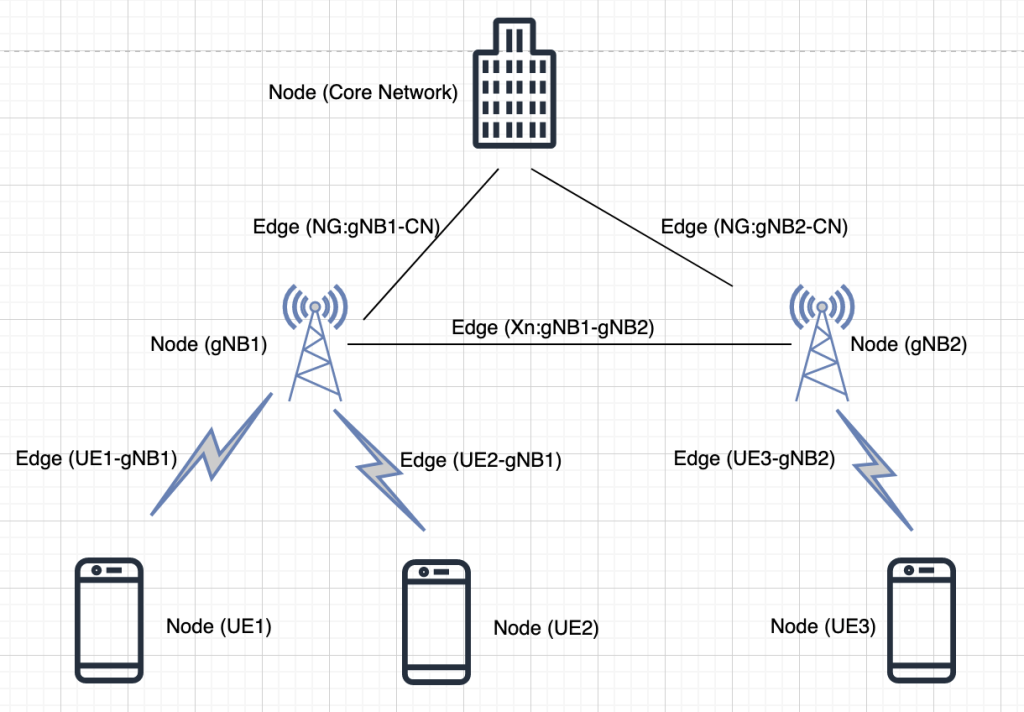
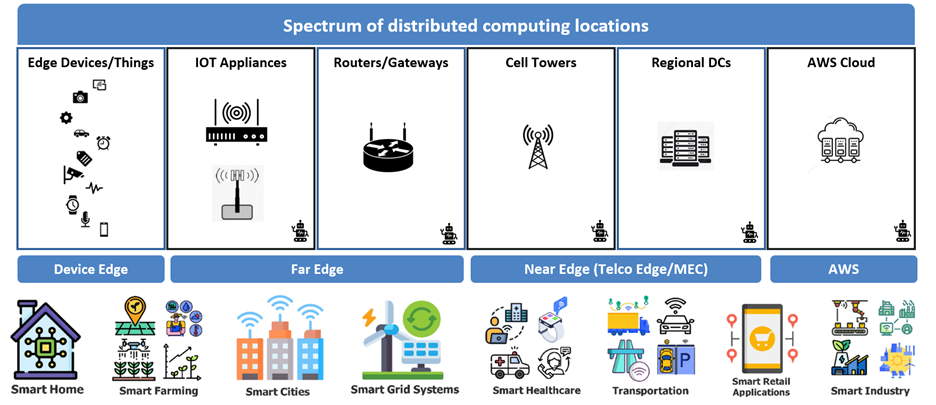
In 6G, the radio access network and cellular tower will support advanced edge computing capabilities. Edge computing shifts data processing from a centralized hub to distributed locations closer to data sources. This enables data-intensive applications, such as autonomous vehicles, AR/VR, and smart factories, to achieve sub-millisecond response times.
End devices
Devices with 6G capabilities will be introduced as 6G rolls out. These devices are engineered to leverage 6G capabilities, including network sensing, low-latency data transfer, and AI-native functions. In addition to 6G smartphones, special devices such as energy-neutral sensors and integrated sensing and communication devices (ISAC) will likely enter the market.
What are the differences between 5G and 6G?
5G is the fifth generation of wireless cellular technology that offers faster speed, lower latency, and increased capacity compared to 4G. Meanwhile, 6G, the sixth generation of cellular network, is designed to succeed 5G. 6G is expected to deliver extraordinary performance and introduce new capabilities.
Functionally, 5G networks operate at frequency bands ranging from sub-6 GHz to above 24 GHz. 6G will further expand the radio spectrum band by enabling transmission in the terahertz band. The current 5G system supports high-speed streaming, IoT connectivity, and faster mobile broadband. As the successor, 6G is expected to heavily leverage AI integration to enable network sensing, machine-to-machine communication, holographic conferencing, and digital twinning.
What are the use cases of 6G?
6G will allow cellular technology to transform communications by introducing new and enhanced applications. Here are some possible use cases.
Massive IoT
6G will provide the bandwidth, energy efficiency, and reliability required to improve how IoT devices operate. Tens of thousands of sensors will be able to share data in real time and automate responses based on predictive AI hosted at edge locations. More importantly, IoT enables energy-neutral devices that harvest energy from their surroundings. Consequently, devices can operate for a longer duration without requiring battery replacement or recharge.
Immersive mixed reality
6G supports an immersive AR/VR experience with high-capacity bandwidth and a distributed AI-powered cellular network. Network operators could offload computationally intensive tasks, stream game logic, and accurately capture users’ positions with 6G’s AI-native capabilities and sub-terahertz spectrum.
Digital twins
Digital twin allows businesses to create highly accurate virtual replicas of real-world environments. It requires near-real-time bidirectional communication between the physical and digital worlds, which 6G’s ultra-low-latency communication enables. By creating digital twins, organizations can run predictive analytics, simulate systems, and manage operations without directly accessing physical devices.
Integrated sensing and communication
Integrated sensing and communication (ISAC) refers to the 6G’s network capability to act as a sensor. When deployed, 6G can accurately report an object’s location, properties, and motion in real time. This opens up new possibilities for smarter object tracking and detection across future applications. For example, you might be able to control smart appliances with hand gestures.
Holographic communication
Holographic communication allows users to project realistic, interactive models of objects or people in real space. It requires high-speed data processing, advanced optics technology, and purpose-built hardware. 6G can support the spatial computing requirements for rendering and transferring holographic data in real time to different locations.
Collaborative robots
6G will enable industrial robots to operate beyond self-contained limits. With integrated sensing and AI-native networks, robots can interact with each other to accomplish tasks without human intervention. Instead of strictly following pre-programmed instructions, robots are more situationally aware and responsive to real-time insights from the future network.
Unmanned aerial vehicles
Drones will benefit from 6G’s high-resolution spatial positioning, distributed radio access points, and low-latency bandwidth. Even in constrained spaces, drones can accurately map their flight paths using data from ubiquitous ground and air networks.
When is 6G being released?
6G is expected to be commercially available in 2030, although it might take several years for the technology to fulfill its potential. Major telcos are researching to define the architecture’s specifications, and early 6G testing is expected in 2028. Feedback from ongoing 5G implementation helps to lay the technical foundation for 6G, with 5G Advanced introducing capabilities that 6G will further build on.
How can AWS support your 6G readiness requirements?
AWS is a leading provider of cloud solutions, including innovative network coverage and connectivity in virtual and physical environments. When 6G is released, AWS will be ready to help you with services and solutions to build and integrate systems with this new technology. In the meantime, you can explore our 5G offerings:
-
Amazon CloudFront is a global edge computing network that helps you securely deliver content with low latency and high transfer speeds across the world.
-
AWS IoT Core allows you to easily and securely connect devices to the cloud. Connect, manage, and scale your device fleets easily and reliably without provisioning or managing servers.
-
AWS Wavelength lets you run applications using AWS infrastructure and services in AWS telco partners’ data centers to meet your low-latency, data-residency, and resiliency needs.
Get started with networking on AWS by creating a free account today.
Browse all cloud computing concepts
Browse all cloud computing concepts content here:
Did you find what you were looking for today?
Let us know so we can improve the quality of the content on our pages