What Is an Optical Network?
- What is an optical network?
- How does an optical network work?
- What technologies are used in optical network infrastructure?
- What is the difference between optical, copper, and wireless networks?
- What are the advantages of optical networks?
- What are some use cases for optical networking?
- How can AWS support your optical network requirements?
What is an optical network?
An optical network is a communications transmission system that uses light to send data across distances. Optical network technologies convert data into light signals and send these light signals through fine glass or plastic tubing, under the ground. Optical networks are considered faster and less prone to interference than copper or wireless networks. Optical networks power much of the internet, from fiber to the home to undersea cabling across continents.
How does an optical network work?
Transmitting data across an optical network involves several key stages.
Data conversion at source
Data, such as a video stream or file transfer, is converted into light signals using a light-emitting diode (LED) or a laser diode in an optical transmitter. Electrical signals are modulated into pulses of light that represent binary code as ones (bright) and zeros (dim), a method known as intensity modulation.
Data transmission
These light pulses travel through thin strands of glass or plastic fiber inside optical network cables, following the principle of total internal reflection. The fiber core is surrounded by cladding with a low refractive index, which means the light bounces in one direction, down the cable, with minimal signal loss.
Signal amplification
The light signal can weaken over long distances due to natural attenuation. To maintain signal strength, optical amplifiers such as erbium-doped fiber amplifiers (EDFAs) boost the signal without converting it back to an electrical form. This allows for faster, more efficient transmission across thousands of kilometers.
Data conversion at its destination
After the signal reaches its destination, an optical network terminal (ONT) converts the light signal from the fiber network back to an electrical signal to be used by the local network.
Software-based routing
At network junction points, optical switches and reconfigurable components, such as wavelength selective switches (WSS), direct specific wavelengths of light to their destinations. In modern systems, this routing is managed by software-defined networking (SDN), which allows for dynamic, automated control over network traffic. Technologies such as ROADMs (reconfigurable optical add-drop multiplexers) also enable network operators to reroute data traffic remotely.
What technologies are used in optical network infrastructure?
Modern, high-speed optical networks rely on a suite of technologies that are integral to global network connectivity.
Fiber optic cables
Fiber optic cables are thin strands of glass or plastic that transmit data as pulses of light. Those strands are enclosed in a protective jacket of polyethylene, vinyl, or other materials, depending on the environmental conditions in which the cable operates.
Cables can be either single-mode or multi-mode. Single-mode cables have a single optical fiber core that allows a signal to follow a single path, or “mode.” This style cable has minimal signal loss and is typically used for longer distance runs. Multi-mode cables can carry multiple data signals simultaneously, but are prone to signal degradation over longer distances. They are typically used in shorter-range, higher-capacity use cases, such as inside a data center.
Optical transmitters and receivers
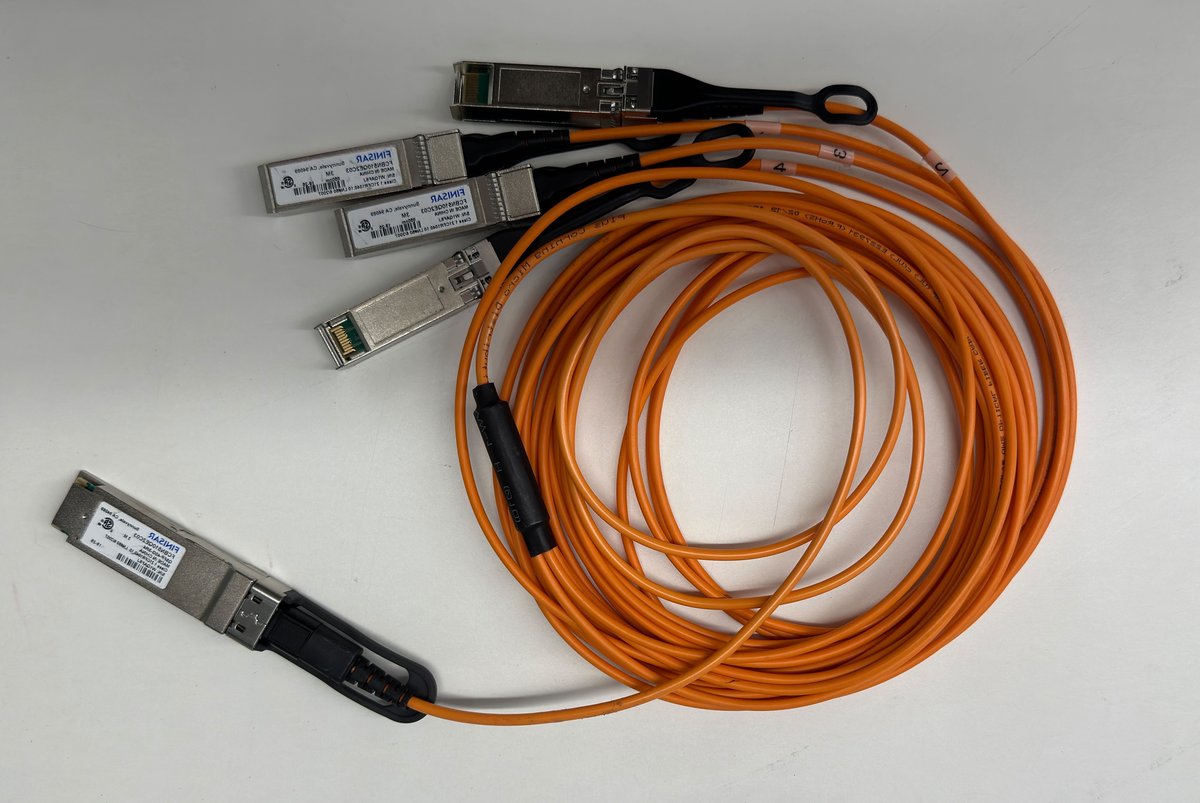
Transmitters and receivers, or ONTs, are necessary to permit bidirectional communication across a fiber optic network. Transmitters convert electrical signals from a source system into light using lasers or LEDs. On the receiving end, receivers use photodetectors to transform incoming light back into electrical data.
Optical amplifiers
In long-distance communication, data can be lost due to signal attenuation, which is the gradual loss of signal intensity as light passes through a medium, such as fiber optic cabling. Optical amplifiers boost light signals without converting them back to electrical form. One of the most common types, EDFA, is used in long-haul and submarine networks to extend reach across thousands of kilometers. Raman amplifiers can provide more distributed signal gain and are often combined with EDFAs.
Multiplexers
To maximize fiber capacity, a multiplexer, or “mux,” can combine multiple data channels onto a single strand using wavelength division multiplexing (WDM). A mux combines different wavelengths of light at the source, while a demux separates them at the destination. Dense wavelength division multiplexing (DWDM) systems can carry 80 channels on a single fiber, increasing bandwidth without requiring new cable.
Switches
Modern, software-controlled networks rely on switching technologies such as WSS to route individual signals.
Optical network management tools
Some of the specialized tools used to monitor optical transport networks include:
-
Optical time-domain reflectometers (OTDRs): OTDRs analyze reflected optical signals to help test fiber optic cabling. They can help identify problems like breaks, bends, or accidental splices.
-
Optical spectrum analyzers (OSAs): OSAs monitor wavelength quality and detect issues like drift or interference.
-
Software-defined networking (SDN) systems: SDN systems provide centralized control, automation, and visibility across the optical network layer.
What is the difference between optical, copper, and wireless networks?
Each medium has distinct characteristics that affect speed, distance, reliability, and use cases.
Copper networks
Copper networks transmit data by electrical signals sent over cables with a copper wire core, for example, in twisted-pair Ethernet or coaxial cables. Copper wiring is widely used for local area networks (LANs) and legacy on-premises infrastructure due to its relatively low cost and ease of installation.
However, signals can degrade over copper wiring at longer distances, and cabling is heavy relative to optical network cabling. These constraints make it less suited for high-speed, longer-distance applications. Unshielded copper wiring is also prone to electromagnetic interference (EMI).
Wireless networks
Wireless networks transmit data by radio waves. Some common wireless standards today are Wi-Fi and LTE cellular. Wireless networks are often used to support mobile device use or to provide network service where physical cabling is not a viable choice, for example, in historic buildings or outdoors.
Signal congestion and environmental interference are both potential issues that can occur in wireless networking.
Optical networks
Optical networks offer far greater bandwidth, lower latency, and immunity to EMI compared to copper and wireless networking. Because signals degrade much more slowly, optical networks can span thousands of kilometers with minimal signal loss.
What are the advantages of optical networks?
Optical networks can be more reliable and perform better than copper or wireless networking in many use cases.
High bandwidth
Optical networks have higher bandwidth capacity, meaning they can move more data than traditional copper cables, typically in the terabits per second range. This helps carry high-definition video and large-scale cloud computing services efficiently.
Low latency
Light can travel faster through optical fiber cables than electrical signals can travel through copper. That means optical networks generally have lower latency. This makes optical fiber cables well-suited for applications where timing is critical, such as financial trading or real-time collaboration and high-speed communication services.
Long-distance data transmission
Optical fiber maintains signal integrity across hundreds of kilometers with minimal loss. Using optical amplifiers such as EDFAs, signals can travel thousands of kilometers, which is why fiber is used for undersea, intercontinental network connections.
Wavelength Division Multiplexing (WDM)
WDM allows multiple data streams to be sent simultaneously over a single fiber. The technology uses different wavelengths of light on the same strand. Variants such as DWDM can combine many more channels on one strand, which can significantly increase network capacity without the need to run more fiber.
Immunity from electromagnetic interference
Electrical signals in copper network cabling can be subject to electromagnetic interference, especially if the lines are unshielded. EMI can come from power lines, motors, or strong, local radio signals. Because optical networks use light instead of electricity, they are immune to EMI.
Scalability
Optical networks are inherently scalable. As demand grows, you can increase capacity using WDM often without needing to replace the underlying fiber infrastructure.
What are some use cases for optical networking?
Optical networking is widely used in modern network infrastructure.
Backbone networks
Optical networks form the core of the global internet infrastructure. These long-haul fiber systems carry massive volumes of data between cities and countries.
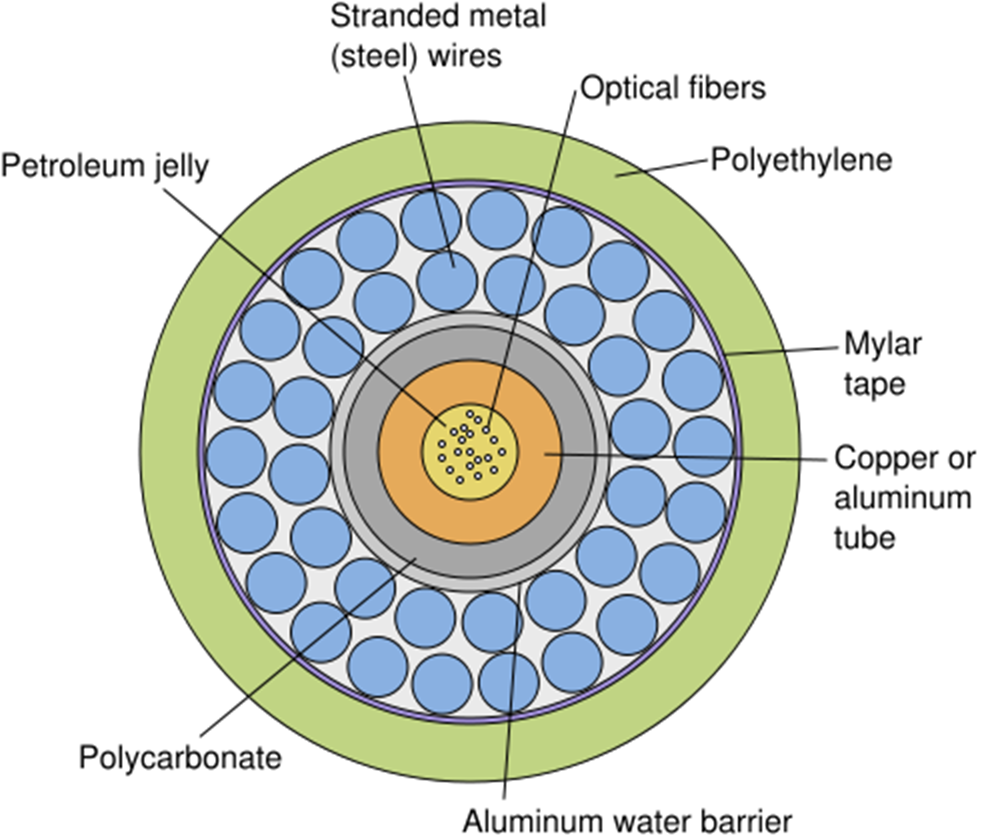
Underwater cabling
Submarine cables running along the ocean bottom connect major network hubs on different continents.
ISP networks
Internet Service Providers (ISPs) frequently use optical networks to deliver broadband services to residential and commercial customers.
Data centers
Data centers now typically use optical networks to connect internal systems and interconnected data centers and cloud platforms.
Wide area networks (WANs)
Organizations use optical networks to connect geographically dispersed locations such as buildings on university campuses, in hospital complexes, or corporate offices. These private WANs help ensure secure, high-performance connectivity for critical applications and large data transfers.
How can AWS support your optical network requirements?
AWS offers a range of services to support high-speed data transmission, leveraging optical networks where possible.
Amazon CloudFront is a content delivery network that reduces latency by delivering data through 700+ globally dispersed Points of Presence (PoPs) with automated network mapping and intelligent routing.
The AWS Direct Connect cloud service is the shortest path to your AWS resources, where your network traffic remains on the AWS global network and never touches the public internet. Direct Connect typically uses fiber optic cabling, which reduces the chance of hitting bottlenecks or unexpected increases in latency.
AWS Global Accelerator is a traffic routing management service that helps improve network performance for your applications by up to 60%. AWS Global Accelerator utilizes AWS edge locations and network backbone to improve application availability, performance, and security.
Get started with high-speed networking on AWS by creating a free account today.
Next steps
Browse all cloud computing concepts
Browse all cloud computing concepts content here:
Did you find what you were looking for today?
Let us know so we can improve the quality of the content on our pages