AWS Partner Network (APN) Blog
Build a secure, scalable deployment pipeline with CircleCI’s AWS Deployment Pipeline Reference Architecture implementation
By: Shalabh Nigam, DevSecOps Solutions Architect – AWS
By: Nitin Kuriakose, Senior Field Engineer – CircleCIer – CircleCI
 |
| CircleCI |
 |
Modern software teams face the critical challenge of needing to deploy applications faster while maintaining security and compliance. Organizations in regulated industries spend significant sprint capacity on manual compliance checks. Enterprises managing multi-Region deployments face extended deployment windows with elevated failure risks. Security scanning often becomes a bottleneck rather than an automated safeguard.
CircleCI addressed these challenges by building a reference implementation of the AWS Deployment Pipeline Reference Architecture (DPRA). This implementation demonstrates how to build enterprise-grade deployment pipelines that are secure by design, scalable across Regions, and integrated with best-in-class DevOps tools. This post explores how CircleCI created this implementation and how organizations can use it as part of CircleCI’s Integrated DevOps Toolchain (IDT).
Understanding the challenge
Organizations building deployment pipelines face challenges that standard continuous integration and continuous delivery (CI/CD) tools don’t adequately address. The compliance burden means organizations spend significant sprint capacity on manual security reviews and audit documentation. Multi-Region complexity creates deployment windows extending for hours, with each Region representing a potential failure point. The security scanning gap occurs when organizations struggle to implement comprehensive scanning without creating bottlenecks—requiring integration of multiple tools for container vulnerabilities, secrets detection, static analysis, and infrastructure compliance. The tool integration challenge emerges as enterprises manage 10–20 tools in their DevOps toolchain, with integration maintenance diverting engineering resources from feature development.
These challenges create a false choice between speed and safety. CircleCI’s DPRA implementation eliminates this trade-off.
What is the AWS Deployment Pipeline Reference Architecture?
The DPRA provides prescriptive guidance for building secure, automated deployment pipelines on AWS. It defines architectural patterns for progressive deployments, automated testing, security scanning, and multi-environment orchestration. Rather than prescribing specific tools, the DPRA establishes a framework that organizations can implement using their preferred CI/CD platform and DevOps tools. CircleCI’s reference implementation demonstrates how to realize the DPRA vision using CircleCI’s CI/CD platform integrated with AWS services and third-party security tools. This implementation serves as a reference blueprint that organizations can fork, customize, and deploy in their own environments.
Why CircleCI built a DPRA reference implementation
CircleCI built this reference implementation to address a fundamental question their customers and partners ask: “What does great look like in a DevOps pipeline?” Organizations know they need to modernize their deployment practices, but they lack concrete examples of reference architectures demonstrating best practices.
The reference implementation serves multiple strategic purposes: accelerate customer adoption by providing a working example that customers can fork and customize; demonstrate AWS integration depth through built-in integration with AWS services including AWS CodeDeploy, Amazon CloudWatch, Amazon Elastic Container Service (Amazon ECS), and Amazon Aurora; validate CircleCI’s IDT by proving the approach delivers measurable outcomes; and enable partner replication by creating a blueprint that AWS Partners can follow to build their own DPRA implementations.
About CircleCI
CircleCI is a standalone CI/CD platform with deep AWS integrations and more than 3,500 partner integrations across the DevOps toolchain. Teams standardize on CircleCI to accelerate delivery; adopt platform-agnostic infrastructure as code (IaC) such as AWS Cloud Development Kit (AWS CDK), Terraform, or Pulumi; and enforce security by design with OpenID Connect (OIDC), policy controls, and comprehensive testing insights. And they can achieve all this without being tied to a single cloud or version control system. CircleCI’s AI-powered capabilities include automated flaky test remediation that identifies and resolves intermittent test failures without manual intervention.
CircleCI’s platform provides enterprise-grade features including reusable configuration, CircleCI Contexts for secure credential management, Test Insights for tracking performance trends, Workspaces for artifact transfer, Matrix Jobs for multi-Region deployments, and the Orb ecosystem with pre-built, reusable configuration packages available at Orbs in the CircleCI Developer documentation.
CircleCI and AWS: A strategic partnership
The collaboration between AWS and CircleCI represents a proven approach to DevOps transformation validated across hundreds of customer implementations. CircleCI holds the AWS DevOps Competency, demonstrating deep expertise in AWS services and best practices. Unlike generic CI/CD tools that treat AWS as merely another deployment target, CircleCI’s AWS integration includes built-in OIDC authentication that eliminates long-lived credentials, optimized AWS service integration with CodeDeploy, CloudWatch, Amazon ECS, and Aurora, first-class AWS CDK support with flexibility for Terraform or Pulumi, and a platform-agnostic approach supporting multi-cloud and hybrid environments. This partnership enables the IDT, a comprehensive solution delivering turnkey excellence through pre-validated tool combinations, personalized solutions from more than 3,500 integrations, fast time to value with pre-built configurations, cost optimization with transparent pricing, and compliance-ready security controls.
Solution architecture
CircleCI’s DPRA reference implementation demonstrates enterprise-grade deployment patterns across three AWS environments: beta, gamma, and production. The implementation deploys a Java Spring Boot API running on Amazon ECS with Aurora database, showcasing real-world architectural patterns.
The architecture incorporates progressive deployment with AWS CodeDeploy for blue/green deployments with automated rollback based on CloudWatch alarms; multi-Region orchestration using CircleCI matrix jobs for parallel deployments; comprehensive security scanning with Trivy (container vulnerabilities), GitGuardian (secret detection), SpotBugs (static analysis), and cdk-nag (infrastructure compliance); automated testing with JUnit, SoapUI, and JMeter integrated with CircleCI Test Insights; and IaC using AWS CDK with reusable constructs.
The following diagram illustrates this architecture.
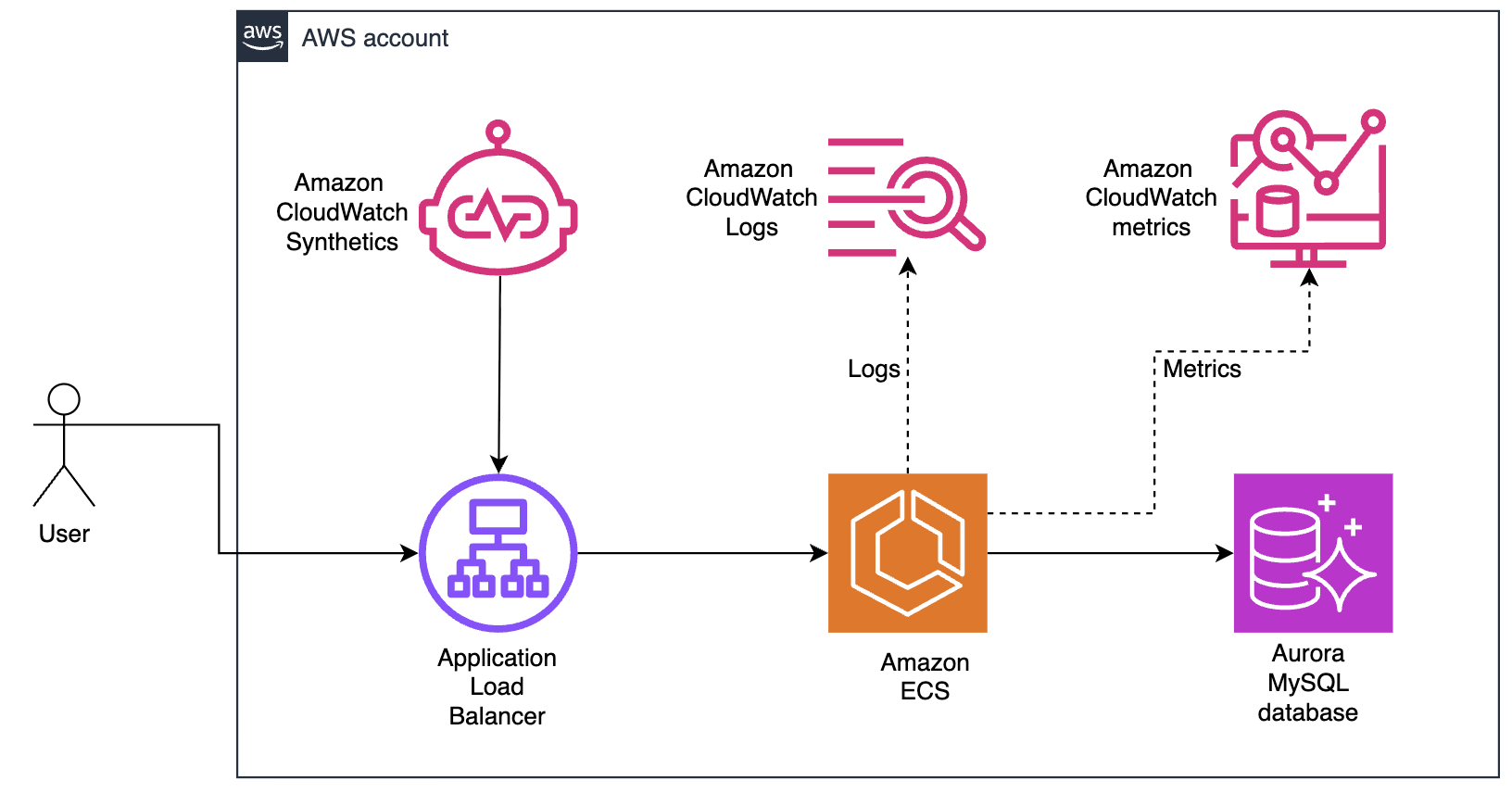
Figure 1: CircleCI DPRA reference implementation architecture
CircleCI made several critical architectural decisions. They chose to use OIDC over long-lived credentials for AWS authentication, eliminating security risks and simplifying credential rotation. They implemented security scanning at every stage rather than as an end-of-pipeline gate, catching issues earlier when they’re cheaper to fix. Platform-agnostic tooling supported AWS CDK, Terraform, and Pulumi to avoid vendor lock-in. Progressive deployment patterns using blue/green deployments with automated rollback minimized risk while maintaining rapid release velocity.
Business impact
Organizations implementing CircleCI’s DPRA reference implementation as part of the IDT typically achieve the following improvements:
- 50% reduction in deployment time through automated progressive deployments and parallel Region rollouts
- 85% decrease in security vulnerabilities using integrated scanning
- 3 times faster incident resolution with comprehensive monitoring using CloudWatch Synthetics and CircleCI Test Insights
- 40% reduction in configuration errors through reusable CircleCI configurations and pre-commit hooks.
Beyond these metrics, organizations report increased developer confidence in deployments, reduced on-call burden through automated rollbacks, and faster onboarding for new team members using documented reference patterns.
Getting started
Organizations can implement CircleCI’s DPRA reference implementation in an afternoon. Begin by forking the reference implementation from the GitHub repository, connect the repository to your CircleCI account, configure AWS credentials using OIDC authentication, customize the AWS CDK templates for your application and environments, and deploy the infrastructure to run your first pipeline.
The repository includes comprehensive documentation, preconfigured pipeline definitions, and step-by-step setup instructions. For organizations ready to go beyond the reference implementation, CircleCI and AWS offer IDT workshops where solution architects help design complete toolchain strategies. For partners interested in building their own DPRA implementations, the reference implementation serves as a blueprint. The AWS DPRA documentation provides additional guidance.
Building your own IDT and contributing to DPRA
AWS Partners can build their own IDT implementations to extend the DPRA ecosystem with validated, approved reference solutions. To do so, you need to select your core toolchain (CI/CD, security, monitoring, and IaC tools), build the reference implementation by forking DPRA architecture and integrating your tools, validate with pilot customers, and contribute back by publishing to GitHub with documentation.
For technical requirements, you need AWS service integration through OIDC, CodeDeploy, CloudWatch, and Amazon ECS or Amazon Elastic Kubernetes Service (Amazon EKS), multistage security scanning, progressive deployment patterns with automated rollback, and IaC with reusable modules.
To contribute to the DPRA ecosystem, submit implementations through the AWS Partner Network portal with architecture diagrams and guides. Participate in DPRA working groups and present at AWS events. Benefits include marketplace differentiation, accelerated customer adoption, deeper AWS partnership, and the potential to be featured in AWS case studies and documentation.
Conclusion
CircleCI’s implementation of the AWS DPRA demonstrates that organizations don’t have to choose between deployment speed and security. By combining the robust cloud infrastructure of AWS with CircleCI’s flexible CI/CD platform and an ecosystem of more than 3,500 integrations, organizations can build deployment pipelines that are secure by design, scalable across Regions, and tailored to their specific requirements. The reference implementation serves as more than merely a technical blueprint—it’s a gateway to comprehensive DevOps transformation through the IDT. Whether you’re starting with the reference implementation or ready to design your complete IDT, CircleCI and AWS provide the expertise, tools, and support to accelerate your DevOps journey.
To get started as an AWS Partner, review the DPRA documentation and CircleCI’s reference implementation, identify your value proposition, and engage your AWS Partner Development Manager. After accessing AWS Partner Central resources, join the DPRA partner community for support. To get started with CircleCI’s Deployment Pipeline Reference implementation, visit the aws-deployment-pipeline-reference-architecture source code on GitHub. Visit CircleCI in AWS Markteplace.

CircleCI – AWS Partner Spotlight
CircleCI is an AWS DevOps Competency Partner and a leading CI/CD platform with deep AWS integrations and more than 3,500 partner integrations across the DevOps toolchain. CircleCI helps organizations accelerate delivery, adopt platform-agnostic infrastructure as code, and enforce security by design—all without being tied to a single cloud or version control system.