AWS Architecture Blog
Category: Security, Identity, & Compliance
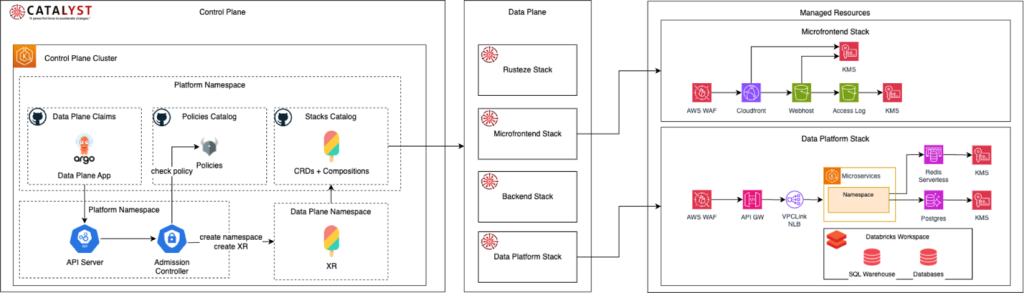
Digital Transformation at Santander: How Platform Engineering is Revolutionizing Cloud Infrastructure
Santander faced a significant technical challenge in managing an infrastructure that processes billions of daily transactions across more than 200 critical systems. The solution emerged through an innovative platform engineering initiative called Catalyst, which transformed the bank’s cloud infrastructure and development management. This post analyzes the main cases, benefits, and results obtained with this initiative.
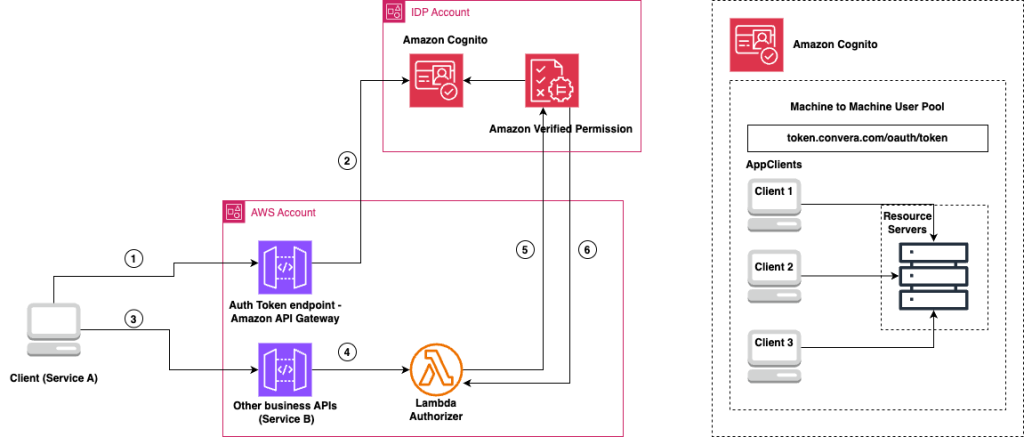
How Convera built fine-grained API authorization with Amazon Verified Permissions
In this post, we share how Convera used Amazon Verified Permissions to build a fine-grained authorization model for their API platform.
Sovereign failover – Design for digital sovereignty using the AWS European Sovereign Cloud
This post explores the architectural patterns, challenges, and best practices for building cross-partition failover, covering network connectivity, authentication, and governance. By understanding these constraints, you can design resilient cloud-native applications that balance regulatory compliance with operational continuity.
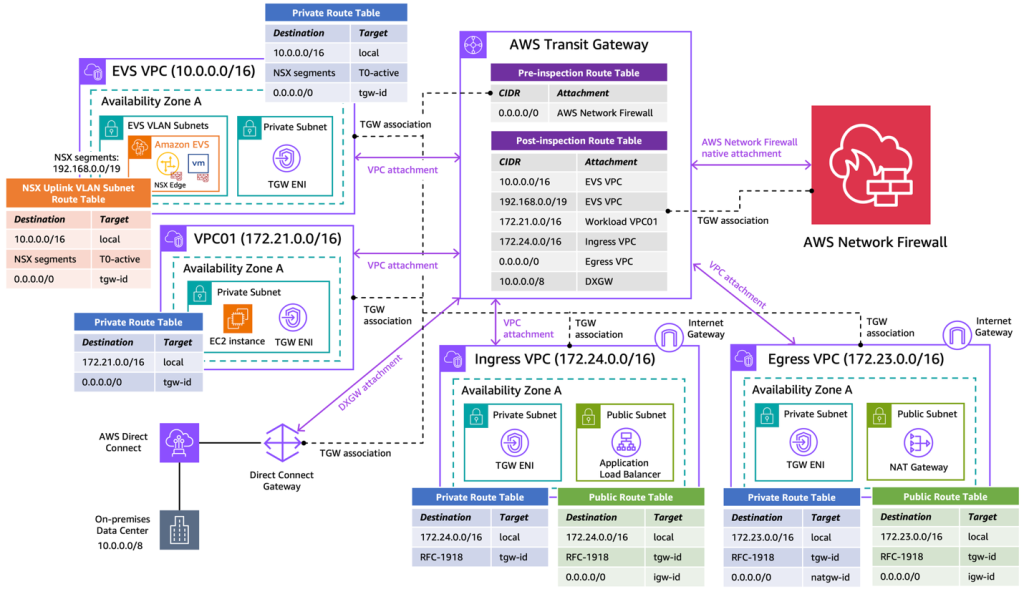
Secure Amazon Elastic VMware Service (Amazon EVS) with AWS Network Firewall
In this post, we demonstrate how to utilize AWS Network Firewall to secure an Amazon EVS environment, using a centralized inspection architecture across an EVS cluster, VPCs, on-premises data centers and the internet. We walk through the implementation steps to deploy this architecture using AWS Network Firewall and AWS Transit Gateway.
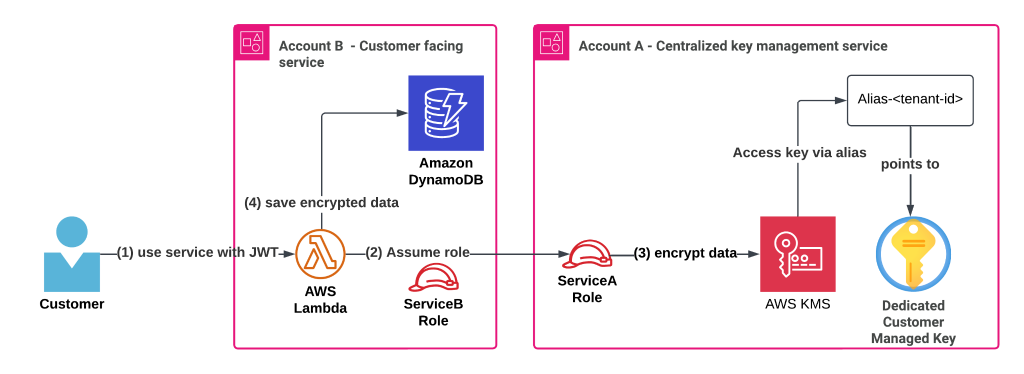
Simplify multi-tenant encryption with a cost-conscious AWS KMS key strategy
In this post, we explore an efficient approach to managing encryption keys in a multi-tenant SaaS environment through centralization, addressing challenges like key proliferation, rising costs, and operational complexity across multiple AWS accounts and services. We demonstrate how implementing a centralized key management strategy using a single AWS KMS key per tenant can maintain security and compliance while reducing operational overhead as organizations scale.
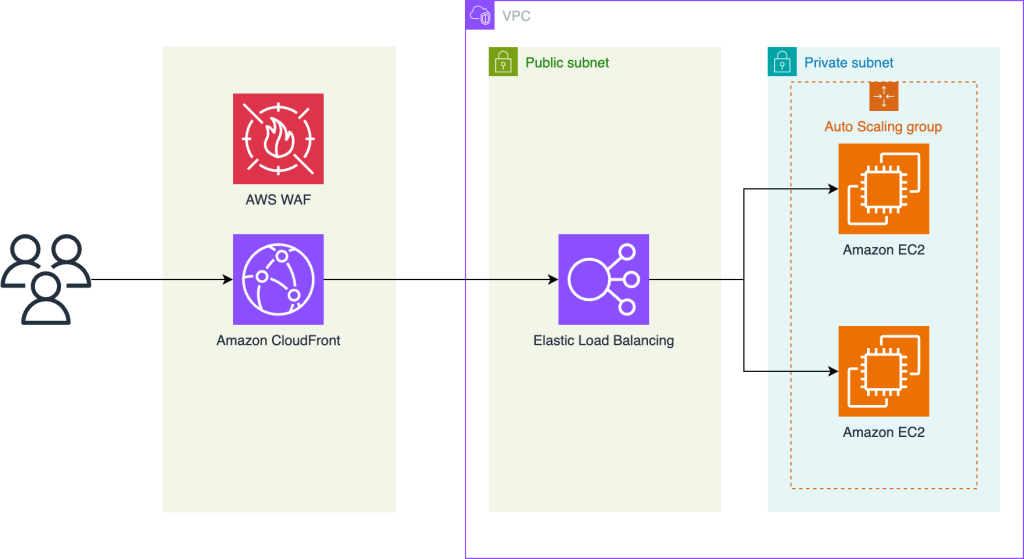
How Scale to Win uses AWS WAF to block DDoS events
In this post, you’ll learn how Scale to Win configured their network topology and AWS WAF to protect against DDoS events that reached peaks of over 2 million requests per second during the 2024 US presidential election campaign season. The post details how they implemented comprehensive DDoS protection by segmenting human and machine traffic, using tiered rate limits with CAPTCHA, and preventing CAPTCHA token reuse through AWS WAF Bot Control.

Amazon Bedrock baseline architecture in an AWS landing zone
In this post, we explore the Amazon Bedrock baseline architecture and how you can secure and control network access to your various Amazon Bedrock capabilities within AWS network services and tools. We discuss key design considerations, such as using Amazon VPC Lattice auth policies, Amazon Virtual Private Cloud (Amazon VPC) endpoints, and AWS Identity and Access Management (IAM) to restrict and monitor access to your Amazon Bedrock capabilities.

How UNiDAYS achieved AWS Region expansion in 3 weeks
In this post, we share how UNiDAYS achieved AWS Region expansion in just 3 weeks using AWS services.

From virtual machine to Kubernetes to serverless: How dacadoo saved 78% on cloud costs and automated operations
In this post, we walk you step-by-step through dacadoo’s journey of embracing managed services, highlighting their architectural decisions as we go.

Converting stateful application to stateless using AWS services
Designing a system to be either stateful or stateless is an important choice with tradeoffs regarding its performance and scalability. In a stateful system, data from one session is carried over to the next. A stateless system doesn’t preserve data between sessions and depends on external entities such as databases or cache to manage state. […]