AWS Big Data Blog

Simplify data pipelines with AWS Glue automatic code generation and Workflows
In this post, we discuss how to leverage the automatic code generation process in AWS Glue ETL to simplify common data manipulation tasks, such as data type conversion and flattening complex structures. We also explore using AWS Glue Workflows to build and orchestrate data pipelines of varying complexity. Lastly, we look at how you can leverage the power of SQL, with the use of AWS Glue ETL and Glue Data Catalog, to query and transform your data.
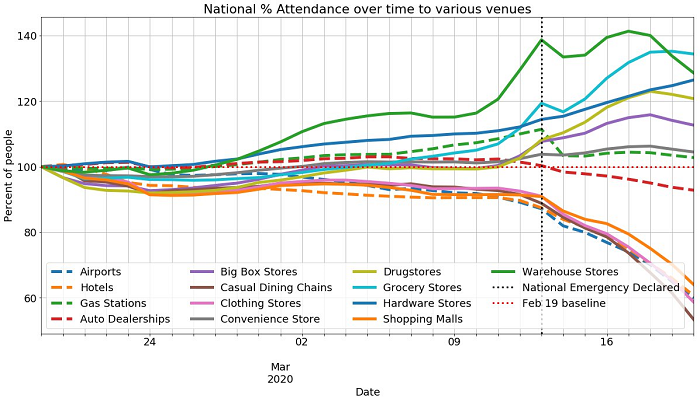
Exploring the public AWS COVID-19 data lake
This post walks you through accessing the AWS COVID-19 data lake through the AWS Glue Data Catalog via Amazon SageMaker or Jupyter and using the open-source AWS Data Wrangler library. AWS Data Wrangler is an open-source Python package that extends the power of Pandas library to AWS and connects DataFrames and AWS data-related services (such as Amazon Redshift, Amazon S3, AWS Glue, Amazon Athena, and Amazon EMR). For more information about what you can build by using this data lake, see the associated public Jupyter notebook on GitHub.

Federate Amazon Redshift access with Microsoft Azure AD single sign-on
April 2024: This post was reviewed for accuracy. December 2022: This post was reviewed and updated for accuracy. February 2nd, 2022: This blog was updated by Kay Lerch. Recently, we helped a large enterprise customer who was building their data warehouse on Amazon Redshift, using Microsoft Azure Active Directory (Azure AD) as a corporate directory. […]

Ingest streaming data into Amazon OpenSearch Service within the privacy of your VPC with Amazon Data Firehose
September 8, 2021: Amazon Elasticsearch Service has been renamed to Amazon OpenSearch Service. See details. February 9, 2024: Amazon Kinesis Data Firehose has been renamed to Amazon Data Firehose. Read the AWS What’s New post to learn more. Today we are adding a new Amazon Data Firehose feature to set up VPC delivery to your […]

Achieve finer-grained data security with column-level access control in Amazon Redshift
September 2023: This post was reviewed for accuracy. Amazon Redshift is the most popular cloud data warehouse because it provides fast insights at a low cost. Customers can confidently run mission critical workloads, even in highly regulated industries, because Amazon Redshift comes with out of the box security and compliance. The security features, combined with […]

Speed up your ELT and BI queries with Amazon Redshift materialized views
The Amazon Redshift materialized views function helps you achieve significantly faster query performance on repeated or predictable workloads such as dashboard queries from Business Intelligence (BI) tools, such as Amazon QuickSight. It also speeds up and simplifies extract, load, and transform (ELT) data processing. You can use materialized views to store frequently used precomputations and […]

Query, visualize, and forecast TruFactor web session intelligence with AWS Data Exchange
This post showcases TruFactor Intelligence-as-a-Service data on AWS Data Exchange. TruFactor’s anonymization platform and proprietary AI ingests, filters, and transforms more than 85 billion high-quality raw signals daily from wireless carriers, OEMs, and mobile apps into a unified phygital consumer graph across physical and digital dimensions. TruFactor intelligence is application-ready for use within any AWS analytics or ML service to power your models and applications running on AWS, with no additional processing required.

Accelerate Amazon Redshift Federated Query adoption with AWS CloudFormation
Amazon Redshift Federated Query allows you to combine the data from one or more Amazon RDS for PostgreSQL and Amazon Aurora PostgreSQL databases with data already in Amazon Redshift. You can also combine such data with data in an Amazon S3 data lake.

Build a Simplified ETL and Live Data Query Solution using Redshift Federated Query
You may have heard the saying that the best ETL is no ETL. Amazon Redshift now makes this possible with Federated Query. In its initial release, this feature lets you query data in Amazon Aurora PostgreSQL or Amazon RDS for PostgreSQL using Amazon Redshift external schemas. Federated Query also exposes the metadata from these source databases through system views and driver APIs, which allows business intelligence tools like Tableau and Amazon Quicksight to connect to Amazon Redshift and query data in PostgreSQL without having to make local copies.

Build a cloud-native network performance analytics solution on AWS for wireless service providers
February 9, 2024: Amazon Kinesis Data Firehose has been renamed to Amazon Data Firehose. Read the AWS What’s New post to learn more. This post demonstrates a serverless, cloud-based approach to building a network performance analytics solution using AWS services that can provide flexibility and performance while keeping costs under control with pay-per-use AWS services. […]