AWS Compute Blog
Category: Uncategorized

Enabling Microsoft Defender Credential Guard on Amazon EC2
This blog post is written by Jason Nicholls, Principal Solutions Architect AWS. In this post we show you how to enable Windows Defender Credential Guard (Credential Guard) on Amazon Elastic Compute Cloud (Amazon EC2) running Microsoft Windows Server. Credential Guard, when enabled on Amazon EC2 Windows Instances protects sensitive user login information from being extracted […]

Using Porting Advisor for Graviton
This blog post is written by Ryan Doty Solutions Architect, AWS and Vishal Manan Sr. SSA, EC2 Graviton , AWS. AWS customers recognize that Graviton-based EC2 instances deliver price-performance benefits but many are concerned about the effort to port existing applications. Porting code from one architecture to another can require investment in time and effort. AWS […]

How to create custom health checks for your Amazon EC2 Auto Scaling Fleet
This blog post is written by Gaurav Verma, Cloud Infrastructure Architect, Professional Services AWS. Amazon EC2 Auto Scaling helps you maintain application availability and lets you automatically add or remove Amazon Elastic Compute Cloud (Amazon EC2) instances according to the conditions that you define. You can use dynamic and predictive scaling to scale-out and scale-in […]

Scaling an ASG using target tracking with a dynamic SQS target
This blog post is written by Wassim Benhallam, Sr Cloud Application Architect AWS WWCO ProServe, and Rajesh Kesaraju, Sr. Specialist Solution Architect, EC2 Flexible Compute. Scaling an Amazon EC2 Auto Scaling group based on Amazon Simple Queue Service (Amazon SQS) is a commonly used design pattern in decoupled applications. For example, an EC2 Auto Scaling […]
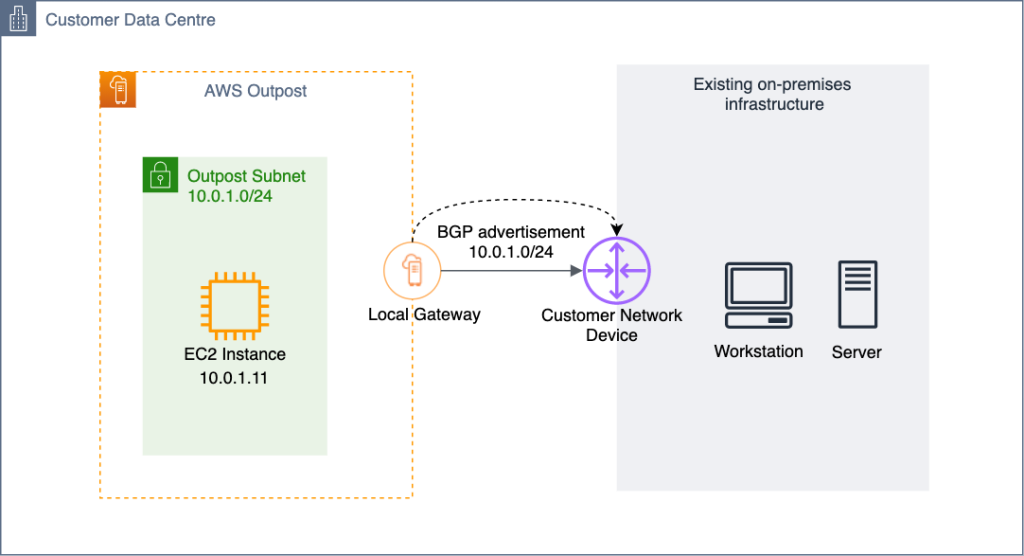
How to choose between CoIP and Direct VPC routing modes on AWS Outposts rack
This blog post is written by Sumit Menaria, Senior Hybrid Solutions Architect AWS WWSO Core Services. AWS Outposts Rack is a fully-managed service that extends AWS infrastructure, services, APIs, and tools to customer premises. By providing local access to AWS managed infrastructure and services, Outposts rack enables customers to build and run applications on premises […]

Implementing architectural patterns with Amazon EventBridge Pipes
This post is written by Dominik Richter (Solutions Architect) Architectural patterns help you solve recurring challenges in software design. They are blueprints that have been used and tested many times. When you design distributed applications, enterprise integration patterns (EIP) help you integrate distributed components. For example, they describe how to integrate third-party services into your […]

Automating your workload deployments in AWS Local Zones
This blog post is written by Enrico Liguori, SA – Solutions Builder , WWPS Solution Architecture. AWS Local Zones are a type of infrastructure deployment that places compute, storage,and other select AWS services close to large population and industry centers. We now have a total of 32 Local Zones; 15 outside of the US (Bangkok, […]
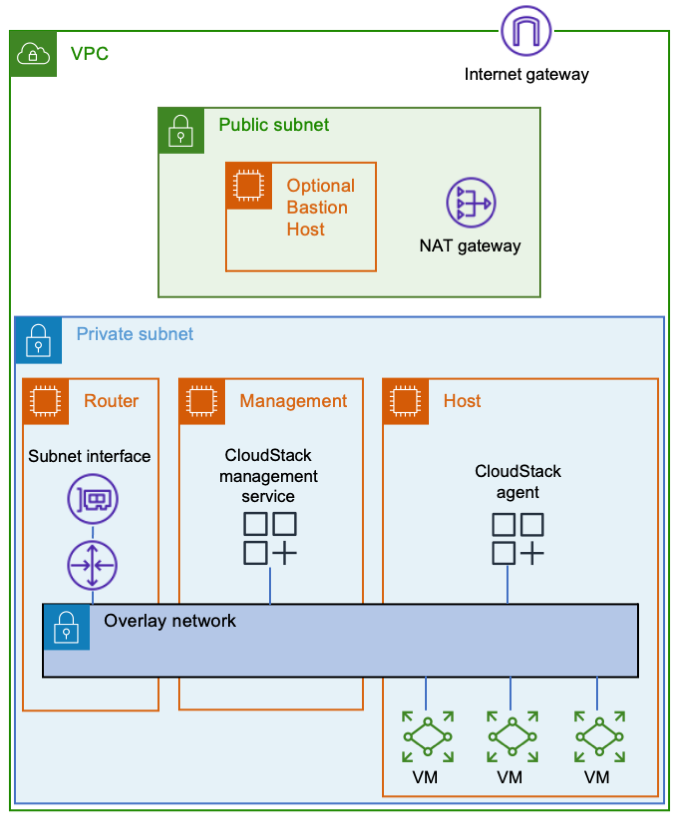
Building a Cloud in the Cloud: Running Apache CloudStack on Amazon EC2, Part 2
This blog is written by Mark Rogers, SDE II – Customer Engineering AWS. In part 1, I showed you how to run Apache CloudStack with KVM on a single Amazon Elastic Compute Cloud (Amazon EC2) instance. That simple setup is great for experimentation and light workloads. In this post, things will get a lot more […]

Building a Cloud in the Cloud: Running Apache CloudStack on Amazon EC2, Part 1
This blog is written by Mark Rogers, SDE II – Customer Engineering AWS. How do you put a cloud inside another cloud? Some features that make Amazon Elastic Compute Cloud (Amazon EC2) secure and wonderful also make running CloudStack difficult. The biggest obstacle is that AWS and CloudStack both want to manage network resources. Therefore, we must […]

Enabling load-balancing of non-HTTP(s) traffic on AWS Wavelength
This blog post is written by Jack Chen, Telco Solutions Architect, and Robert Belson, Developer Advocate. AWS Wavelength embeds AWS compute and storage services within 5G networks, providing mobile edge computing infrastructure for developing, deploying, and scaling ultra-low-latency applications. AWS recently introduced support for Application Load Balancer (ALB) in AWS Wavelength zones. Although ALB addresses […]