AWS Compute Blog
Category: Uncategorized

Announcing winners of the AWS Graviton Challenge Contest and Hackathon
At AWS, we are constantly innovating on behalf of our customers so they can run virtually any workload, with optimal price and performance. Amazon EC2 now includes more than 475 instance types that offer a choice of compute, memory, networking, and storage to suit your workload needs. While we work closely with our silicon partners […]

Offset lag metric for Amazon MSK as an event source for Lambda
This post written by Adam Wagner, Principal Serverless Solutions Architect. Last year, AWS announced support for Amazon Managed Streaming for Apache Kafka (MSK) and self-managed Apache Kafka clusters as event sources for AWS Lambda. Today, AWS adds a new OffsetLag metric to Lambda functions with MSK or self-managed Apache Kafka event sources. Offset in Apache […]
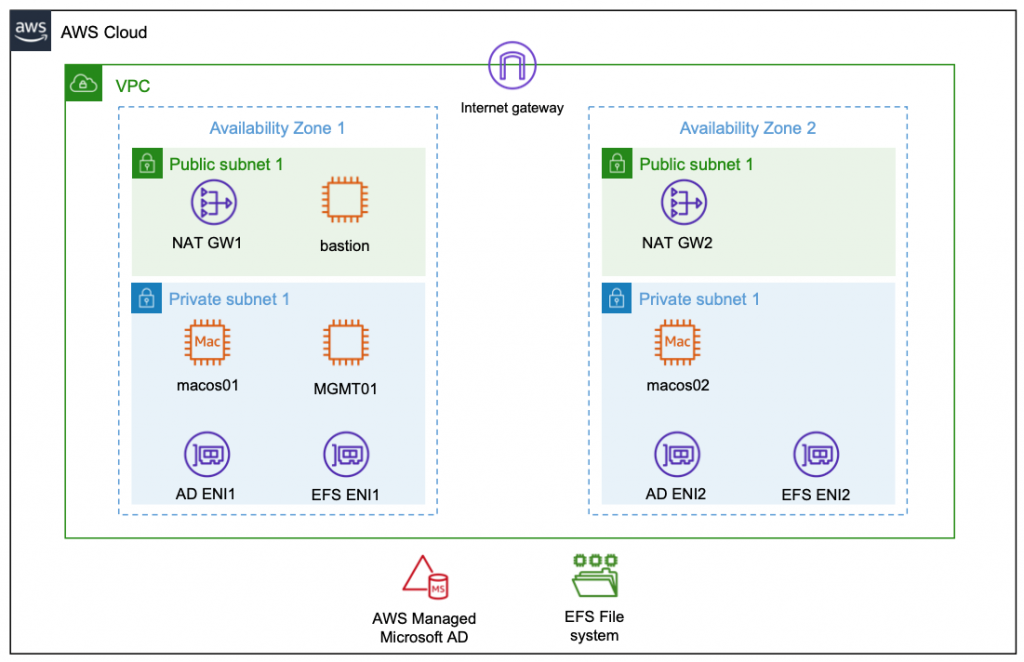
Setting up EC2 Mac instances as shared remote development environments
This post is written by: Michael Meidlinger, Solutions Architect In December 2020, we announced a macOS-based Amazon Elastic Compute Cloud (Amazon EC2) instance. Amazon EC2 Mac instances let developers build, test, and package their applications for every Apple platform, including macOS, iOS, iPadOS, tvOS, and watchOS. Customers have been utilizing these instances in order to […]

Modernizing deployments with container images in AWS Lambda
This post is written by Joseph Keating, AWS Modernization Architect, and Virginia Chu, Sr. DevSecOps Architect. Container image support for AWS Lambda enables developers to package function code and dependencies using familiar patterns and tools. With this pattern, developers use standard tools like Docker to package their functions as container images and deploy them to […]

Introducing cross-account Amazon ECR access for AWS Lambda
This post is written by Brian Zambrano, Enterprise Solutions Architect and Indranil Banerjee, Senior Solution Architect. In December 2020, AWS announced support for packaging AWS Lambda functions using container images. Customers use the container image packaging format for workloads like machine learning inference made possible by the 10 GB container size increase and familiar container […]

Accelerating serverless development with AWS SAM Accelerate
Building a serverless application changes the way developers think about testing their code. Previously, developers would emulate the complete infrastructure locally and only commit code ready for testing. However, with serverless, local emulation can be more complex. In this post, I show you how to bypass most local emulation by testing serverless applications in the […]

Amazon EC2 Auto Scaling will no longer add support for new EC2 features to Launch Configurations
This post is written by Scott Horsfield, Principal Solutions Architect, EC2 Scalability and Surabhi Agarwal, Sr. Product Manager, EC2. In 2010, AWS released launch configurations as a way to define the parameters of instances launched by EC2 Auto Scaling groups. In 2017, AWS released launch templates, the successor of launch configurations, as a way to streamline […]

Visualizing AWS Step Functions workflows from the AWS Batch console
This post written by Dhiraj Mahapatro, Senior Specialist SA, Serverless. AWS Step Functions is a low-code visual workflow service used to orchestrate AWS services, automate business processes, and build serverless applications. Step Functions workflows manage failures, retries, parallelization, service integrations, and observability so builders can focus on business logic. AWS Batch is one of the […]

Accepting API keys as a query string in Amazon API Gateway
This post was written by Ronan Prenty, Sr. Solutions Architect and Zac Burns, Cloud Support Engineer & API Gateway SME Amazon API Gateway is a fully managed service that makes it easier for developers to create, publish, maintain, monitor, and secure APIs at any scale. APIs act as the front door to applications and allow […]

15 years of silicon innovation with Amazon EC2
The Graviton Hackathon is now available to developers globally to build and migrate apps to run on AWS Graviton2 This week we are celebrating 15 years of Amazon EC2 live on Twitch August 23rd – 24th with keynotes and sessions from AWS leaders and experts. You can watch all the sessions on-demand later this week to […]