AWS Database Blog
Category: Intermediate (200)

Monitoring best practices with Amazon ElastiCache for Redis using Amazon CloudWatch
Monitoring is an important part of maintaining the reliability, availability, and performance of your Amazon ElastiCache resources. This post shows you how to maintain a healthy Redis cluster and prevent disruption using Amazon CloudWatch and other external tools. We also discuss methods to anticipate and forecast scaling needs.

Cross-Region disaster recovery of Amazon RDS for SQL Server
December 2022: Amazon RDS for SQL Server now supports cross-Region read replicas. Amazon RDS for SQL Server makes it easy to set up, operate, and scale SQL Server deployments in the Amazon Web Services (AWS) cloud environment. For your enterprise workloads, which depend on Amazon RDS for SQL Server, you need an effective disaster recovery […]

Improving application availability with Amazon RDS Proxy
One of the benefits of Amazon RDS Proxy is that it can improve application recovery time after database failovers. While RDS Proxy supports both MySQL as well as PostgreSQL engines, in this post, we will use a MySQL test workload to demonstrate how RDS Proxy reduces client recovery time after failover by up to 79% […]

Running spiky workloads and optimizing costs by more than 90% using Amazon DynamoDB on-demand capacity mode
November 2024: This post was reviewed and updated for accuracy. This is a guest post by Keisuke Utsumi, a Software Engineer with TVer Technologies Inc. In their own words, “TVer Technologies Inc. offers interactive entertainment services to users using a synchronized website with a TV broadcast.” TVer Technologies Inc. provides website and app-based interactive content […]
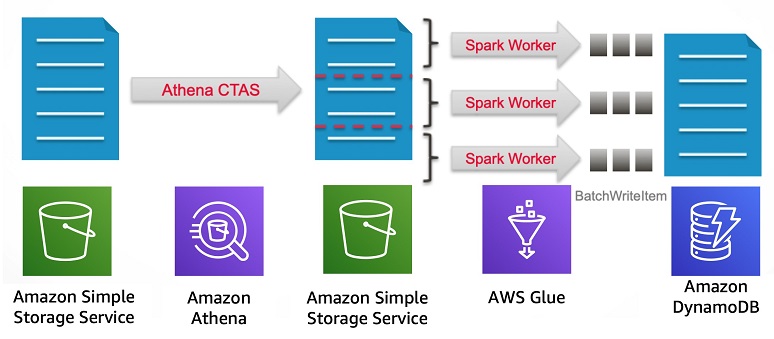
How realtor.com maximized data upload from Amazon S3 into Amazon DynamoDB
This is a customer post by Arup Ray, VP Data Technology at realtor.com, and Daniel Whitehead, AWS Solutions Architect. Arup Ray would like to acknowledge Anil Pillai, Software Development Engineer at Amazon, for his pioneering contributions to this project during his former tenure at realtor.com as Senior Principal Data Engineer. realtor.com , operated by Move, Inc., […]
Working with RDS and Aurora PostgreSQL logs: Part 2
July 2023: This post was reviewed for accuracy. The first post in this series, Working with RDS and Aurora PostgreSQL Logs: Part 1, discussed the importance of PostgreSQL logs and how to tune various parameters to capture more database activity details. PostgreSQL logs provide useful information when troubleshooting database issues. This post focuses on different […]
Working with RDS and Aurora PostgreSQL logs: Part 1
April 2025: This post was reviewed for accuracy. PostgreSQL is one of the most popular open-source relational database systems. With more than 30 years of development work, PostgreSQL has proven to be a highly reliable and robust database that can handle a large number of complicated data workloads. AWS provides two managed PostgreSQL options: Amazon […]

Optimizing and tuning queries in Amazon RDS PostgreSQL based on native and external tools
January 2024: This post was reviewed and updated for accuracy. PostgreSQL is one of the most popular open-source relational database systems. The product of more than 30 years of development work, PostgreSQL has proven to be a highly reliable and robust database that can handle a large number of complicated data workloads. PostgreSQL is considered […]

Running AWS Lambda-based applications with Amazon DocumentDB
Microservices-based applications architectures are the norm for building scalable applications. AWS makes creating these types of applications easier with Amazon DocumentDB (with MongoDB compatibility). Just bring your code and deploy an application with this fast, scalable, highly available, and fully managed document database service that supports MongoDB workloads. You can use the same MongoDB application […]

Announcing the support of Parquet data format in AWS DMS 3.1.3
Today AWS DMS announces support for migrating data to Amazon S3 from any AWS-supported source in Apache Parquet data format. This is one of the many new features in DMS 3.1.3. Many of you use the “S3 as a target” support in DMS to build data lakes. Then, you use this data with other AWS […]