AWS DevOps & Developer Productivity Blog
Tag: DevOps

Continuous Compliance Workflow for Infrastructure as Code: Part 1
Security and compliance standards are of paramount importance for organizations in many industries. There is a growing need to seamlessly integrate these standards in an application release cycle. From a DevOps standpoint, an application can be subject to these standards during two phases: Pre-deployment – Standards are enforced in an application deployment pipeline prior to […]
How Amazon CodeGuru Profiler helps Coursera create high-quality online learning experiences
This guest post was authored by Rana Ahsan and Chris Liu, Software Engineers at Coursera, and edited by Dave Sanderson and Adnan Bilwani, at AWS. Coursera was launched in 2012 by two Stanford Computer Science professors, Daphne Koller and Andrew Ng, with a vision of providing universal access to world-class learning. It’s now one of […]
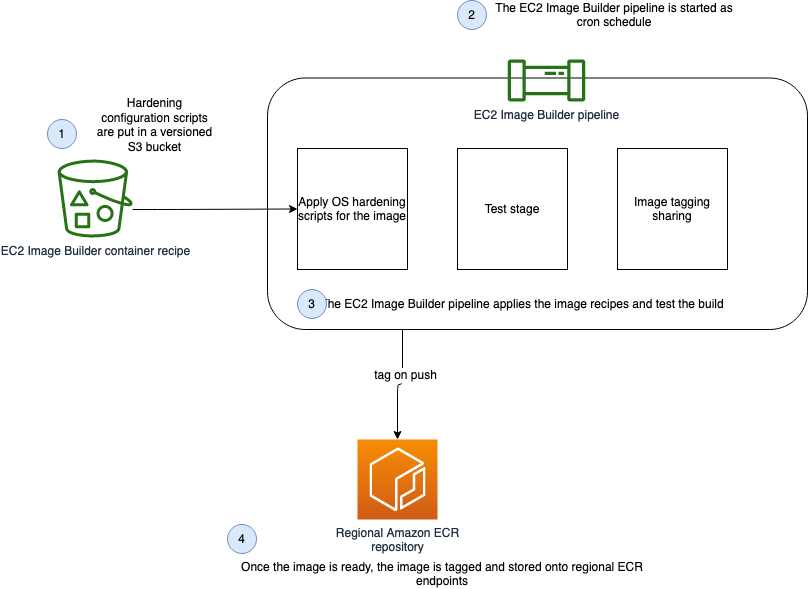
Build and Deploy Docker Images to AWS using EC2 Image Builder
The NFL, an AWS Professional Services partner, is collaborating with NFL’s Player Health and Safety team to build the Digital Athlete Program. The Digital Athlete Program is working to drive progress in the prevention, diagnosis, and treatment of injuries; enhance medical protocols; and further improve the way football is taught and played. The NFL, in […]

Build real-time feature toggles with Amazon DynamoDB Streams and Amazon API Gateway WebSocket APIs
Feature toggles (or feature flags) are a software development technique allowing developers to programmatically enable or disable features of an application. In practice, feature toggles control a system’s behavior by controlling conditional statements in the application code. Feature toggles have a number of use cases: Selectively enable or disable features – You can use feature […]
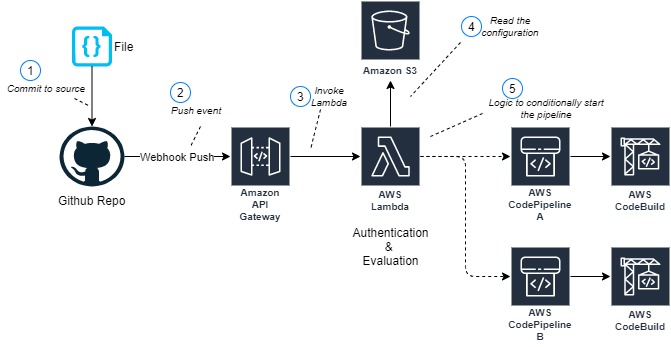
Integrate GitHub monorepo with AWS CodePipeline to run project-specific CI/CD pipelines
Understand how to automate trigger of project specific code pipeline for GitHub mono repos users. Currently, if a customer is using GitHub as a version control system and he has only one repository which contains multiple folders each for a different project, change in any file, triggers the code pipeline for the whole repository rather than for the appropriate project. With this blog, they would be able to automate trigger of appropriate pipeline based on the project folder where the file gets changed.
CDK Corner – April 2021
Social – Community Engagement We’re getting closer and closer to CDK Day, with the event receiving 75 CFP submissions. The cdkday schedule is now available to plan out your conference day. Updates to the CDK Constructs promoted to General Availability Promoting a module to stable/General Availability is always a cause for celebration. Great job to […]
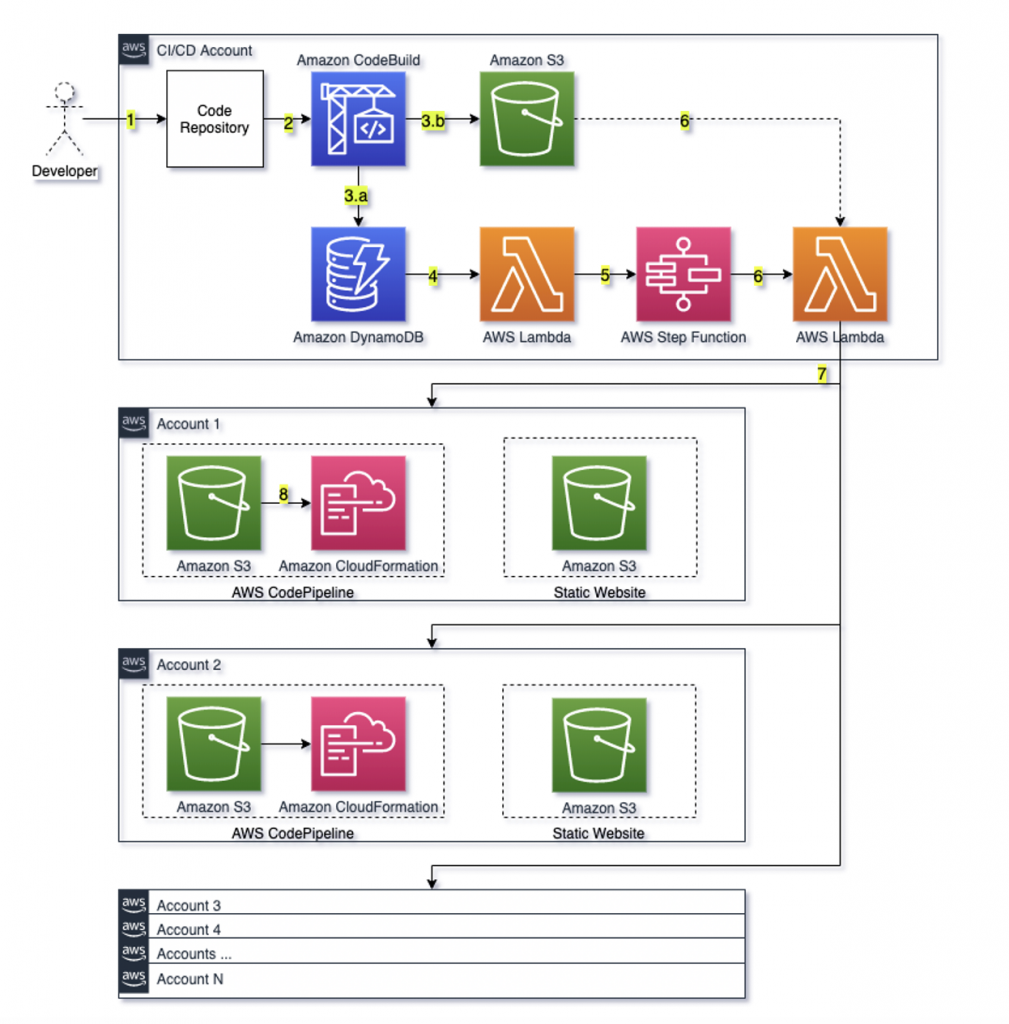
How SOMA Global deploys their application with a dynamic multi-account pipeline
In April 2020, SOMA Global, a leading provider of Public Safety as a Service (PSAAS™), set out to update its computer aided design (CAD) platform to increase reliability to 99.999%, an industry first. SOMA Global adopted an account-based approach for tenant isolation to meet Criminal Justice Information Service (CJIS) regulations. The development and operations team […]

Serverless UI testing using Selenium, AWS Lambda, AWS Fargate, and AWS Developer Tools
Since the post Using AWS CodePipeline, AWS CodeBuild, and AWS Lambda for Serverless Automated UI Testing was published, things have evolved with Chrome headless and Firefox headless being supported natively. AWS Lambda now supports container images, AWS Step Functions has added support for Map state and its integration with Lambda, and AWS Fargate has enabled […]

Building a serverless Jenkins environment on AWS Fargate
Jenkins is a popular open-source automation server that enables developers around the world to reliably build, test, and deploy their software. Jenkins uses a controller-agent architecture in which the controller is responsible for serving the web UI, stores the configurations and related data on disk, and delegates the jobs to the worker agents that run […]
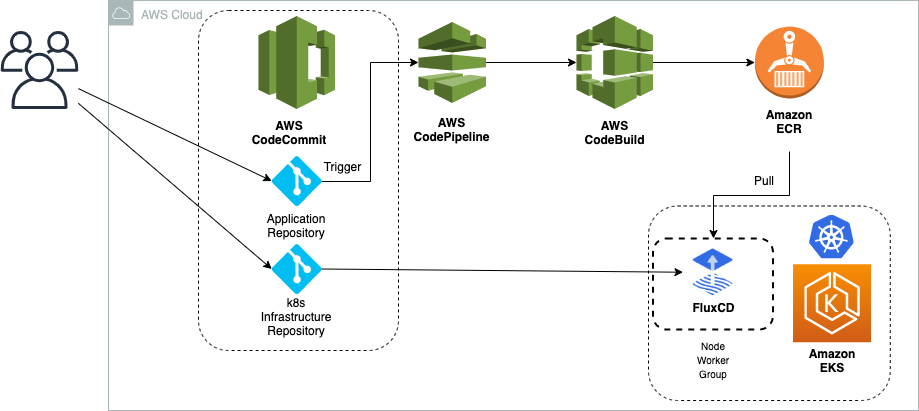
CI/CD on Amazon EKS using AWS CodeCommit, AWS CodePipeline, AWS CodeBuild, and FluxCD
This post discusses how we can speed up the development of our Kubernetes infrastructure by using a continuous integration (CI) pipeline to build our Docker images and automatically deploy them to our Amazon Elastic Kubernetes Service (Amazon EKS) cluster using FluxCD and the GitOps philosophy as the continuous delivery (CD) element. To do so, we […]