AWS DevOps & Developer Productivity Blog
Tag: DevOps

Use the Snyk CLI to scan Python packages using AWS CodeCommit, AWS CodePipeline, and AWS CodeBuild
Learn how to scan Python packages for security vulnerabilities using AWS Developer tools and Snyk
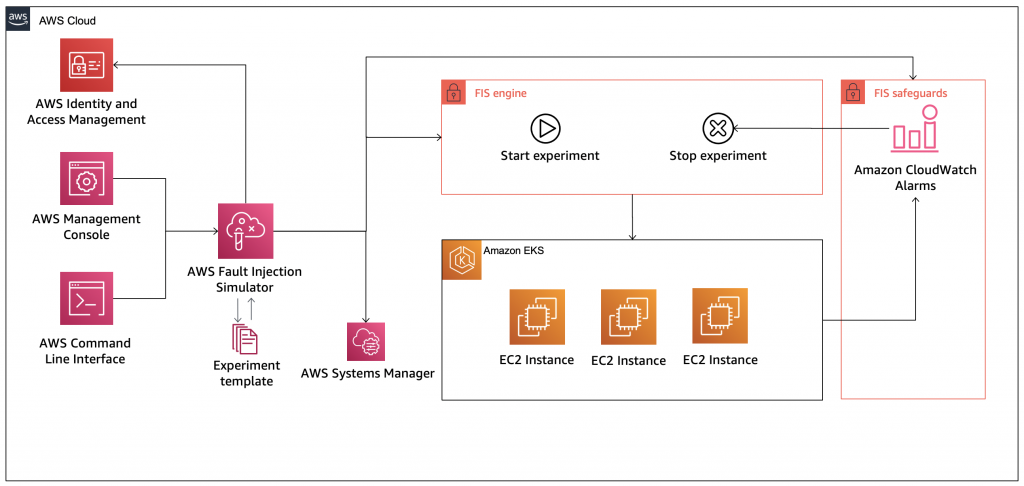
Chaos engineering on Amazon EKS using AWS Fault Injection Simulator
In this post, we discuss how you can use AWS Fault Injection Simulator (AWS FIS), a fully managed fault injection service used for practicing chaos engineering. AWS FIS supports a range of AWS services, including Amazon Elastic Kubernetes Service (Amazon EKS), a managed service that helps you run Kubernetes on AWS without needing to install […]

Introducing new self-paced courses to improve Java and Python code quality with Amazon CodeGuru
This post announces the availability of new self-paced where you learn how to use CodeGuru Reviewer to automatically scan your code base, identify hard-to-find bugs and vulnerabilities, and get recommendations for fixing the bugs and security issues.

Keeping up with your dependencies: building a feedback loop for shared libraries
In a microservices world, it’s common to share as little as possible between services. This enables teams to work independently of each other, helps to reduce wait times and decreases coupling between services. However, it’s also a common scenario that libraries for cross-cutting-concerns (such as security or logging) are developed one time and offered to […]

Building an end-to-end Kubernetes-based DevSecOps software factory on AWS
DevSecOps software factory implementation can significantly vary depending on the application, infrastructure, architecture, and the services and tools used. In a previous post, I provided an end-to-end DevSecOps pipeline for a three-tier web application deployed with AWS Elastic Beanstalk. The pipeline used cloud-native services along with a few open-source security tools. This solution is similar, […]

Choosing a Well-Architected CI/CD approach: Open-source software and AWS Services
Take a Well-Architected approach to make an informed decision when choosing to implement CI/CD using open-source tools on AWS services, using managed AWS services, or a combination of both.
We will look at key considerations for evaluating open-source software and AWS Services using the perspectives of a startup company, and a mature company, as examples. These will give you two very different points of view that you can use to compare to your own organization. To make this investigation easier we will use Continuous Integration (CI) and Continuous Delivery (CD) capabilities as the target of our investigation.
In our next two blog posts we will follow two AWS customers Iponweb and BigHat Biosciences as they share their CI/CD journeys, their perspective, the decisions they made, and why.
To end the series, we will explore an example reference architecture showing the benefits AWS provides regardless of your emphasis on open source tools or managed AWS services.

Continuous Compliance Workflow for Infrastructure as Code: Part 1
Security and compliance standards are of paramount importance for organizations in many industries. There is a growing need to seamlessly integrate these standards in an application release cycle. From a DevOps standpoint, an application can be subject to these standards during two phases: Pre-deployment – Standards are enforced in an application deployment pipeline prior to […]
How Amazon CodeGuru Profiler helps Coursera create high-quality online learning experiences
This guest post was authored by Rana Ahsan and Chris Liu, Software Engineers at Coursera, and edited by Dave Sanderson and Adnan Bilwani, at AWS. Coursera was launched in 2012 by two Stanford Computer Science professors, Daphne Koller and Andrew Ng, with a vision of providing universal access to world-class learning. It’s now one of […]
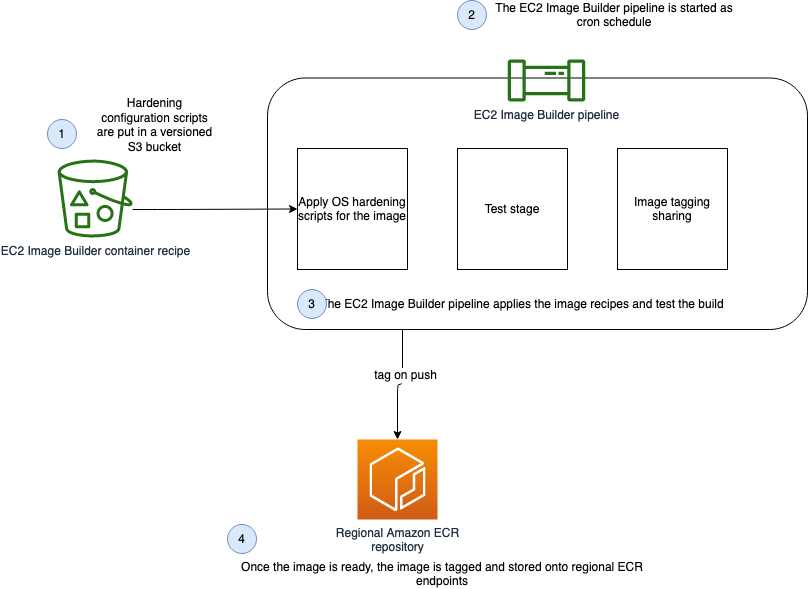
Build and Deploy Docker Images to AWS using EC2 Image Builder
The NFL, an AWS Professional Services partner, is collaborating with NFL’s Player Health and Safety team to build the Digital Athlete Program. The Digital Athlete Program is working to drive progress in the prevention, diagnosis, and treatment of injuries; enhance medical protocols; and further improve the way football is taught and played. The NFL, in […]

Build real-time feature toggles with Amazon DynamoDB Streams and Amazon API Gateway WebSocket APIs
Feature toggles (or feature flags) are a software development technique allowing developers to programmatically enable or disable features of an application. In practice, feature toggles control a system’s behavior by controlling conditional statements in the application code. Feature toggles have a number of use cases: Selectively enable or disable features – You can use feature […]