IBM & Red Hat on AWS
How IBM scales post-acquisition cloud migrations with Targetprocess
At IBM, post-acquisition cloud migration is a continuous, repeatable process built on IBM Targetprocess. Every acquisition brings its own infrastructure, identity systems, billing structures, and operational practices. Integrating a new company into a cloud estate quickly, securely, and without disrupting customers is a complex process for a single acquisition and becomes increasingly complex at scale.
With multiple acquisitions per year, IBM’s CIO Hyperscaler Center of Excellence (HCOE) needed more than a playbook. IBM needed a system that could orchestrate every phase of the migration, assign work across IBM, AWS, and the acquired company, and track progress against 30–60–90-day timelines.
That system is IBM Targetprocess. Combined with a Structured Migration and Integration Framework that IBM and AWS co-developed, IBM now runs every acquisition through a single, standardized process instead of treating each one as a standalone project. In this post, we show how IBM uses Targetprocess for post-acquisition cloud integration and how structured tooling, AWS migration services, and cross-team collaboration reduced onboarding timelines to approximately 10 weeks, based on IBM’s internal results.
Why IBM needed a standard M&A integration process
Before this framework, IBM was acquiring multiple companies per year, and each integration surfaced the same problems.
Inconsistent execution. IBM handled every acquisition differently, with its own approach, timelines, and handoffs. This created unpredictable outcomes and made risk difficult to quantify.
Team coordination friction. Six or more groups participated in each deal, including IBM HCOE, IBM Software, the acquired company, and AWS teams such as the M&A team. Each group worked from its own view, so it was difficult to see what depended on what, or where things stood.
Security and compliance gaps. Acquired companies arrived with different security postures, AWS Identity and Access Management (IAM) configurations, and network models, which meant non-compliant workloads could go live during the transition window.
Billing and financial complexity. Merging savings plans, reserved instances, cost centers, and payer accounts across acquired entities was slow and error-prone.
Limited visibility. IBM wanted a shared view that could answer basic questions across concurrent acquisitions, such as which migrations were on track, which were over budget, and which workloads were ready to move.
IBM needed a single place where all the teams could plan, execute, and track every acquisition through the same process.
Why IBM chose Targetprocess for M&A
IBM Targetprocess is an enterprise agile planning platform. It helps IBM manage work at every level, from strategic initiatives down to individual tasks, with clear visibility into dependencies, progress, and team capacity.
The following table shows the Targetprocess work hierarchy and how each level maps to IBM’s M&A work.
| Level | Entity | Description | M&A Exmaple |
|---|---|---|---|
| 1 | Initiative | CIO-level strategic objective (3–4 per year) | “AI and Automation,” “Security,” “Financial and Operational Governance,” “Community Management” |
| 2 | Capability | Major capability area within an initiative | M&A spans Automation, Security, and Financial Governance |
| 3 | Feature | Deliverable or workstream | “Account Migration to IBM Payer,” “IAM Identity Center Integration” |
| 4 | Use Story | Specific outcome from a stakeholder perspective | “As a CIO finance analyst, I need all acquired accounts visible in IBM Cloudability within 30 days” |
| 5 | Task | Atomic work item assigned to an individual | “Create IAM roles for IBM HCOE cross-account access in account 12345” |
This hierarchy matters because M&A work doesn’t fit neatly under one initiative. A single acquisition touches AI and automation, security, and financial governance all at once. With the multi-dimensional model in Targetprocess, IBM can track M&A work across all three capability areas while keeping a single view of progress for each acquisition.
How IBM uses Targetprocess day to day
IBM works in Targetprocess every day. It is IBM’s system of record for stand-up meetings, progress tracking, and cross-team coordination.
IBM maps each acquisition to program increments, with epics that correspond to the migration phases. IBM links account consolidation tasks to security remediation items, so teams cannot move migrations forward until they clear compliance gates. IBM groups application integrations into release waves, which supports migrating workloads in controlled batches.
Targetprocess assigns tasks to team members across IBM HCOE, the acquired company, and AWS. Each team sees only its relevant work items, while leadership retains the full portfolio view. M&A outcomes roll up into quarterly objectives and key results (OKRs), tying individual task completion to CIO-level goals. IBM Targetprocess user interface showing initiatives, capabilities and user stories to manage M&A tasks is shown in Figure 1.
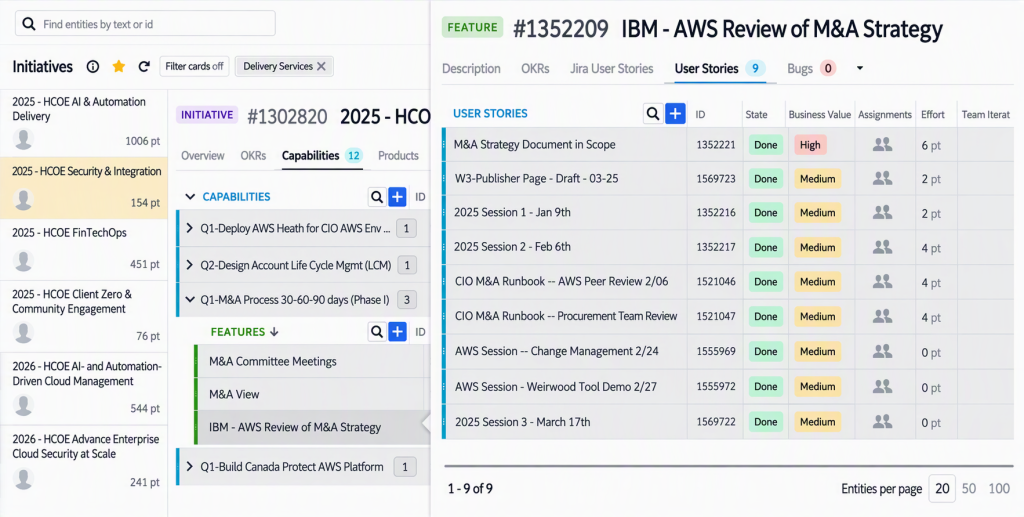
Figure 1. View of IBM M&A initiatives and user stories in Targetprocess.
The Structured Migration and Integration Framework
Targetprocess is the platform. The Structured Migration and Integration Framework, which IBM and AWS co-developed, is the methodology. Together they form a complete system. Targetprocess handles the tracking and management, and the framework defines what gets done and when. The framework rests on four pillars, which collectively enable the end-to-end approach for migrating and managing workloads, is shown in Figure 2.
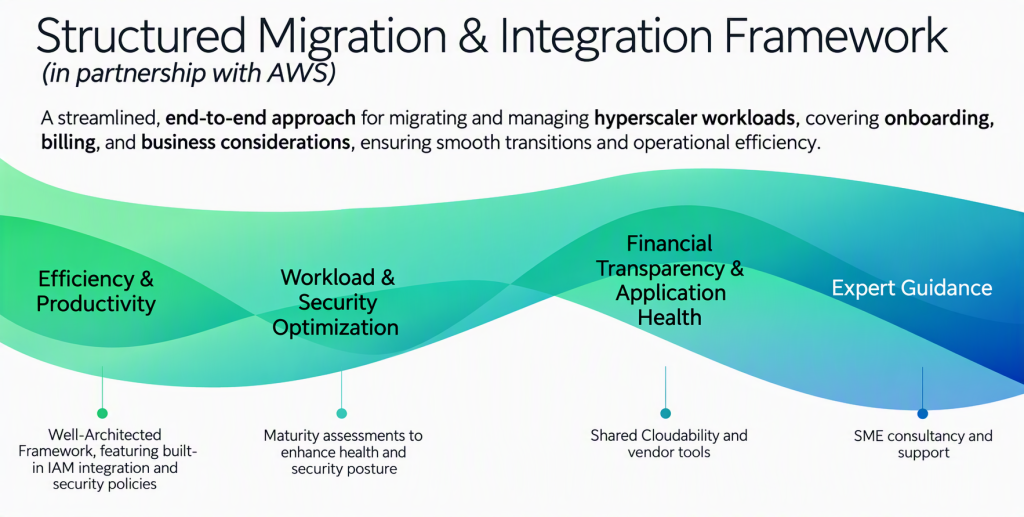
Figure 2. IBM and AWS partnered Structured Migration and Integration Framework for M&A.
Table 2 shows the four pillars of the framework and how each one supports a consistent, secure, and cost-transparent integration.
| Pillar | Description |
|---|---|
| Efficiency and productivity | Standardized 30–60–90-day playbook with clear ownership, a classification system, and right-sized resource allocation. |
| Workload and security optimization | Cloud Maturity Assessments using the AWS Well-Architected Framework, with IAM integration and security policies from day one. |
| Financial transparency and app health | Centralized Cloudability dashboards for cost visibility, with billing integration to improve billing accuracy. |
| Expert guidance | Dedicated AWS Customer Solutions Manager (CSM), Technical Account Manager (TAM), and AWS Professional Services engagement, with IBM HCOE as the single point of coordination. |
The 30–60–90-day phased approach
IBM runs each acquisition through a 30–60–90-day phased approach and maps each phase to Targetprocess epics. Figure 3 shows how the phases align to the epics that track them.
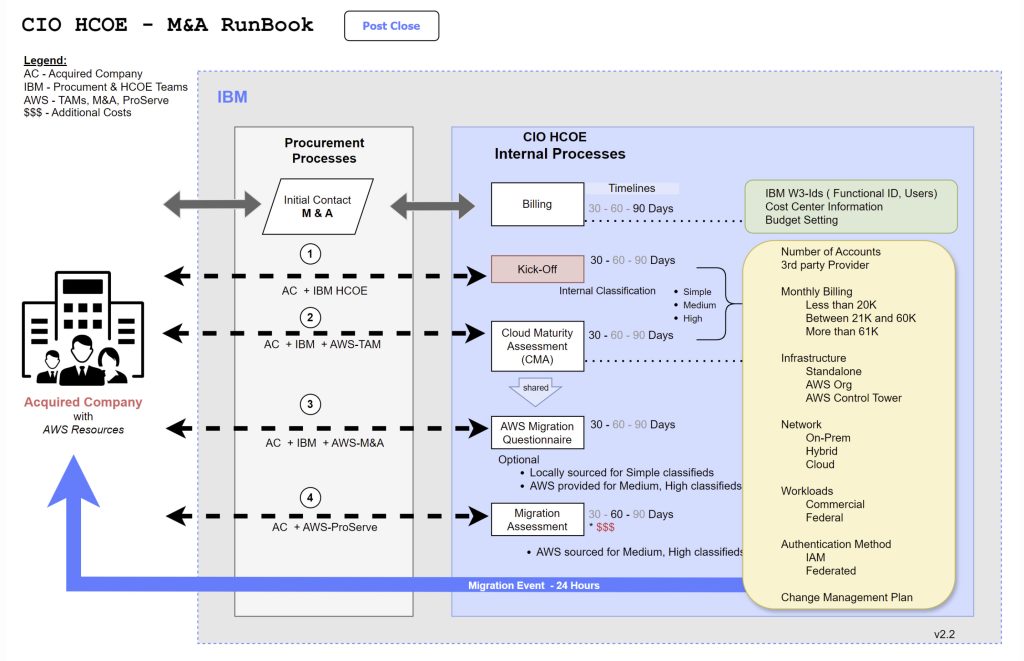
Figure 3. The 30–60–90-day phased migration framework mapped to Targetprocess epics.
Days 0–30: kickoff and assessment
IBM tracks this phase as an epic, with features and user stories for the work that follows. IBM hosts the technical kickoff with the acquired company’s contacts. IBM classifies migration complexity as Simple, Medium, or High. IBM runs a Cloud Maturity Assessment using AWS Well-Architected Framework principles, and completes an AWS Migration Questionnaire to identify blockers, gaps, and current-state readiness. Each finding becomes a Targetprocess task, assigned to the team member who needs to act on it.
Days 30–60: assessment and remediation planning
This phase introduces dependency gates in Targetprocess. AWS Professional Services runs an optional assessment covering people, process, and technology. IBM tracks the project plan, timelines, and deliverables as Targetprocess features, and reviews the Transitional Services Agreement (TSA). IBM then defines remediation actions with explicit dependencies on the Days 0–30 findings. Security remediation items must reach Done status before the migration execution epic can begin, and IBM enforces this gate through the relations and dependencies feature in Targetprocess.
Days 60–90: billing integration and migration execution
The final phase uses the release wave mechanism in Targetprocess. IBM consolidates billing, including savings plans, reserved instances, cost centers, and payer accounts. IBM onboards the acquired company to IBM Cloudability and the CIO centralized dashboards for cost and health observability. IBM then executes the organization migration event over 24–72 hours, which includes account migration, single sign-on (SSO) verification, and Service Control Policy (SCP) validation. IBM tracks this event as a time-boxed release, with task updates throughout the execution window.
AWS services and tools used in the framework
The following table lists the AWS services and programs, along with the IBM offering, that IBM uses in each phase of the framework.
| Service or Program | Phase | How IBM uses it |
|---|---|---|
| AWS Well-Architected Framework | Days 0–30 | Foundation for Cloud Maturity Assessments; identifies architectural gaps |
| AWS Migration Hub | Days 30–60 | Centralized tracking of migration progress across applications and servers |
| AWS Organizations | Days 60–90 | Account structure management, SCPs, and consolidated billing integration |
| AWS IAM Identity Center | Days 60–90 | Single sign-on (SSO) integration and identity federation for acquired company users |
| AWS Professional Services | Days 30–60 | Optional deep assessment covering people, process, and technology readiness |
| AWS Enterprise Support | All phases | TAM-led technical guidance, operational reviews, and AWS Countdown support |
| IBM Cloudability | Days 60–90 | Cost observability and financial governance dashboards |
| AWS Cost Explorer and Savings Plans | Days 60–90 | Savings Plan transfer, Reserved Instance (RI) management, and cost optimization |
Results
IBM reports that, since it published the framework internally in April 2025, the combination of Targetprocess and the Structured Migration and Integration Framework has produced the following results. These figures reflect IBM’s own internal measurements.
| Metric | Result |
|---|---|
| Onboarding timeline | Reduced onboarding from months to approximately 10 weeks |
| Framework adoption | Adopted as IBM’s standard M&A migration process |
| Migration event duration | Reduced the migration event to a 24–72 hour execution window |
| Acquisitions supported | Scaled the framework to more than 20 acquisition onboardings |
| Security posture | Strengthened its security posture through Cloud Maturity Assessment (CMA)-driven assessments and dependency-gated approvals |
| Cross-team visibility | All stakeholders operate from a single Targetprocess view with role-appropriate visibility |
Lessons learned
After running these acquisitions through the framework, IBM and AWS found the following practices work well.
- Start with the platform, not the spreadsheet. The work hierarchy in Targetprocess matches how M&A workflows. Spreadsheets fall apart when three organizations need shared visibility with the right access boundaries.
- Classification drives resource allocation. The Simple, Medium, and High system gives a 3-account startup a right-sized path, while a 200-account enterprise gets the full AWS Professional Services assessment and support from subject matter experts (SMEs).
- Dependency gates prevent premature migration. Making security remediation a prerequisite in Targetprocess helps reduce the risk of migrating workloads with unresolved compliance gaps.
- The migration event builds trust. Bringing all teams together for a focused, time-boxed event with real-time tracking creates shared accountability and speeds up knowledge transfer.
- Cost observability starts on day one. Onboarding to Cloudability during the migration puts financial transparency in place from the first billing cycle.
Conclusion
In this post, we showed how IBM approaches post-acquisition cloud integration, a common challenge for companies that grow through M&A. With the right platform (Targetprocess for orchestration), the right methodology (the Structured Migration and Integration Framework that IBM and AWS co-developed), and the right support (AWS migration services and enterprise support), IBM made M&A integration more predictable and provided measurable integration outcomes.
For IBM, Targetprocess is more than a project management tool. It connects CIO-level strategy to the individual tasks that make each acquisition work. By mapping every phase of the framework into the Targetprocess work hierarchy, IBM built an M&A integration capability that scales with its acquisition pace.
Customer quotes
“As IBM integrates acquisitions at scale, our collaboration with AWS supports a structured, repeatable approach to M&A integration, accelerating onboarding, improving visibility, and strengthening security. Targetprocess is the platform that brings it all together, from CIO-level initiatives down to the individual tasks that make each migration successful.” – Pimmi Malhotra, Head of Cloud Office, IBM CIO
“The M&A process established a standardized workflow that aligned stakeholders and supported smoother migrations, improved efficiency, and stronger trust through clear expectations.” – Dexter Joseph, AWS M&A Leader, IBM CIO
Call to action
To go deeper on the AWS services and programs that support post-acquisition cloud integration, explore the following resources: