AWS for Industries
How Autel Transformed Charging Station Management with AI Agents on AWS
This post shows how Autel used AWS cloud services and AI technologies to build an AI digital employee system that streamlines charging station operations. We explore the five specialized AI agents we created, the technical architecture powering them, and how these intelligent employees enable CPOs to manage their charging networks more efficiently with conversational interfaces rather than complex manual processes.
Autel is a global leading provider of charging stations and energy management solutions. Its CSMS (Charging Station Management System) covers core scenarios including operations management, equipment monitoring, revenue analysis, and smart charging, serving multiple types of customers such as Charge Point Operators (CPOs), automotive companies, and government agencies. At Autel, we witnessed the explosive growth of electric vehicles (EVs) globally—17.8 million units sold in 2024 alone, accounting for nearly 19% of light vehicle sales. As a leading provider of CSMS, we faced a critical challenge: our CPO (Charge Point Operator) customers needed to transition from “rapid scale expansion” to “refined intelligent operations.” Traditional CSMS (Charging Station Management System) platforms required extensive manual training, complex configuration processes, and countless hours analyzing data to make pricing and operational decisions. We knew there had to be a better way to serve our customers as the industry scales toward 250 million EVs and over 1.2 million public charging units by 2030. We found our solution in AWS cloud services and AI capabilities, building an an innovative AI Digital Employee system that transforms how CPOs manage their charging networks.
Partnering with AWS, we set out to transform our platform from a traditional hardware-focused solution to a cloud-native, AI-powered “intelligent operations enabler.” By using AWS cloud computing infrastructure, generative AI capabilities, and the Strands Agents SDK—a lightweight, production-ready agent orchestration framework that provides fine-grained control over agent behaviors and seamless tool integration—we built one of the innovative AI digital employee systems. This innovation changes how CPOs interact with charging infrastructure—replacing complex manual operations with conversational AI interfaces that handle everything from configuration to strategic pricing decisions.
Overview of Solution
Our primary goal was to reduce the operational complexity for CPOs while improving decision-making quality. Traditional CSMS platforms required extensive training, with new users taking weeks to become proficient. Manual data analysis for pricing strategies could take days, and configuration tasks were error-prone and time-consuming.
The key opportunities we identified included: (1) eliminating repetitive manual tasks through AI automation, (2) embedding deep industry knowledge into AI agents to provide expert-level guidance, (3) transforming complex multi-step operations into simple conversational interactions, and (4) enabling proactive insights rather than reactive data analysis. The main risk we managed was ensuring the AI agents understood not just natural language, but also the specific business logic, terminology, and analytical frameworks unique to charging station operations.
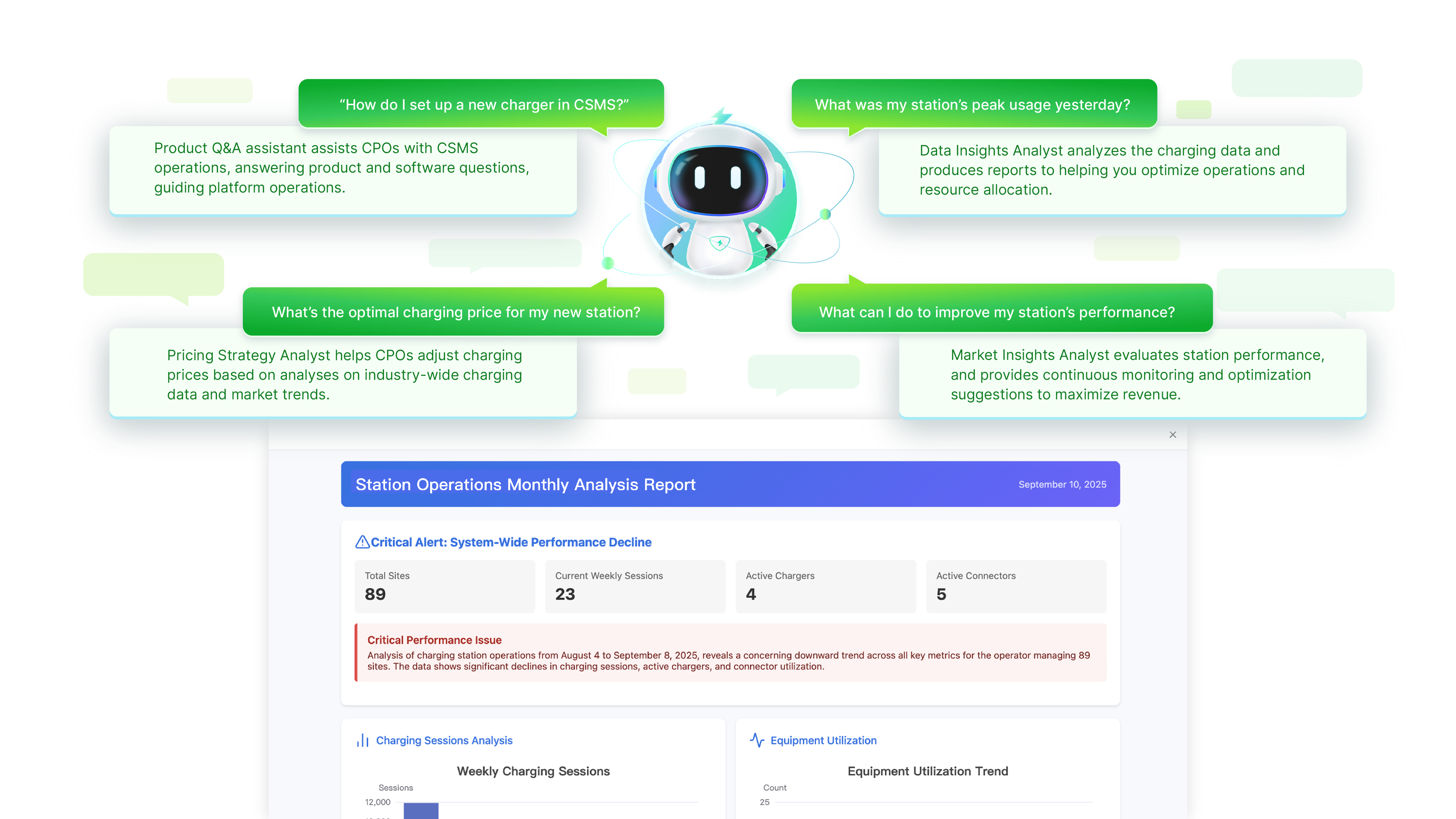
Figure 1: AI Digital Employee concept for EV charging operations.
Solution
Our solution involved building five specialized AI digital employees, each designed to handle specific operational domains. The project took several months with a cross-functional team of engineers, product managers, and charging industry experts from both Autel and AWS. The implementation involved building five specialized AI agents, each designed to handle specific operational tasks for CPOs. The key tasks involved in our implementation were:
- Designing and implementing five specialized AI agents using the Strands Agents SDK integrated with Amazon Bedrock, a fully managed service for building generative AI applications with foundation models, for natural language processing
- Building a cloud-native architecture on Amazon Elastic Container Service (Amazon ECS), a fully managed container orchestration service, with containerized FastAPI applications for scalability and high availability
- Integrating Amazon DynamoDB, a serverless NoSQL database with single-digit millisecond performance at any scale, for data storage of conversation history and session states
- Implementing Elastic Load Balancing (Application Load Balancer), a service that automatically distributes incoming traffic across multiple targets, for intelligent traffic distribution and high-concurrency handling
- Developing the Model Context Protocol (MCP) Server, based on the open standard protocol for AI agent-to-tool communication, for standardized data analysis and insight capabilities
- Infusing charging station industry knowledge into the AI models to understand domain-specific terminology and business logic
- Creating conversational interfaces for each AI agent covering Q&A, configuration, data analysis, pricing optimization, and market insights
The Five AI Digital Employees
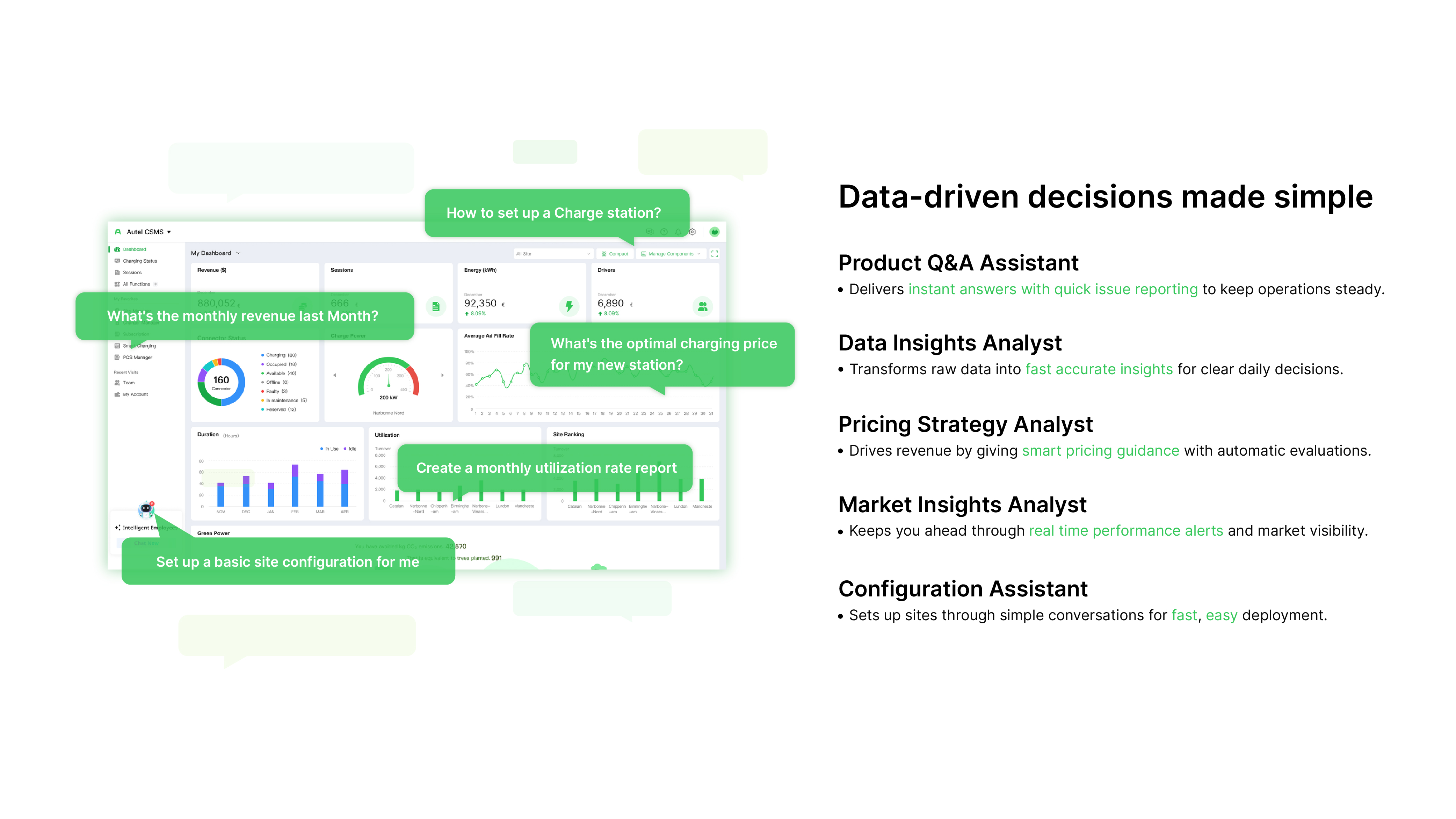
Figure 2: Autel CSMS dashboard with the AI Digital Employee chat interface.
Product Q&A Assistant
The Product Q&A Assistant helps simplify the learning curve of CSMS. Through natural language interaction, it can explain functionality purposes, operational paths, alert meanings, and business scenarios. New users no longer require multiple training sessions or constant manual support—they simply ask questions and receive clear, context-aware answers that reference the current interface state.
Configuration Assistant
Site creation, charger onboarding, and parameter configuration traditionally involved multiple modules and tedious steps. The Configuration Assistant eliminates this complexity through conversational AI. CPOs can use natural language instructions to complete initial configuration—the system automatically handles backend logic, seamlessly completing everything from device onboarding to parameter configuration.
Data Insights Analyst
This agent continuously monitors key indicators such as utilization rate, availability rate, and session success rate across all sites. It automatically generates daily, weekly, or monthly reports on demand, combining historical data to identify causes of anomalies, highlighting sites and time periods worth attention. Operators grasp key conclusions first before deciding how to act, saving time while improving decision accuracy.
Pricing Strategy Analyst
Pricing Strategy Analyst combines historical traffic, charging time distribution, and site characteristics to identify slow and congested periods. It evaluates different strategies such as time-of-use pricing, regional differences, or membership pricing, generating specific pricing adjustment recommendations with estimated results. What previously took days of manual analysis now takes just minutes.
Market Insights Analyst
As site scale expands across various layout types—shopping centers, parks, highways, communities—this agent helps operators coordinate their charging network from a global perspective. It compares site performance across different cities and scenario types, identifies sustained high-growth regions and long-term low-utilization sites, and analyzes the return potential of different models.
Technical Implementation
Prerequisites
To implement a similar AI digital employee system, you need the following: an AWS account with access to Amazon Bedrock foundation models, familiarity with containerized application deployment on Amazon ECS, a working knowledge of Python and the FastAPI framework, an existing CSMS or charging management platform with accessible APIs, and basic understanding of large language model (LLM) concepts and prompt engineering.
In architecting our agent framework, we evaluated the AWS agent services—including Amazon Bedrock Agents for managed deployment, Bedrock Multi-Agent Collaboration for complex task coordination, and Amazon Bedrock AgentCore for low-level customization. We selected the Strands Agents SDK integrated with Amazon Bedrock for our initial implementation due to its rapid development velocity and production readiness: the framework’s intuitive abstractions enabled quick prototyping of our five specialized agents while maintaining clean separation of concerns; its flexible tool integration patterns simplified connecting to existing CSMS APIs and MCP Server analytics; and its lightweight orchestration layer gave us precise control over agent routing and error handling critical for mission-critical charging infrastructure, all while using Amazon Bedrock’s powerful foundation models.
Looking ahead, as our agent patterns mature and operational requirements solidify, we are evaluating migration paths toward Amazon Bedrock AgentCore for long-term infrastructure optimization. AgentCore represents the next evolution in AWS’s agent services—providing lower-level building blocks that enable deeper integration with AWS services while reducing infrastructure management overhead. Once our five agent workflows are fully validated in production and their interaction patterns are well-understood, AgentCore’s native AWS integrations could streamline our deployment pipeline, improve observability through native CloudWatch integration, and reduce operational complexity by eliminating the orchestration layer overhead. This migration path aligns with AWS’s strategic direction of providing progressively more managed agent infrastructure, allowing teams to start with flexible frameworks like Strands SDK for rapid innovation, then migrate to AgentCore for production-optimized operations as patterns stabilize. The key advantage of AgentCore in this context is not just reduced infrastructure management burden, but also tighter coupling with AWS’s evolving agent capabilities—including native support for multi-agent collaboration, advanced memory management, and integrated guardrails—positioning us to adopt these capabilities as they mature without significant architectural rework.
The system adopts a cloud-native architecture using AWS enterprise-grade services:
- Elastic Load Balancing (Application Load Balancer): A service that automatically distributes incoming traffic across multiple targets in one or more Availability Zones. It provides intelligent traffic distribution and high availability, ensuring the system can handle sudden high-concurrency access during peak charging times.
- Amazon Elastic Container Service (Amazon ECS): A fully managed container orchestration service that helps you deploy, manage, and scale containerized applications. It runs our FastAPI framework-based applications in containers, integrated with the Strands Agents SDK for dynamic agent creation and management, providing scalability and efficient resource utilization.
- Amazon Bedrock: A fully managed service that provides access to high-performing foundation models from leading AI companies. It provides core large language model inference capabilities. After deep infusion of charging station industry knowledge, the AI understands not just natural language but also the business logic, terminology, and analytical frameworks specific to this industry.
- Amazon DynamoDB: A serverless, fully managed NoSQL database with single-digit millisecond performance at any scale. It stores critical business data such as conversation history and session states, ensuring the system can meet the needs of customers of different scales without manual capacity management.
- Model Context Protocol (MCP) Server: Based on the open standard protocol for AI agent-to-tool communication, it provides powerful data analysis and insight capabilities with a standardized protocol design that gives the system excellent scalability for integrating additional data sources and analytical tools in the future.
- Amazon Virtual Private Cloud (Amazon VPC): Lets you launch AWS resources in a logically isolated virtual network. It ensures network security and resource isolation for all system components, protecting sensitive charging network data and customer information.
- AWS Secrets Manager: A service that helps manage, retrieve, and rotate database credentials, API keys, and other secrets throughout their lifecycles. It securely stores and manages the API credentials and configuration secrets required for the AI agents to connect with external charging station APIs and third-party services.
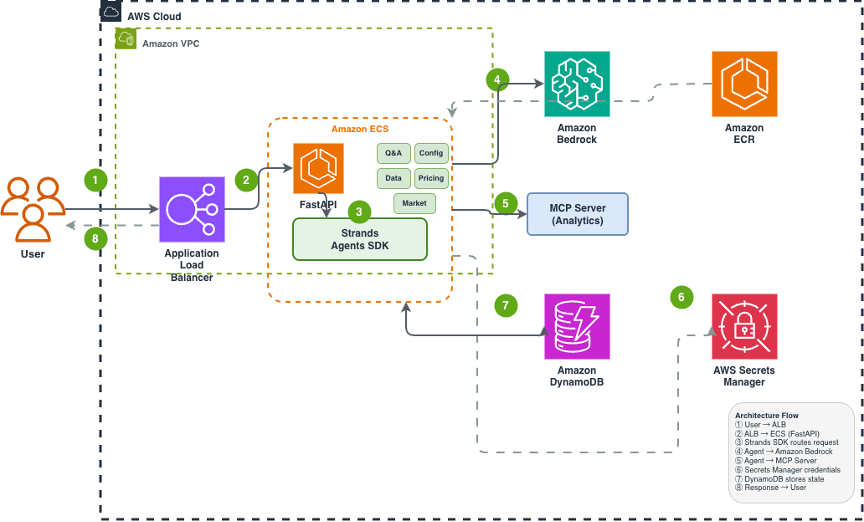
Figure 3: AWS architecture diagram for the AI Digital Employee system.
Architecture Flow
The following steps describe how a user request flows through the system: (1) A user sends a request through the web interface, which is received by the Application Load Balancer (ALB) for traffic routing. (2) ALB distributes the request to containerized FastAPI services running on Amazon ECS. (3) The application layer uses the Strands Agents SDK to route the request to the appropriate AI agent based on the user’s intent. (4) The selected agent invokes Amazon Bedrock for natural language understanding and response generation, using charging-industry-specific knowledge. (5) For data-driven queries, the agent calls the MCP Server to retrieve analytics, generate reports, or run pricing simulations. (6) AWS Secrets Manager provides secure access to API credentials needed for external service connections. (7) Session state and conversation history are persisted in Amazon DynamoDB, enabling continuity across interactions. (8) The generated response is returned to the user through ALB.
A Day with AI Employees: Transforming Daily Operations
AI digital employees transform the daily rhythm of charging operations. A typical day now looks like this:
Morning: The Data Insights Analyst automatically generates an operations morning report showing yesterday’s key indicators, risk points, and abnormal sites—operators grasp the overall situation on one screen.
Mid-Morning: The AI acts as an “operations radar,” identifying issues such as rising session failure rates and proactively pushing alerts to pinpoint key sites and time intervals requiring attention.
Afternoon: For low-utilization sites, operators simply ask: “Find me sites with profit potential and generate time-of-use pricing optimization plans.” The Pricing Strategy Analyst outputs a draft plan with revenue estimates in minutes.
End of Day: A single command—“Generate this week’s operations summary”—produces a complete, structured weekly report with data ready for management submission.
New Employee Onboarding: The Product Q&A Assistant answers questions on demand, allowing new team members to quickly master operational processes through hands-on practice rather than lengthy training sessions.
This shifts CPO work from reactive firefighting to proactive management, with faster, more stable, and more accurate decision-making.
Conclusion
By partnering with AWS and using cloud-native architecture, generative AI, and serverless technologies, Autel has successfully transformed from a traditional hardware manufacturer to an intelligent operations enabler. Our AI digital employee system represents a significant step forward in how CPOs interact with charging infrastructure—moving from complex manual operations to conversational, intelligent interfaces. Looking ahead, we continue advancing in three directions: (1) enabling complete site setup through natural language conversations, (2) building AI team collaboration where multiple digital employees automatically divide work to deliver executable operational plans, and (3) simplifying the entire operational experience to conversational commands. For CPOs looking to scale their operations intelligently, this AI-native approach offers not just reliable hardware, but a full-stack operational support system that continuously evolves.
To get started with building AI-powered solutions for your charging operations: (1) explore Amazon Bedrock to evaluate foundation models for your use case, (2) review the Strands Agents SDK on GitHub to understand the agent framework, (3) contact your AWS account team to discuss an architecture review for your charging infrastructure, or (4) visit aws.amazon.com/energy for more AWS solutions in the energy sector.
CPOs interested in exploring how Autel CSMS can support and scale their charging operations are invited to connect for tailored guidance on AI-enabled management, payment and session control, and multi-site deployment planning. To ensure an efficient response, please include company name and country, charger model and quantity, deployment type (private or public), payment and integration requirements (e.g., OCPI or API), and expected project scope when registering at https://autelenergy.us/pages/register