AWS for M&E Blog
Sony Marketing Inc. built Cloud-based live video production for sports events with AWS Elemental MediaConnect Router
Sony Marketing Inc. and Sony Corporation built a cloud-based live video production system using AWS Elemental MediaConnect Router to complement their existing on-premises infrastructure for large-scale sports events. By adding cloud-based video routing alongside traditional on-premises routers, they created a hybrid system capable of handling more than 90 live video sources, including international broadcasts, domestic cameras, and replays, while reducing the overall cost and complexity of their physical infrastructure.
In this post, we walk through how Sony extended their on-premises video production environment into the cloud, and how AWS Elemental MediaConnect Router solved a key technical constraint that made the hybrid architecture possible.
When traditional infrastructure can’t meet modern scale demands
Traditional video production for large sports events comes with a familiar set of pain points:
-
- High equipment costs – Cameras, routers, switchers, cabling, and racks require significant capital investment for limited-use periods.
-
- Transportation and logistics – Shipping equipment to event venues is increasingly expensive and complex.
-
- Large on-site teams – Installation, calibration, and teardown require specialized personnel and extended preparation windows.
-
- Long lead times – Setup can take days or weeks before an event begins.
Sony wanted to dramatically reduce their on-premises footprint without compromising broadcast quality or production flexibility.
The design constraint that shaped the architecture
Sony’s production requirements called for more than 90 video source systems. They selected eight Sony M2L-X cloud switchers (plus one spare) for video switching. But a critical limitation surfaced: the M2L-X pre-selector supports a maximum of 32 inputs.
That gap of nearly 60 sources became the defining design challenge.
One option was to add on-premises video routers upstream of the switchers to handle source selection. But that would have reintroduced the physical infrastructure Sony was trying to eliminate, conflicting with their cloud-first design goals.
Solution overview
Sony deployed MediaConnect Router upstream of the M2L-X switchers, creating a cloud-based routing layer that replaced the need for physical pre-selectors entirely.
Here’s how it works:
-
- All video sources ingest into AWS Elemental MediaConnect – International feeds, domestic cameras, replays, and other sources all land in the cloud.
-
- MediaConnect Router handles source selection – Operators dynamically route any combination of the 90-plus sources to the appropriate M2L-X switcher inputs.
-
- M2L-X handles production switching – The cloud switchers receive their routed inputs and handle transitions, effects, and program output as usual.
This architecture, shown in the following diagram, eliminated the 32-input bottleneck without adding any on-premises hardware.
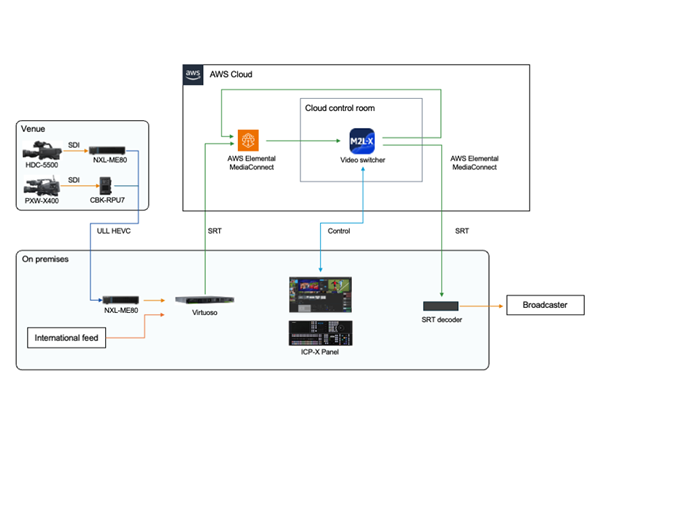
Figure 1: System architecture showing MediaConnect Router as the central cloud-based routing layer between video sources and M2L-X cloud switchers
Control and operation
For crosspoint control, Sony used their in-house circuit control application, Live Link Control (L2C), which interfaces with AWS Elemental MediaConnect Router through its API. This gave operators:
-
- A crosspoint control screen that sends routing commands to MediaConnect Router by way of API, with the same look and feel as conventional hardware video routers
-
- Remote control panel integration for each switcher, supporting familiar production workflows
-
- The ability to manage both cloud and on-premises routing from a single interface, whether on-site or remote
Because L2C abstracts the API layer behind a familiar control surface, operators worked with the same panels and workflows they already knew. The following screenshots show these panels.
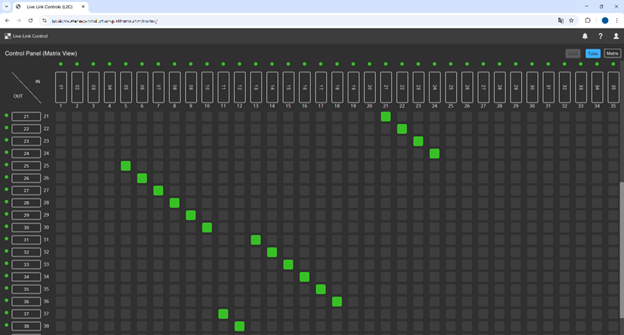 Figure 2: L2C control screen
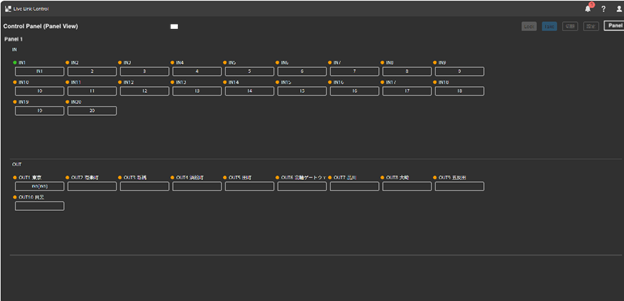 Figure 3: L2C remote control panel
AWS support for the event
To ensure operational readiness for a live broadcast of this scale, Sony worked closely with the AWS Unified Operations for Media team throughout the planning and testing phases. The engagement included architecture reviews, operational runbook development, and real-time support during the broadcast. Ahead of the event, the Unified Operations team helped validate the hybrid architecture, including AWS Direct Connect resilience, multi-AZ deployment patterns, and MediaConnect Router failover configurations, which proactively identified and mitigated risks before going live.
Results
The simplified infrastructure of the cloud-based system reduced Sony’s physical footprint at event venues. Fewer racks, fewer cable runs, and fewer equipment shipments translated directly into lower transportation and installation costs. Setup that previously required extended on-site preparation became faster and simpler.
Using M2L-X cloud switchers with conventional operation panels provided broadcast-quality production with familiar operations, so the production teams could work in the cloud environment without changing their workflows. Video transitions, effects, and other production elements met television broadcast standards with no compromise in quality.
MediaConnect Router delivered the production flexibility at scale that physical routers couldn’t match in this architecture:
-
- Full source access – All 90-plus video sources were selectable in the cloud, removing the 32-input pre-selector constraint.
-
- Multi-program production – Switcher outputs could be re-ingested as sources, enabling multiple simultaneous program productions.
-
- Improved reliability – Flexible routing configurations for multi-viewer setups improved system availability and provided better failover options during live production.
Conclusion
Sony’s implementation demonstrates cloud-based video production at broadcast scale. By using MediaConnect Router for video routing, they transformed a physical infrastructure constraint—more than 90 sources exceeding switcher input limits—into a software configuration challenge that scales elastically. This architecture delivers a proven path for broadcasters managing large-scale live events: reduced costs and operational complexity without compromising production quality or established workflows.
To get started with cloud-based video routing, visit the AWS Elemental MediaConnect product page or explore the MediaConnect User Guide.