Migration & Modernization
Category: Migration Solutions
Assess and Migrate Storage to the Cloud with AWS Transform
Storage is a crucial component of every enterprise application, and it has the potential to be the most complex part of any cloud migration. Many migration approaches work around that complexity by starting with compute and network, leaving storage as an afterthought and this can lead to storage becoming a late-stage bottleneck. In addition to […]
How Cornerstone Transformed Its Global Infrastructure
Six data centers. Eleven AWS Regions. 140 million users. Strengthened incident response protocols. Enterprise SaaS providers on aging infrastructure face compounding pressure: escalating costs, mounting technical debt, and a widening gap between customer expectations and what legacy infrastructure can deliver. The question is no longer whether to migrate to the cloud — it is how […]
How to plan your migration to the AWS Region in Saudi Arabia
The first AWS Region in Saudi Arabia is on track for December 2026. Learn which workloads to evaluate, what data to prepare, and how an AWS Optimization and Licensing Assessment helps you compare costs before you commit.
When to use what: A guide to AWS Transform interfaces
You just got assigned 40 applications to migrate. Three teams, two time zones, a mix of .NET services and legacy monoliths, and leadership wants a status update every Friday. Where do you start? With AWS Transform, the answer depends on what you’re doing right now, not which interface is “correct.” There isn’t one. There are […]
Discover and migrate Microsoft Hyper-V workloads with AWS Transform
Introduction For organizations running Microsoft Hyper-V on premises, migrating workloads to AWS offers a path to reduce infrastructure costs, eliminate licensing complexity, and unlock cloud-native capabilities. Yet the first weeks of a migration effort are rarely spent migrating. In any environment that has grown over years, whatever the platform, systems inventory and architectural documentation lags […]
Migrate faster with AWS Transform and your AI coding agent
Introduction If you already work with an AI coding agent, you know how much they can do. Tools like Kiro, Claude Code, and Cursor read repositories, reason over code, and drive multi-step tasks from an IDE or terminal. They’re excellent general-purpose AI coding agents, built to help with everyday software development tasks. But planning and […]
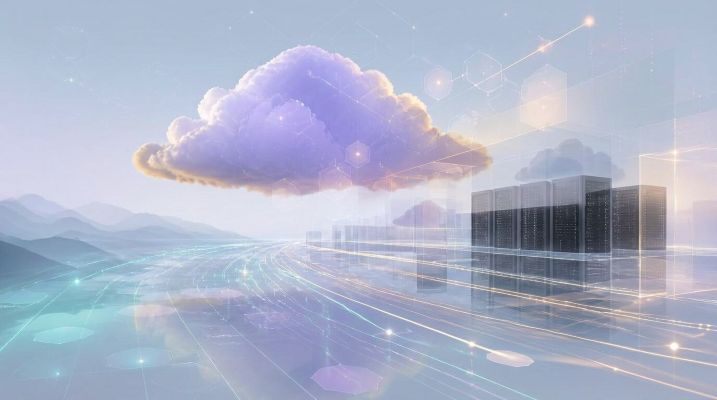
Why Legacy Infrastructure Blocks AI Success
When AI initiatives stall, the instinct is to look at the model, the data, or the team. But more often, the constraint is underneath all of those — in the infrastructure itself. And running in the cloud doesn’t automatically remove that constraint. If the architecture was designed around pre-AI assumptions, it carries the same limitations […]
Automate MAP Tagging at Scale with Amazon Nova and AWS Serverless
Learn how to automate AWS MAP tagging at scale using Amazon Nova and serverless architecture. Deploy a self-service solution that generates correct tag values, CLI commands, and discovers untagged resources in ~5–8 minutes. | 31 August 2026 | Amazon Bedrock, AWS Lambda, AWS CloudFormation, Migration Acceleration Program (MAP), Generative AI. Introduction MAP tagging determines whether […]
Increase your cluster density with Memory Tiering in Amazon Elastic VMware Service
Increasing your cluster density by using Memory Tiering within the Amazon Elastic VMware Service (Amazon EVS) can help drive down the costs of your AWS infrastructure. Amazon EVS now supports VMware Cloud Foundation (VCF) 9.0 and 9.1 . In VMware Cloud Foundation (VCF) 9.0 Memory Tiering was introduced, which is a new feature within ESX […]
Migrating and Modernizing Oracle Databases to PostgreSQL on AWS – Part 4: Post-cutover optimization
Introduction In this blog post, we cover the post-cutover phase of an Oracle-to-PostgreSQL migration on Amazon Web Services (AWS), demonstrating how to transform a functional PostgreSQL system into an operationally excellent one. We walk through immediate validation, comprehensive observability, systematic performance optimization, disaster recovery validation, Oracle decommissioning, and the operational excellence foundation, including the continuous […]