Migration & Modernization
How Cornerstone Transformed Its Global Infrastructure
Six data centers. Eleven AWS Regions. 140 million users. Strengthened incident response protocols.
Enterprise SaaS providers on aging infrastructure face compounding pressure: escalating costs, mounting technical debt, and a widening gap between customer expectations and what legacy infrastructure can deliver. The question is no longer whether to migrate to the cloud — it is how to execute a migration of extraordinary complexity without disrupting the customers who rely on the platform every day. Cornerstone OnDemand, Inc. (Cornerstone) faced exactly this challenge: migrate six legacy data centers to AWS — encompassing 1,500+ servers, approximately 35,000 databases, 4 petabytes of data, and 8 billion files across 11 AWS Regions — without disrupting the thousands of enterprise customers who depend on its platform daily.
Cornerstone used the AWS Migration Acceleration Program (MAP) 2.0 framework and custom migration automation to execute the transition. Most customers experienced minimal-to-zero perceivable impact during the migration.
About Cornerstone OnDemand
Founded in 1999 and headquartered in Santa Monica, California, Cornerstone serves 7,000+ organizations and 140 million users across 186 countries. The company employs approximately 4,000 people worldwide and operates across six continents.
Cornerstone’s flagship offering, Cornerstone Workforce AI™, combines two decades of workforce data across 45 million users with a taxonomy of 55,000+ skills to power AI-driven talent development. The platform is built on the Cornerstone People Graph™ — a proprietary intelligence layer that translates workforce signals into actionable insights at enterprise scale.
Cornerstone holds leadership positions across 19 analyst rankings in 2025 — including The Forrester Wave for Learning Management and Fosway 9-Grid for Learning Systems.
The Strategic Imperative: Why Cloud Migration Became Inevitable
The convergence of business pressures
Cornerstone’s decision to migrate was driven by three pressures: (1) data center lease expirations that would require millions of dollars in renewal costs, (2) hardware refresh cycles that could not keep pace with customer growth — capacity utilization exceeded 85% across primary data centers, and (3) the inability to deploy new AI/ML capabilities on aging infrastructure that lacked GPU support and modern orchestration. Each month of delay increased technical debt and widened the gap between customer expectations and platform capabilities.
Why AWS
When evaluating cloud providers, Cornerstone identified three primary reasons for choosing AWS as shown in the figure below:
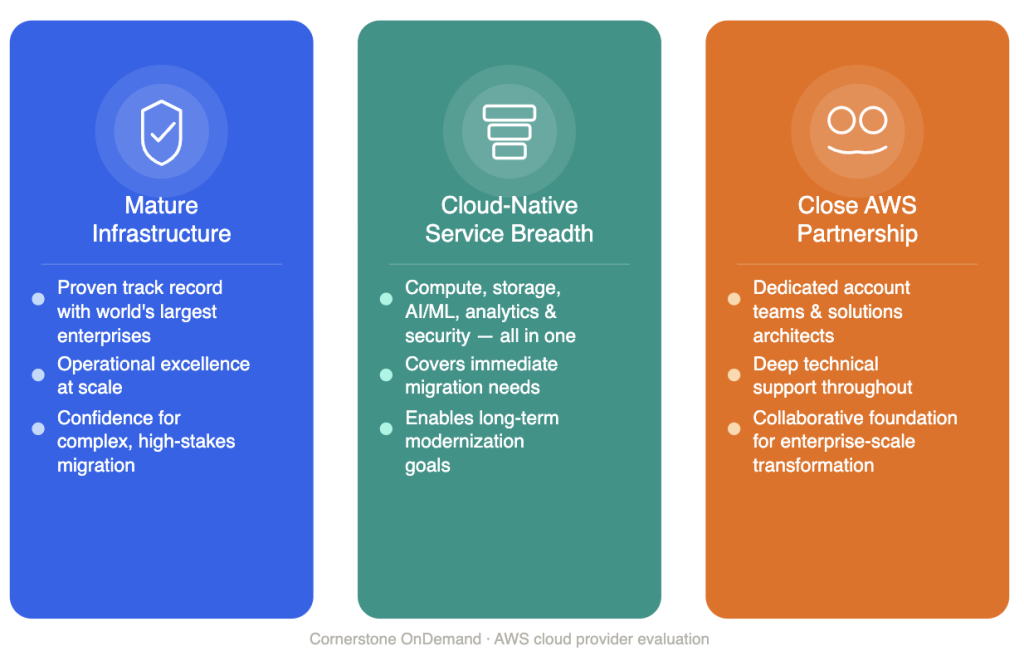
Figure 1: Primary reasons for Cornerstone choosing AWS
The Proprietary Database Dimension
Cornerstone runs approximately 35,000 closed-source databases with per-core licensing. This created a specific migration constraint: standard EC2 instances offered too many CPU cores relative to RAM, making licensing costs on AWS prohibitive compared to on-premises. The scale — one of the largest known proprietary database migrations to AWS — ruled out manual lift-and-shift and required purpose-built automation.
However, as AWS expanded its Amazon Elastic Compute Cloud (Amazon EC2) portfolio — particularly the R-series (memory-optimized), X-series (memory-intensive), and high-memory Dedicated Host options — Cornerstone identified configurations that delivered the required RAM-to-core ratios for database licensing optimization. By leveraging R5 and X1e instance families on Dedicated Hosts, Cornerstone brought existing licenses (Bring Your Own License – BYOL) to AWS, achieving cost parity with on-premises infrastructure while gaining cloud elasticity, automated patching, and multi-AZ resilience.
Architecture Evolution: From Monolithic Planning to Adaptive Learning
Operational and Architectural Requirements
Mandatory requirements that shaped every architectural and operational decision:
Seamless customer experience — Maintain high availability throughout migration with minimal-to-zero customer impact; infrastructure distributed across 3 Availability Zones per region; service continuity prioritized in every decision
Regional data sovereignty — Strict controls ensuring customer data remained within appropriate regional boundaries for healthcare, financial services, and government compliance (ISO 27001/27017/27018/27701, GDPR, SOC 2, FedRAMP, etc.)
Rapid regional deployment — New regional presence in 6 weeks; core infrastructure, network, and observability operational in 24–48 hours (vs. 6 months legacy)
Target AWS Architecture
The new AWS-based architecture leveraged cloud-native services and modern architectural patterns:
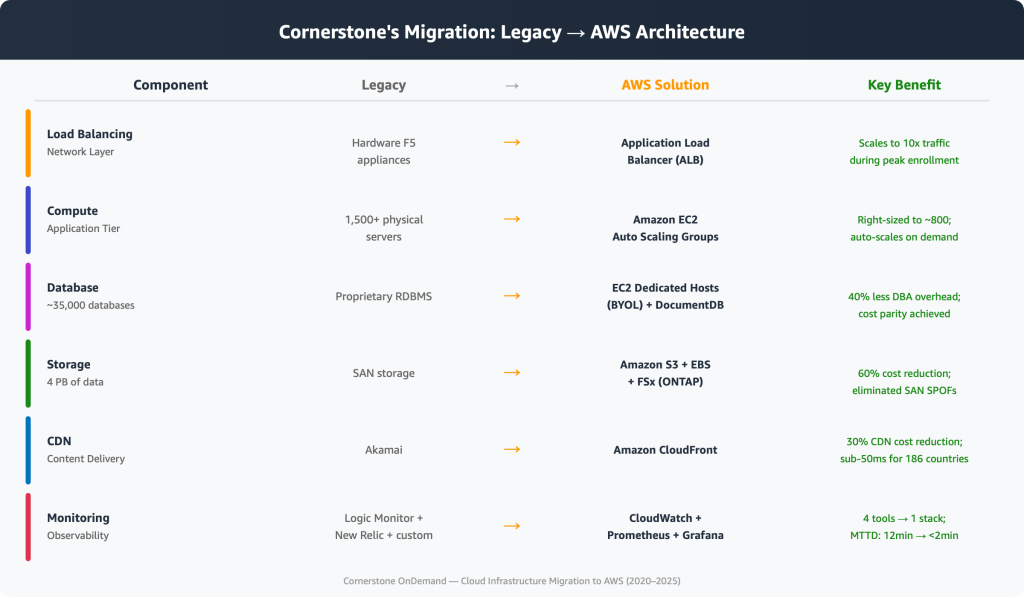
Figure 2: Legacy-to-AWS service mapping and measured benefits
The Migration Methodology: How Cornerstone Executed at Scale
Cornerstone’s methodology combined automation, Infrastructure-as-Code, and iterative scaling across six stages per the figure below:
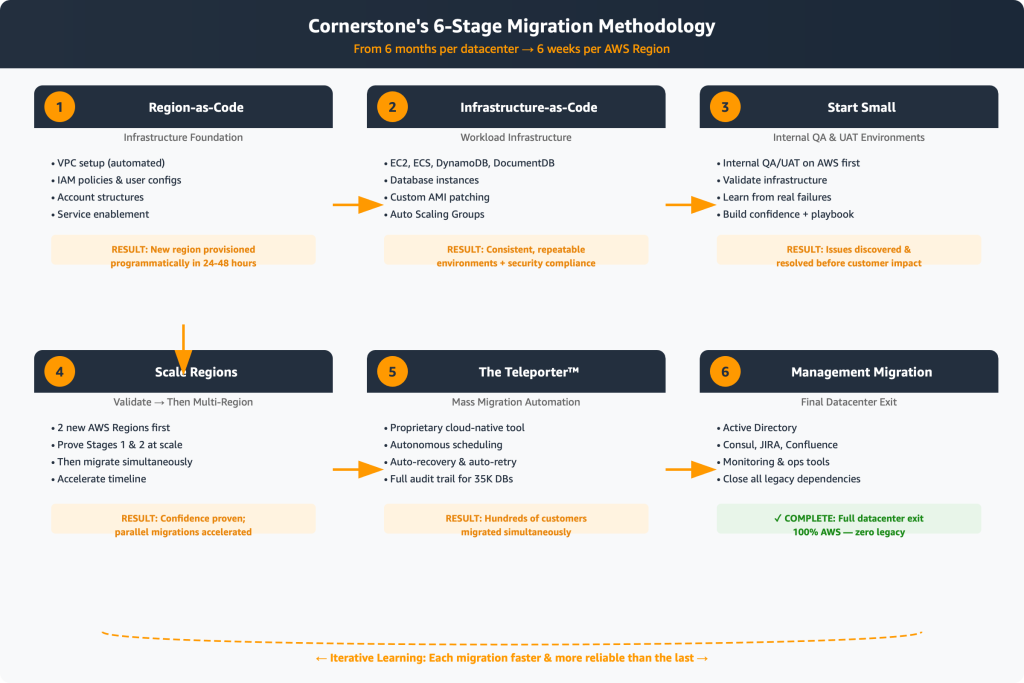
Figure 3: Six stages of migration
Execution Excellence: Systematic Learning and Continuous Improvement
The Teleporter
To migrate 35,000 databases without manual effort, Cornerstone built the Teleporter, a cloud-native migration automation platform that schedules and runs migrations for hundreds of customers and their components in parallel. Built-in auto-recovery and auto-retry handle failures without engineer intervention, and step-level logging creates a full audit trail for every migration.
Iterative learning as a core discipline
After each migration, Cornerstone conducted post-mortems using team feedback to reduce downtime, simplify processes, and prevent recurring issues. When outages exceeded maintenance windows, Correction of Error (COE) analysis identified root causes and preventive measures, creating a cycle of continuous improvement.
Cornerstone also ran dedicated cross-functional reviews — called “synops” internally — before each database migration wave. These brought DBAs, platform engineers, and application owners together to identify migration-specific risks for each batch of databases before cutover.
The breakthrough insight
After the first data center migration, the team shifted approach — sequencing migrations so each incorporated fixes from the prior round. The first took 8 weeks; by the fourth, under 2 weeks with 68% fewer incidents.
Logging and monitoring
During the initial migration cycles, incomplete monitoring delayed incident detection — the team couldn’t distinguish between a deployment issue and a platform problem in real time. After that, Cornerstone required full observability (metrics, monitors, and alerts) to be operational before going live in any new region. On-call engineers needed to detect anomalies within minutes, not hours.
Cornerstone’s Monitoring and Observability Stack:
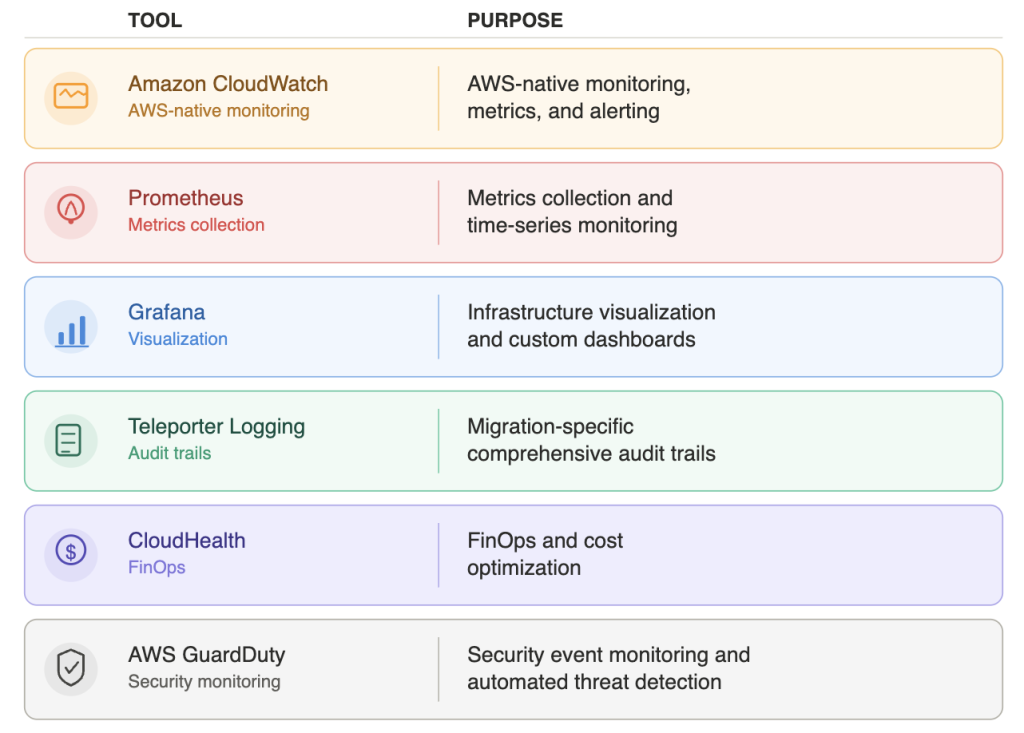
Figure 4: Monitoring and observability stack
FinOps practices born from migration
Post-migration compute optimization established FinOps practices that continue today. The phased approach enabled Reserved Instances and Savings Plans strategies — optimizing purchases based on observed usage rather than committing upfront. As a result, compute costs dropped 30–40% through right-sizing and RI/SP coverage, and the CapEx-to-OpEx shift eliminated upcoming lease renewals and hardware refresh costs.
Maintaining Service Quality: The Technical Architecture
Cornerstone migrated onto a workload-matched AWS architecture, pairing Amazon Elastic Container Service (Amazon ECS), Amazon Elastic Kubernetes Service (Amazon EKS), AWS Lambda, and latest-generation Amazon EC2 for compute with a purpose-built database tier spanning BYOL on Amazon EC2 Dedicated Hosts, Amazon DynamoDB, Amazon DocumentDB (with MongoDB compatibility) and Amazon Aurora. The result is a 35,000-database estate running on the right engine for each job, with AWS Systems Manager and AWS Step Functions keeping operations and orchestration consistent across the platform.
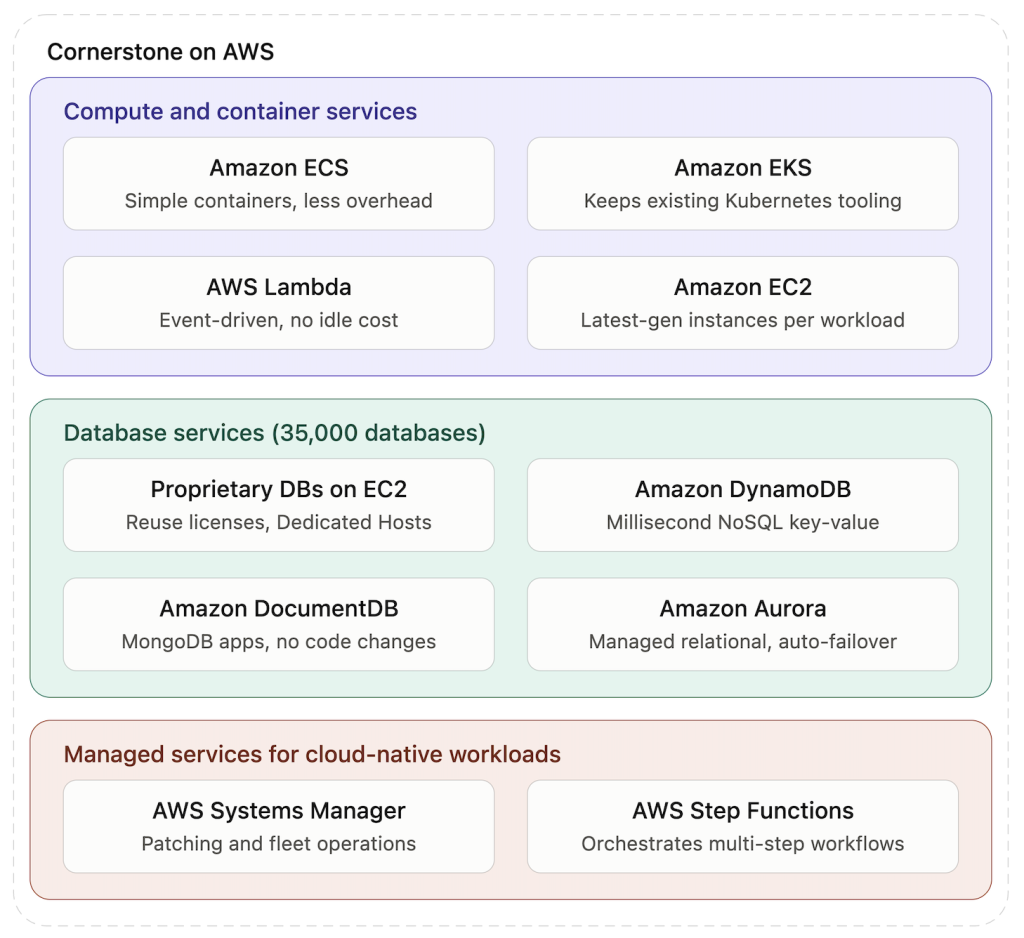
Figure 5: Post-migration architecture on AWS and the role of each service
Business Outcomes and Strategic Positioning
Immediate strategic benefits
With the migration complete, Cornerstone has achieved five strategic outcomes:
- AI-powered innovation — Workforce solutions now accelerated via AWS AI/ML services (Amazon Bedrock, Amazon SageMaker), enabling capabilities that were impossible on legacy infrastructure.
- Elastic scalability at global scale — Infrastructure supporting 140 million users across 186 countries now auto-scales to demand, eliminating capacity planning constraints.
- Reduced technical debt — Decades of infrastructure overhead eliminated through Infrastructure-as-Code, automated patching, and modern orchestration.
- Pay-as-you-go cost optimization — Shifted from CapEx hardware purchases to OpEx cloud consumption, with costs aligned to actual usage patterns rather than peak-capacity provisioning.
- Compliance maintained — Achieved and maintained certifications across financial services (SOC 2) and government (FedRAMP) verticals without disruption during migration.
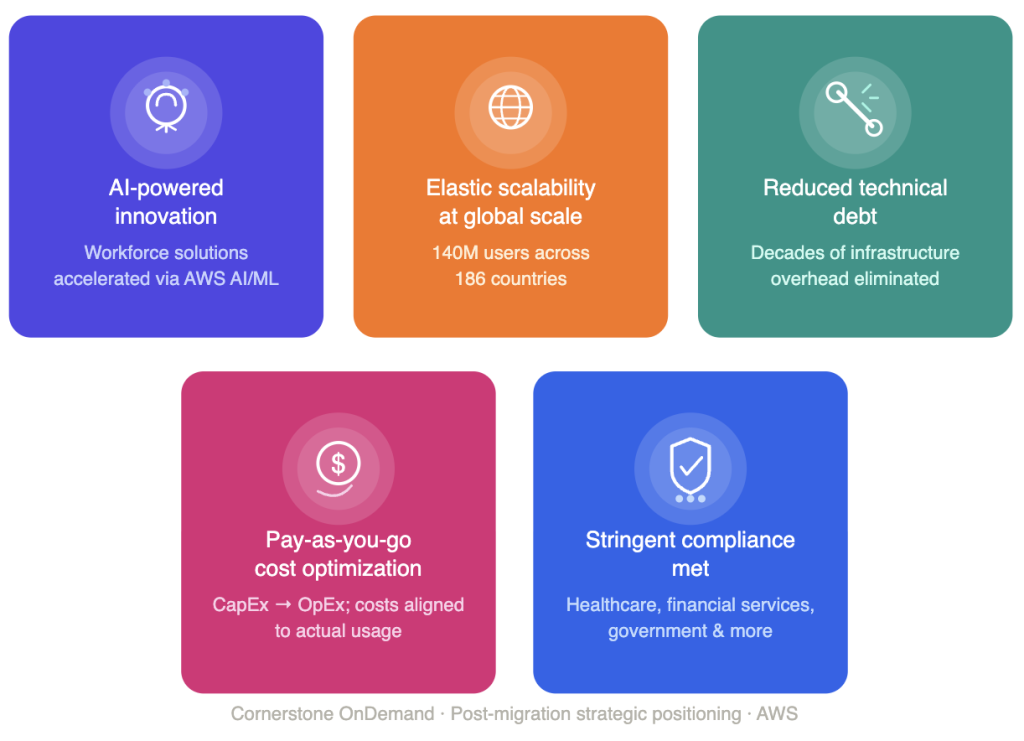
Figure 6: Key business outcomes
Cornerstone Workforce AI™ in AWS Marketplace
Cornerstone Workforce AI™ is available in AWS Marketplace. Customers can purchase and deploy directly through their AWS account: AWS Marketplace listing.
The road ahead: AI-powered innovation
Looking ahead, Cornerstone’s modernization roadmap includes:
☁ Cloud-Native Optimization
Evolve from lift-and-shift to cloud-native — containerization, serverless, next-gen compute. Already using Amazon DynamoDB, Amazon DocumentDB, Amazon ECS for AWS-native applications with ongoing platform optimization
Key AWS Services: Amazon EKS, Amazon S3 Vectors, AWS Graviton5 (M9g Instances), AWS Compute Optimizer, Amazon Aurora Serverless v2, AWS Lambda for Managed Instances
✦ AI Integration Across Operations
Integrate AI with all aspects of operations and automation using the full AWS AI/ML services portfolio
Key AWS Services: Amazon Bedrock, Amazon Q Developer, Amazon SageMaker Unified Studio, Amazon Bedrock Data Automation
◈ Agentic AI — Cornerstone Workforce AI™
Leveraging Amazon Bedrock AgentCore for next-generation agentic AI capabilities within Cornerstone Workforce AI™ for workforce intelligence at scale
Key AWS Services: Amazon Bedrock AgentCore, Strands Agents, Amazon Bedrock Agents (multi-agent collaboration)
◉ AWS Marketplace Expansion
Cornerstone Workforce AI™ now available in AWS Marketplace — simplified customer procurement and expanded co-sell motion
Key AWS Services: AWS Marketplace
This roadmap positions Cornerstone at the intersection of enterprise cloud migration and the AI revolution. With infrastructure transformation complete, Cornerstone can capitalize on both.
Lessons Learned: Insights for Enterprise SaaS Leaders
Cornerstone’s five-year migration produced five actionable principles: (1) Automate at scale — The Teleporter migrated 35,000 databases with auto-recovery and full audit trails. (2) Sequence for learning — each round incorporated prior fixes, reducing per-region time from 8 weeks to under 2 weeks with 68% fewer incidents. (3) Stage observability before go-live — pre-deployed monitoring reduced mean-time-to-detect from 12 minutes to under 2 minutes. (4) Optimize costs post-migration — right-sizing and Reserved Instances based on observed usage delivered 30–40% compute savings. (5) Minimal to zero customer impact is the constraint — achieved across 7,000+ enterprise customers and 140 million users.
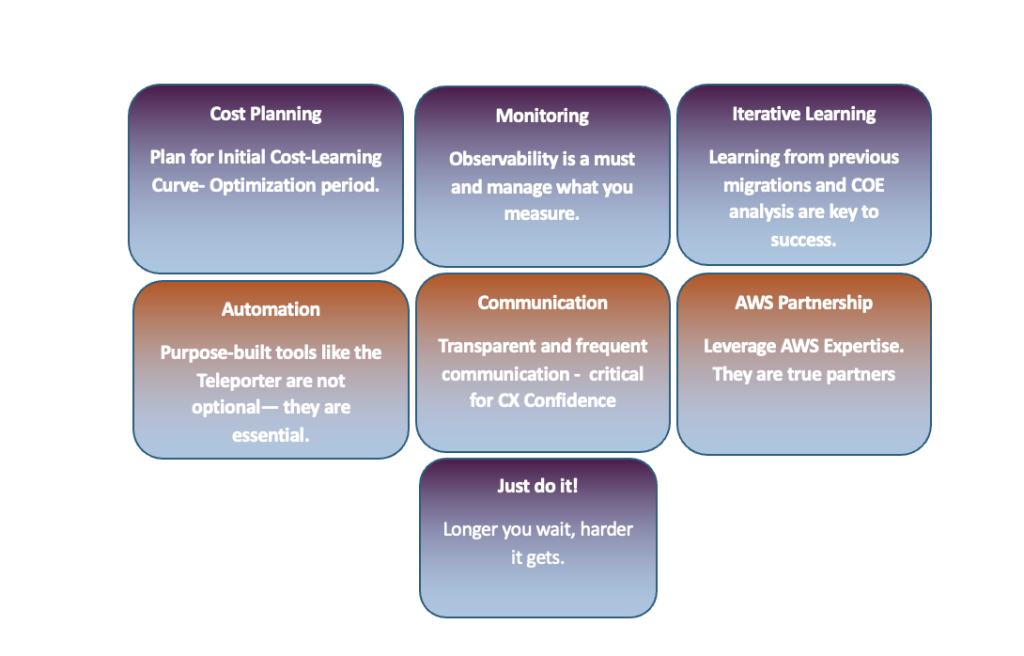
Figure 7: Lessons learned
Conclusion: A Blueprint for Enterprise-Scale Transformation
Over five years, a 4,000-person company migrated 1,500+ servers, 35,000 databases, and 4 petabytes of data across 11 AWS Regions while maintaining 99.9%+ availability for 140 million users. Per-region migration time dropped from 8 weeks to under 2 weeks. The investment in automation — particularly the Teleporter platform — paid for itself as each migration executed faster with fewer incidents.
The migration has positioned Cornerstone as a cloud-native platform company — ready to leverage AI, advanced analytics, and the full breadth of AWS services to lead the next generation of workforce innovation. Cornerstone Workforce AI™ is now available in AWS Marketplace, and its modernization roadmap includes Amazon Bedrock AgentCore for agentic AI.
For enterprise SaaS leaders considering a similar migration: Cornerstone’s methodology, tooling, and phased approach are documented above. The scale is achievable.
Get Started
Start your migration: Organizations planning a large-scale migration can contact their AWS account team or learn more about the AWS Migration Acceleration Program. For workforce solutions, visit cornerstoneondemand.com or find Cornerstone Workforce AI™ in AWS Marketplace.