AWS Physical AI Blog
Introducing AWS Physical AI Toolchain
End-to-End solution for Training and Deploying Physical AI Policies on AWS at Scale
Physical AI is artificial intelligence that operates in the real world through robots, autonomous vehicles, and smart factories. According to the Capgemini Research Institute, 79% of organizations are already engaging with Physical AI, and 60% of executives believe that physical AI will enable robotics adoption in areas that were once impossible or impractical. The technology is at an inflection point.
But getting a robot from a working lab prototype to a reliable production system requires more than a single model. It requires an integrated pipeline that spans data collection, synthetic data generation, model training, simulation-based validation, and edge deployment. Each stage demands different compute, different tools, and different operational constraints. The handoffs between them are where most teams lose months of engineering time.
Today we are introducing the Physical AI Toolchain on AWS: a curated collection of reference architectures, Infrastructure as Code, and deployment automation for running the complete Physical AI development lifecycle on AWS, integrated with the NVIDIA Physical AI stack. The toolchain is robot-agnostic and task-agnostic. Bring your own URDF, your own teleoperation data, and your own task definition, and the infrastructure handles the rest.
The Physical AI Development Lifecycle
Physical AI operates in a closed loop, sensing, deciding, and actuating in continuous cycles against the real world. This is fundamentally different from conventional ML-Ops, where a model processes data and returns predictions to a screen. A model that achieves high accuracy in an offline evaluation may fail when it must control a 6-axis arm at 200 Hz in a cluttered warehouse. The development process must account for physical dynamics, real-time constraints, sensor noise, safety boundaries, latencies, and the expensive reality that every real-world trial involves hardware that can break.
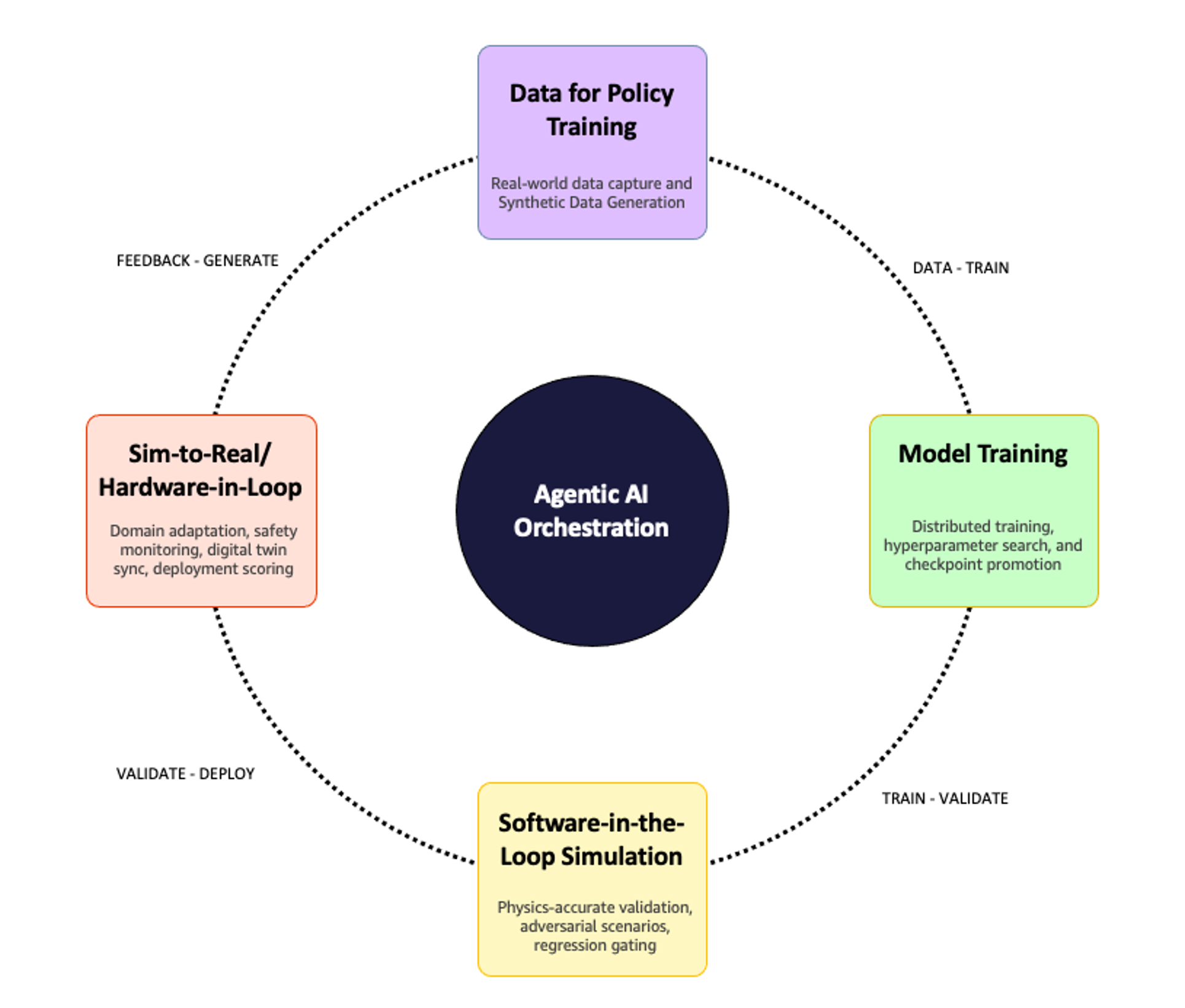
Figure 1: Physical AI Development Lifecycle
The Physical AI lifecycle is not a linear pipeline; it is a flywheel. Deployed robots generate new data that reveals edge cases. Those edge cases inform new simulation scenarios. Simulation produces synthetic training data. Better models get validated against progressively harder tests. The cycle repeats, and each iteration narrows the sim-to-real gap.
Why Physical AI Needs a Dedicated Toolchain
Physical AI breaks generic ML-Ops assumptions. Here are five problems that require purpose-built infrastructure:
- Compute heterogeneity. A single Physical AI workflow spans high-bandwidth GPU clusters for foundation model training, elastic mid-tier GPU capacity for physics simulation, and edge GPUs for real-time inference on the robot. No single compute service covers the full range.
- Artifact sprawl. A robot release includes datasets, simulation scenes, robot URDF descriptions, calibration data, training containers, checkpoints, evaluation outputs, and deployable edge packages. Without governed artifact promotion across stages, teams lose reproducibility within weeks.
- Validation depth. A failed robot restarts into a physical world that has already changed. Physical AI requires staged promotion through simulation, supervised reality testing, and controlled production rollout. There is no equivalent of a simple blue-green deployment for a robot arm.
- Data economics. Real robot data is expensive to collect. Production-grade policies need coverage across hundreds of environmental variations. Teams need a loop that multiplies sparse demonstrations through synthetic augmentation and reinforcement learning.
- Control path placement. Inference that determines physical motion is bound by latency, power budgets, and thermal limits on the robot. The cloud coordinates training and fleet management, but it cannot be the control loop for safety-relevant physical tasks.
All five problems interact. The value of a toolchain is not one more training script. It is a coherent, tested path from data ingest through simulation to edge deployment that handles the handoffs where most teams lose time.
Introducing the Physical AI Toolchain on AWS
The Physical AI Toolchain on AWS is a publicly available collection of reference architectures, Infrastructure as Code, and deployment automation purpose-built for the Physical AI development lifecycle on AWS. It integrates the NVIDIA robotics software stack: GR00T for vision-language-action training, Isaac Sim for physics simulation, Isaac Lab for reinforcement learning at scale, Cosmos for synthetic data generation, and OSMO for workflow orchestration into a single, reproducible pipeline that deploys on AWS managed services. The toolchain does not abstract away Physical AI complexity. It gives teams a repeatable way to move data, models, simulation jobs, and deployment artifacts across stages without reinventing the infrastructure at each handoff.
Built on Open Standards
Beyond the NVIDIA components, the toolchain is built on the publicly available tools robotics teams already use: it ingests raw recordings in Zarr and standardizes them to the community LeRobot format, trains with PyTorch and Hugging Face, defines reinforcement learning tasks with Gymnasium, describes robots with URDF, and exports to ONNX for portable edge inference. Models hand off to ROS 2 for on-robot control. This keeps your data and models in open, portable formats.
Design Principles
Three design principles guide the toolchain:
- Modular, not monolithic: Each component (Foundation, Isaac Sim, Isaac Lab, GR00T, OSMO) is an independent Terraform module. You can adopt it one stage at a time or deploy the full pipeline. The modules share configuration through SSM parameters but have no hard dependencies on each other.
- NVIDIA-native on AWS infrastructure: The toolchain runs the NVIDIA Physical AI stack on AWS compute, storage, networking, and security services. You can follow NVIDIA documentation directly and still benefit from cloud-native deployment automation.
- Flywheel-aware, not pipeline-linear: The infrastructure supports the iterative nature of Physical AI development. Data flows back from deployment to inform new simulation scenarios. Synthetic data generation feeds into training. Trained models feed into validation. The toolchain does not impose a fixed sequence, rather it provides infrastructure for every transition in the flywheel.
Architecture
The Physical AI Toolchain on AWS maps the development flywheel onto AWS solutions by abstracting away the underlying complexity. The architecture is intentionally vertical with each pillar self-contained with its own NVIDIA domain layer on top of AWS managed infrastructure. The bottom layer of the entire architecture is the Strands Agentic Layer, an AI-driven orchestration layer built on the Strands Agents SDK that enables intelligent coordination. Teams can adopt any single pillar independently or connect them into a full end-to-end pipeline with agentic orchestration managing the transitions.
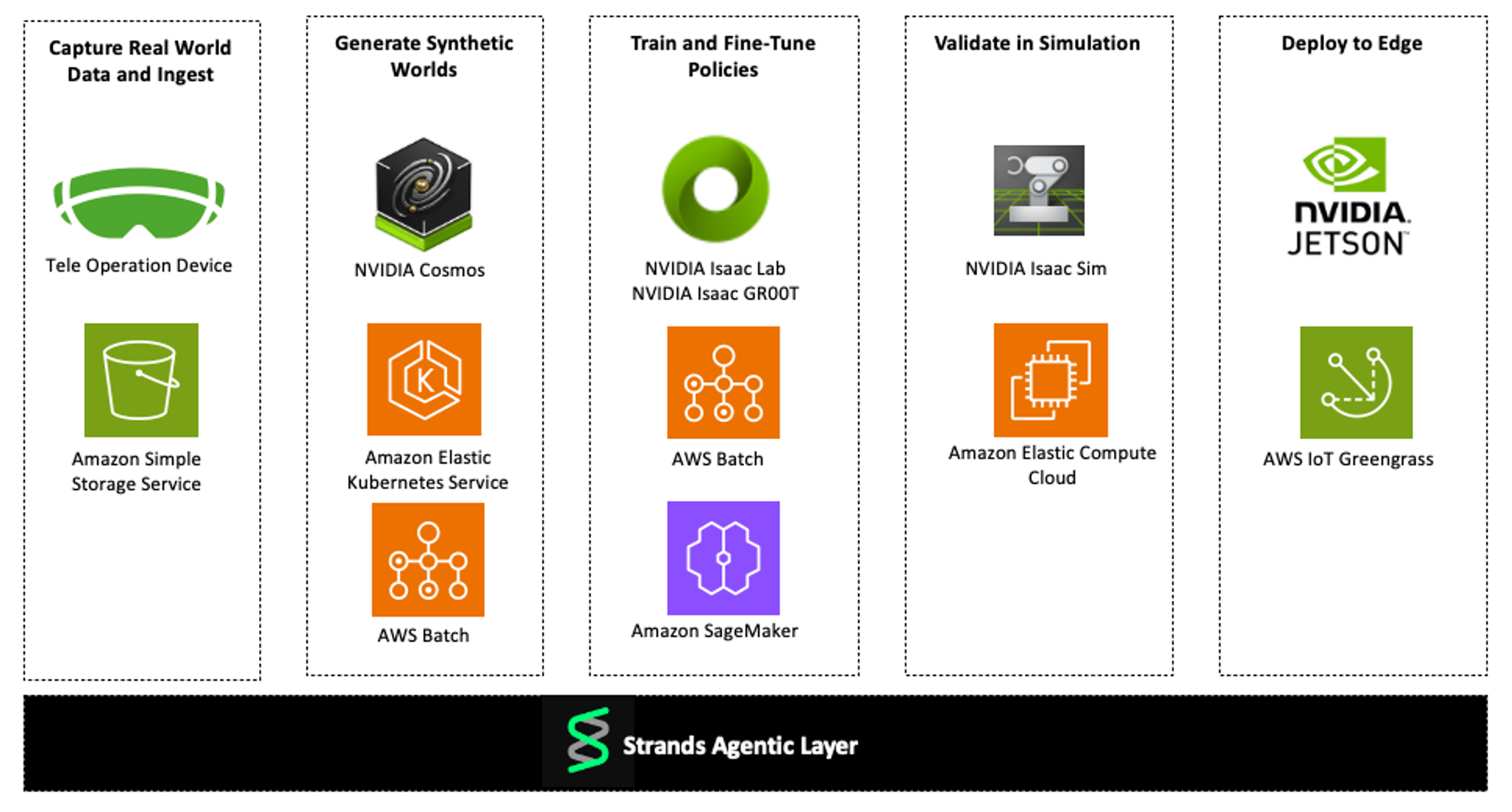
Figure 2: The Physical AI Toolchain on AWS Components
Data flows left to right through the pillars: raw teleoperation recordings land in Amazon Simple Storage Service (Amazon S3), synthetic world generation runs on Amazon Elastic Kubernetes Service (Amazon EKS) and AWS Batch with NVIDIA Cosmos, policy training executes on AWS Batch and Amazon SageMaker using NVIDIA Isaac Lab and Isaac GR00T, validation runs in NVIDIA Isaac Sim on Amazon Elastic Compute Cloud (Amazon EC2), and final deployment pushes optimized models to NVIDIA Jetson hardware using AWS IoT Greengrass. Training or Fine-tuning jobs run on Amazon SageMaker or AWS Batch to optimize cost of deployment.
The Strands Agentic Layer built on the publicly available Strands Agents SDK provides an AI-native interface to the entire toolchain. Rather than writing custom orchestration scripts for each pipeline variant, teams describe intent in natural language or structured prompts, and the agentic layer resolves which components to invoke, provisions the required compute, manages data handoffs, and reports results.
NVIDIA Physical AI Stack Integration
The toolchain is deeply integrated with NVIDIA Physical AI software stack, deployed and operated on AWS infrastructure.
NVIDIA provides the domain-specific layers:
- Isaac Sim for scene composition, physics-accurate rendering, and real-time simulation
- Isaac Lab for reinforcement learning at scale with thousands of parallel environments
- Isaac GR00T for vision-language-action model fine-tuning from demonstrations
- Cosmos for world generation and visual data augmentation for synthetic dataset scaling
- OSMO for workflow orchestration across heterogeneous compute (cloud, on-prem, edge)
- Jetson / RTX for target runtime hardware for edge inference under real-time constraints
AWS provides the execution substrate:
- Amazon EC2 with NVIDIA GPU instances for simulation and synthetic data generation
- Amazon SageMaker / AWS Batch for managed training with automatic provisioning and zero idle cost
- Amazon EKS for scalable and distributed OSMO and cluster workloads with GPU scheduling
- Amazon S3, Amazon Elastic Container Registry (Amazon ECR), Amazon FSx for Lustre for datasets, containers, and high-throughput training data delivery
- Amazon CloudWatch, AWS Secrets Manager, AWS Key Management Service (AWS KMS), AWS IoT Greengrass for observability, security, and edge deployment
The toolchain reduces friction at the boundary between these two stacks. AWS handles infrastructure provisioning, deployment automation, security primitives, and managed service integration. NVIDIA handles the simulation engines, foundation models, and orchestration layers that Physical AI teams already use.
Target Audience
This toolchain is built for robotics engineers, ML engineers, platform teams, and solutions architects who need cloud-backed infrastructure for scalable training and deploying robot policies. Industries that benefit directly include manufacturing and industrial automation, warehousing and logistics, energy and utilities, healthcare and life sciences, mining and construction, agriculture, and aerospace and defense. Any domain where robots must learn adaptive behaviors, validate in simulation before deployment, and operate under real-time constraints at the edge. The toolchain provides infrastructure patterns and architectural guidance, not finished robot behaviors.
Getting Started
To help you get started, we’ve provided a workshop in the following repository. Prerequisites include:
- An AWS account with GPU quota approved for both SageMaker and EC2
- An NVIDIA NGC API key for container image pulls
- A Hugging Face token for model weight downloads
- Please follow the tear down steps to avoid incurring costs
The workshop walks through each stage with working examples that can be run against any robot data. For detailed setup instructions, see the README guide in the repository: https://github.com/aws-samples/sample-the-physical-ai-toolchain-on-aws
Working Examples at Every Stage
Every stage of the toolchain comes with step-by-step instructions, and the exact commands, configurations, and expected outputs to follow along. Each module ships with its own working example out of the box: GR00T training, for instance, comes with 27 supplied UR3 pick-and-place teleoperation episodes, making it possible to run the module and confirm it works before substituting a different use case or dataset. A single module can be deployed independently, or the complete pipeline can be composed end to end. Backed by tested Terraform Infrastructure as Code, teams can move from evaluation to running the toolchain on their own data in hours rather than weeks of custom integration. Some familiarity with AWS is assumed, but Physical AI expertise is not required — the instructions explain the relevant terminology and concepts as they come up, and a Physical AI glossary is included for reference.
Conclusion
The Physical AI Toolchain on AWS treats Physical AI as a full lifecycle problem, not a single training job. It provides reference architecture patterns for data ingest, imitation learning, reinforcement learning, synthetic data generation, simulation, orchestration, and edge deployment on AWS, integrated with NVIDIA’s robotics stack from day one. The recommended approach is to start with the one component that removes the current bottleneck. When starting from scratch, deploying Foundation and OSMO first provides a single control plane for the entire flywheel. Try the toolchain, open an issue, or share feedback in the comments. Thanks to all the builders who contributed to the project.