AWS Public Sector Blog
The 1000 Genomes Project, reanalyzed: A new analytical baseline for human genomics
The Illumina bioinformatics team reanalyzed the 1000 Genomes Project to establish a new analytical baseline for common human genetic variation. Thousands of studies benchmark against the original 1000 Genomes Project call set. Population frequency estimates used in genome-wide association studies (GWAS) and variant interpretation databases derive from it. It is, in many ways, the cohort the global genomics community trusts most.
The original baseline predates recent advances in structural variant detection, repeat expansion analysis, pangenome references, and pharmacogenomic characterization. The analytical frontier advanced dramatically, but the original 1000 Genomes Project call sets weren’t updated alongside it. The gap between what modern pipelines can detect and what the original 1000 Genomes Project calls contain has become a limiting factor for labs validating new methods.
This reanalysis removes that ceiling. We used Illumina DRAGEN (Dynamic Read Analysis for GENomics) on Amazon Elastic Compute Cloud (Amazon EC2) F2 instances to reanalyze the entire 1000 Genomes Project high-coverage cohort (3,202 whole genomes including 602 trios) across five major DRAGEN versions (3.5, 3.7, 4.0, 4.2, and 4.4), producing consistent calls across every major variant class from a single pipeline run. DRAGEN 4.4 anchors analysis against a pangenome reference, demonstrating pangenome-based variant calling at population scale on a globally representative cohort.
You can access the results on the Registry of Open Data on AWS at no cost. No Amazon Web Services (AWS) account is required, and there are no egress fees.
In this post, you can learn what distinguishes this reanalyzed dataset from prior 1000 Genomes Project call sets, how to access the data, and how to explore it using both bioinformatics tools and a natural-language query interface built on Amazon Bedrock.
Key differentiators of this reanalysis
This is not a newer pipeline applied to the same data. Rather, we reprocessed the data using a wider set of current methods, distinguishing it from any prior 1000 Genomes Project call set.
DRAGEN v4.4.7 calls single nucleotide variants (SNVs), indels, copy number variants (CNVs), structural variants (SVs), short tandem repeats (STRs), and human leukocyte antigen (HLA) types from a single integrated pipeline. Targeted callers additionally characterize pharmacogenomically complex genes, such as CYP2D6, CYP2B6, GBA, SMN, HBA, LPA, RH, and CYP21A2, in the same run. A single integrated pipeline eliminates the need for tool-stitching or reconciliation across independent callers: one pipeline, one reference framework, one quality model.
DRAGEN 4.4 incorporates a second-generation multigenome mapper with an expanded pangenome reference containing samples from diverse ancestries. Combined with machine learning (ML)-based variant recalibration, this reduces reference bias for non-European populations (a known limitation of linear reference alignment). It also supports more accurate structural variant detection in regions of high population-specific diversity. Applied to the 1000 Genomes Project 3,202 genome cohort (26 populations across 5 superpopulations), this represents a landmark demonstration of pangenome-based calling on a diverse, well-characterized cohort.
The Registry of Open Data on AWS hosts DRAGEN call sets from versions 3.5, 3.7, 4.0, 4.2, and 4.4. All are applied to the same 3,202 genomes. You can track algorithmic improvements across DRAGEN generations on identical inputs, validate methods against multiple analytical baselines simultaneously, and quantify the impact of specific advances (such as the pangenome introduction in 4.4) on variant sensitivity and specificity.
Performance
The combination of DRAGEN v4.4 with EC2 F2 instances delivers a fundamental shift in what is economically feasible at population scale. According to benchmarks published in the AWS HPC Blog, DRAGEN v4.4 on EC2 F2 instances (f2.6xlarge) achieves significant improvements.
Full WGS analysis, including mapping, variant calling, CNV, SV, STR, HLA, and targeted callers was two times faster than previous-generation F1 instances at 30% of the Amazon EC2 compute cost. Basic WGS analysis, including mapping and small variant calling only, was 1.5 times faster at 40% of cost.
These economics matter beyond this project. At 30% of previous cloud compute cost, population-scale reanalysis moves from being accessible only to large consortia to being fundable by academic groups and smaller research programs.
Joint genotyping: Cohort-level analysis with DRAGEN IGG
Beyond per-sample variant calling, we performed variant aggregation and filtering using the DRAGEN Iterative Genomic Variant Call Format (gVCF) Genotyper (IGG) v4.4.7. IGG genotypes large collections of germline gVCFs from unrelated samples, producing a single normalized multisample VCF containing all variants and genotypes observed across the cohort.
The iterative workflow supports efficient cohort updates without reprocessing all input data, making it well-suited for evolving reference resources. The resulting joint-called VCF provides a standardized, analysis-ready resource compatible with downstream workflows including GWAS, population stratification, and variant annotation.
You can directly compare allele frequencies across the five 1000 Genomes Project superpopulations or integrate the data with other cohorts without additional harmonization. For the 602 trio families in the cohort, additional pedigree analyses enabled joint small variant genotyping along with variant detection for both CNVs and structural variants.
Accessing the data
The complete reanalysis is publicly available on Amazon Simple Storage Service (Amazon S3) through the Registry of Open Data dataset at 1000 Genomes Phase 3 Reanalysis with DRAGEN 3.5, 3.7, 4.0, 4.2, and 4.4. The dataset includes high-quality variant calls for all variant classes (VCF format), aligned CRAM files, quality metrics and annotations for downstream analysis, and cohort-level joint-called VCFs from DRAGEN IGG.
To access the reanalysis without an AWS account, use the command line interface (CLI):
aws s3 ls s3://1000genomes-dragen-v4-4-7/ --no-sign-requestIf you have an AWS account, you can access the reanalysis by signing in on the Amazon S3 console.
No egress fees apply for public access. Complete dataset documentation, usage examples, and technical specifications are available on the 1000 Genomes Phase 3 Reanalysis with DRAGEN page on the Registry of Open Data.
Exploratory analysis: From variant calls to population insights
Researchers can use Illumina Connected Analytics (ICA) Bench and Jupyter notebooks to explore how the reprocessed cohort supports sophisticated downstream analysis. The following examples demonstrate population-level analyses, with visualizations shown in the following graphs.
The first graph, a scatterplot, shows principal component analysis (PCA) of the 1000 Genomes Project population dataset PCA clustering with GIAB samples excluded. This analysis confirms expected population clustering across the 1000 Genomes Project superpopulations.
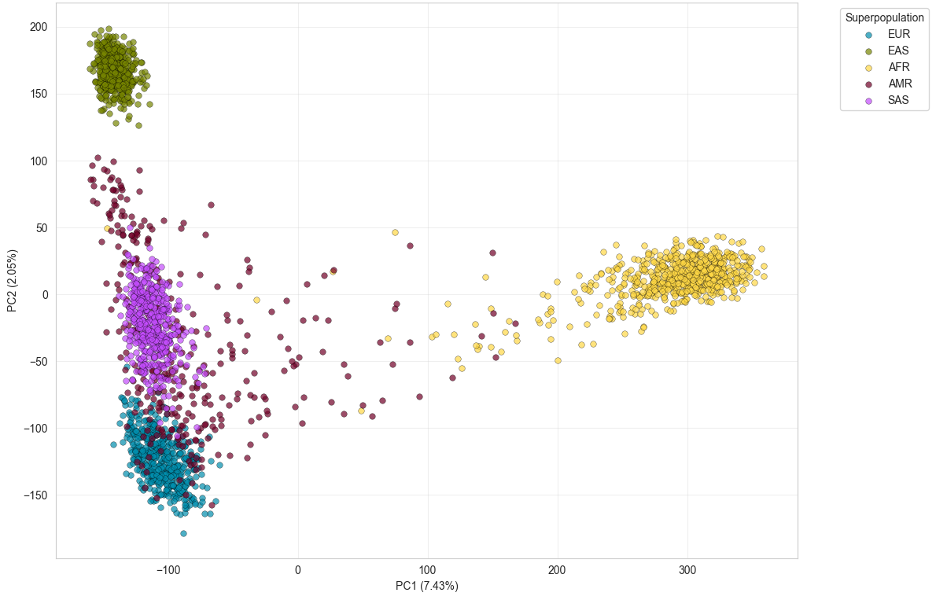
Figure 1: PCA clustering of 1000 Genomes dataset
The following bar graph shows that loss-of-function (LOF) and missense mutations appear more often at lower allele frequencies, whereas splice region and synonymous mutations appear more at higher allele frequencies. This pattern is consistent with purifying selection acting on deleterious variants.
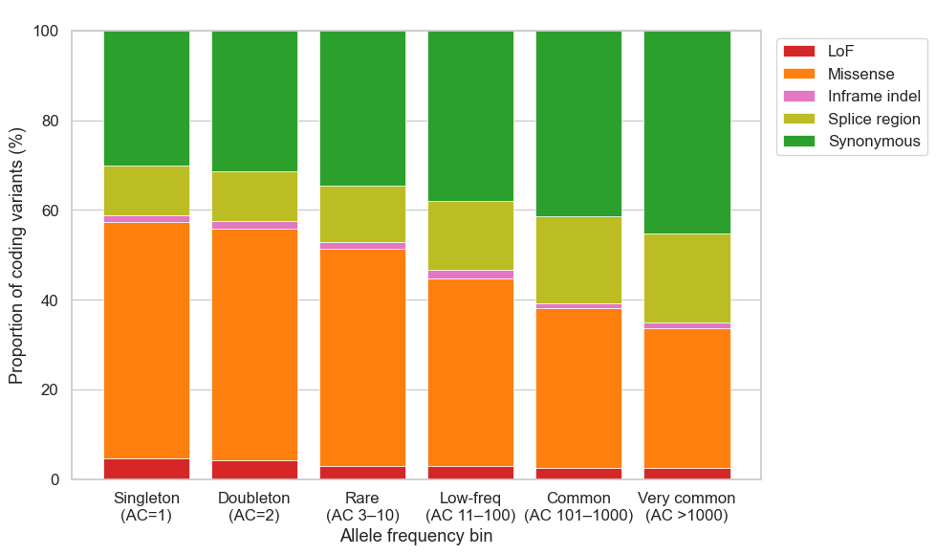
Figure 2: Variant consequence by allele frequency
These Jupyter notebooks provide reproducible starting points for researchers conducting their own population-scale analyses. The notebook files are packaged as an ICA bundle named “1kg_jupyter_notebooks v1.0,” available to any ICA user with a subscription in the US ICA region. There is no additional cost beyond an ICA Basic subscription.
ICA bundles can’t be shared using a direct external link. To find it, on the Bundles console, choose Bundles in the left navigation pane and the Entitled Bundles tab, then link it to your project. Refer to the ICA Bundles documentation for detailed instructions on ICA Bundle access and usage.
Natural language querying
For researchers who need answers from this data without pipeline infrastructure, we developed an open source conversational agent using the Strands Agents SDK with Amazon Bedrock for model inference.
The workflow ingests per-sample VCFs and Illumina Connected Annotations into Amazon S3 Tables in Apache Iceberg format. Amazon Athena provides SQL access across the entire cohort. The conversational agent translates natural-language questions into SQL, executes queries, and returns results such as the following:
- “Which samples carry a heterozygous variant in BRCA2?” returns sample IDs, genotypes, and population labels.
- “Show me pathogenic variants on chromosome 17 with gnomAD frequency below 1%” returns matching variants with ClinVar annotations.
- “What are the top 10 highest REVEL score variants in cancer-related genes? Only show the 5 most useful columns” returns the resulting SQL query and the query results in a tabular format, as shown in the following screenshot.
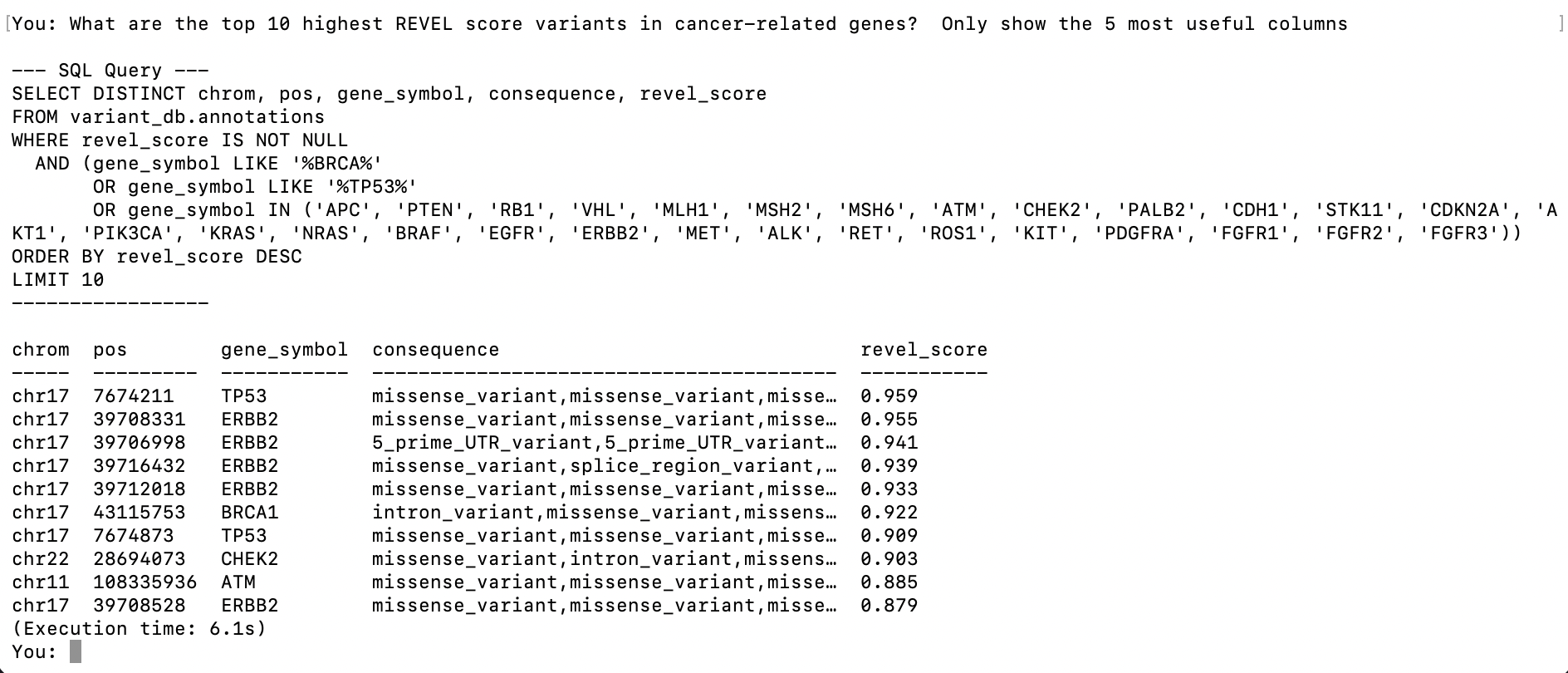
Figure 3: The conversational agent returns the top 10 highest REVEL score variants in cancer-related genes, demonstrating natural-language SQL query generation
This interface reduces friction for researchers who need population frequency data to inform research design but lack command line expertise. The open source code is available at sample-bedrock-variant-query-agent on GitHub.
The following diagram is the solution architecture. Key components shown in the diagram include the VCF data loader and annotations parser, data loading of the parsed data into Amazon S3 Tables, usage of AWS Glue and Amazon Athena to enable querying, and Amazon Bedrock for the AI chat capabilities.
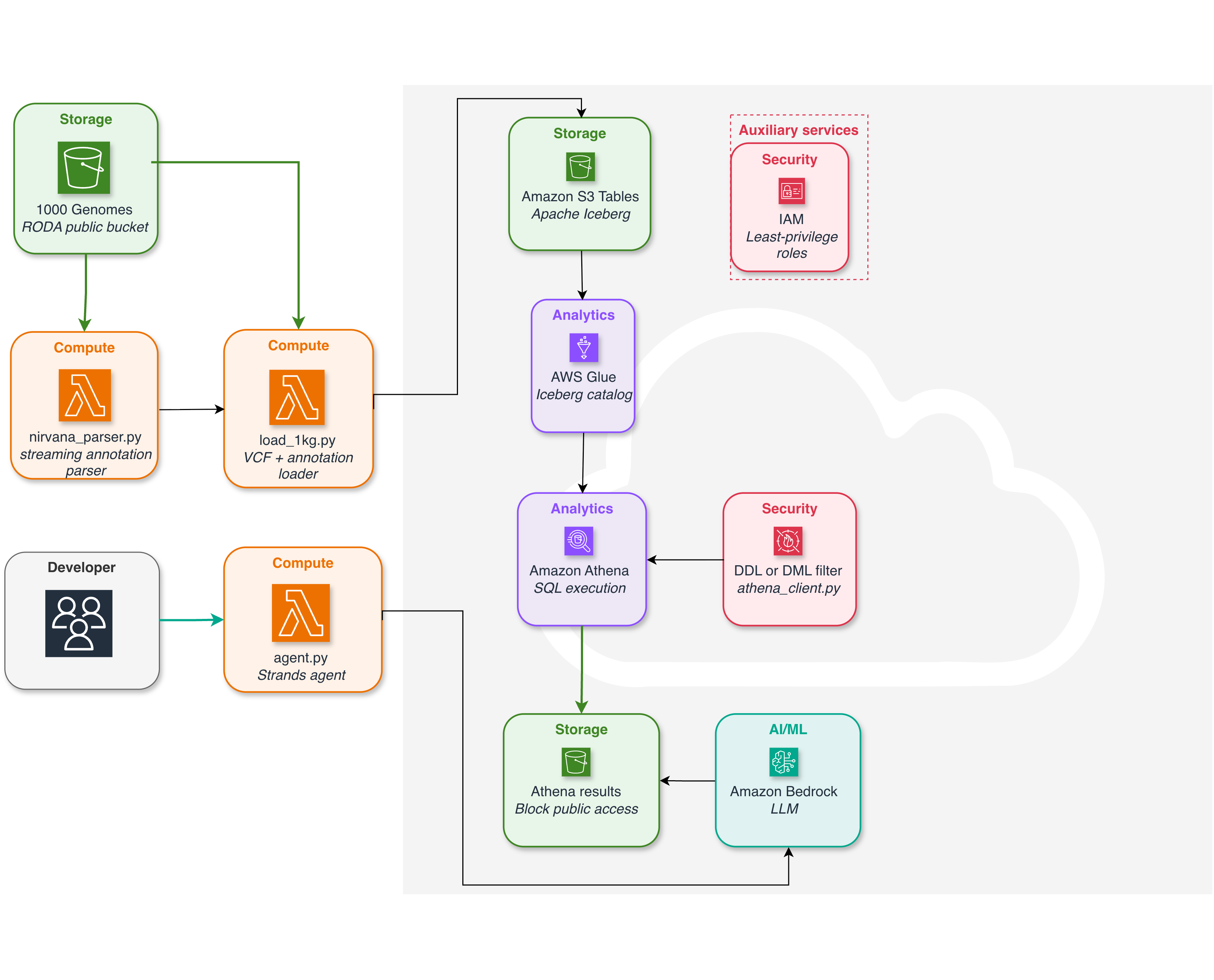
Figure 4: Architecture of the Amazon Bedrock variant query agent
Conclusion
This reanalysis is not the endpoint; it’s infrastructure that supports ongoing work across multiple research domains:
- For bioinformaticians and method developers – Five pipeline versions were applied to the same 3,202 genomes, in one bucket. You can track algorithmic evolution, validate methods against multiple baselines, and benchmark against pangenome-anchored calls on the cohort that the field already uses as ground truth.
- For population geneticists – Pangenome-anchored calls reduce reference bias in non-European populations. Full variant-class coverage supports structural variant and STR analyses that earlier call sets can’t provide.
- For translational researchers – The updated results are an analytically current reference for population frequency estimation, variant interpretation, and method validation, accessible in standard formats with no barriers.
- For the field – This reanalysis lifts the ceiling. The baseline now reflects current methods. The infrastructure is openly accessible.
Explore the dataset today in the Registry of Open Data on AWS and try the ICA Bench example population analysis scripts and the conversational Amazon Bedrock agent example in the sample-bedrock-variant-query-agent GitHub repository.
For full technical details on DRAGEN v4.4.7 pipelines, parameters, and benchmarking results, refer to the DRAGEN v4.4 User Guide. Whether you’re conducting population genetics research or validating a new analysis method, this dataset and the surrounding tooling provide a strong foundation to accelerate your work.
For more info about DRAGEN on AWS, visit DRAGEN Complete Suite in AWS Marketplace, view the DRAGEN v4.4 blog, or visit Illumina’s Informatics products home page.
The information in this post is for research use only and not to be used in diagnostic procedures.
The authors would like to thank Trevor Cousins (Illumina) who helped with the exploratory analysis in Illumina Connected Analytics.